Climate Social Ecosystem
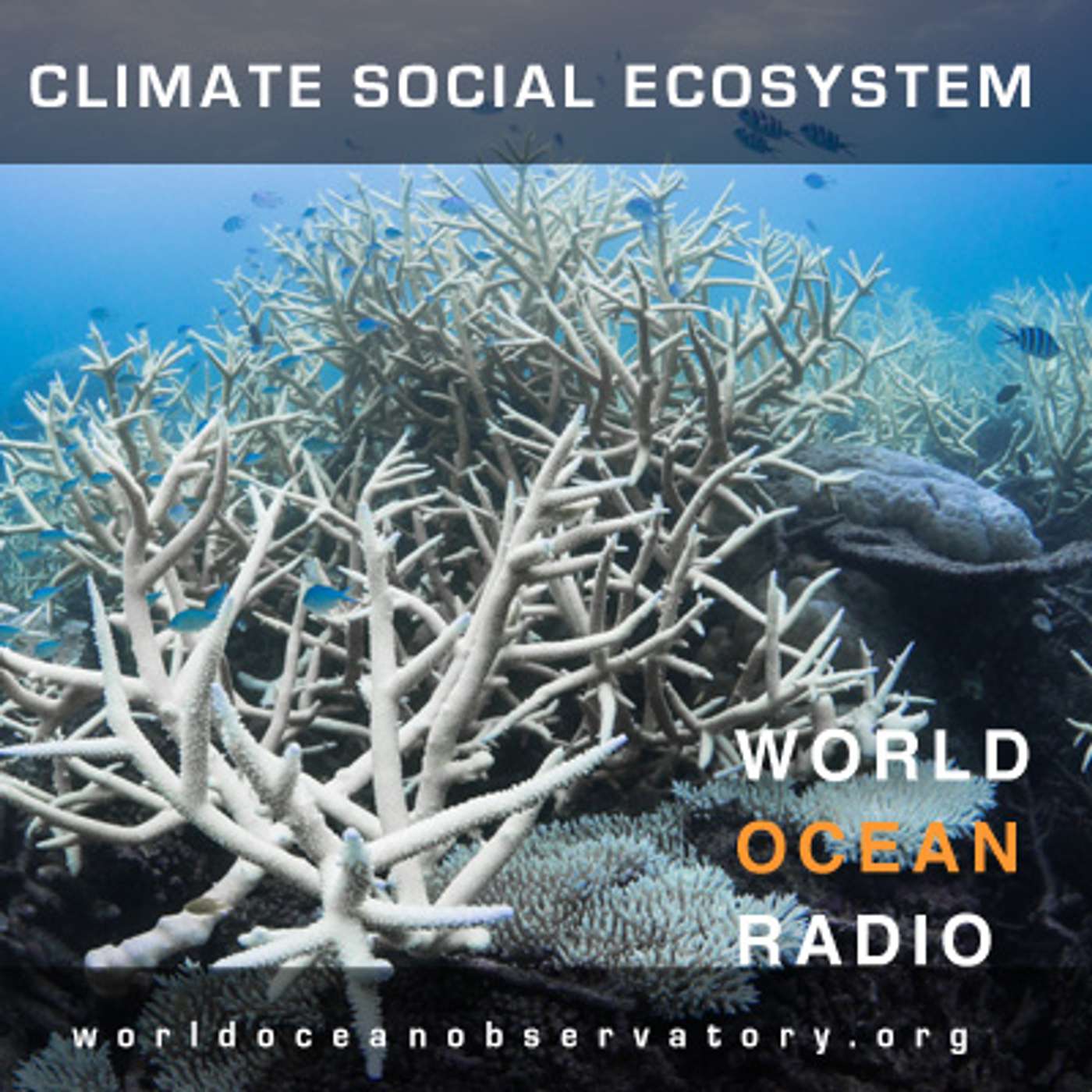


We are seeing examples every day of the cause-and-effect of climate change on ecosystems: temperature and species, rainfall and agriculture, drought and community, air quality and health, warming ocean water and migration of people and animals. What's it going to take to motivate change? Let's move beyond inadequate responses to inventive solutions, positive change, and embrace of new systems to provide unexpected outcomes to common problems.
About World Ocean Radio
World Ocean Radio is a weekly series of five-minute audio essays available for syndicated use at no cost by college and community radio stations worldwide. Peter Neill, Director of the World Ocean Observatory and host of World Ocean Radio, provides coverage of a broad spectrum of ocean issues from science and education to advocacy and exemplary projects.
World Ocean Radio
15 Years, 800+ Episodes
Ocean is climate
Climate is ocean
The sea connects all things
[intro music, ocean sounds]
Welcome to World Ocean Radio…
I’m Peter Neill, Founder of the World Ocean Observatory
A principal conclusion from modern natural science is that as climate changes ecosystems follow. If temperatures rise, species adapt and shift. If rainfall declines, plants are starved and agricultural opportunities demand more fertilizer, more unavailable irrigation, less successful harvest. We are seeing this phenomenon around us every day – across the country as drought and desertification force social consequence and community adaptation. If air quality changes, the normal health conditions of an urban environment decline: allergies intensify, lung conditions increase, respiratory disease expands, and the medical and public health response is taxed, over-whelmed. Those of us in lower Manhattan follow the 9/!1 attacks are still being tracked to follow the statistical, indeed personal, consequence of breathing in the toxic dust from that catastrophic event to the ongoing detriment of normal health.
There are numerous examples around us. Lobsters migrate from traditional feeding grounds farther offshore in climate-induced colder water. Birds or butterflies migrating along different long flight paths due to the changing landscape below for watering and rest. Refugees fleeing drought conditions or temperatures for tenable living, moving into Europe from Africa to change the traditional political balance or from the southern US to the northeast seeking habitable weather, exchanging extreme heat for livable cold. All species adaptable, by Nature, and so it should be no surprise that as climate changes, distribution and survivability patterns will also change in course and the social outcomes from food supply to highway traffic to stress on supply chains and public support systems under-designed to meet the new demand will inevitably follow.
Inherent in this reality would seem to be obvious solutions. Attack the problem at its source, and so if air or water quality are at risk, research the cause, invent the solution, and implement the positive change required to meet the negative condition. What amazes me is that simple logic, applied to the specific problem, is so often ignored in favor of what? Ignorance? Vested interest? How many times on World Ocean Radio have I asked “what will it take” to motivate change? And yet smart people over and over again defer to the status quo through inadequate response, including so often the affirmation of conditions that go directly and obviously against their self-interest. For example, in states where aridification and water scarcity are real, political support for conditions or institutions that enhance the challenge is sustained – a vote in direct contradiction to the solution of the problem. We see it over and over again. Veterans who oppose of the diminishment of veterans’ benefits; farmers who demand subsidy for equipment and markets that maximize short-term profits over long term productivity; and, yes, environmentalists who oppose clean alternative energy generation in favor of proven destructive conventional technology. The paradox is today most evident in the controversy over AI centers that, through massive consumption of energy and water, exacerbate existing vulnerabilities while undermining local, regional, and national employment, community development, and social stability. No wonder the fish move offshore, or the animals die off, or the people who have lived in that place for generations are now forced to find new places to settle and survive, challenging and displacing others already there.
What will it take? It will take the abrogation of the profit motive based on accelerated consumption in favor of a new system of incentives and rewards. It will take citizens that will no longer accept the consequences of decisions made against their public interest in favor of private profit. It will take the embrace of new technology that provides unexpected outcomes to common problems, without pollution and further degradation of the natural and social environment. It will take an expression of massive self-interest to demand in place a new system that contradicts the drought, the polluted air, the poisoned water, and all the deleterious human consequence that has so disastrously followed. It will take you and me to say “enough,” to demand the regeneration of a damaged ecosystem, to redress the social consequences, and to enact change toward the collective benefit and future sustainability of what we call “civilization.” Soon, we will have no choice.
We will discuss these issues, and more, in future editions of World Ocean Radio.
WORLD OCEAN RADIO IS DISTRIBUTED BY THE PUBLIC RADIO EXCHANGE AND THE PACIFICA NETWORK, FOR USE BY COLLEGE AND COMMUNITY RADIO STATIONS WORLDWIDE. FIND US WHEREVER YOU LISTEN TO PODCASTS, AND AT WORLD OCEAN OBSERVATORY DOT ORG.
[outro music, ocean sounds]