A Marine Wildlife Victory: Why New Protections for Manta Rays and Sharks Matter More Than Ever
The Hidden Crisis Facing Ocean Giants
Around the world, manta rays, devil rays, and sharks have been pushed to the brink by unchecked demand for their fins, gill plates, and meat. For years, conservationists have warned that international trade was outpacing these species’ ability to recover. Now, new global protections are finally giving these animals a fighting chance. This episode breaks down what changed, why it matters, and how these decisions could reshape the future of marine conservation.
Introduction
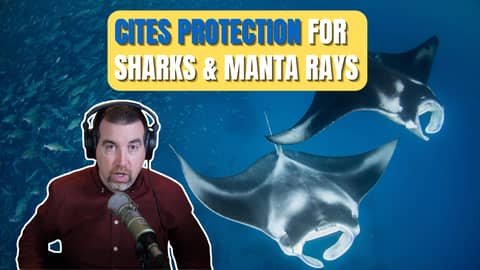
In this episode of How to Protect the Ocean, Andrew explores the newly strengthened CITES protections for manta rays, devil rays, thresher sharks, silky sharks, smooth hammerheads, and more. These species have long been hunted for international markets, and earlier levels of protection were not enough to stop severe declines. Now, many have been uplisted to Appendix I, cutting off international trade and opening the door for genuine recovery.
What You Will Learn
• Why manta rays, devil rays, and sharks need stronger protections
• How international trade contributed to population collapse
• What Appendix I status means and why it is a turning point
• Real examples of species that recovered after similar protections
• The role of science, monitoring, and funding in improving outcomes
• How these victories fit into the bigger picture of ocean conservation
The Crisis That Sparked Global Action
For years, manta rays and devil rays were targeted for their gill plates, sold in international markets under the belief that they held medicinal value. Sharks faced similar pressures, especially from the shark fin trade, where fins were worth far more than the meat itself.
The transcript highlights how little we still know about these species. As Andrew explains, we still lack key information on their migration patterns, reproduction, and full distribution, which makes them especially vulnerable. The combination of slow reproduction and intense trade pressure created the perfect storm.
One striking moment in the episode comes when Andrew notes that even with recent gains in research, “we still don’t know what makes them tick.” That lack of knowledge underscores how fragile these species are.
Why Appendix II Was Not Enough
Earlier CITES listings under Appendix II helped establish monitoring, permits, and required sustainable trade practices. This slowed the decline but didn’t stop it.
Countries differed greatly in enforcement. Some embraced the rules. Others ignored or circumvented them. Illegal trade continued through loopholes and weak regulation.
As population data improved, it became clear that Appendix II protections were not preventing dangerous declines, and conservation organizations pushed for the next step.
The Shift to Appendix I Protections
Appendix I is the highest level of CITES protection. It effectively bans international commercial trade in listed species or their parts.
This is the turning point highlighted in the episode. Now, trade in manta ray gill plates, shark fins from silky or hammerhead species, and other high-value products can no longer legally cross borders.
Andrew describes this moment as a breakthrough: a rare instance where global governments agree unanimously that ocean wildlife needs immediate intervention.
The uplift to Appendix I also triggers more funding for research, monitoring, and enforcement. As Andrew notes, “more money is alleviated to study these animals and monitor and protect and educate people.”
Proof That These Protections Work
The episode highlights several species whose recovery was aided by similar protections:
• Mediterranean monk seals once numbered fewer than a dozen in some regions. After Appendix I protections and strict enforcement, populations stabilized and later increased.
• Hawaiian monk seals also benefited from focused protection and habitat recovery efforts.
• Olive ridley sea turtles, once heavily targeted for leather and eggs, saw dramatic improvement after international trade restrictions.
These examples provide real-world evidence that international trade bans can reverse declines, especially when paired with local conservation action.
Why This Matters For The Ocean
Protecting sharks, manta rays, and devil rays does more than save individual species. These animals play critical roles in ocean ecosystems.
• Sharks keep fish populations balanced
• Manta rays support planktonic food webs
• Devil rays connect nutrient cycles across vast distances
When their numbers drop, entire ecosystems lose stability. The new protections represent a major shift toward valuing marine wildlife not for their parts, but for their ecological importance.
This is a global victory for marine biodiversity, for science, and for every community that depends on a healthy ocean.
What You Can Do
Here are simple actions that make a real impact:
Share this episode to help others understand why these protections matter.
Support organizations working on shark and ray conservation, such as Manta Trust or Shark Trust.
Avoid products tied to unsustainable fishing, including uncertified fish, marine curios, and traditional medicines containing marine ingredients.
Speak up when your region considers legislation that affects marine protection.
Learn more about CITES and how the global wildlife trade impacts ecosystems.
Call to Action
Listen to the full episode and subscribe to the podcast to stay updated on the latest ocean conservation breakthroughs.

CEO

How Microbes Are Nature’s Cleanup Crew for Ocean Pollution


