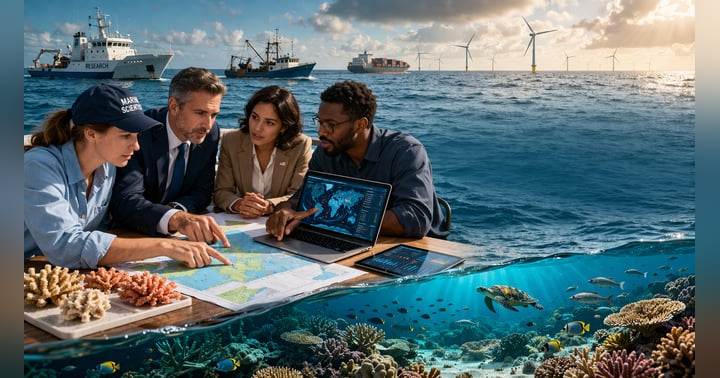
How Business and Storytelling Are Changing Ocean Conservation

What if saving the ocean isn’t just about better science…
but about better business and better storytelling?
Because right now, that’s exactly what’s happening.
Introduction
Ocean conservation is evolving.
For decades, the focus has been on research, data collection, and policy. But today, a new model is emerging, one where business, investment, and communication play just as important a role as science.
In this episode of How to Protect the Ocean, Andrew Lewin speaks with Peter Simek, CEO of EarthX, about how global conferences are helping bring together unlikely partners to build real-world solutions.
What You Will Learn
Why science alone cannot scale ocean solutions
How businesses are becoming key players in conservation
The role of collaboration across industries
Why storytelling drives action more than data
How conferences like EarthX accelerate real-world impact
The Shift from Science to Solutions
Science has helped us understand ocean problems in incredible detail.
We know about overfishing, climate change, pollution, and biodiversity loss.
But understanding a problem is not the same as solving it.
Peter Simek explains that solutions only move forward when they become scalable. That often requires funding, partnerships, and business models that allow ideas to grow beyond pilot projects.
Why Business Is Now Part of Conservation
One of the biggest changes in ocean conservation is the involvement of business.
Startups, investors, and corporations are beginning to see environmental challenges as opportunities to innovate.
This shift is critical.
Businesses bring:
Speed
Funding
Scalability
Without these elements, even the best scientific solutions can remain stuck in early stages.
Collaboration Is the Real Catalyst
A key theme from the conversation is collaboration.
Ocean problems are complex, and no single group can solve them alone.
At EarthX, scientists, policymakers, investors, and business leaders are brought together in the same space. These interactions often lead to partnerships that would not happen otherwise.
And those partnerships are where real progress begins.
Storytelling Drives Action
Another major takeaway is the importance of storytelling.
Data alone rarely motivates people to act.
Stories connect with emotions, values, and priorities.
Whether it is convincing investors, engaging the public, or influencing policymakers, the way a message is communicated can determine whether a solution gains traction.
Why This Matters
Ocean conservation is entering a new phase.
It is no longer just about identifying problems.
It is about building solutions that can scale globally.
That requires a mix of science, business, collaboration, and storytelling.
And understanding how those pieces fit together is essential for anyone who wants to make a real impact.

CEO

Why Storytelling Might Be the Most Powerful Ocean Solution