How Do We Know If Tuna Is Running Out?
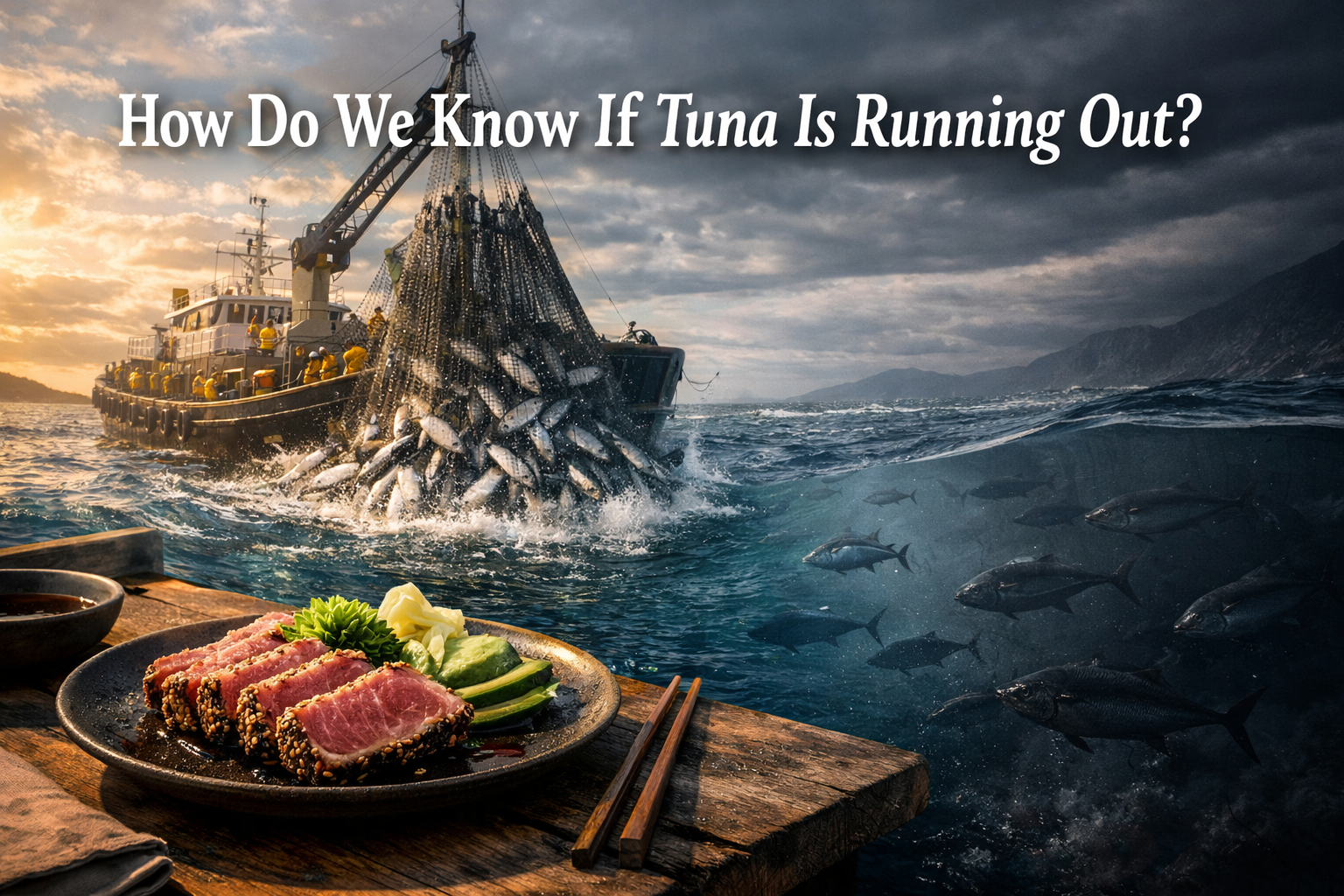
Every time you eat tuna, you’re trusting a system you’ve probably never heard of.
That system is trying to answer one question:
Are we taking too much from the ocean… or just enough?
Because if we get that answer wrong, tuna populations don’t slowly decline, they can collapse.
What You Will Learn
What a tuna stock assessment actually does
How scientists estimate fish populations in the open ocean
Why uncertainty is part of the process
How decisions used to ignore science
What changed to improve tuna sustainability
The Hidden System Behind Tuna
Tuna don’t stay in one place.
They move across entire ocean basins, crossing national borders constantly. That means no single country controls them.
Instead, multiple countries must agree on how much tuna can be caught.
To guide those decisions, scientists run stock assessments.
They use:
catch data
fishing effort
biological information
Then they build models to estimate how many fish are in the ocean and how much fishing pressure the population can handle.
Why This Is So Difficult
You can’t count every fish in the ocean.
So scientists rely on models and the best available data.
That creates uncertainty.
But uncertainty doesn’t mean guesswork.
It means making informed decisions based on evidence, trends, and probabilities.
And in a global fishery worth billions, those decisions matter.
Where Things Used to Break Down
For a long time, the science was not the problem.
The problem was what happened after.
Scientists would recommend catch limits.
But countries would negotiate those limits higher.
Or fail to agree altogether.
That gap between science and decision-making is where fisheries get into trouble.
What Changed the System
Things started to improve when multiple groups aligned:
scientists producing better data
industry sharing information
buyers demanding sustainability
organizations pushing accountability
Harvest strategies also changed the game by setting rules in advance, reducing the chance for short-term political decisions.
This helped shift the system toward following the science.
Why This Matters
Tuna is one of the most valuable and widely consumed seafood products in the world.
If stock assessments fail:
fisheries collapse
livelihoods are lost
ecosystems are damaged
But when they work, they prove something important:
We can manage ocean resources sustainably.

CEO

Why Tuna Fisheries Matter More Than You Think




