Nature's Kidneys: How Coastal Wetlands Filter Nitrogen Pollution for Free
Green water. A smell that won't go away. Sometimes, dead fish washing up on shore. That's what too much nitrogen does to a coastline, and if you've been following ocean news lately, it can feel like one more thing to be anxious about. It isn't. This is one of the more fixable problems the ocean is facing, and there's already a working, natural solution doing the job.
Nitrogen itself isn't the villain. It's essential to life and it's why fertilizer works at all. The problem is that human activity, fertilizer production and fossil fuel combustion in particular, has roughly doubled the natural rate of nitrogen entering ecosystems. Unlike carbon dioxide, which spreads out and warms the whole planet, nitrogen's damage is local and immediate. Too much of it in one estuary, and you get algal blooms, oxygen dead zones, fish kills, and in bad cases, red tide.
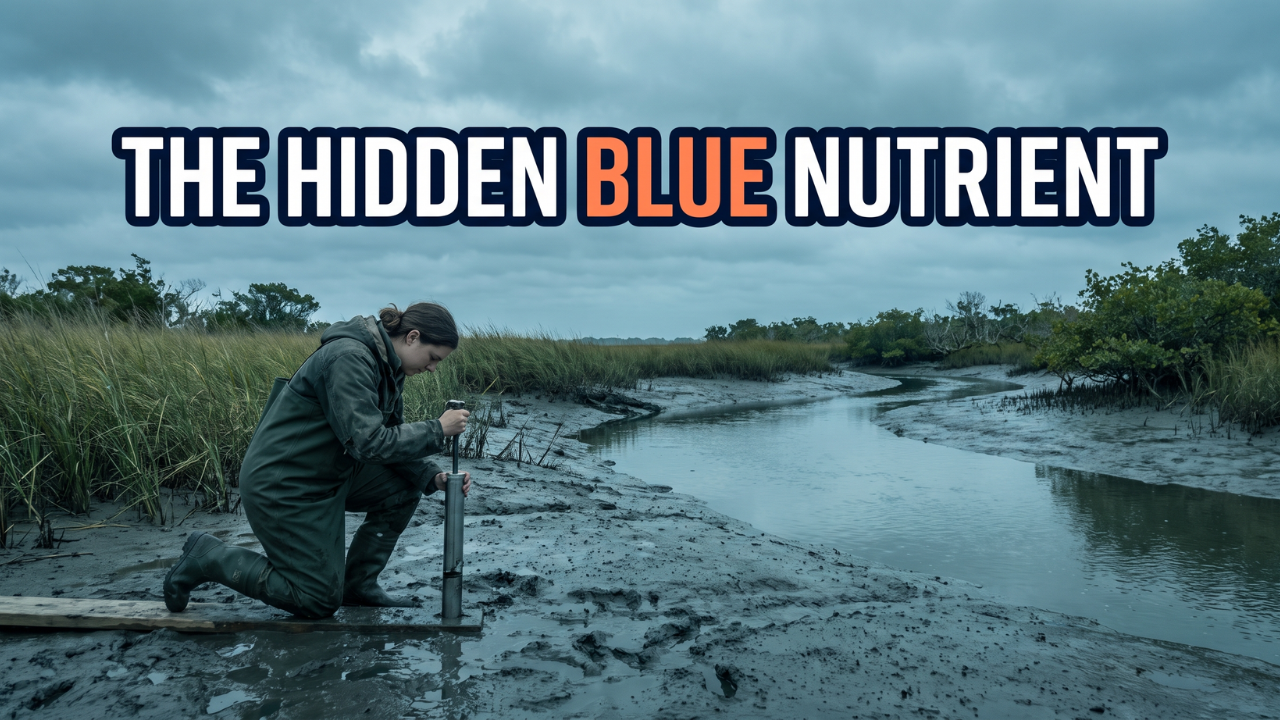
Here's what most people don't know: coastal wetlands, salt marshes, and mangroves don't just store carbon. They pull nitrogen straight out of the water before it ever reaches a bay. Plant roots take the nitrogen up because they need it to survive, waterlogged soil starves out the bacteria that would otherwise release it back into circulation, and it locks away in the mud for centuries. It's the same lack of oxygen that lets a body found in a peat bog stay preserved for hundreds of years, just applied to nutrient pollution instead.
A study by Skidmore and Karwowski, published in the Journal of the Association of Environmental and Resource Economists, looked at roughly 9,000 wetland easements across the Mississippi River Basin between 1990 and 2018. Restoring a single 100-acre wetland cut nearby ammonia by 62 percent and total nitrogen by 37 percent, and saved local water treatment systems about $17,000 a year, all within just three years. A patch of wetland smaller than most farms was doing the job of a municipal water treatment plant, for free, just by existing.
Tampa Bay is the clearest proof this works at scale. Between the 1950s and 1970s, the bay's population exploded, from roughly 400,000 people to over a million, once air conditioning made Florida livable year-round. Development paved over the mangroves and marshes that had filtered the bay's water for centuries, untreated and lightly treated sewage poured in, nitrogen fed algae blooms that blocked the sunlight, and seagrass collapsed to near nothing.
The turn came after a 1974 60 Minutes segment held the bay up as a pollution poster child and public pressure followed. Florida's Grizzle-Figg Act forced wastewater treatment plants to strip nutrients out before discharge. In 1991, the Tampa Bay Estuary Program formed a Nitrogen Management Consortium that coordinated over 500 separate nutrient-reduction projects across industry, agriculture, and local government, alongside active habitat restoration rebuilding mangrove and marsh acreage.
The results: nitrogen flowing into the bay from wastewater sources dropped by about 90 percent. Seagrass went from roughly 21,600 acres in 1982 to over 40,000 acres by 2015, nearly doubling and covering an area close to the size of Manhattan. A bay written off as dead in the 1970s now underpins about 1 in 5 jobs in the region, largely through tourism the healthy bay supports. It's worth being honest that the wastewater treatment upgrades were the biggest single lever in the initial turnaround. Habitat restoration is what's carrying more of the ongoing filtering load today, as the region keeps growing.
Non-point source pollution (runoff that doesn't come out of a single identifiable pipe) is harder to regulate, and it's exactly where coastal wetlands do the most good. The Everglades, for example, is a huge natural sink for nitrogen, taking it up into its system before it ever reaches the coast. The Mississippi River tells the other side of that story: fertilizer runoff from the entire basin flows down to the Gulf of Mexico, feeding springtime phytoplankton blooms that die, sink, and get broken down by bacteria that strip oxygen from the bottom layer of the Gulf in that area, creating a seasonal dead zone.
Zoomed out, the world has lost roughly 20 percent of its mangroves since 1980, mostly to coastal development, per FAO and Global Mangrove Watch data (a summary of UN figures, not itself peer-reviewed research). It's the exact same pattern that nearly destroyed Tampa Bay. But global blue carbon habitat, mangroves, marshes, and seagrass combined, is still valued at close to $191 billion a year in climate benefit alone, and that's before counting what it's worth for nutrient filtering.
There's a harder lesson buried in here too. In the Mississippi Delta in the 1970s and 80s, engineers hardened parts of the coastline with concrete to stop erosion in places slated for development. What they later realized is that hardening one stretch just moved the erosion elsewhere in the Delta, often onto Indigenous land nearby that had nothing to do with the original decision. That's led to a newer push to soften shorelines again, so the Delta can rebuild what it used to do naturally.
What you can actually do: cut back on synthetic lawn fertilizer this season, or switch to a slow-release or organic option. It won't green up your lawn quite as fast, but it's the exact runoff that overwhelms a coastal wetland's filtering capacity once it reaches a stream or a bay. On the policy side, this isn't only an individual choice. Tampa Bay turned around because government regulated point-source discharge and stuck with it. Where that regulation lapses, this problem gets worse, especially as climate change intensifies these events.
Takeaways:
- Excess nitrogen, not nitrogen itself, is what causes algal blooms, red tide, and dead zones.
- Coastal wetlands filter nitrogen out of the water for free, then lock it away in oxygen-starved mud for centuries.
- A restored 100-acre wetland cut nearby ammonia by 62% and total nitrogen by 37% within three years, saving $17,000 a year in treatment costs.
- Tampa Bay's seagrass nearly doubled after regulation and habitat restoration, and the bay now supports about 1 in 5 regional jobs.
- Cut back on synthetic lawn fertilizer, or switch to slow-release or organic options, to reduce runoff at the source.

CEO
Blue Nitrogen: The Nutrient Story Coastal Wetlands Have Been Hiding


