Northern Right Whale Numbers Rise: What It Means for an Endangered Giant
The crisis facing the Northern Right Whale is urgent, and the stakes could not be higher.
With only 384 individuals left, every birth, every loss, and every policy decision matters. For the first time in years, the population did not decline. It rose slightly. This fragile increase is a spark of hope for a species pushed to the edge by ship strikes, fishing gear entanglement, and a rapidly changing ocean. It is a moment worth examining closely because it reveals both progress and danger.
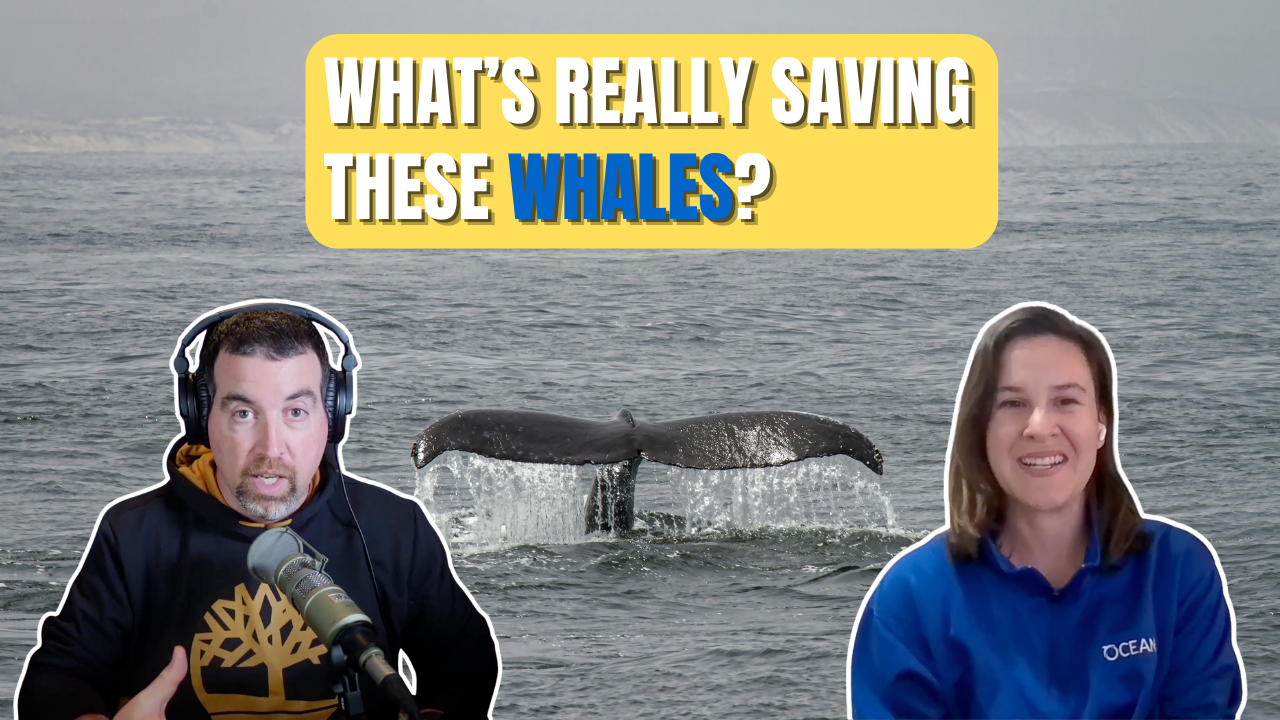
In this episode of How to Protect the Ocean, Andrew Lewin speaks with Nora Ives of Oceana, a scientist, educator, storyteller, and campaigner who works directly on Northern Right Whale conservation. Together, they examine what this population bump really means and what must happen next to keep these whales alive.
What You Will Learn
• Why Northern Right Whale numbers rose for the first time in years
• How ship strikes and fishing gear entanglement continue to threaten recovery
• The role of storytelling in marine conservation
• What monitoring reveals about whale behavior and distribution
• Actions Oceana is taking to push governments and industries to change
• Why individual stories, like a rare new calf, matter so much
The Story Behind the Numbers
For years, scientists have watched Northern Right Whale counts slip lower. This year, the number moved in the opposite direction. It is only a slight rise, but for a species this close to extinction, even little progress can spark scientific and emotional relief.
As Andrew notes in the episode, the increase is just 2 percent, leaving the question: Is it meaningful or misleading? Nora unpacks how complex population estimates can be and explains why one good year does not mean the crisis is over.
“It’s a small glimmer of hope,” Andrew says, and that framing guides the entire discussion.
Ship Strikes and Entanglement: The Two Biggest Killers
The transcript highlights two primary threats:
• Ship strikes
• Fishing gear entanglement
These hazards are not hypothetical. They kill whales every year, and both problems are worsening as whales shift their distribution in response to climate change.
Nora points out that even a single entanglement or a single high-speed vessel can undo hard-won conservation progress. The whales face a dangerous world where the line between survival and loss is razor-thin.
The Power of Storytelling in Conservation
One of the most compelling parts of the interview is Nora’s emphasis on storytelling. She describes how sharing narratives about individual whales, families, migrations, and struggles helps people connect emotionally with a species they may never see.
Andrew echoes this, calling storytelling an essential piece of the “weaponry” of conservation. Facts motivate policy, but stories inspire people.
A standout example from the conversation is the description of a mother whale in her late teens or early twenties who finally had a new calf after many years. Stories like this make the crisis real and offer a glimpse of resilience.
Why Monitoring Efforts Matter
Monitoring gives scientists priceless information on where whales travel, how they behave, and what risks they face. Nora explains how these efforts uncovered shifts in migration routes and surprising individual movements, including whales seen in places not previously documented.
These insights drive decisions on vessel slowdowns, fishery closures, and habitat protection. Without monitoring, managers would be blind, and whales would be unprotected.
Why This Matters For The Ocean
The Northern Right Whale is more than an endangered animal. It is a symbol of how human activity reshapes marine ecosystems.
Saving the species requires addressing climate change, reducing shipping risks, redesigning fisheries, and rethinking how industry interacts with wildlife. Right Whales remind us that ocean conservation is interconnected: protecting one species protects an entire ecosystem.
If we fail to act, we will lose a whale that once dominated Atlantic waters. If we succeed, it will be a global example of what determined conservation can achieve.
What You Can Do
1. Support organizations working on whale conservation
Groups like Oceana advocate for policy changes, vessel speed rules, and safer fishing gear.
2. Share accurate information
Help raise awareness by sharing episodes, articles, or research so more people understand the crisis.
3. Choose responsible seafood
Selecting sustainably caught seafood reduces the risk of whale entanglement.
4. Back science-driven policy
Support policies that require vessel slowdowns or gear modernization.
5. Follow and amplify conservation storytellers
Voices like Nora’s help the public connect emotionally with threatened wildlife.
Listen to the full episode and subscribe to the podcast to stay informed about how you can help protect the ocean.

CEO
The Hidden Costs of Seafood: Who Really Pays for “Sustainable” Tuna?