The African Penguin Crisis, Why 95 Percent of a Species Vanished in Just a Few Years
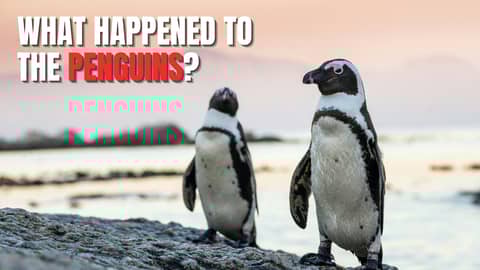
What happens when a species that once filled beaches with sound and movement collapses to fewer than ten thousand breeding pairs, and almost no one sees it happening until it is nearly too late? The African penguin is facing a devastating spiral toward extinction, and new research finally reveals why these beloved birds starved by the tens of thousands while the world looked away.
Introduction
This episode of How to Protect the Ocean uncovers the shocking truth behind the African penguin die off, where colonies in South Africa lost up to ninety-five percent of their birds between 2004 and 2011. Once home to more than fifty-seven thousand breeding pairs, the species now stands at roughly ninety-nine hundred. Andrew walks through what happened, why the penguins could not recover, and what must change if we want to save one of the ocean’s most iconic species.
What You Will Learn
Why African penguins starved to death during their most vulnerable life stage
How the collapse of sardine populations triggered a mass penguin die off
Why warming oceans and shifting plankton pushed prey out of reach
What conservation groups are doing and why it is not enough
How climate change and overfishing combine to create food web collapse
What actions you can take to support penguin recovery
What Happened to the African Penguins
In 2004, African penguins had around 57,000 breeding pairs across their range. Today there are roughly 9,900 breeding pairs left worldwide . Two major colonies, Dassen Island and Robben Island, lost up to 95 percent of their penguins in under a decade. More than sixty thousand penguins starved during molt, a period when they cannot leave land and must live entirely on stored fat.
These colonies, once packed with life, now sit nearly empty. Their disappearance was not the result of disease or predators, but of hunger.
Why the Sardine Collapse Triggered a Disaster
Sardines are the penguins’ primary food source. They provide the dense energy penguins need to survive molt and raise their chicks. But from 2004 onward, sardine biomass crashed to less than a quarter of its historical maximum, and it stayed low for almost twenty years.
Warming waters changed plankton patterns, salinity shifted, and industrial fishing continued to remove sardines from the ecosystem. When penguins went to sea to build up fat reserves before molt, they simply could not find enough food.
A striking moment from the episode captures this reality: “More than sixty thousand birds starved during their most vulnerable life stage.”
It is a sentence that lands with emotional weight because every one of those birds starved quietly onshore.
Why Penguins Could Not Recover
Even after the initial collapse, the sardines never rebounded. Anchovies, their next best prey, shifted eastward and outside the penguins’ foraging range. Penguins cannot abandon their nesting sites, especially while raising chicks, and they cannot travel long distances for food.
With low energy prey and repeated food shortages, chicks died, adults molted underweight, and the population spiraled downward year after year . Replacement species like hake were too fast, too sparse, or too low in fat to help.
This was not a one-time event. It was a compounding crisis.
What Conservation Groups Are Doing
Conservation organizations and government agencies are working hard to slow the decline. These efforts include:
Fishing closures around key colonies
Improved nesting shelters and predator management
Rescue and rehabilitation of starving adults and abandoned chicks
Tracking studies to identify new feeding hotspots
These actions help individual birds, and they matter deeply. But as the episode notes, “Efforts are slowing the decline rather than reversing it.”
The core issue, the collapse of sardines, has not been solved.
Why This Matters For The Ocean
The African penguin crisis is a warning sign for the entire marine ecosystem. Sardines support not just penguins, but seals, whales, seabirds, and coastal fisheries. When prey collapses, predators collapse behind them.
This is a clear example of how climate change, overfishing, and shifting food webs interact to destabilize entire ecosystems. If sardines can vanish this quickly, other small forage fish could follow. And with them, the species that depend on them.
The penguin story is not only about penguins. It is about the health of the ocean itself.
What You Can Do
Here are meaningful ways listeners can help support African penguin recovery:
Support organizations working directly on penguin and sardine conservation
Share science-based information on climate impacts and overfishing
Choose sustainable seafood whenever possible
Advocate for marine protected areas and science-driven fisheries policies
Amplify this story so the scale of the crisis reaches more people
The decline went silent for far too long. Awareness is the first step toward action.
Call to Action
To hear the full story, including the emotional details and scientific insights behind this collapse, listen to the full episode and subscribe to the How to Protect the Ocean podcast.

CEO
How Microbes Are Nature’s Cleanup Crew for Ocean Pollution


