The Orcas Changing Antarctica Faster Than Scientists Expected
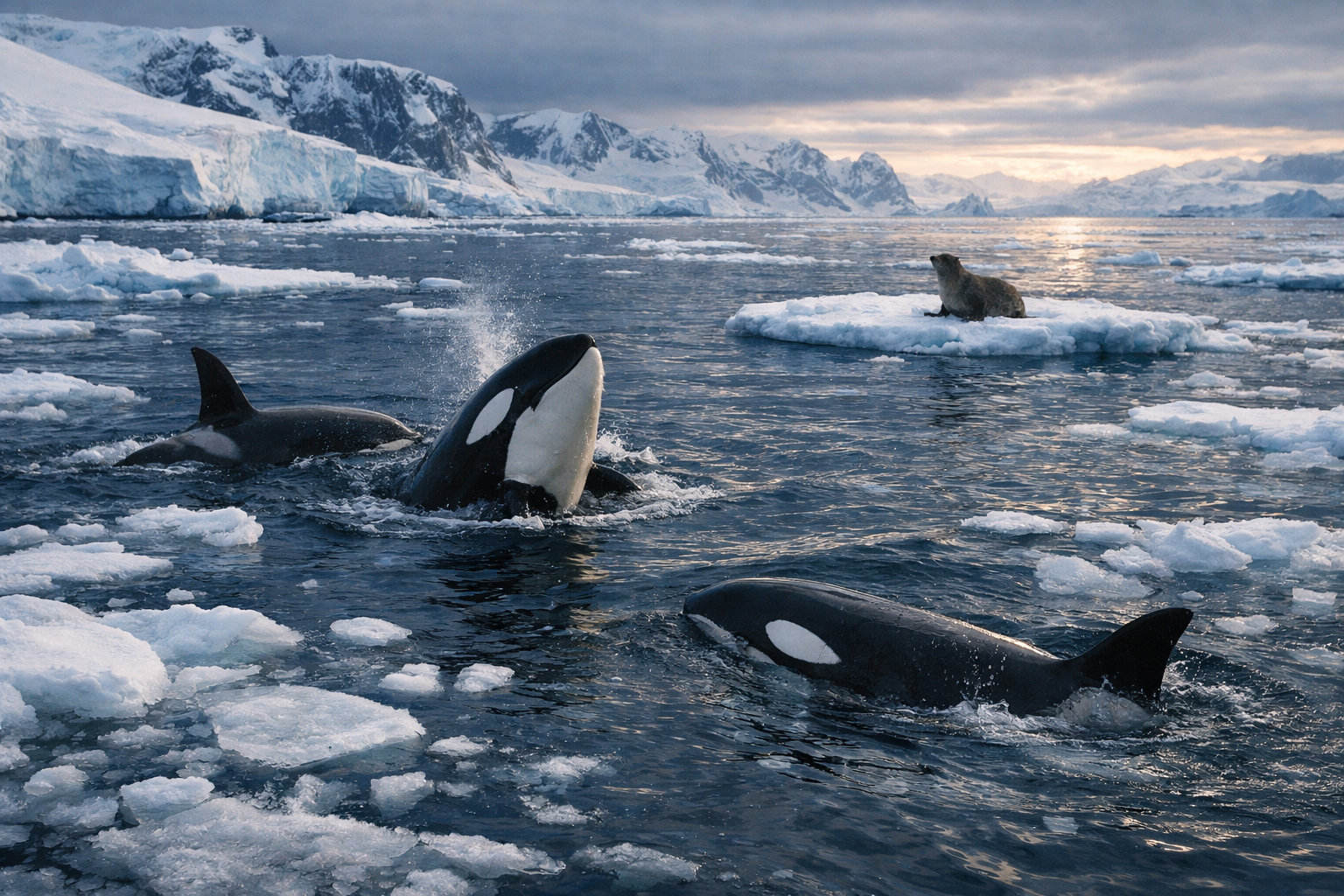
When most people think about Antarctica, they picture a frozen, remote place that changes slowly.
But that image is starting to break down.
In this episode of How to Protect the Ocean, we look at how Antarctic orcas may be changing the ecosystem faster than scientists expected. These animals are not just top predators moving through an icy landscape. They are specialized hunters, cultural learners, and ecosystem shapers that may be gaining new advantages as sea ice retreats.
Antarctica’s orcas are not all the same
One of the most important ideas in this episode is that Antarctic orcas are not a single uniform population. They are made up of multiple ecotypes, including Type A, B1, B2, and C, each with different diets, behaviors, and hunting styles.
That matters because it changes how we understand the Southern Ocean food web.
These are not just whales living in the same place. They appear to be highly specialized groups that rarely mix, and some may even be on separate evolutionary paths. In other words, Antarctica does not have one orca story. It has several, and each one may affect the ecosystem differently.
Orcas are hunters, but they are also teachers
One of the most striking behaviors discussed in the episode is wave-washing, where orcas work together to create waves that knock seals off ice floes.
It is one of the clearest examples of coordinated hunting in marine mammals.
But what makes this behavior even more remarkable is that it does not look random. It looks learned. Research suggests these hunts involve timing, teamwork, and specific roles, which points to culture rather than pure instinct.
That matters for conservation because when a population has culture, losing one group means losing more than numbers. You can lose hunting knowledge, social patterns, and behaviors that took generations to develop.
Climate change may be giving orcas new access
As Antarctic ice declines, the ocean is opening up in ways that may give orcas access to places they could not reach as easily before.
That creates pressure on species like seals and penguins that already depend on sea ice for survival.
So now, prey animals may be facing two major changes at once: habitat loss and more exposure to highly effective predators. That does not mean orcas are the villain in the story. It means climate change is reshaping the rules of the ecosystem, and orcas are responding quickly.
This is where the episode gets especially interesting.
Orcas may not just be adapting to environmental change. They may be helping drive it through shifts in predation pressure, prey movement, and food web structure.
Antarctica is still full of unknowns
The episode also highlights how much we still do not know.
We do not fully know the population sizes of every Antarctic orca ecotype. We do not know how climate change will affect each group differently. We do not know how human activity may disrupt their behavior or culture.
And that creates a real conservation problem.
You cannot protect what you do not fully understand.
Antarctica has always been difficult to study because of distance, ice, weather, and logistics. But as the region becomes more accessible through melting, scientists are racing to understand what is happening before major ecosystem changes outpace the research.
Why this episode matters
This episode is about more than orcas.
It is about how fast ecosystems can change when climate pressure, habitat shifts, and predator behavior all collide in one place. Antarctica is often treated like a distant wilderness, but what happens there matters to the global ocean.
If orcas are helping reshape the Southern Ocean in real time, then understanding them becomes essential to understanding Antarctica’s future.
Listen to the episode
In this episode, you will hear:
Why Antarctic orcas are more diverse than most people realize
How coordinated hunting may reflect animal culture
Why shrinking sea ice changes the balance between predators and prey
Why scientists may still be behind in understanding one of the ocean’s most powerful animals
Follow How to Protect the Ocean for more daily ocean science updates.

CEO

The Tuna Comeback You Haven’t Heard About




