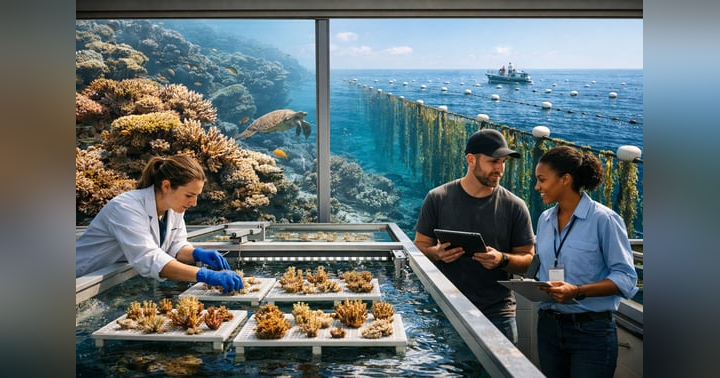
Why Storytelling Might Be the Most Powerful Ocean Solution
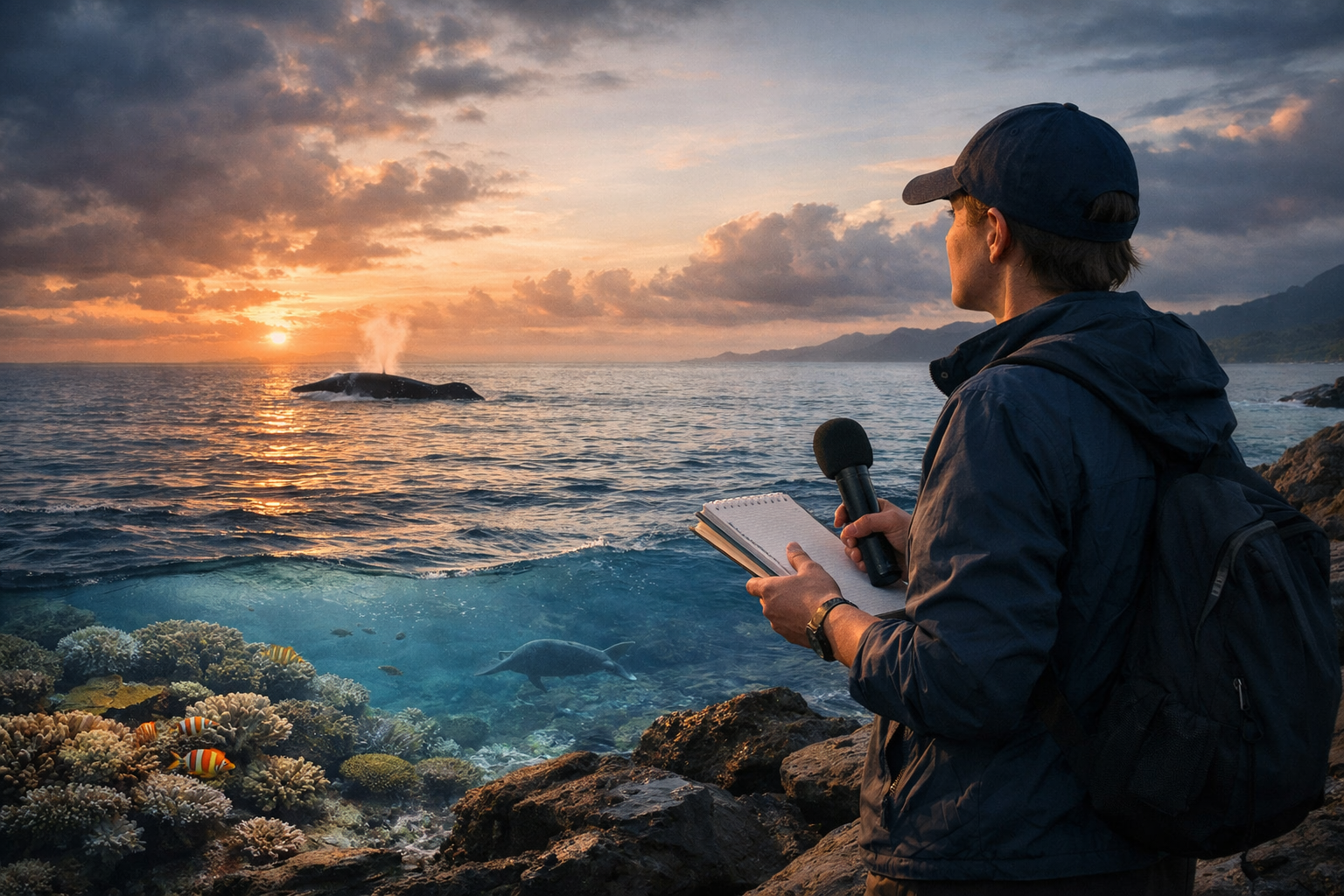
What makes people care enough to protect the ocean?
It is not usually a graph.
It is not usually a statistic.
And it is definitely not another headline telling people that everything is getting worse.
The truth is simple: facts can inform people, but stories move them.
That matters because ocean conservation does not succeed when people only understand a problem. It succeeds when people feel connected to it, when they see themselves in it, and when they believe their actions matter.
In this episode of How to Protect the Ocean, I explore why storytelling may be one of the most powerful tools we have for ocean conservation, and why the future of science communication depends on our ability to turn data into meaning.
Why Facts Alone Often Fail
Ocean science gives us important information.
We can measure coral bleaching, overfishing, biodiversity loss, warming seas, and pollution with incredible precision. We have more data than ever before. But data alone does not guarantee action.
That is where many conservation efforts run into trouble.
For years, environmental messaging has leaned heavily on crisis, collapse, and urgency. Those things are real, and we should not downplay them. But when people are constantly exposed to overwhelming information without a sense of hope or agency, they often shut down instead of stepping up.
This is one of the biggest communication problems in conservation today.
If people feel powerless, they disengage. If they feel blamed, they turn away. If the message feels too big or too abstract, they do not know what to do next.
So the problem is not just that people do not know enough.
The problem is that many messages are not built to connect.
Why Storytelling Works Better
Stories help people make sense of information.
They take something complex and make it human. They create emotion, context, and memory. They help people understand not just what is happening, but why it matters.
That is what makes storytelling so powerful in ocean conservation.
You can tell someone that fish populations are under pressure.
Or you can tell the story of a coastal community where families have depended on those fish for generations, and now the catch is smaller, the trips are longer, and the future feels uncertain.
Those two messages may point to the same issue.
But only one is likely to stay with the listener.
Stories work because people remember people. They remember stakes. They remember moments. They remember emotion.
When we use storytelling well, we do not weaken the science. We make it land.
The Doom Problem in Conservation Messaging
A lot of conservation communication still assumes that if people hear enough bad news, they will finally act.
But fear without direction usually creates paralysis.
That is why doom-heavy messaging often struggles. It can make people feel overwhelmed instead of motivated. It can make the ocean feel like a lost cause instead of a place worth fighting for.
This does not mean we should avoid hard truths.
It means we should frame those truths in a way that gives people a reason to care and a pathway to respond.
The best storytelling does both.
It tells the truth about what is at risk, while also reminding people what is still possible.
That combination matters. It creates emotional honesty without trapping the audience in hopelessness.
Real Examples of Storytelling That Connects
One of the most memorable examples in environmental communication came from the United Nations Development Programme.
They launched a campaign featuring a talking dinosaur delivering a warning about extinction. It was funny, surprising, and easy to share. More importantly, it cut through the noise.
People paid attention because it did not sound like the usual environmental message.
That is the lesson.
If your message feels predictable, people tune out. If it creates curiosity and emotion, they lean in.
Organizations like SeaLegacy also understand this well. Their visual storytelling does not just document ocean life, it creates a relationship between the audience and the subject. A photograph of a whale, shark, or reef can do more than illustrate a problem. It can create empathy.
And empathy is a powerful driver of conservation.
People protect what they feel connected to.
Why This Matters for Ocean Conservation
The ocean can feel distant to a lot of people.
Many people do not dive on coral reefs. They do not work in fisheries. They do not see marine ecosystems every day. That means ocean conservation often has to overcome a gap in proximity.
Storytelling helps close that gap.
It brings the ocean into everyday life.
It helps someone understand that seafood choices, coastal protection, climate impacts, biodiversity loss, and marine policy are not separate issues happening somewhere far away. They are part of a larger human story about food, livelihoods, culture, identity, and the future.
That is when conservation becomes relevant.
Not when it is reduced to a technical issue, but when it is framed as something that affects real people in real ways.
How Scientists and Communicators Can Improve
If you communicate about the ocean, the goal is not just to explain better.
The goal is to connect better.
That starts with knowing your audience. What do they care about already? What values shape how they see the world? What language makes sense to them?
From there, you can build a message that meets them where they are.
That means using fewer technical terms when plain language will do the job. It means focusing less on what you want to say, and more on what your audience needs to hear in order to understand and care.
It also means making the audience part of the story.
People are more likely to act when they see themselves in the solution. If they only hear about experts, institutions, and systems, they may admire the work but feel removed from it. If they see how they fit into the story, they are more likely to respond.
Storytelling Is Not Extra, It Is Essential
Too often, storytelling is treated like a nice add-on.
The science comes first, and the story gets added later.
But in reality, storytelling is part of how science reaches people.
Without it, even the strongest research can fail to resonate. Without it, critical conservation messages can disappear into the noise. Without it, people may understand a fact but never feel compelled to do anything about it.
That is why storytelling is not optional.
It is the multiplier.
It helps science travel farther, land deeper, and matter more.
If we want people to protect the ocean, we need more than accurate information.
We need stories that make that information unforgettable.
Listen to the Episode
In this episode of How to Protect the Ocean, I break down why storytelling matters so much in conservation, why crisis-heavy messaging often backfires, and how better communication can turn ocean science into action.
Follow How to Protect the Ocean on your favorite podcast app, and share this episode with someone who cares about the future of the ocean.

CEO
Why Ocean Solutions Depend on Collaboration Across Industries