Why You Should Think Twice Before Eating Squid
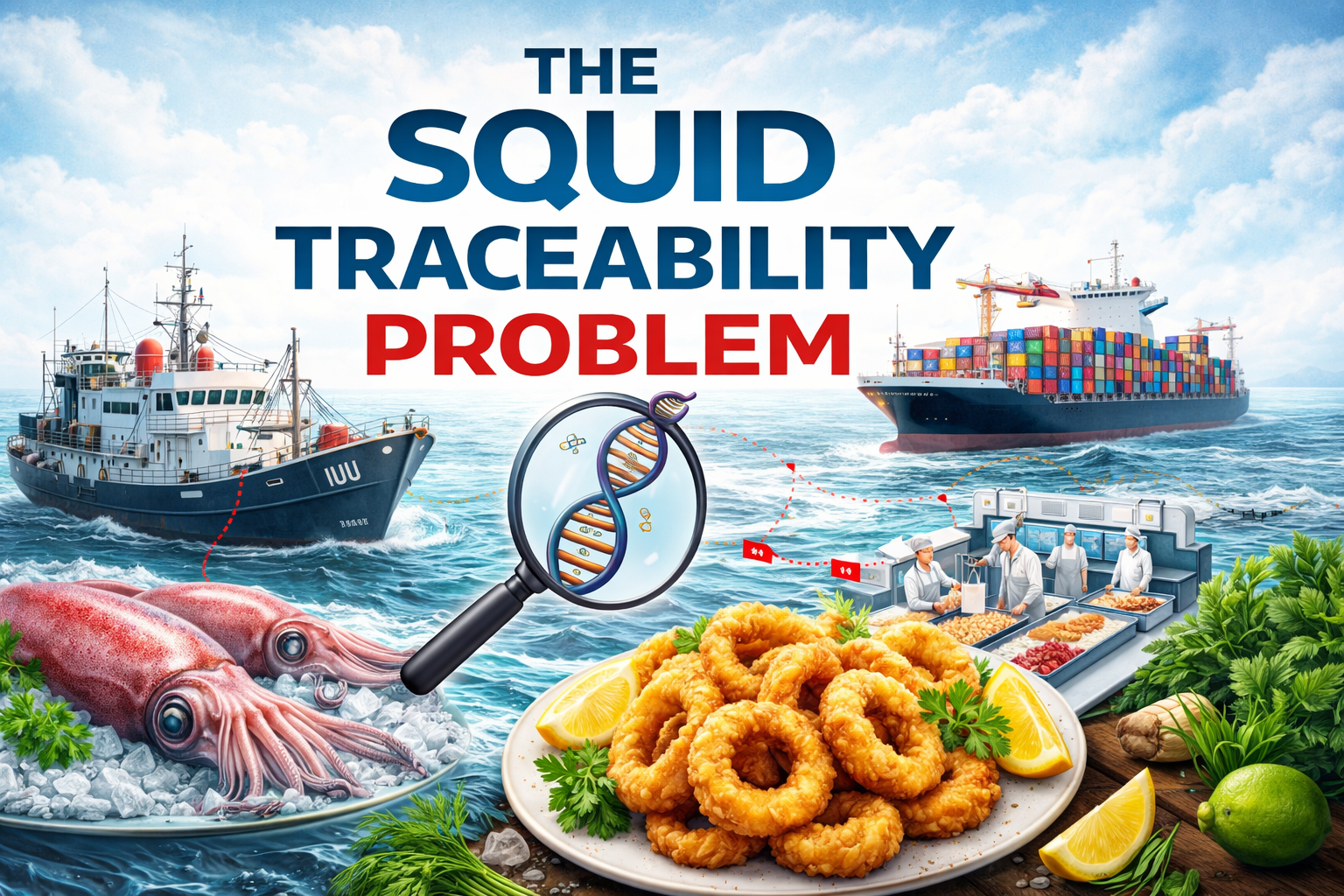
The hidden problem behind your calamari
When you order calamari at a restaurant, you probably don’t think twice about it.
It’s just squid, right?
But here’s the problem: there are over 300 species of squid, and most restaurants cannot tell you which one you are eating, where it came from, or how it was caught.
That lack of information matters more than you might think.
Because behind that plate of calamari could be a global supply chain linked to unregulated fishing, poor traceability, and even human rights abuses.
Introduction
In this episode of How to Protect the Ocean, I speak with marine biologist and Oceana policy advisor Marine Cusa about one of the most overlooked issues in seafood sustainability: squid fisheries and seafood labeling.
Using DNA analysis, Marine and her team uncovered what species are actually being sold as “squid” and where they come from.
What they found reveals a major gap in seafood transparency.
What You Will Learn
Why squid is one of the hardest seafood products to trace
How DNA testing reveals hidden species in seafood products
What “non-labeling” means and why it is a problem
How global squid fisheries are linked to unregulated fishing
Why consumers often cannot make informed seafood choices
What better seafood traceability could look like
The Problem With Squid Labeling
Most seafood comes with at least some information.
Salmon might be labeled as Atlantic or Pacific. Tuna might list its species.
But squid?
It’s almost always just labeled as “calamari.”
That’s it.
According to Marine Cusa, this is not just a labeling oversight. It’s a systemic issue.
“If it’s not labeled, you can’t even prove it’s mislabeled.”
That distinction is important.
Most seafood fraud studies rely on comparing labels to actual species. But in squid, there often isn’t enough information to even begin that process.
This creates a blind spot in the seafood system.
What DNA Testing Revealed
To understand what consumers are actually eating, Marine’s team sampled nearly 200 squid products across Europe.
They used DNA barcoding to identify the species.
The results were striking.
About half of the products had no labeling at all
90 percent of unlabeled products came from distant waters
Many were identified as jumbo flying squid, a species often linked to high-risk fisheries
This matters because not all squid fisheries are the same.
Some are well-managed.
Others are not.
And without labeling, consumers have no way to tell the difference.
A Global Supply Chain You Never See
Squid supply chains are complex.
A squid can be:
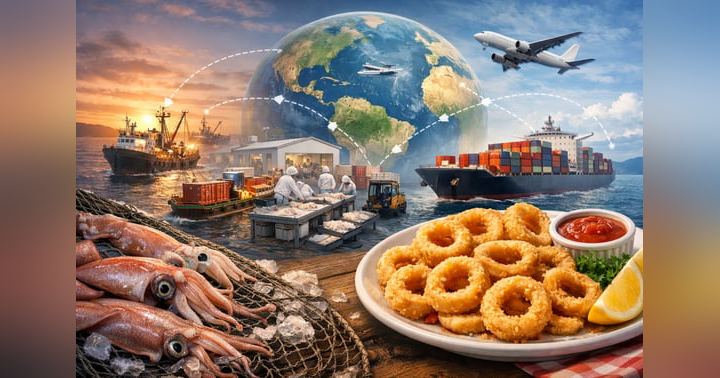
Caught in the Southeast Pacific
Processed in China
Exported to Europe or North America
Served in a restaurant as generic calamari
At each step, information can be lost.
Processing makes things worse. Once squid is cut into rings or fried, you lose all visual clues about species.
This is why traceability breaks down so easily.
And why tools like DNA testing, satellite tracking, and digital traceability systems are becoming more important.
The Hidden Reality of Squid Fisheries
One of the most eye-opening parts of this episode is what happens at sea.
Some squid fleets operate far from shore for months or even years.
They rely on:
Fuel vessels
Transshipment ships
Even floating “hospital” vessels
These systems allow fleets to stay at sea almost indefinitely.
But they also create conditions where oversight is limited.
In some cases, these fisheries have been linked to:
Illegal and unregulated fishing (IUU fishing)
Poor labor conditions and worker abuse
This is not true for every fishery.
But without transparency, there is no way to separate responsible fisheries from problematic ones.
Why This Matters For The Ocean
Squid play a critical role in marine ecosystems.
They sit in the middle of the food web:
Eating smaller fish
Feeding larger predators like tuna, whales, and seabirds
They are also highly responsive to environmental changes, meaning populations can fluctuate quickly.
In theory, squid could support sustainable fisheries for decades.
In practice, many fisheries are:
Unmanaged
Unregulated
Overexploited
Without proper oversight and traceability, we risk turning a renewable resource into another case of overfishing.
What You Can Do
You don’t need to be a scientist to make better choices.
Here are a few simple steps:
1. Ask questions
When ordering seafood, ask where it comes from and how it was caught.
2. Be cautious with vague labels
If it just says “calamari” or “squid,” that’s a sign information is missing.
3. Support transparent seafood sources
Choose markets and restaurants that provide detailed sourcing information.
4. Use seafood guides
Apps like Seafood Watch or Ocean Wise can help, even if they are not perfect.
5. Stay informed
The more you understand seafood systems, the better decisions you can make.
Final Thoughts
This episode highlights a simple truth:
You cannot make informed choices without information.
And right now, when it comes to squid, that information is often missing.
The good news is that solutions exist.
Better labeling. Digital traceability. Stronger policies.
But awareness is where it starts.
🎧 Listen to the Full Episode
If you want to understand how seafood labeling, squid fisheries, and global supply chains are connected, listen to the full episode now.
👉 Listen on your favorite platform
👉 Follow How to Protect the Ocean for daily ocean insights
👉 Share this episode with someone who loves seafood
Because the more people understand the ocean, the better chance we have of protecting it.

CEO
Why Squid Seafood Traceability Is So Complicated (And How to Address It)