The Squid You Eat Is a Mystery, Seafood Mislabeling Explained


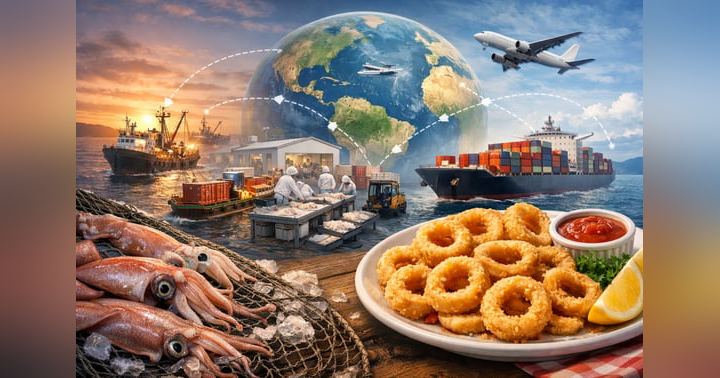
Seafood mislabeling is more common than most people realize, and squid might be one of the biggest examples. When you order calamari, you are rarely told which species you are actually eating. With more than 300 squid species in the ocean, and most products labeled simply as “squid,” consumers are left with almost no information about the origin, sustainability, or even the species on their plate.
Squid fisheries are growing rapidly across the globe, but they are also some of the hardest to track. Squid is often caught on the high seas, processed in multiple countries, and sold in forms like rings or frozen mixes that remove all identifying features. This creates major gaps in traceability and opens the door to mislabeling, illegal fishing, and supply chain confusion.
Ocean conservation depends on transparency, and squid shows exactly where the system breaks down. In this episode, we break down why squid is so difficult to trace and what that means for seafood sustainability. Tomorrow, we continue the conversation with marine scientist Marine Cusa, who studies seafood traceability and global squid fisheries.
Follow the show to stay informed on ocean science and conservation every weekday.
Support Independent Podcasts: https://www.speakupforblue.com/patreon
Help fund a new seagrass podcast: https://www.speakupforblue.com/seagrass
Connect with Speak Up For Blue
Website: https://bit.ly/3fOF3Wf
Instagram: https://bit.ly/3rIaJSG
TikTok: https://www.tiktok.com/@speakupforblue
Twitter: https://bit.ly/3rHZxpc
YouTube: www.speakupforblue.com/youtube
00:00:00,050 --> 00:00:02,899
When you order calamari on a
restaurant, the menu usually
2
00:00:02,960 --> 00:00:04,789
tells you one thing, it's squid.
3
00:00:04,910 --> 00:00:06,680
We know that calamari is squid.
4
00:00:06,863 --> 00:00:10,696
But scientists know that there are more
than 300 species of squid living in
5
00:00:10,696 --> 00:00:13,938
the Ocean, and most seafood labels do
not tell you which one you're eating.
6
00:00:14,488 --> 00:00:17,311
Even on a menu, it won't tell you what
type of squid you're eating, but when
7
00:00:17,311 --> 00:00:20,398
you order fish, it'll tell you what is
salmon, or it'll tell you a specific
8
00:00:20,398 --> 00:00:24,221
salmon or cohost salmon or the type of
cod like it's black cod or atlantic cod.
9
00:00:24,331 --> 00:00:27,061
There's all these different types
of species of each of the types
10
00:00:27,061 --> 00:00:27,961
of foods that you're eating.
11
00:00:27,961 --> 00:00:30,091
Why aren't they identifying squid?
12
00:00:30,311 --> 00:00:33,011
And most seafood labels don't
tell you which one you're eating.
13
00:00:33,371 --> 00:00:37,811
So in many cases, restaurants, grocery
stores, and importers simply label
14
00:00:37,811 --> 00:00:40,181
a product as squid or even calamari.
15
00:00:40,586 --> 00:00:44,260
So the squid on the plate could come
from multiple species, different oceans,
16
00:00:44,290 --> 00:00:46,420
and completely different fisheries.
17
00:00:46,570 --> 00:00:50,263
This is the How to Protect the Ocean
Podcast, your weekday Ocean news updates.
18
00:00:50,456 --> 00:00:54,086
If you care about staying informed
about the Ocean every weekday, hit
19
00:00:54,086 --> 00:00:57,596
that follow button right now so
you don't miss tomorrow's story.
20
00:00:58,226 --> 00:00:59,366
Key question for today.
21
00:00:59,713 --> 00:01:03,283
Why is squid one of the hardest
seafood products to trace?
22
00:01:03,703 --> 00:01:04,333
Shouldn't be.
23
00:01:04,768 --> 00:01:05,938
We know a lot about squid.
24
00:01:06,118 --> 00:01:07,948
We know that there's over 300 species.
25
00:01:08,218 --> 00:01:10,348
We should be able to track
where those species go.
26
00:01:10,708 --> 00:01:13,138
We have the technology,
we have the ability.
27
00:01:13,288 --> 00:01:14,668
We just don't do it.
28
00:01:15,045 --> 00:01:18,735
So seafood products are often heavily
processed before they reach consumers.
29
00:01:18,935 --> 00:01:22,468
They're commonly sold as calamari,
squid rings, fried seafood
30
00:01:22,468 --> 00:01:24,628
platters, frozen seafood mixes.
31
00:01:25,048 --> 00:01:28,138
Processing removes most identifying
features 'cause a lot of
32
00:01:28,138 --> 00:01:29,458
times you're just using rings.
33
00:01:29,508 --> 00:01:32,088
That's what you see when you have
calamari or seafood rings, right?
34
00:01:32,138 --> 00:01:33,071
Grilled calamari.
35
00:01:33,431 --> 00:01:36,448
So for example, when a whole squid
is caught, scientists can identify
36
00:01:36,448 --> 00:01:40,553
the species using features such as
body shape, fin size and placement.
37
00:01:40,823 --> 00:01:42,683
Tentacle length and color patterns.
38
00:01:42,803 --> 00:01:46,749
But when squid is cut into rings
or chopped into pieces, those
39
00:01:46,749 --> 00:01:48,399
features obviously disappear.
40
00:01:48,769 --> 00:01:52,519
So once it is breaded and fried
as calamari, visual identification
41
00:01:52,519 --> 00:01:54,303
becomes nearly impossible.
42
00:01:54,486 --> 00:01:57,336
I mean, you look at Calamari, all it
is is just the bread and maybe you
43
00:01:57,336 --> 00:02:00,463
see the rings, but you can't tell
unless you actually get the DNA,
44
00:02:00,463 --> 00:02:04,609
whether it's a specific species or
not, even for trained seafood expects.
45
00:02:04,873 --> 00:02:08,353
So this means seafood buyers and
restaurants often rely entirely on
46
00:02:08,353 --> 00:02:10,303
paperwork provided by the suppliers.
47
00:02:10,303 --> 00:02:13,033
And I question sometimes
whether they actually care.
48
00:02:13,326 --> 00:02:15,953
And if that information isn't
incomplete or inaccurate, it
49
00:02:15,953 --> 00:02:17,363
becomes very difficult to verify.
50
00:02:17,363 --> 00:02:19,493
So you can have something on
the sheet saying it's one squid.
51
00:02:19,639 --> 00:02:20,479
It's actually another squid.
52
00:02:20,479 --> 00:02:23,959
But you have no idea of knowing
unless you do the DNA barcoding.
53
00:02:23,959 --> 00:02:28,309
So the research using DNA barcoding has
shown that seafood products often contains
54
00:02:28,309 --> 00:02:30,590
species that are not listed on the label.
55
00:02:31,070 --> 00:02:35,089
In several studies, squid products
marketed as a single species were found to
56
00:02:35,089 --> 00:02:37,369
contain multiple species mixed together.
57
00:02:37,909 --> 00:02:38,779
How does that happen?
58
00:02:39,170 --> 00:02:40,190
And why does that happen?
59
00:02:40,534 --> 00:02:43,954
Squid fisheries are some of the
fastest growing fisheries in the world.
60
00:02:44,211 --> 00:02:48,591
They involve hundreds of species in
industrial fleets from multiple countries,
61
00:02:48,771 --> 00:02:51,411
large fishing operations on the High Seas.
62
00:02:51,801 --> 00:02:53,451
That makes it very difficult to stop.
63
00:02:53,678 --> 00:02:57,308
Some squid fisheries operate far
from their national coastlines,
64
00:02:57,308 --> 00:02:59,483
particularly in areas of the
Pacific and the South Atlantic.
65
00:03:00,011 --> 00:03:03,371
These distant water fleets can
include dozens or even hundreds
66
00:03:03,371 --> 00:03:04,691
of vessels operating together.
67
00:03:04,691 --> 00:03:08,801
Sometimes using powerful lights at night
to attract the squid to the surface.
68
00:03:09,131 --> 00:03:10,271
So here's an example.
69
00:03:10,571 --> 00:03:13,271
Off the coast of Argentina, there
is a squid species that's heavily
70
00:03:13,271 --> 00:03:17,568
fished and it's fished sustainably
and managed by the Argentian government
71
00:03:17,568 --> 00:03:19,518
within its exclusive economic zone.
72
00:03:19,548 --> 00:03:22,158
But at some point during their
life history, that squid will
73
00:03:22,158 --> 00:03:26,498
cross the Exclusive Economic Zone,
in the EEZ, into the High Seas.
74
00:03:26,688 --> 00:03:29,598
Once it crosses into the high
Seas, Argentina doesn't have any
75
00:03:29,598 --> 00:03:31,008
authority over that management.
76
00:03:31,258 --> 00:03:34,928
And so the distance water fleet, often
Chinese boats, so I've been reading
77
00:03:34,928 --> 00:03:38,515
up on, which has the largest distance
water fleet, will line up along the
78
00:03:38,515 --> 00:03:40,375
border of that Exclusive Economic Zone.
79
00:03:40,375 --> 00:03:44,478
And once those squid come across, they
try and catch as many as possible.
80
00:03:44,788 --> 00:03:47,938
So by the time those squid species reached
the restaurant menu, the original catch
81
00:03:47,938 --> 00:03:51,611
information may have been passed through
several companies and several countries.
82
00:03:51,875 --> 00:03:55,955
Every step adds another opportunity
for information to be lost.
83
00:03:56,305 --> 00:03:58,645
Squid highlights several
challenges that may affect
84
00:03:58,645 --> 00:04:00,175
seafood products at the same time.
85
00:04:00,455 --> 00:04:03,185
First, fisheries management
for squid is often weak.
86
00:04:03,511 --> 00:04:07,295
Unlike many fish stocks, squid
populations are rarely managed with strict
87
00:04:07,295 --> 00:04:09,348
quotas or detailed stock assessments.
88
00:04:09,651 --> 00:04:13,821
Second, squid fisheries often operate
across international waters where
89
00:04:13,821 --> 00:04:15,051
enforcement is more difficult.
90
00:04:15,051 --> 00:04:18,171
Hopefully, the High Seas will allow
that better enforcement to happen.
91
00:04:18,481 --> 00:04:23,491
Third labeling rules allow seafood
to be sold under broad market names
92
00:04:23,491 --> 00:04:26,871
such as squid, rather than listing
the exact species or even calamari.
93
00:04:26,871 --> 00:04:27,501
Believe it or not.
94
00:04:27,698 --> 00:04:31,588
So for consumers, that means the
label provides very little information
95
00:04:31,588 --> 00:04:33,088
about what they're actually eating.
96
00:04:33,388 --> 00:04:37,275
And for scientists studying seafood supply
chains, squid is one of the clearest
97
00:04:37,275 --> 00:04:41,305
examples of how global seafood trade can
become opaque and difficult to track.
98
00:04:41,630 --> 00:04:46,269
Now tomorrow we're gonna be talking
to Dr. Marine Cusa, who's a fisheries
99
00:04:46,269 --> 00:04:49,089
scientist, a Marine scientist from Oceana.
100
00:04:49,276 --> 00:04:53,843
She also is a Pew fellow and she
studies fisheries supply chains.
101
00:04:53,843 --> 00:04:55,313
She studies aquaculture fish feed.
102
00:04:55,313 --> 00:04:59,119
She's been on the podcast before for
talking about fish feed for aquaculture
103
00:04:59,149 --> 00:05:01,989
and sustainable and certified
ones and how that's necessary.
104
00:05:02,126 --> 00:05:04,466
Tomorrow she's going to be
featured on the podcast.
105
00:05:04,466 --> 00:05:06,926
She studies seafood traceability
and squid fisheries.
106
00:05:06,926 --> 00:05:08,513
She's done a lot of research on this.
107
00:05:08,563 --> 00:05:12,158
And her research shows how global
squid supply chains work and how
108
00:05:12,158 --> 00:05:16,224
little information consumers often
receive about the seafood they eat.
109
00:05:16,351 --> 00:05:19,708
So if you don't wanna miss that interview,
hit that follow button right now so
110
00:05:19,708 --> 00:05:20,848
that you get tomorrow's interview.
111
00:05:21,024 --> 00:05:24,774
But also share this episode with
someone that you think would need it.
112
00:05:24,894 --> 00:05:27,654
If you think they need to learn more
about seafood traceability, or they
113
00:05:27,654 --> 00:05:29,964
want to know what the problems are
out in the Ocean and they wanna help
114
00:05:29,964 --> 00:05:31,718
solve it, I'm here educating people.
115
00:05:31,718 --> 00:05:32,348
I'm here for you.
116
00:05:32,348 --> 00:05:35,678
This episode, this podcast is here
for people who want to know about
117
00:05:35,678 --> 00:05:38,404
the Ocean so I wanna inform you
as much as possible and make it
118
00:05:38,404 --> 00:05:39,984
entertaining as well, which I hope I do.
119
00:05:40,131 --> 00:05:43,221
But I want you to share this with somebody
who you think will get value out of
120
00:05:43,221 --> 00:05:44,691
it and you think should know about it.
121
00:05:44,834 --> 00:05:46,428
But that's it for today's episode.
122
00:05:46,574 --> 00:05:49,424
I wanna thank you so much for
joining me on today's episode of the
123
00:05:49,424 --> 00:05:50,744
How to Protect the Ocean Podcast.
124
00:05:50,744 --> 00:05:52,564
If you want to give
feedback, you can do so.
125
00:05:52,668 --> 00:05:54,948
Go to speak up for blue.com/feedback.
126
00:05:54,948 --> 00:05:59,598
I want to hear your comments, questions,
concern, speak up for blue.com/feedback.
127
00:05:59,648 --> 00:06:00,398
Have a great day.
128
00:06:00,448 --> 00:06:02,728
I'll talk to you tomorrow
and happy conservation.