Deep Sea Hydrothermal Vents: Exploring Endeavour, a Hidden World Shaping Life on Earth
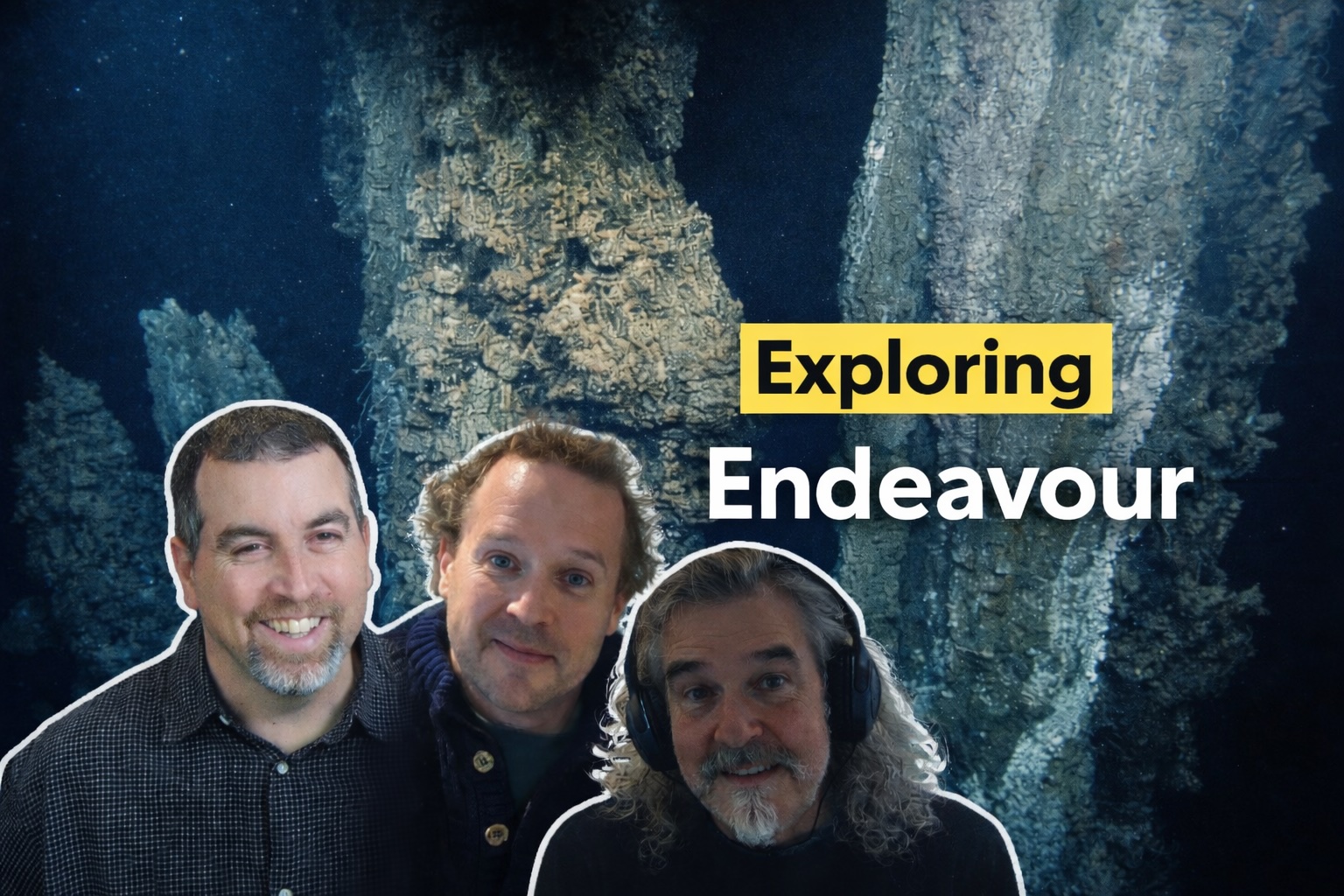
Far beneath the Pacific Ocean, life thrives in complete darkness, fueled not by sunlight but by heat, chemistry, and geology. This matters because these deep sea systems are not isolated curiosities, they actively shape ocean chemistry, biodiversity, and even our understanding of how life began on Earth.
Introduction
In this episode of How to Protect the Ocean, we explore Endeavour, one of the most active and scientifically important deep sea hydrothermal vent systems on the planet. Located along the Juan de Fuca Ridge off the coast of British Columbia, Endeavour is monitored in real time by Ocean Networks Canada, making it one of the only places on Earth where scientists can watch underwater volcanoes and ecosystems change as they happen.
Joined by Steve Mahaly of Ocean Networks Canada and geologist Laurence Coogan from the University of Victoria, this conversation dives into how hydrothermal vents work, why Endeavour is so unique, and what this extreme environment can teach us about life in the ocean and beyond
What You Will Learn
How deep sea hydrothermal vents support life without sunlight
Why Endeavour is one of the most active vent systems on Earth
How vent fluids influence the entire Pacific Ocean
What real-time monitoring reveals about underwater volcanoes
Why microbes inside the ocean crust form a hidden food chain
A World Built Without Sunlight
At Endeavour, ecosystems are powered by chemosynthesis, not photosynthesis. Instead of relying on the Sun, microbes use chemicals from superheated vent fluids to create energy. These microbes form the base of a food web that supports crabs, tube worms, fish, and other specialized species.
As discussed in the episode, some animals avoid the hottest vent openings entirely, while others thrive nearby. One striking story involves crabs aggressively chasing researchers collecting tube worms, revealing how finely tuned feeding behaviors are in this extreme environment.
Why Endeavour Is So Special
Endeavour is not just another hydrothermal vent field. It contains multiple major vent sites packed closely together, releasing enormous amounts of heat and chemicals into the ocean. Scientists describe it as one of the most spectacular places on Earth, even though it sits nearly two kilometers below the surface.
Because Endeavour lies within Canada’s exclusive economic zone, it can be protected and studied intensively. It was designated a marine protected area early on, recognizing both its ecological value and the risks posed by deep sea mining.
The Ocean Is More Connected Than You Think
One of the most surprising findings discussed in the episode is that vent fluids from Endeavour can be traced across the entire Pacific Ocean. Using chemical signatures like iron and isotopes, scientists have shown that materials released at the seafloor travel thousands of kilometers at depth.
This matters because iron is a limiting nutrient for ocean productivity. What happens at deep sea hydrothermal vents can influence ecosystems far from the vents themselves, linking the deep ocean to surface life.
Watching Underwater Volcanoes in Real Time
Ocean Networks Canada operates one of only two cabled deep sea observatories in the world. At Endeavour, this allows scientists to monitor temperature, chemistry, seismic activity, and biology in real time.
Instead of waiting years between research cruises, scientists can now see changes as they happen. This continuous stream of data is transforming how we understand underwater volcanoes, deep sea ecosystems, and Earth’s internal processes.
Why This Matters For The Ocean
Deep sea hydrothermal vents challenge the idea that life depends on sunlight and stable conditions. They show how resilient and adaptable life can be, even in extreme environments. Protecting places like Endeavour helps preserve biodiversity we are only beginning to understand and safeguards natural laboratories that inform climate science, ocean circulation, and the origins of life.
As interest in deep sea mining grows, understanding and protecting these systems becomes even more urgent.
What You Can Do
Learn about deep sea ecosystems and why they matter
Support science-based ocean protection policies
Share this episode with someone curious about the ocean
Follow organizations like Ocean Networks Canada
Stay informed about deep sea mining and conservation
Call to Action
Listen to the full episode and subscribe to How to Protect the Ocean.

CEO
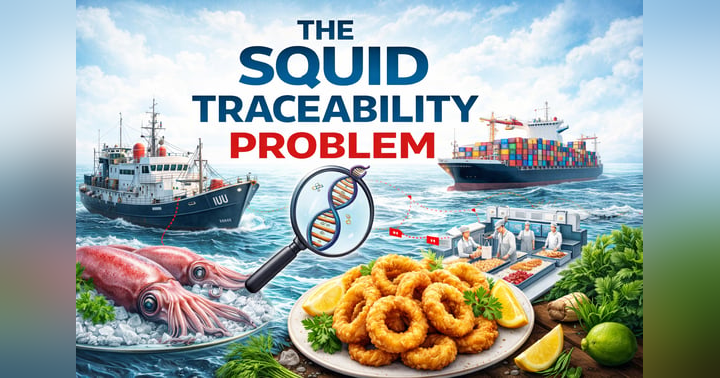
Why You Should Think Twice Before Eating Squid