The Electric Boat Revolution Is Here
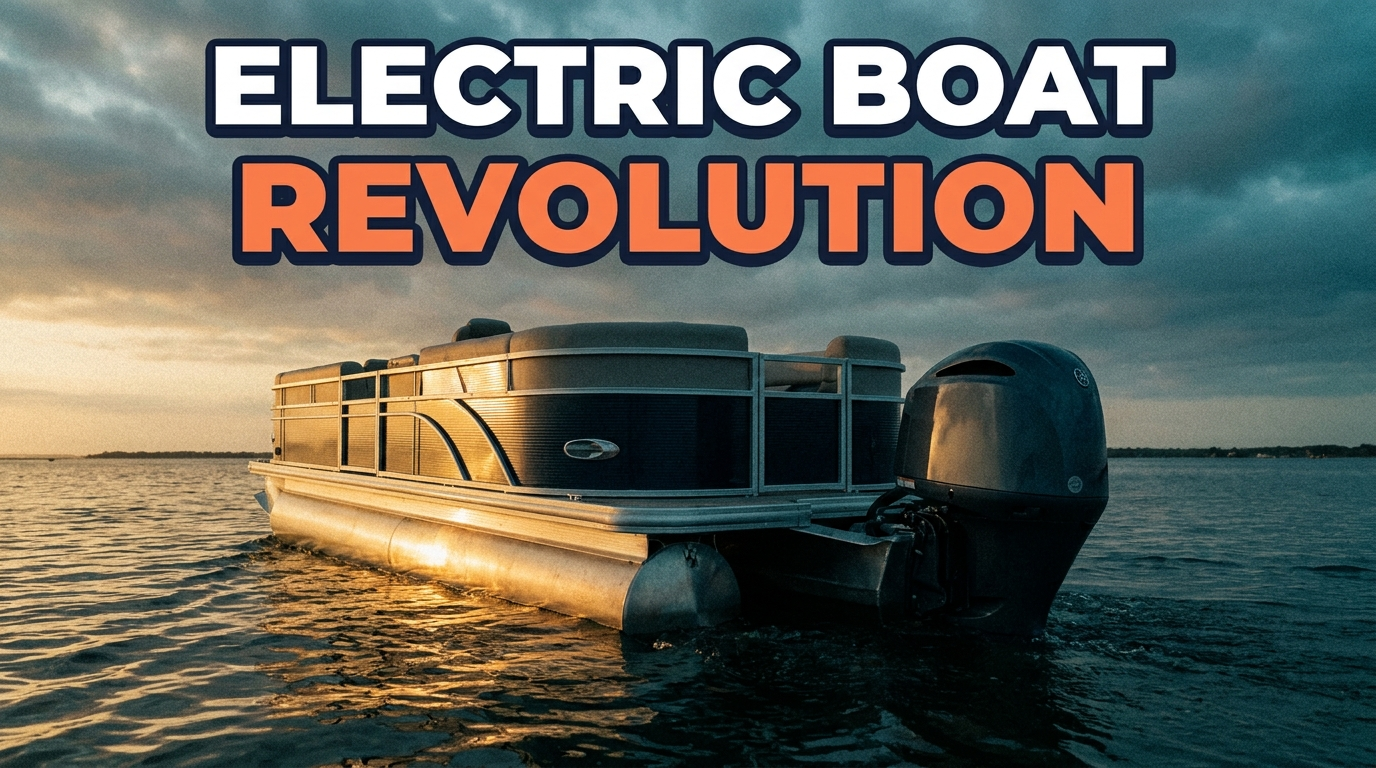
Electric vehicles took over the road years ago. Now the same shift is happening on the water, and Alexandre Mongeon has a front row seat. As CEO and co-founder of Vision Marine Technologies, Alexandre has spent more than a decade building the electric outboard systems now powering boats across North America. On this episode of How to Protect the Ocean, he joins Andrew to talk about how that business came together, what it actually feels like to drive an electric boat, and where the industry goes from here.
From speed boats to electric outboards
Alexandre's path into electric boating did not start with a business plan. He spent years importing gas-powered speed boats into Canada and racing them on weekends. A chance encounter at a boat ramp with Ian Bruce, the Olympic sailor and designer behind the Laser sailboat, changed the direction of his career. Bruce showed him a converted classic boat running on an electric drivetrain years before most manufacturers were paying attention to the idea. When Bruce passed away partway through their first electric boat project, Alexandre and his business partner had to finish the work themselves, a process he credits with teaching him the fundamentals of the technology from the ground up.
Building a business on rentals, not just sales
A trip to a boat show in Newport Beach, California, was the turning point. Alexandre discovered thousands of electric boats already cruising the harbor, most of them built by Duffy Electric Boats, a company started decades earlier by Marshall "Duffy" Duffield. Rather than compete head-on, Alexandre built a rental operation in Newport Beach that doubled as a showroom. Renters got hands-on with the technology, and many converted into buyers. That same model scaled into a public company by 2020 and eventually led Vision Marine to acquire Nautical Ventures, a Florida-based dealership group, giving the company its own distribution network across the US.
What it is actually like to own one
Alexandre is direct about the tradeoffs. Electric boats are quiet enough to hold a normal conversation at 20 miles per hour, deliver instant torque without the vibration of a combustion engine, and skip the smell of gas fumes entirely. Range anxiety, he says, is mostly theoretical. Vision Marine's own rental data shows most boaters travel under nine nautical miles per outing, well within what a single charge supports. Built-in limp modes automatically slow the boat down before the battery runs out, something Alexandre says has never stranded one of his electric customers, while gas boats running dry remains a common service call.
Why the technology has been slow to scale
Despite the advantages, electric boats remain a small share of the market. Alexandre points to the scale of existing gas outboard manufacturing as the main obstacle. Companies with decades of infrastructure built around combustion engines face a costly and complex shift to build electric platforms from scratch, which is part of why Vision Marine has focused on owning its own battery tooling, patents, and supplier relationships rather than relying on off-the-shelf parts. The company's technology has been validated through two years of testing with McLaren Engineering, and a custom-built electric race boat has posted faster lap times than its gas-powered Mercury counterpart on the same hull.
The conservation connection
Vision Marine's relationship with ocean conservation organization 4ocean adds an environmental throughline to the business. The partnership has funded cleanup work tied to boat sales and rentals, and it grew out of a cross-country trip Alexandre's in-laws took on a solar-powered electric pontoon from New York to Florida. Beyond the funding relationship, Alexandre points to a quieter benefit of electric propulsion: reduced underwater noise, which matters for marine mammals that rely on sound to navigate and communicate.
Takeaways
- Electric boats trade gas fumes and engine noise for instant torque and quiet, social rides on the water
- Range anxiety is rarely an issue in practice, since most boaters travel under nine nautical miles per outing
- Vision Marine's acquisition of Nautical Ventures gave it its own dealership and service network across the US
- A specially built electric race boat has outpaced its gas-powered Mercury counterpart on the same hull
- Quieter electric motors mean less underwater noise pollution, which matters for marine mammal communication
- Big outboard manufacturers have been slow to go electric because switching from combustion engine production is costly and complex
- Vision Marine's partnership with 4ocean has funded ocean cleanup work tied directly to boat sales and rentals

CEO

Boat Wake Erosion Explained: The Coastal Threat With Nothing to Do With Climate Change