Ghost Nets: Why They Keep Happening and What's Actually Working


 Apple Podcasts

 Spotify

 YouTube

 Amazon Music

 PocketCasts

 Overcast
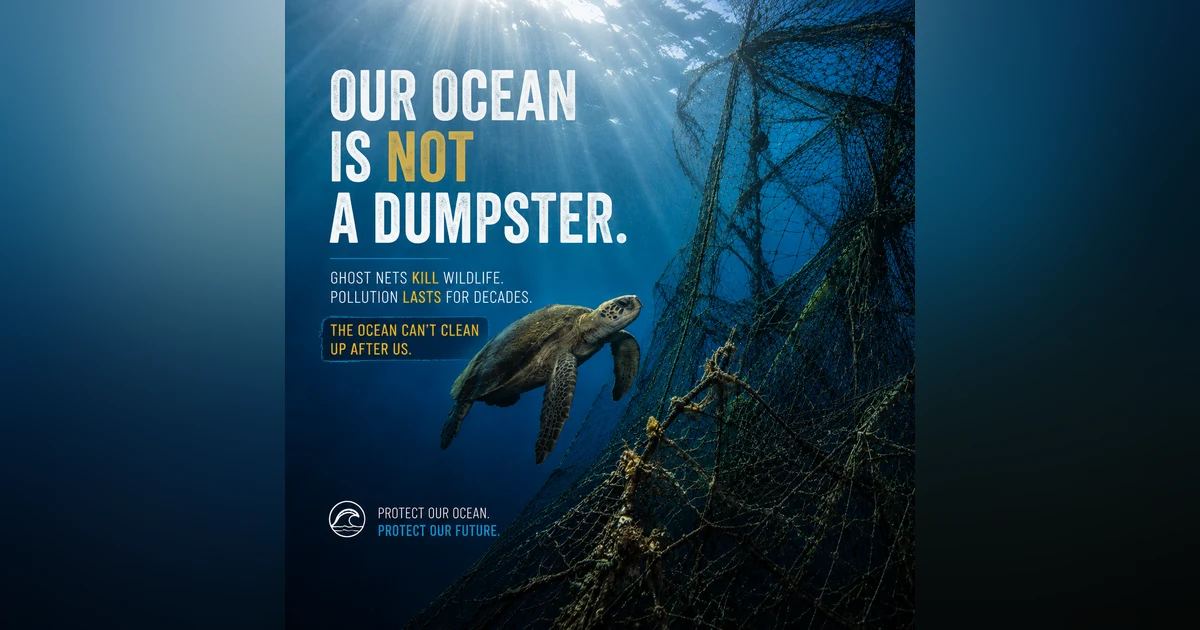
A viral TikTok about fish aggregation devices drifting into marine protected areas got Andrew thinking about a topic he hasn't covered in a while: ghost nets. In this episode, he breaks down what ghost nets actually are, the scientific term for them (ALDFG, or abandoned, lost, or otherwise discarded fishing gear), and why they're a growing, well-documented problem from the ocean surface all the way down to the deep seafloor.
Andrew walks through what the peer-reviewed research shows: entanglement patterns across whales, seals, sea turtles, and coral reefs, a personal diving story off Big Cayman where he watched a ghost net get cut free from a loggerhead sea turtle, and the real economic and technical challenges holding back solutions like ropeless fishing gear and biodegradable nets. He also covers where progress is actually happening, from derelict net removal programs to circular economy recycling models.
This isn't a "just stop fishing" episode. Andrew makes the case that ghost nets are a solvable, adaptable problem, but one that needs more research funding, cheaper technology, and stronger enforcement to get there.
Takeaways from this episode:
- Ghost nets (ALDFG) are found from the ocean surface to the deep seafloor, and they keep catching and killing marine life for as long as they remain in the water.
- The animals most affected span whales, seals, sea turtles, and coral reef species, not just fish.
- Solutions like ropeless gear and biodegradable nets are real and improving, but cost and fisher adoption remain the biggest barriers.
- Stopping fishing altogether isn't a realistic fix. The path forward is better gear design, more funding, and stronger enforcement.
- Listeners can support the fisheries and programs that are already investing in gear-loss prevention and removal.
Support Independent Podcasts: https://www.speakupforblue.com/patreon
Need help with your ocean non-profit, company, or project? Get the help you need with Pisces Oceans Inc.: https://www.piscesoceans.ca
Connect with Speak Up For Blue
Website: https://bit.ly/3fOF3Wf
Instagram: https://bit.ly/3rIaJSG
TikTok: https://www.tiktok.com/@speakupforblue
Twitter: https://bit.ly/3rHZxpc
YouTube: www.speakupforblue.com/youtube
0:00 Something kind of crazy happened to me the other day on TikTok. I had a video that went viral, a post that I talked about FADs, the fish aggregation devices that were for tuna. And some of these fish aggregation devices, these FADs, were going into, floating into marine protectors. Essentially, they were lost. They were almost like a ghost net. And the post went viral. At this point of recording, I have over 100,000 views. And normally, I get like 200 views, maybe 300 views. And it went viral. It went crazy. I got a lot of eyes on the profile. I got eyes on the podcast, which was great. And it was fun. I got some interesting comments, of course, but it was a lot of fun to be able to see that happen. And it made me think, you know what? I haven't done a ghost net podcast in a while.
0:45 And with all of this AI and search engine optimization, just to be transparent, it's starting to look at, you know, podcasts and pages on websites that are showing that they know a little bit about certain parts of the subject. So what I wanted to do is cover a little bit about ghost nets, what they are, how do we, why they keep happening? Why do we keep seeing them? What's being done to clean them up and so forth. And we're going to talk about that on today's episode of the how to protect the ocean podcast, because this is where you find your weekday ocean news Monday to Friday on oceans. And this is your ocean resource. So this is what I want to do for you is be your ocean resource. So if you want me to get that, or you want me to provide that, you can go to your favorite podcast app that you're listening this on and say, Hey, you know what, I'm going to follow this, just click that button, don't tap it, click it, whatever you do. And I will be in your feed Monday to Friday. So you can take a look at that, or you can take a listen to that. So that's always fun. So follow that. And of course, if you want to support the podcast, if you feel the need to support all the stuff we do, we do the podcast, we do YouTube, I'm going to be starting doing ocean decoded live Monday to Fridays. I'm also going to be I do things on Tik TOK and Instagram and Facebook and so forth. And so if you enjoy that and you want to support me, you can go to speak up for blue.com forward slash Patreon that speak up for blue.com forward slash Patreon. Now I want to talk about ghost nets because ghost nets are really interesting.
2:08 If you don't know what ghost nets are, essentially they are nets that have been lost at sea. So these are fishing nets that have been used and maybe lost because of bad weather, or maybe they're discarded over the boat, but they've essentially been lost. And what they do is these, these large nets are found all over the world in the oceans, whether it's in the deep sea, whether it's in the floating on the top or whether it's in the water column, and they continue to catch fish, marine mammals, sea turtles, other fish like sharks and so forth. And they die, they can't, they can't get out of it and they end up dying, but nobody's fishing them because it's just, it's a net that's just floating. It's a ghost net. And the scientific term actually is abandoned, lost or otherwise discarded fishing gear known as ALDFG.
2:55 It's a huge acronym. It doesn't really sound like anything really important, but it's something that's, that's really important. It's defined as gear that continues to catch or kill marine life with no one checking or retrieving it. And it's a process called ghost fishing. So ghost nets, ghost fishing, go hand in hand. And it's recognized in the peer review literature as a major and growing contributor to marine plastic pollution distinct from other litter because it is specifically designed to catch and hold living things. Now, a 2023 deep sea survey around the Azores near Portugal or in Portugal used 351 dives and 15 years of seafloor footage from 2006 to 2020 and found an average of roughly 597 items of ghost nets related gear per square kilometer on the seafloor. That's per square kilometer. It shows that it isn't just the surface or a coastal problem.
3:55 It reaches the deep sea as well. So that's obviously something that we don't like to see, but this is something that we need to dive into. So why does ghost net really matter other than just catching fish? Well, a study using social media records from 2012 to 2023 documented 144 individual animals across 35 species, 13 of them were actually endangered or vulnerable were entangled in derelict gear in the Indian coastal and freshwater systems. So that's just one study. Now we know with the North Atlantic right whale, we see entanglements all the time. Sometimes we don't see those entanglements and you know, the whales will wash up or sometimes we don't see them at all, but they're entangled. And what happens is the nets get caught or the ropes get the lines get caught on their pectoral fins. And as they continue to swim, the lines dig into their pectoral fins and it continues to make a mark. It starts to bleed. It gets infected and eventually the animal can die. It can also be see seals and sea lines that like the nets around their neck. It can cause asphyxiation, strangle them.
4:59 It could also cause a lot of problems trying to feed or anything like that. There are people who roam beaches to try and free sea lions and seals with these nets around their neck. And unfortunately it happens to too many people. And of course sea turtle hatchling mortality has been directly linked to derelict nets and synthetic rope entanglement in recent fishing in recent field research with over 200 dead hatchlings recorded primarily trapped in the gear. And that was a study in 2025. Now, of course, I talked a little bit about deep sea impacts, but researchers have found that ALDFG entangled in cold water coral colonies across multiple regions, including the northwestern Mediterranean.
5:42 The Lingeran Sea, England's Atlantic Coast and the Azores showing is this is a consistent cross sectional pattern rather than an isolated finding. So this is something that's happening more and more in a related study specifically examined how abandoned ghost neck gear becomes incorporated into structural growth of the coral species. Dendrophilia, Philia, Dendrophilia ramia along Portugal's Atlantic Coast, illustrating how litter flies and the other. And how litter physically integrates into living restructures over time. Now, one of the interesting stories of like diving stories that I have is I remember diving off the coast of the Cayman Islands, Big Cayman.
6:24 And I was diving with some older people like in their 50s and 60s. They have a lot more experience than I do. They were in rebreathers and stuff. And we were doing a dive start off at 100 feet. That was our deepest depth. Then we started to kind of slowly climb up on a reef about 60 days, 70 feet body amount and kind of hanging out there. And one of the guys was a diver and obviously and he was doing something around a coral reef and I was like, Oh, what's he doing? So I kind of came around to watch. He had a knife out and he was actually taking off some fishing net gear that had been lost. So, you know, these ghost nets and there were some species in there like some little shrimp and some nematodes and some fish and stuff like that. So he was actually cutting them off. And what was interesting about it is like during that time, I'm saying you got a picture as both scuba diving.
7:08 He's kind of floating above the reef. I'm floating above the reef, probably about two feet above him. And we're just kind of maybe a little bit more in line than that. Maybe it wasn't two feet and where there's a bit of a space in between us. And as we're watch as I'm watching this guy take the ghost net gear off this loggerhead sea turtle comes right over top of us. And he just kind of peaks his head. He or she, I don't remember peaks head and he starts looking at us and he looks at both of us and kind of feels like he gave a nod. I'm probably exaggerating a little bit, but it feels like he gave a nod and just kind of came out almost like a, Hey, thanks a lot for taking this away from us. But this is your stuff anyway. So take it back to the surface and keep it there, which is where we want to do. We don't, we want to keep it back at the surface because we don't want that to keep coming out onto the bottom, right?
7:53 Because that's something that, you know, we just don't want to do. Now, one of the things that's interesting beyond like looking at seeing ghost nets in the waters, why it keeps happening. So some of the challenges that have been identified in some of the research that I looked up in the literature. So there's also there's an economic cost to the fishing industry itself, right? Because you lose the nets. It's something that's a big problem. A 2023 study modeling the English channel static gear fishery found real economic costs tied to gear loss and ghost fishing and found that current biodegradable gear designs need improvement before meaningfully reducing the costs of these types of gear.
8:34 So there needs to be more research in the biodegradable gear in case it does get lost. It could just biodegrade. It could just basically disintegrate into the ocean without having problems. Obviously, we're not there yet and there still needs to be done. But look, about 10 years ago when I was at the International Marine Conservation Congress, there was a hackathon that was happening in Malaysia. And I remember it was a really cool thing. They had all these engineers, all these people who like to do these hackathons. And then we had a presentation. There were five ocean issues that we were dealing with. One of them was crab and lobster fishing and all that kind of coming up with a fishing gear that would reduce entanglement. And one of the ideas was to have a ropeless or a lineless lobster or crab trap. And so what was basically the idea that was done in the prototype that was done that actually won the competition, even though there's other issues that they covered.
9:27 They actually had this ropeless one where you'd have balloons that would pop up. And when you press the button as you want to retrieve your gear and it would float to the surface. Now, when that first came out, people were like, "This isn't going to work. There's going to be a lot of problems. The ocean is pretty harsh. How are we going to find it?" All this kind of stuff. And we still need to put buoys to make sure we can find it and GPS tracks and everything like that. And there were a lot of problems when they tried it out. I remember talking to some fishers and they were saying, "Yeah, it's really expensive. We don't really know if it's going to be working." And some of the trials haven't really shown that it worked. But it gets better and better. The technology gets better and better as more experimentation happens and as people are trying it out. And now there's a lot of fisheries in Canada on the east coast that are experimenting with this and see how much retrieval can happen and all that kind of stuff.
10:16 And the gear is getting cheaper and cheaper. So we're starting to see some headway. So, you know, with biodegradable nets, we might see some more headway as we move into the future. So I think it's good, but it isn't a simple fix yet. A 2025 laboratory comparison of biodegradable copolyester microfilaments against traditional polyamide monofilaments tested degrading degradation rates under accelerated aging. But part of an active research effort to find materials that break down fast enough to stop ghost fishing, but it didn't, but hold up long enough to still catch the fish. But there still needs to be experimentation on that one. And in economic feasibility research cited in 2025, synthesis found biodegradable gear runs about 30 to 50% more expensive than conventional gear on average.
11:07 And a major barrier for small scale fishing operations on tight margins, particularly in low income fishing communities. In 2025, experimental study of Norwegian fishers found willingness to adopt biodegradable gear is highly conditional. Right. The fishers will switch if catch efficiencies matches conventional gear. That makes sense. But as relative efficiency drops, adoption becomes contingent on whether the other fishers adopted too. So it's a little bit of a peer pressure thing. Meaning individual incentives are likely won't alone won't likely drive the shift.
11:48 So that's something that's interesting. And of course, local knowledge and enforcement gaps are really important. A 2026 study in Cameron small scale fishing marine fisheries used local ecological knowledge from fishers and state professionals and state officials to examine why gear gets lost, abandoned or discarded and found that weak enforcement of gear registration and marking policies means fishers face little to no consequences for failing to report lost gear. So there's a lot of, you know, still a lot of problems with some of the solutions that are out there, but something that's working solutions that are being tested within that I looked up in the literature. So there's systematic evidence for recycling. So 2026 systematic literature review following Prisma methodology, synthesized at 17 peer reviewed studies from 2015 to 2025 across marine ecology materials and engineering and circular economy research evaluating both ecological impacts of ghost nets and the technical feasibility of recycling recovered fishing gear polymers into new products using Hawaii as a case model.
12:52 So there have been some successes around there. And of course, researchers from British Columbia, Salish Sea documents active derelict net removal programs designed specifically around safeguarding habitat and reducing mortality across multiple species cited a model approach within deep sea ghost net literature. So that's nice to see that there are some things that are working out. And of course, there's still material science progress is happening ongoing degradation testing of specific polymers represents the live edge of material research aimed at gear that ghost net fish fishes for months. So that's not century. So that's good. We're starting to see a reduction in that by like 100 years, which is great to see.
13:33 So look, the peer reviewed literature that we looked up for this study is for this episode is consistent. Ghost nets is a measurable quantifiable problem from the sea surface to the deep sea. We definitely know that it's definitely a problem. And the fixes on the table like biodegradable materials or recycling better enforcement are all real, but each comes with its own trade off that scientists are actively working through. And we need more progress. We need more research on this. We need more pilot studies on this to ensure that these ghost nets, one can not affect other fishes or marine mammals or sea turtles or sea birds. I always forget seabirds in that last one.
14:15 But also like to be able to have more efficiency and less expand, make sure they're less expensive so that they'll be adopted by fishers. A lot of times fishers who use these types of nets are small scale. They don't have a big budget. Some of the major corporations do have those big budgets so they could be using this type of stuff too. But a lot of the fishers don't have it and we need to make sure we can get those in those hands. So lots of research, more funding and more adoption is needed. And there's a lot of stuff that we talked about today. And I would love to hear from you what you think is needed when we look at managing ghost nets and making sure. And I know a lot of people will say, Hey, you know what? We just got to stop fishing and reduce fishing in certain situations that's going to work in other situations. It's not going to work because people need to fish. They need to their protein source. They need to make money for their families. It's not going away anytime soon. There are certain cases that yet can be reduced to nothing.
15:08 But there's other situations where fishing is just always going to happen. And we need to make sure that we can adapt to that as quickly as possible. That's it for today's episode. I'd love to hear your thoughts. You can hit me up on Instagram, TikTok, wherever you want to DM me. You'd also go to speak up for blue.com to find out more about the podcast that we have beyond Jaws and how to protect the ocean. This one, you can also follow those when you go to the website. And of course, if you want to support me, you can go to speak up for blue.com forward slash Patreon can support the stuff that I create on this podcast on YouTube as well as Instagram, TikTok and Facebook and all the socials on LinkedIn. We do a lot of work here to make sure that we provide you with the resource for oceans. If you like that kind of stuff, support me speak up for blue.com forward slash Patreon. I would really appreciate your support. I want to thank you so much for joining me on today's episode of the how to protect the ocean podcast. I'm your host, Angelo, and have a great day.
16:01 We'll talk to you next time and happy conservation.


