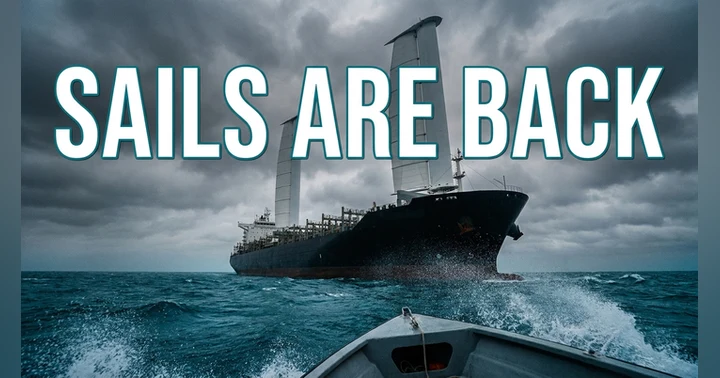
Why Cargo Ships Are Bringing Back Sails to Cut Emissions

 Apple Podcasts
 Spotify
 YouTube
 Amazon Music
 PocketCasts
 Overcast
 Global shipping moves roughly 80 to 90% of the world's trade, and it comes with a real climate cost: the industry is responsible for a little over 2% of global CO2 emissions. On today's episode of the How to Protect the Ocean Podcast, Andrew looks at one of the more surprising fixes the industry is turning to: sails. Not the old canvas kind, but massive rigid wing sails retrofitted onto modern cargo vessels to cut fuel use and emissions without waiting on next-generation fuels.
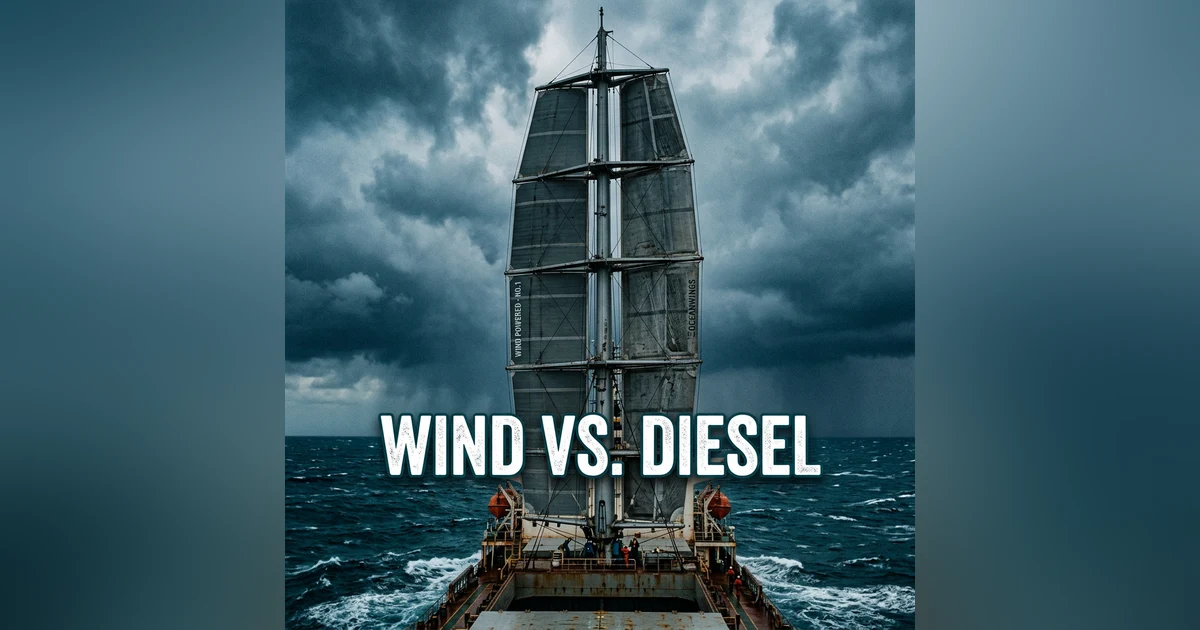
The centerpiece example is the Pyxis Ocean, a bulk carrier fitted with two 37.5-meter WindWings that fold down like giant airplane wings when they're not catching wind. It's part of a wider trend: more than 100 large cargo ships now sail with some form of wind propulsion installed, and the fuel savings range from about 1% to as much as 47%, depending on the number of sails and wind conditions. Andrew breaks down why shipping companies are leaning into this old-school technology now, from tightening emissions regulations to the simple fact that wind is free once the hardware is on deck.
The bigger obstacle isn't the technology, it's the business model. Andrew digs into the split incentive problem in shipping: the owners who pay to install wind systems often aren't the ones paying for fuel, and the charterers who control fuel costs aren't the ones footing the bill for new equipment. That mismatch, more than any engineering hurdle, is what's slowing wind propulsion from scaling across the global fleet.
Takeaways:
- Global shipping carries 80 to 90% of world trade and produces roughly 2% of global CO2 emissions
- The Pyxis Ocean was retrofitted with two 37.5-meter WindWing sails and helped kick off the current wave of wind-assisted shipping
- More than 100 large cargo ships now have wind propulsion installed, saving an estimated 100,000 tonnes of CO2 equivalent a year combined
- Wind can cut fuel use anywhere from 1% to 47%, and purpose-built wind-assisted ships could average a 50% reduction
- The biggest barrier to scaling wind propulsion is commercial, not technical: owners and charterers have mismatched incentives
- The IMO has set decarbonization targets for shipping, and EU-funded projects are running sea trials in the North Sea to prove the technology out
Support Independent Podcasts: https://www.speakupforblue.com/patreon
Need help with your ocean non-profit, company, or project? Get the help you need with Pisces Oceans Inc.: https://www.piscesoceans.ca
Connect with Speak Up For Blue
Website: https://bit.ly/3fOF3Wf
Instagram: https://bit.ly/3rIaJSG
TikTok: https://www.tiktok.com/@speakupforblue
Twitter: https://bit.ly/3rHZxpc
YouTube: www.speakupforblue.com/youtube
00:00:00,050 --> 00:00:07,163
At the start of 2026, there were between
50,000 and 116,000 shipping vessels
2
00:00:07,236 --> 00:00:10,753
trading some sort of cargo on the ocean.
3
00:00:10,883 --> 00:00:12,673
And that is an incredible number.
4
00:00:12,673 --> 00:00:16,103
And if you really think of
what we're looking at from
5
00:00:16,250 --> 00:00:18,420
shipping and climate change.
6
00:00:18,556 --> 00:00:24,766
Shipping is responsible for 2.1%
of the global CO2 emissions,
7
00:00:24,766 --> 00:00:27,686
according to the International
Maritime Organization, the IMO.
8
00:00:27,853 --> 00:00:30,643
And we're gonna be talking about how
some of those shipping companies are
9
00:00:30,643 --> 00:00:35,443
trying to not only save costs on
fuel, but also help the environment
10
00:00:35,453 --> 00:00:38,003
by reducing their CO2 emissions.
11
00:00:38,013 --> 00:00:40,613
So we're gonna talk about that on
today's episode of the How to Protect
12
00:00:40,613 --> 00:00:43,386
the Ocean podcast, because this is
where you find all of your latest
13
00:00:43,416 --> 00:00:47,286
ocean news, your sustainability
news, here Monday to Friday.
14
00:00:47,286 --> 00:00:50,413
If you like this type of information,
just hit the follow button on your
15
00:00:50,413 --> 00:00:54,623
favorite podcast app, 'cause you'll be
able to hear it every Monday to Friday.
16
00:00:54,623 --> 00:00:57,183
Now, this week, we have
an interview on Friday.
17
00:00:57,183 --> 00:00:59,483
We're gonna be talking
to Alexandre Mendron.
18
00:00:59,673 --> 00:01:03,013
He owns a boating company
where he sells boats.
19
00:01:03,129 --> 00:01:06,769
And part of that, what he's really
proud of, is his electric vehicle
20
00:01:06,769 --> 00:01:10,906
boats, so his electric motors that
he sells on a regular basis now and
21
00:01:10,916 --> 00:01:12,066
he's working with a bunch of makers.
22
00:01:12,066 --> 00:01:15,306
He creates the motors in a
manufacturing plant in Montreal
23
00:01:15,336 --> 00:01:17,103
and then ships them out worldwide.
24
00:01:17,273 --> 00:01:20,226
And it's really interesting
to see how he got into it and
25
00:01:20,246 --> 00:01:22,426
what he likes so much about it.
26
00:01:22,426 --> 00:01:24,666
So that's on Friday if you
wanna hear that interview.
27
00:01:24,823 --> 00:01:27,543
All you have to do is hit the
follow button to make sure you
28
00:01:27,543 --> 00:01:29,233
get all the interviews on Fridays.
29
00:01:29,363 --> 00:01:32,543
And also, if you wanna support the
show, you can go to our Patreon
30
00:01:32,543 --> 00:01:34,133
site to support the work that I do.
31
00:01:34,133 --> 00:01:37,403
That's speakupforblue.com/patreon.
32
00:01:37,633 --> 00:01:41,033
That's speakupforblue.com/patreon.
33
00:01:41,333 --> 00:01:41,663
Okay.
34
00:01:41,663 --> 00:01:43,663
Let's get into the show, because
this is something that's really
35
00:01:43,663 --> 00:01:46,456
interesting, 'cause global
shipping moves roughly between 80
36
00:01:46,456 --> 00:01:49,376
and 90% of the world trade volume.
37
00:01:49,396 --> 00:01:50,906
Like, think about that for a second.
38
00:01:50,916 --> 00:01:55,286
Like, that is a pretty big amount in
terms of what we're looking at shipping.
39
00:01:55,286 --> 00:01:58,746
Everything we get, like all the stuff that
we get from Amazon, all the stuff that we
40
00:01:58,746 --> 00:02:03,606
get that's shipped anywhere or even that's
created and made overseas, especially if
41
00:02:03,616 --> 00:02:07,176
you're in North America or even if you're
in Europe, gets shipped to those places.
42
00:02:07,226 --> 00:02:11,063
That's incredibly, incredibly
large amount of percentages, right?
43
00:02:11,149 --> 00:02:13,549
And then the industry, like I
mentioned before, is responsible
44
00:02:13,559 --> 00:02:17,936
for close to 2.1% of the global CO2
emissions, according to the IMO, the
45
00:02:17,936 --> 00:02:20,056
International Marine Organization.
46
00:02:20,169 --> 00:02:24,609
And companies are now retrofitting
massive cargo vessels with rigid
47
00:02:24,609 --> 00:02:28,786
sails and wind structures instead
of relying only on new fuels.
48
00:02:28,933 --> 00:02:33,643
So that's a really big deal here, where
you have a shipping industry that is
49
00:02:33,723 --> 00:02:37,803
massively important to the world in
terms of how much it ships of the cargo
50
00:02:37,873 --> 00:02:39,473
and how much it's involved in trade.
51
00:02:39,726 --> 00:02:43,336
We also know that it presents a
large CO2 emissions and it has a
52
00:02:43,336 --> 00:02:44,926
problem, and it needs to fix that.
53
00:02:45,119 --> 00:02:47,799
And there are a lot of organizations,
a lot of of governments who
54
00:02:47,829 --> 00:02:50,889
are putting regulations on CO2.
55
00:02:51,093 --> 00:02:55,763
So whether they're gonna be putting it
on the flag that these ships are sailing
56
00:02:55,763 --> 00:02:59,283
with, whether it be Canadian or anywhere
in the European Union or anywhere in
57
00:02:59,283 --> 00:03:03,023
Asia, they will have to do something
at some point, and it might be now.
58
00:03:03,236 --> 00:03:08,403
Cargill's Pyxis Ocean is a company,
was fitted with two WingWing sails,
59
00:03:08,483 --> 00:03:11,313
each standing 37.5 meters tall.
60
00:03:11,573 --> 00:03:15,599
And as of mid-2026, more than
100 large cargo ships, over 400
61
00:03:15,609 --> 00:03:19,363
gross tons, have wind propulsion
systems installed worldwide.
62
00:03:19,613 --> 00:03:22,633
Now, the International Maritime
Organization set a target, just as I said,
63
00:03:22,633 --> 00:03:29,279
of at least 40% emissions reduction from
shipping by 2030, with a net zero by 2050.
64
00:03:29,459 --> 00:03:31,996
So that's a lot between like,
you know, going from 40% all the
65
00:03:31,996 --> 00:03:34,499
way to 100% by 2050 in 20 years.
66
00:03:34,589 --> 00:03:37,799
So a lot of the work has to, and
infrastructure has to be put up now.
67
00:03:37,966 --> 00:03:41,876
So fuel costs and tightening emissions
regulations are pushing ship owners
68
00:03:41,876 --> 00:03:46,396
towards proven low-risk technology
rather than waiting on new fuels
69
00:03:46,396 --> 00:03:48,586
like ammonia or methanol, right?
70
00:03:48,586 --> 00:03:51,216
And wind is free once the
hardware is installed.
71
00:03:51,346 --> 00:03:54,916
So unlike alternative fuels which
require new infrastructure, so instead
72
00:03:54,916 --> 00:03:57,986
of building all the infrastructure
that's needed for like ammonia fuels
73
00:03:57,986 --> 00:04:01,059
or methanol-based fuels, which are
still will cause pollution, you
74
00:04:01,059 --> 00:04:05,409
can go back to the old school way of
getting across the ocean and use sails,
75
00:04:05,659 --> 00:04:08,006
because wind is free when it's there.
76
00:04:08,133 --> 00:04:10,863
And now things will be changing
with wind, and the trade winds might
77
00:04:10,863 --> 00:04:12,239
be changing due to climate change.
78
00:04:12,396 --> 00:04:16,723
But we will see vessels and we're
starting to see vessels who are actually
79
00:04:16,723 --> 00:04:20,983
trying to use wind propulsion to help
offset some of the costs of fuel.
80
00:04:21,183 --> 00:04:24,326
Fuel efficiency is one of the most
important things 'cause it's so expensive.
81
00:04:24,326 --> 00:04:27,666
And now with everything happening in
Iran, with everything happening in the
82
00:04:27,666 --> 00:04:31,836
Strait of Hormuz and other places around
the world, ships being blown up, cargo
83
00:04:31,836 --> 00:04:35,046
not getting to where it needs to go,
especially with oil and things like that,
84
00:04:35,176 --> 00:04:39,479
there's gonna be a demand for safe and
fuel-efficient transportation, and we're
85
00:04:39,479 --> 00:04:41,059
getting close to seeing that already.
86
00:04:41,226 --> 00:04:45,683
And then of course, wind can assist
to cut fuel anywhere from 1% to 47%,
87
00:04:45,703 --> 00:04:48,916
depending on the number of sails and
the wind conditions at the time.
88
00:04:48,916 --> 00:04:50,196
So it's never gonna be perfect.
89
00:04:50,416 --> 00:04:52,066
It's never gonna be to 100%.
90
00:04:52,076 --> 00:04:55,379
I'm not saying we're replacing fuels
altogether, but we're getting to a point
91
00:04:55,379 --> 00:04:57,796
where we can r-replace almost up to half.
92
00:04:57,946 --> 00:05:01,056
And 100-plus ships with wind
propulsion installed are estimated
93
00:05:01,056 --> 00:05:05,666
to be saving around 100,000 tons of
CO2 equivalent per year combined.
94
00:05:05,666 --> 00:05:07,848
I think at the beginning
of the show, I said they're
95
00:05:07,848 --> 00:05:11,308
responsible for 2.1% of that CO2.
96
00:05:11,328 --> 00:05:14,068
And that'll be reduced
significantly over that time.
97
00:05:14,068 --> 00:05:16,601
I don't know what that equates
to in terms of percentages, but
98
00:05:16,601 --> 00:05:17,861
that's a pretty big chunk.
99
00:05:18,105 --> 00:05:21,865
Now, purpose-built wind-assisted
ships could see a 50% average
100
00:05:21,865 --> 00:05:25,791
reduction in fuel consumption per the
International Windship Association.
101
00:05:25,791 --> 00:05:26,841
So this is coming.
102
00:05:26,901 --> 00:05:27,911
This is already here.
103
00:05:28,048 --> 00:05:31,988
To scale it to get to where we want
is really difficult, 'cause right
104
00:05:31,988 --> 00:05:36,388
now, about one in 500 or one to a
thousand ships will have some sort
105
00:05:36,388 --> 00:05:38,148
of wind propulsion device on there.
106
00:05:38,298 --> 00:05:41,235
But it doesn't necessarily mean
that everybody's gonna have them.
107
00:05:41,481 --> 00:05:43,941
To scale that is going to be difficult.
108
00:05:44,001 --> 00:05:48,855
But the barrier really is the way the
commercial contract structure is set.
109
00:05:49,108 --> 00:05:52,628
So essentially, the primary obstacle
for wind-assisted propulsion in
110
00:05:52,628 --> 00:05:55,688
global shipping is now commercial
rather than technological.
111
00:05:55,688 --> 00:05:59,418
So the technology is there, but
shipping's long-established commercial
112
00:05:59,428 --> 00:06:03,268
model separates ownership from the
actual operation, so the charter.
113
00:06:03,478 --> 00:06:06,961
So the owners invest in vessels
and onboard technologies, while
114
00:06:06,981 --> 00:06:11,141
charterers typically control fuel
consumption and voyage decisions.
115
00:06:11,271 --> 00:06:13,071
So this creates a split incentive.
116
00:06:13,071 --> 00:06:16,101
So owners bear the cost of
installing efficiency technologies,
117
00:06:16,151 --> 00:06:19,831
but charterers who control fuel
decisions capture the immediate
118
00:06:19,831 --> 00:06:21,361
financial and environmental benefits.
119
00:06:21,361 --> 00:06:24,081
So fixing this would take
standardized charter agreements
120
00:06:24,138 --> 00:06:27,008
that split costs and savings fairly.
121
00:06:27,215 --> 00:06:30,621
There's still a lot of things that have to
do with the infrastructure of the shipping
122
00:06:30,621 --> 00:06:31,761
industry, which I don't know much of.
123
00:06:31,761 --> 00:06:32,291
I'll be honest.
124
00:06:32,291 --> 00:06:34,251
I don't know much about
how this all works.
125
00:06:34,251 --> 00:06:37,328
But if there's a separation between the
owner incentive and the charterer's
126
00:06:37,328 --> 00:06:40,481
incentive, and the owners will be
building the fuel efficiency part,
127
00:06:40,501 --> 00:06:43,221
will be building like the upfront
cost and paying for the capital, and
128
00:06:43,221 --> 00:06:46,481
the charterers are more for the fuel
efficient, like actually spending on fuel.
129
00:06:46,481 --> 00:06:48,401
So that, you know, they might work
together and be like, "Hey, we
130
00:06:48,401 --> 00:06:50,261
can both make money off of this."
131
00:06:50,345 --> 00:06:53,401
But that's something that's, gonna
be a question in the future, and
132
00:06:53,401 --> 00:06:54,811
probably one of the biggest challenges.
133
00:06:54,995 --> 00:06:58,185
Now, the International Maritime
Organization's 2023 strategy formally
134
00:06:58,185 --> 00:07:01,921
recognized wind and other zero or
near zero technologies as part of
135
00:07:01,921 --> 00:07:03,841
the path to decarbonization targets.
136
00:07:04,055 --> 00:07:09,105
No dedicated subsidies exist yet for
wind propulsion systems in most regions.
137
00:07:09,105 --> 00:07:12,575
So adoption is gonna be driven by
rising carbon costs, so the carbon
138
00:07:12,575 --> 00:07:16,331
offset cost, and regulation rather
than direct government incentives.
139
00:07:16,351 --> 00:07:18,741
Now even think about everything
that's happening now in the world
140
00:07:18,741 --> 00:07:21,961
with oil and gas going up and down
depending on what's happening, and
141
00:07:21,961 --> 00:07:24,885
diesel going up and down and being
very, very expensive at this point.
142
00:07:25,131 --> 00:07:27,015
Shipping is gonna get more
expensive, which is gonna make
143
00:07:27,015 --> 00:07:28,418
our products more expensive.
144
00:07:28,751 --> 00:07:32,835
Being able to increase fuel efficiency by
reducing fuel costs is gonna be probably
145
00:07:32,835 --> 00:07:35,945
at the top of the list for a lot of
these shipping companies and even the
146
00:07:35,945 --> 00:07:40,315
companies who use shipping to get their
products to you at a specific time.
147
00:07:40,385 --> 00:07:44,055
Of course, EU as the EU always is,
the funded research projects called
148
00:07:44,105 --> 00:07:47,838
WAS or Sail Horizon or Optiwise
are supporting sea trials and
149
00:07:47,838 --> 00:07:49,858
validation in the North Sea region.
150
00:07:49,878 --> 00:07:53,448
So there are things that
people can do with all of this
151
00:07:53,518 --> 00:07:54,818
happening around us, right?
152
00:07:54,818 --> 00:07:58,508
There are things that we can look
at, there are things that we could
153
00:07:58,508 --> 00:08:02,518
spend time at and experiment, but
we have to go faster than normal.
154
00:08:02,518 --> 00:08:07,655
And I like how the wind aspect is, moving
forward with this type of technology.
155
00:08:07,655 --> 00:08:08,535
So I think it's really good.
156
00:08:08,565 --> 00:08:11,575
Now, stuff that you can do is you
can look for shipping and logistics
157
00:08:11,575 --> 00:08:15,675
companies that disclose emissions data
and wind-assist adoption when choosing
158
00:08:15,685 --> 00:08:17,105
brands that ship internationally.
159
00:08:17,315 --> 00:08:19,145
That information is not
always easy to find.
160
00:08:19,175 --> 00:08:21,295
I'm gonna be honest, like I
had trouble looking for that.
161
00:08:21,295 --> 00:08:25,185
But if you have a product that's shipping
from say, the east to the west or vice
162
00:08:25,185 --> 00:08:28,931
versa, you would wanna look at what
type of companies they use to ship.
163
00:08:28,931 --> 00:08:32,431
I think they should be saying if they
wanna be transparent in their supply
164
00:08:32,431 --> 00:08:35,121
chain so that people know - like
where all this comes from, how
165
00:08:35,121 --> 00:08:36,601
it gets there, how advanced.
166
00:08:36,601 --> 00:08:39,591
'Cause that I think is a benefit to
talk about is, "Hey, look, our ship
167
00:08:39,611 --> 00:08:44,481
uses wind propulsion to get to where
you are, so we reduce CO2 emissions,
168
00:08:44,561 --> 00:08:48,251
and we increase fuel efficiency, which
helps in the pricing of your product."
169
00:08:48,251 --> 00:08:51,738
And for consumer relations, I think
that's a big deal, but I don't know if
170
00:08:51,738 --> 00:08:54,908
the industry thinks that's a big deal
or companies actually care about that.
171
00:08:54,908 --> 00:08:56,368
But that's something that I care about.
172
00:08:56,521 --> 00:08:58,951
That's something you can ask your
products, the people that sell
173
00:08:58,951 --> 00:09:01,151
your products, you can ask them
to do that, but I don't know if
174
00:09:01,151 --> 00:09:02,381
that'll actually ever happen.
175
00:09:02,551 --> 00:09:05,801
Now, of course, obviously we can
support the policy conversations pushing
176
00:09:05,801 --> 00:09:10,031
the IMO's 2030 and 2050 targets of
eventually going net zero, near net
177
00:09:10,031 --> 00:09:11,935
zero as they stay pretty ambitious.
178
00:09:12,101 --> 00:09:15,061
Old technology is
solving a modern problem.
179
00:09:15,121 --> 00:09:16,001
Like think about that.
180
00:09:16,001 --> 00:09:19,511
Using sails, using winds is
still solving a modern problem.
181
00:09:19,785 --> 00:09:23,165
And I think that's a real shift
in looking at decarbonization.
182
00:09:23,475 --> 00:09:27,925
It's a matter of like, hey, how do we
make sure that like going back to the
183
00:09:27,965 --> 00:09:31,555
old ways might take a little longer, or
if we use it in combination, might not
184
00:09:31,555 --> 00:09:34,191
take a little longer, but when we can
use wind, that would be much better.
185
00:09:34,191 --> 00:09:37,381
You can travel quite fast
with wind using as propulsion.
186
00:09:37,381 --> 00:09:40,915
And I think that's like an interesting
concept to say, let's go back in
187
00:09:40,915 --> 00:09:43,771
time, and let's look at what worked
before, so we don't have to worry
188
00:09:43,771 --> 00:09:45,161
about what works in the future.
189
00:09:45,258 --> 00:09:49,928
Sometimes using fuel is not a good idea,
especially in the type of world we're
190
00:09:49,928 --> 00:09:54,101
living in right now, where we're seeing
the direct climate change consequences
191
00:09:54,101 --> 00:09:56,131
happening in front of our eyes.
192
00:09:56,355 --> 00:10:01,231
This week is all going to be about
looking at ways that we can be more
193
00:10:01,231 --> 00:10:03,911
efficient within businesses and
what businesses are doing to be more
194
00:10:03,911 --> 00:10:05,541
efficient, like the shipping industry.
195
00:10:05,735 --> 00:10:08,071
I thought that was kind of important,
especially with our guest, Alexandre
196
00:10:08,631 --> 00:10:10,341
Mongeon, who's gonna be joining us.
197
00:10:10,608 --> 00:10:13,778
We're gonna be talking about
electric motors for boats, which
198
00:10:13,778 --> 00:10:14,768
I think is always interesting.
199
00:10:14,945 --> 00:10:17,455
And tomorrow, we're actually gonna
be spending more time on boats.
200
00:10:17,455 --> 00:10:20,205
We're gonna be looking at boat-sharing
economies, just like ride-share.
201
00:10:20,445 --> 00:10:22,765
And so we're gonna see
where that's gonna take us.
202
00:10:22,881 --> 00:10:26,371
And later on, we're gonna be talking
about 4Oceans and their business model,
203
00:10:26,371 --> 00:10:30,591
and how we can earn living wages on the
Thursday's episode in coastal action.
204
00:10:30,601 --> 00:10:32,738
So we're gonna be talking
about all of that this week.
205
00:10:32,878 --> 00:10:36,235
So hit that follow button if you already
haven't, so that you don't miss any
206
00:10:36,235 --> 00:10:39,615
of the episodes Monday to Friday on
the How to Protect the Ocean podcast.
207
00:10:39,748 --> 00:10:42,218
And of course, if you wanna support
the podcast and all the other work I
208
00:10:42,218 --> 00:10:46,558
do on Beyond Jaws, our other podcast,
and on YouTube, and on Instagram,
209
00:10:46,558 --> 00:10:49,231
and on TikTok, and Facebook, and
all those wonderful places, you
210
00:10:49,231 --> 00:10:49,521
can go to speakupforblue.com/patreon
211
00:10:52,451 --> 00:10:57,251
and join our Patreon to help support
all the work I do on this type of
212
00:10:57,251 --> 00:11:00,051
subject, on the ocean, being that
resource for you for the ocean.
213
00:11:00,051 --> 00:11:03,401
So I wanna thank you so much for
joining me on today's episode of the
214
00:11:03,401 --> 00:11:04,641
How to Protect the Ocean podcast.
215
00:11:04,661 --> 00:11:05,311
Have a great day.
216
00:11:05,311 --> 00:11:07,191
We'll talk to you next
time, and happy conservation.