Why Cargo Ships Are Bringing Back Sails to Cut Emissions
Global shipping is the invisible backbone of nearly everything we buy. Somewhere between 80 and 90% of world trade moves by sea, and that scale comes with a real environmental price tag: shipping is responsible for a little over 2% of global CO2 emissions, according to the International Maritime Organization (IMO). That is a huge industry with a stubborn emissions problem, and it needs solutions that work now, not in a decade.
One of those solutions sounds almost old-fashioned: sails.
The Ship That Started It
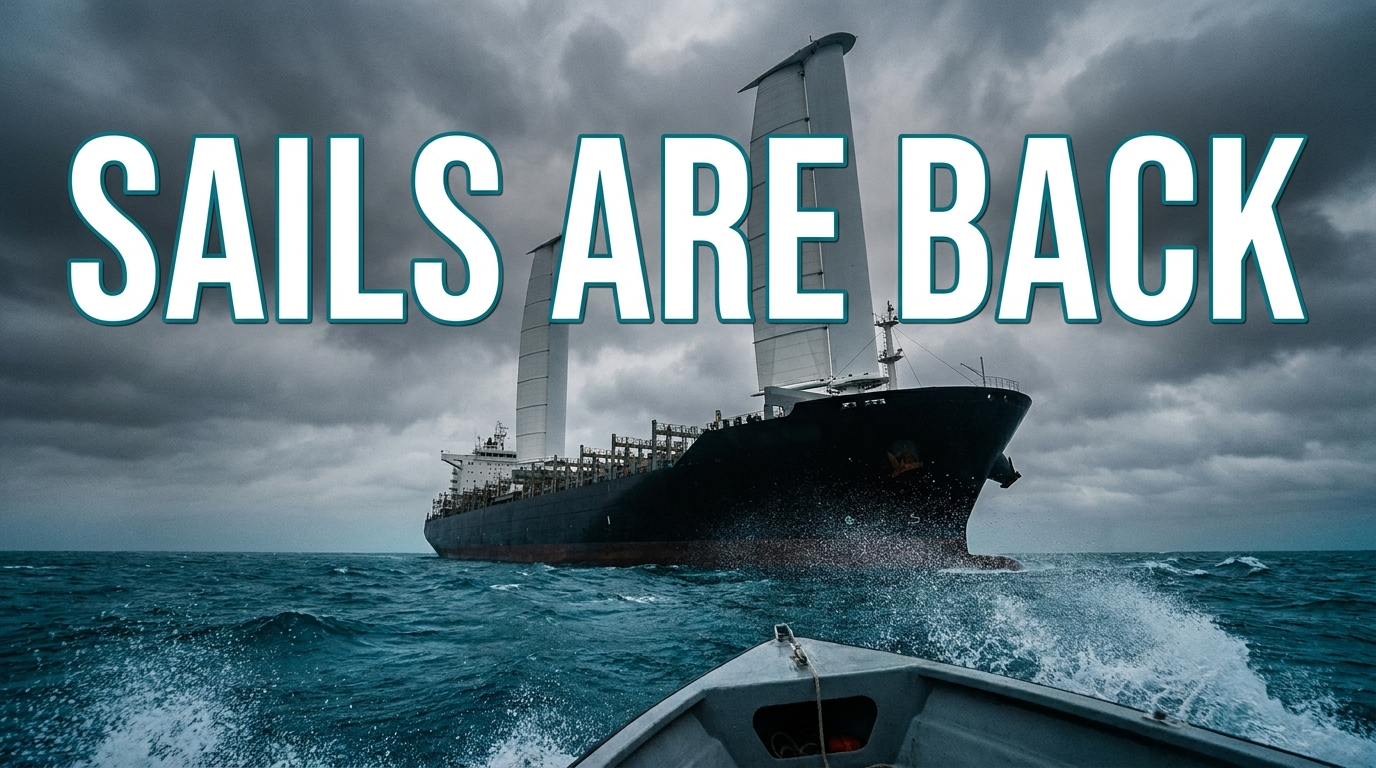
The clearest example is the Pyxis Ocean, a bulk carrier retrofitted with two rigid WindWing sails, each standing 37.5 meters tall. These aren't canvas sails snapping in the wind. They're solid, engineered wing structures, closer in design to an airplane wing than a sailboat's rigging, that automatically adjust to catch the wind and reduce how hard the ship's engine has to work.
The Pyxis Ocean isn't alone anymore. As of mid-2026, more than 100 large cargo ships, each over 400 gross tons, are sailing with some form of wind propulsion installed. Together, those ships are estimated to be saving around 100,000 tonnes of CO2 equivalent per year.
How Much Fuel Can Wind Actually Save?
The answer depends heavily on the ship and the conditions. Retrofitted wind systems can cut fuel use anywhere from about 1% up to 47%, depending on the number of sails installed and how favorable the wind is on a given route. Ships built from the ground up with wind propulsion in mind can do even better: purpose-built wind-assisted vessels could see an average 50% reduction in fuel consumption.
Nobody in the industry is claiming wind will replace fuel entirely. But shaving even a fraction of a massive fuel bill, on a ship burning through enormous quantities of diesel, adds up fast, both financially and environmentally.
Why Now?
A few forces are converging at once. Fuel costs are volatile and shipping companies want a hedge that doesn't depend on new infrastructure or new fuel types like ammonia or methanol. Emissions regulations are tightening. And the IMO's 2023 strategy formally recognized wind propulsion as part of the industry's path to decarbonization, alongside its broader targets of steep emissions cuts by 2030 and net zero shipping by 2050.
Wind also has one advantage no other fuel source can claim: once the hardware is installed, the energy itself is free.
The Real Barrier Isn't the Technology
Here's the part that might surprise you: wind propulsion technology is proven and ready to deploy. What's slowing it down is how the shipping industry is structured commercially.
Ship owners are the ones who invest in the vessel and any onboard technology, including wind systems. But charterers, the companies that lease the ship and control how it's operated, are usually the ones who pay for fuel and capture the savings when fuel use drops. That mismatch is called a split incentive, and it means the party paying to install the sails often isn't the party who benefits most from the fuel savings.
Fixing that will likely require standardized charter agreements that split the costs and savings more fairly between owners and charterers. Right now, that kind of standardization mostly doesn't exist, and it may end up being one of the biggest hurdles to scaling wind propulsion across the global fleet, bigger than any engineering challenge.
Research Is Already Underway
The EU has been funding real-world trials of wind propulsion technology. The WASP (Wind Assisted Ship Propulsion) project, funded through the Interreg North Sea Europe programme, has tested wind systems on vessels operating in the North Sea. Related EU-backed research, including the CHEK project connected to the Pyxis Ocean's WindWings deployment, is helping validate performance data that the wider industry can build on.
A note on sourcing: the episode also referenced additional EU research initiatives by name, but the exact project names in the recording were not fully verifiable. WASP and CHEK are the two confirmed projects behind current North Sea sea trials.
What You Can Do
There's no dedicated subsidy program for wind propulsion in most regions yet, so adoption is being pushed mostly by rising carbon costs and regulation rather than direct incentives. As a listener, there are still a few things worth doing:
- Look for shipping and logistics partners that disclose emissions data and wind-assist adoption, especially if you're buying from brands that ship internationally
- Ask companies you buy from whether their supply chain is transparent about how products get shipped and what technology is used
- Support policy conversations pushing the IMO's 2030 and 2050 decarbonization targets forward
Old technology solving a modern problem is a good reminder that climate solutions don't always need to be new. Sometimes they need to be brought back and scaled up.
Takeaways:
- Shipping moves 80 to 90% of world trade and produces roughly 2% of global CO2 emissions
- The Pyxis Ocean's two 37.5-meter WindWing sails helped launch the current wave of wind-assisted retrofits
- Over 100 large cargo ships now sail with wind propulsion, saving an estimated 100,000 tonnes of CO2e per year combined
- Fuel savings from wind range from 1% to 47%, with purpose-built wind ships averaging around 50%
- The main barrier to scaling wind propulsion is the split incentive between ship owners and charterers, not the technology itself
- EU-funded projects like WASP are running real-world sea trials in the North Sea to validate the technology

CEO

Red Tide, Decoded: Why Florida's Worst Blooms Aren't Random