Red Tide, Decoded: Why Florida's Worst Blooms Aren't Random
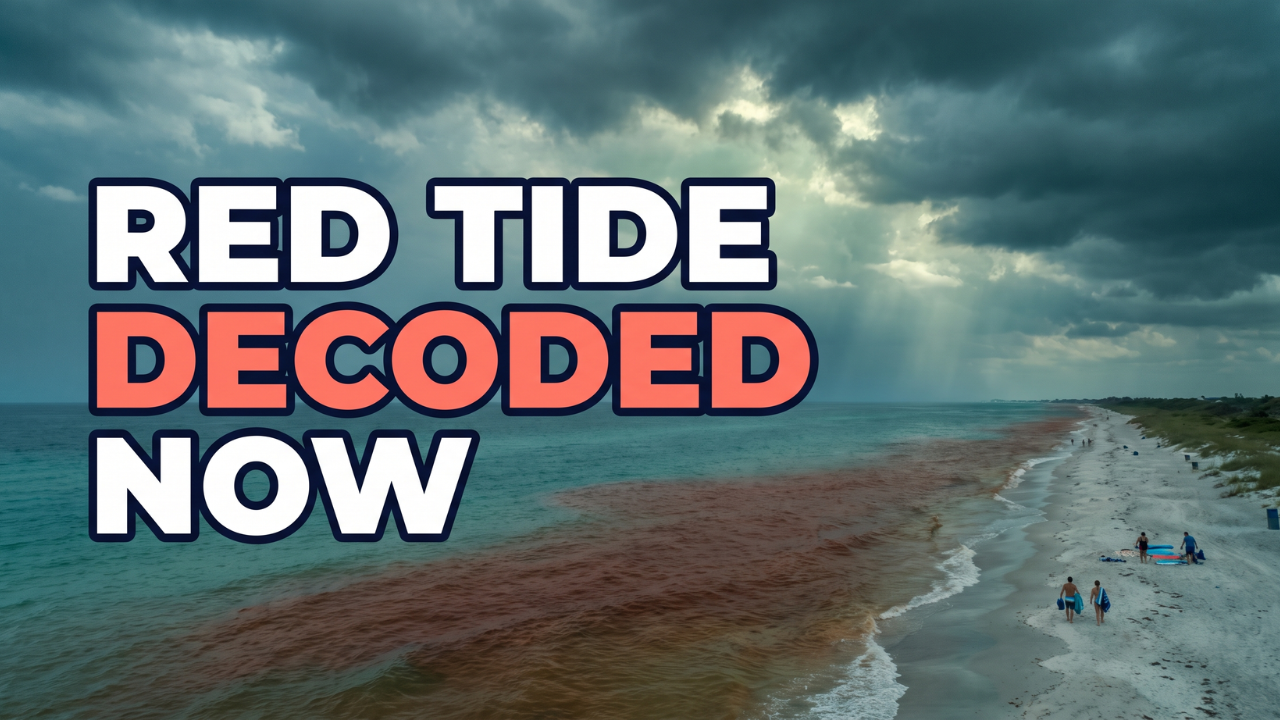
No smell. No warning sign. Just a beach full of people who suddenly start coughing, grab their towels, and leave. If you've ever wondered what that actually is, it's red tide, and it feels like a mystery right up until you understand the mechanism behind it. It isn't random, and it isn't unstoppable.
Red tide is caused by Karenia brevis, an algae that occurs naturally in the Gulf of Mexico and the Atlantic. When it blooms, it produces a toxin called brevetoxin, and wind and wave action carry that toxin into the air along the shoreline. That's why people can start coughing with no visible warning, nothing in the water looks obviously wrong, but the air itself is irritating their lungs. It's worse for anyone with asthma or another respiratory condition, but it can affect anyone standing close enough to the water.
This isn't a rare event. The 2017 to 2019 Southwest and Southeast Florida red tide bloom is estimated to have cost the region $2.7 billion, mostly in tourism-dependent business losses, over roughly a year and a half of disruption. Beaches closed. Dead fish washed up by the ton, and in the worst stretches, manatees, dolphins, and sea turtles did too.
Here's the part that doesn't get said enough: this bloom is controllable, even though the algae itself is natural. Karenia brevis needs three things to turn into a red tide: warm water, wind and currents that gather it together, and nutrients to feed on. Sea temperature is hard to control locally. Wind and currents aren't controllable at all. But nutrients are, and that's exactly where the accountability question lives.
Follow the water and the source becomes clear. Nitrogen and phosphorus accumulate in the Kissimmee River basin, flow into Lake Okeechobee, and when the lake fills during spring rains, water managers release it down the Caloosahatchee River into the Gulf, carrying decades of nutrient buildup with it. A 2022 University of Florida-led study (Medina et al., Science of the Total Environment) used nine years of data to confirm these discharges make red tide blooms bigger, longer, and more intense, not just correlated with them. Coastal nitrogen loading in the study area is now roughly two to three times pre-settlement levels.
It's worth being precise about where that nutrient load comes from, since it's genuinely contested. The Everglades Agricultural Area, farmland south of Lake Okeechobee dominated by sugarcane, operates under a legally mandated phosphorus-reduction program set by Florida's 1994 Everglades Forever Act, requiring at least a 25 percent cut in phosphorus leaving the area. State agency data, reported through an agricultural trade publication (a flag worth noting, since that's industry-adjacent framing, not peer-reviewed research), shows the program has averaged closer to 55 percent over the long term, exceeding its own legal minimum. That's a real, measurable result, worth stating plainly.
At the same time, the broader system still isn't meeting the water quality standard the lake and estuaries actually need. A stricter downstream phosphorus standard due to take effect in May 2027 is projected to still be missed, and of the constructed treatment wetlands built to filter this water, only one has hit that stricter target between 2021 and 2025, even though those wetlands remove the large majority of phosphorus overall. Historically, the tightest enforcement steps in this system have come from lawsuits rather than voluntary compliance: a 1988 federal suit led to the 1994 Everglades Forever Act, and further litigation followed in 2013.
Hold both of those facts at once. A specific, mandated program has produced a real result. The overall system still isn't there yet, and getting further has historically required courts, not goodwill. That's a policy and accountability gap, not a reason to vilify any one company or industry, most of which provide products people actually use.
In the meantime, there's something you can actually do before your next Gulf Coast beach trip: check before you go. Mote Marine Laboratory's Beach Conditions Reporting System, built on peer-reviewed research into reducing human exposure to red tide, uses trained volunteers to report dead fish, water color, wind direction, and respiratory complaints at named beaches. It's free, it updates like a weather forecast, and it turns a vague "something in the water" fear into a specific, checkable fact.
This also connects directly to the nutrient-pollution story from the "nature's kidneys" episode: healthy coastal wetlands like mangroves and marshes filter nitrogen out of the water before it ever reaches the coast. The same forces that make wetland loss worse make red tide worse. They're not two separate problems.
What you can actually do: find and bookmark your region's water quality or bloom tracker before your next coastal trip. For Gulf Coast beachgoers, that's Mote's Beach Conditions Reporting System. On the accountability side, this is also an election issue. Nitrogen and phosphorus limits are set and enforced at the state and local level, so who represents you there matters for whether this problem keeps getting worse or actually improves.
Takeaways:
- Red tide is caused by Karenia brevis, an algae that produces brevetoxin, a toxin that becomes airborne and irritates the respiratory system, worse for people with asthma but capable of affecting anyone near the water.
- The 2017–2019 Southwest and Southeast Florida red tide bloom cost the region an estimated $2.7 billion, mostly in tourism losses.
- Excess nitrogen and phosphorus flowing from the Kissimmee Basin through Lake Okeechobee and down the Caloosahatchee River make naturally occurring red tide blooms bigger, longer, and more frequent.
- A mandated program has cut phosphorus leaving Everglades-area farmland by roughly 55 percent long-term, against a 25 percent legal minimum, but the broader system still isn't meeting the standard the Gulf needs.
- Mote Marine Laboratory's free Beach Conditions Reporting System lets Gulf Coast beachgoers check red tide conditions before they go, at mote.org.

CEO
Nature's Kidneys: How Coastal Wetlands Filter Nitrogen Pollution for Free