Your Washing Machine Sheds Up to 18 Million Microfibers a Load
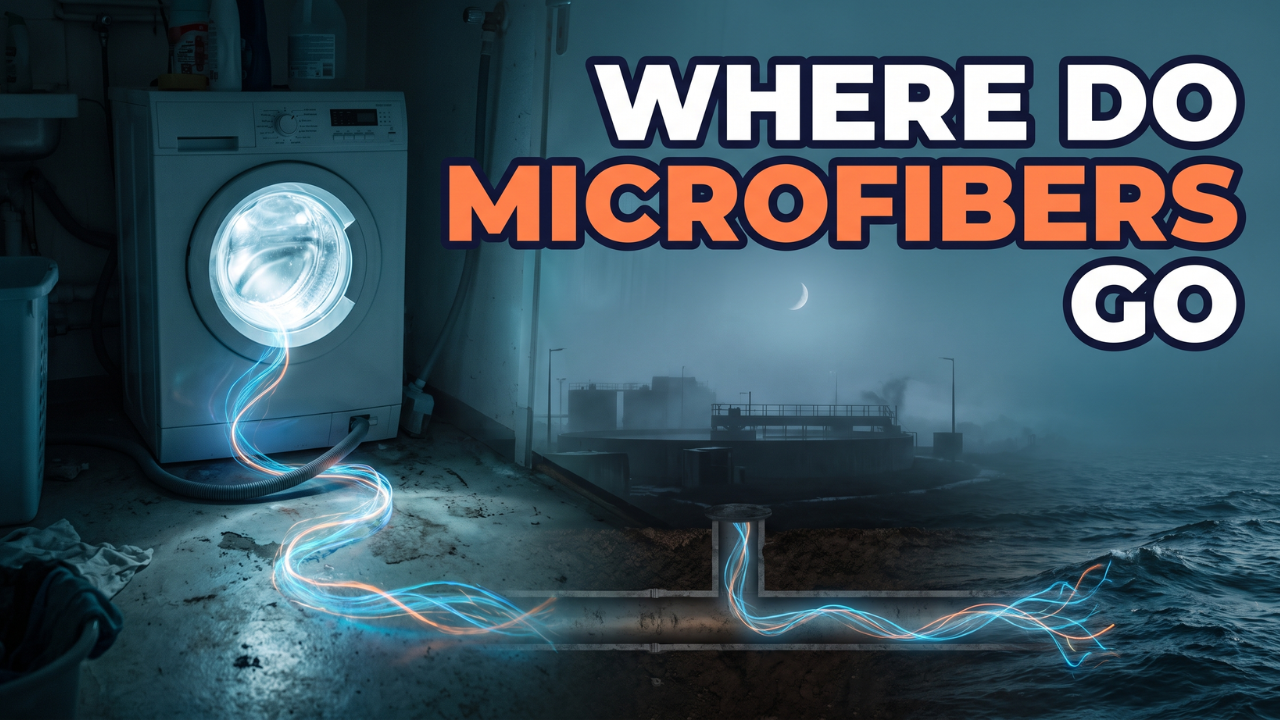
Every time synthetic clothing gets washed, it sheds tiny plastic fibers. Depending on the study, a single load can release anywhere from a few hundred thousand to 18 million of them, each one roughly 100 times thinner than a human hair. Last Monday, Andrew talked with Dr. Anja Brandon of Ocean Conservancy about this exact problem. This episode follows up on the question that conversation left open: has anyone actually fixed this yet?
Why Washing Sheds Fibers in the First Place
Agitation is the strongest, best-documented cause of shedding. Fibers rub against other fibers, the fabric weave, and the machine drum itself, wearing down fiber ends the same way a rope frays at a point of repeated friction. Machine type appears to matter too: top-loading machines with a central agitator have been reported to shed meaningfully more than front-loading machines that simply tumble, though the exact multiple should be confirmed against the original study before it's repeated as a hard number. Counterintuitively, a full load sheds less per item than a half-empty one, because more fabric-on-fabric contact is actually less abrasive than a few items tumbling loosely with extra water.
Heat and detergent play a role too, though the science is softer here. The working theory is that heat loosens the bonds holding fibers to fabric, making them more likely to break free under the same agitation, and one study found that different fiber types respond differently to heat versus wash duration. Detergent is the murkiest factor of all. Studies disagree on whether soap alone increases, decreases, or has no effect on shedding, but detergent combined with wash duration appears to have an outsized effect, suggesting soap's role may be less about attacking the fiber directly and more about extending how long fabric sits in an abrasive environment.
Where the Fibers Actually Go
Without a filter, shed fibers flow straight into the wastewater from the wash cycle. Wastewater treatment plants capture a substantial share of what reaches them (published estimates run well above the widely repeated "40%" figure some sources cite, more typically in the 60-99% range depending on the plant), but a high capture rate isn't the same as removal. Captured fibers end up in biosolids, and biosolids are frequently spread on farmland as fertilizer. The plastic isn't gone. It's relocated, from water to soil.
The fibers that make it past treatment continue into rivers, lakes, and the ocean. Once there, or once inhaled, their needle-like shape makes them unusually good at lodging in tissue. A 2024 University of New Mexico study found microplastics, including textile-linked nylon fibers, in every human placenta tested, real evidence that this isn't just an environmental abstraction but something reaching developing fetuses directly. A 2023 study using lung organoid models found that nylon 6,6 fibers specifically disrupted how developing airway cells grow, an effect researchers flagged as most concerning for young children with developing lungs and for people with existing lung disease. And this isn't a brand-new discovery: a 1998 study examining 114 human lung tissue samples found inhaled cellulosic and plastic fibers, including polyester, in 87% of them, some of the earliest direct evidence that fiber-shaped plastics accumulate in human lungs at all.
The Fix That Keeps Stalling
Here's the frustrating part: the fix is cheap and it already works. France passed the world's first law requiring microfiber filters on new washing machines, effective January 2025. It still isn't enforced, because the technical definitions needed to actually apply it, what counts as a microfiber, what makes a filter compliant, were never published. California tried its own version, AB 1628, which passed the legislature in 2023 and was vetoed by Governor Newsom, who cited cost concerns even though Ocean Conservancy's own economic analysis put the added cost at just $14 to $20 per machine. The primary opposition came from the appliance manufacturers' trade group, which has disputed how much filters actually capture, a dispute the next episode covers in more detail. A federal bill, the Fighting Fibers Act of 2025, introduced by Representative Mike Levin and Senator Jeff Merkley, is currently sitting in committee.
For anyone who doesn't want to wait on policy, there are options today. A Cora Ball (around $42) is low-maintenance and catches roughly a quarter to a third of shed microfibers per load. A Guppyfriend mesh washing bag (around $36) claims to catch a much higher share of whatever's washed inside it specifically. A PlanetCare retrofit filter ($76 to $132, plus replacement cartridges every 30 to 60 days) claims the highest capture rate of the three, around 98%, at the cost of the most maintenance and ongoing expense. None of these is a perfect answer on its own. Andrew hasn't tried one yet himself, but plans to, and will report back on what the actual maintenance looks like.
Takeaways:
- A single load of synthetic laundry can shed anywhere from a few hundred thousand to millions of microfibers, and agitation is the best-documented cause, though machine type, wash temperature, and detergent all play a role too.
- A full load of laundry sheds less per item than a half-empty one, because more fabric-on-fabric contact is actually less abrasive than items tumbling loosely with excess water.
- Fibers that make it past a wastewater treatment plant often end up in biosolids, which get spread on farmland as fertilizer, meaning they're relocated rather than actually removed from the environment.
- Emerging research has found textile-linked microplastic fibers in human lung tissue and in every human placenta tested in a 2024 study, with inhaled nylon fibers shown to disrupt developing airway cells.
- A washing machine filter can capture the large majority of shed microfibers for an estimated $14 to $20 added to the cost of a machine, but France's 2025 filter law remains unenforced, California vetoed its own version in 2023, and a federal bill is still in committee.
- Consumer-level options exist today: a Cora Ball, a Guppyfriend mesh washing bag, or a PlanetCare retrofit filter, each trading off cost, maintenance, and capture rate differently.

CEO


