People and Sustainability: The Human Cost Big Business Keeps Ignoring


 Apple Podcasts
 Spotify
 YouTube
 Amazon Music
 PocketCasts
 Overcast
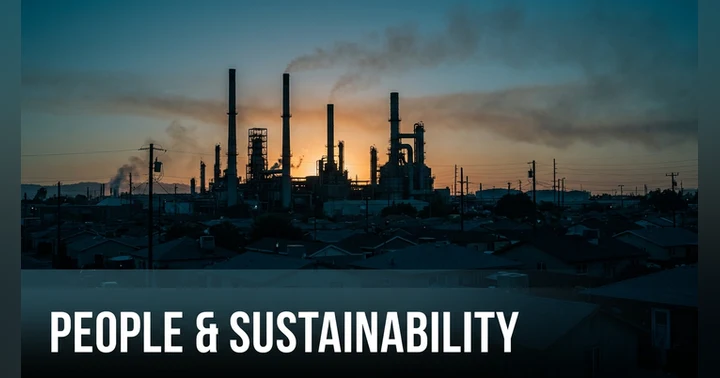
 Sustainability conversations usually center on ecosystems, emissions targets, and corporate pledges, but this episode makes the case that people belong at the center of that conversation too. Andrew looks at how communities living closest to refineries, extraction sites, and industrial waterfronts carry a disproportionate share of the pollution burden, often without having consented to the risk in the first place.
Using a Philadelphia refinery as a case study, Andrew walks through how fenceline communities experience higher poverty rates, higher rates of residents of color, and elevated cancer and respiratory risk compared to their surrounding cities. He extends that pattern to wildfire response, contrasting how affluent California communities were able to evacuate and rebuild after the Santa Ana wind fires with how remote Northern Ontario and Arctic communities, some with only one road in and one road out, had to be airlifted out entirely. The episode also revisits New York's Hudson River, once devastated by industrial chemical runoff and now home to returning oysters, menhaden, and whales after decades of restoration work.
The back half of the episode turns to policy. As federal environmental justice efforts recede in 2026, states including Minnesota, Illinois, and Massachusetts are stepping into that gap, and nonprofit legal teams are winning court challenges against federal rollbacks. Andrew closes with a reminder that protecting the environment and protecting people are frequently the same fight, and that sustainable business practices tend to protect local economies as much as they protect public health.
Takeaways
- Communities near industrial facilities carry a disproportionate pollution burden, often without their consent
- Fenceline communities show higher poverty rates, higher percentages of residents of color, and elevated cancer and respiratory risk
- Wildfire evacuation capacity varies sharply by community resources and infrastructure
- The Hudson River's recovery shows environmental restoration is possible after decades of industrial damage
- States are advancing environmental justice policy as federal efforts recede in 2026
- Courts have blocked some federal rollbacks of environmental justice funding
- Protecting the environment and protecting public health are frequently the same fight
Support Independent Podcasts: https://www.speakupforblue.com/patreon
Need help with your ocean non-profit, company, or project? Get the help you need with Pisces Oceans Inc.: https://www.piscesoceans.ca
Connect with Speak Up For Blue
Website: https://bit.ly/3fOF3Wf
Instagram: https://bit.ly/3rIaJSG
TikTok: https://www.tiktok.com/@speakupforblue
Twitter: https://bit.ly/3rHZxpc
YouTube: www.speakupforblue.com/youtube
0:00 In the past, the health of people really haven't been at the center of attention for businesses. And a lot of the times, some of the businesses that really run our economy, whether it be in Canada, whether it be in the US, like the fossil fuel companies, have really put people at the lowest end of the society in some cases. It's a real shame to see that and what they've been able to get away with. And for a long time, people were suffering with cancer, high cancer rates and things like that in Chemical Alley in the United States and other places. And today we're gonna be talking about how businesses who are not sustainable and who have problems with providing health problems to people in the surrounding areas of refineries and factories and so forth, and disposal areas, have really made a big problem for people.
0:50 And that sustainable businesses need to think of the health of the people who not only they serve as providing services and products for, but are people who are in the surrounding areas that are part of the communities where these businesses actually run. And I think today's episode of the How to Protect the Ocean podcast, we're gonna be really focusing on people and sustainability, especially from, like, a negative point of view of the past that's happened, and areas that were vulnerable communities have really suffered, and how we would like to see a change, and how a lot of places are changing in that way, but not fast enough, and unfortunately in the US, not under this administration. So, today we're gonna be talking about that. As we do, we talk about sustainability, ocean news every weekday, Monday to Friday.
1:30 If you enjoy that type of news, please feel free to follow on your favorite podcast app. And of course, if you wanna support the show, you can do so by going to speakupforblue.com/patreon. I am here to provide you with what you need to know to protect the ocean. I want you to know how to protect the ocean, hence the name of this podcast. And we do this on How to Protect the Ocean. We do this on Beyond Jaws. We talk about it on Ocean Decoded Live, our YouTube channel. We talk about it on TikTok. We talk about it on Instagram. We talk about it on Facebook. We talk about it on social media. And that's what we do here. And if you wanna support the show, all the efforts that I make, you can do so at speakupforblue.com/patreon. All right, let's get back into the show here. Sustainability is about people. And if we look in the past and how major industries have really screwed people over.
2:17 Communities living next to industrial facilities carry a disproportionate pollution burden. In Philadelphia, a former refinery released the second highest benzene emissions of any US refinery in 2020 and 2021, even after being shut down, with roughly 117,000 people living within one mile, most of them low-income residents of color. And why is this happening? Like what is really going on? So fentyl in communities consistently show higher poverty rates, higher percentages of residents of color, and high cancer rates and respiratory hazard risk rates than the surrounding city or county. And more people now live in oil and gas development due to expanding extraction techniques and new industrial animal operations, both linked to increased pollutant exposure.
3:05 And if you look at something that's very, very new to the news world is wildfires. Areas where, you know, forests are catching on fire and they are spreading like crazy are areas where you will see some of our most vulnerable communities. Communities who do not have the infrastructure or the getaway a lot of the times to get out easy, to evacuate their areas easily. Last year and the year before, we talked about the Santa Ana winds in California, Pasadena. It was horrible what we saw. We saw homes go down, people losing pets. They lost homes, they lost memorabilia, they lost a lot of things and their possessions. And now these were homes of affluent communities for the most part, and they were able to get another home.
3:46 Obviously they were devastated, but they had the means to be able to find places to live and get their family safe and get out as safely as possible. Obviously quickly, and had to be evacuated for some, but still able to get out compared to countries in the north of Canada, Northern Ontario, the Arctic, where indigenous communities who do not have the infrastructure of multiple roads and some, they only had one road in, one road out, could not get out because of the wildfires. They had to be evacuated out by plane or by helicopter multiple times to accommodate all the family members of that community. These are vulnerable communities. Some of them don't even have proper drinking water. Some of them don't have road infrastructure, multiple road infrastructure.
4:29 Some of them just don't have the communities to rebuild and go back to where they can because there might be another fire there, or they don't have the money to rebuild, or the money is not being put in to rebuild because there's such a disaster around the area that other things have to be rebuilt and maybe prioritized differently That's a scary thought when you are surrounded by wildfires, and these wildfires come in quickly. Anybody who's been around them or studied them knows how fast these wildfires spread. And sometimes you think, "Oh, I have time to get out." No, you don't have time to get out, and you have to get out when they tell you to because if not, it might be too late. A lot of times before a community's evacuated, they give like the get your 72-hour bag ready, basically being like within 72 hours you be ready to go at any point in time, because you have to have a go bag and you have to get out, and you have to know how to get out.
5:14 Think about a massive community of like 100, 200 people up north in very remote areas having to get out all at the same time with one road in, one road out. That's not good. Then you're looking at breathing in all the toxins from the fire, the methane, the metals, everything that comes out, the nasty stuff that comes out of those fires, the smoke from the fire. Then you're looking at communities downwind or upwind, wherever they are, where that wind goes and where the wind blows. You have those communities that have higher toxicity in the air, bad water quality. Toronto had the worst air quality in the world at one point a couple of weeks ago. That was the least that we suffered compared to all these other communities who were devastated by the loss of their homes and their communities and some of them, their loved ones.
5:59 And again, it's these, companies that continue to contribute to the problem and get away with it with tax breaks and other things and other benefits that they can get away with while building their refineries, while building their oil and gas extraction plants and things like that. And then of course, there's other places where there's like really bad health, outcomes, right? Now, some of the things that, like the consequences you get, like obviously the health outcomes, not just like ecosystem outcomes where it's bad, but directly involved in like industrial siting decisions. There's an ocean tie-in, like the Philadelphia example includes a shipping port among the compounding pollution sources and the direct link between industrial waterfront activities and community health.
6:41 If you look at New York back in the '50s and '60s and '70s, their water quality was awful along the harbor front. Like, the Hudson River was a disaster. They lost a lot of, like, oysters. They lost their whales, they lost their menhaden because that's when the whales left. And they're just the, the chemicals that were in there from the warehouses and the chemical plants and all that kind of stuff just made it an absolute disaster. And then of course being around that area, inhaling all that smell and the chemicals coming off of that, that couldn't have been good for them either. And then when New York cleaned up its harbor finally, the menhaden came back, oysters were put back in through restoration efforts, expensive restoration efforts, and then eventually the whales came back. And that's great. That's awesome.
7:21 I think that's great to be able to clean it up, but to get there in the first place is really awful and that's where a lot of people were suffering. And the refineries where they are, the old refineries that are shut down and the example that I talked about at the beginning of this show and refineries that are going on right now are usually in areas where it's poverty-stricken. The people can't afford to move and nobody's gonna buy their homes right next to a refinery. So it's not as if they have a lot of value in their homes other than living in their homes and having their communities. Plus that's where they grew up. That's their history. That's their culture. Those refineries may not have been there when they were first born, but then they got added there without their consultation and without any word from them. And now they're suffering higher cancer rates, higher pollution rates, emphysema, asthma rates.
8:02 It's awful. These are examples of companies who don't care about the people who are probably their consumers, and they get away with it every single time. And unfortunately, like the states are stepping up as federal environmental justice efforts recede in 2026. So, Minnesota is advancing cumulative impact rules. Illinois created an EPA Office of Environmental Justice, and Massachusetts adopted new siting regulations for energy infrastructure. So, we're seeing states step up where the federal government is lacking, 'cause the federal government has pretty much taken away all the ability for the EPA to do anything, and sometimes the EPA is harming more than it is doing good. And meanwhile, like in federal courts found the EPA unlawfully terminated environmental justice grant funding, because that's what they did when they first came out, 'cause they wanted to get rid of any kind of, quote-unquote, " DEI projects." And that case is still being litigated on appeal.
8:52 So, the EPA tried to take it away, went to court, a judge says, "Hey, yeah, you can't do this," and now it's being appealed I assume, by the federal government. And this is where we start to feel hopeless a little bit. One, you know the courts are doing their jobs by upholding the laws that were originally put in, in most cases. We've seen a lot of environmental things that the Trump administration has tried to do in the last couple years, and a lot of times they haven't been able to be successful. Although some, they have been able to be successful is opening up marine monuments to industrial fishing and/or artisanal fishing. They're not monitoring those programs either as a way to actually look at what kind of data they can get out of that and looking at the benefits of what a marine protected area has over the last 10, 16 years, or 15 years, has been able to do to replenish those numbers.
9:34 Unfortunately, they're just not gonna get the value out of that by monitoring that. And in many cases, like this case where there were the EPA unlawfully terminated environmental justice grant funding, that gets held up in court, which is good. So we're starting to see some movement on there, but there's still a lot of stuff that people are fighting that environmental justice people, environmental advocates are fighting, and activists are fighting against the Trump administration. And nonprofit organizations and NGOs who have law divisions, who have people able to take the government to court, they're taking them to court, and they're winning these battles, which is really great to see. Now, there's stuff that you can do. You can understand that protecting the environment and protecting people are the same fight in some communities. I think sometimes you'll hear me or you'll hear people be like, " Hey, you know what? We need to protect the environment.
10:14 This is one of the best things we need to do." But while protecting the environment, you're also protecting the economy, you're making it more sustainable, you're saving money for businesses, and you're protecting people. You are protecting people. And people will start to say, " Why do we care about the environment? We need to care about the economy." We also need to take care of the health of people, which often gets ignored when we talk about climate change. When we talk about pollution, it gets ignored a lot of the times. And we've seen some really big mistakes that have happened in countries all over the world, but especially in the US, especially as these laws are being contested for protecting the environment. So that's it for today's episode. It's a short one. I just wanted to get that through. Protecting the environment, being sustainable protects people, and that's a very big, important part of sustainability.
10:54 So I'd love to hear your thoughts. You can DM me in my socials, go to the show notes. You can also support the show by going to speakupforblue.com/patreon. I put an episode Monday to Friday. I do The Ocean Decoded live on YouTube. I, uh, do The Beyond Jaws podcast with David Ebert. We edit shows. We do all this wonderful stuff, to get you the ocean resources you need so that you can make - a better decision on protecting the ocean. And this is how you learn how to protect the ocean, by listening to this podcast. So follow on your favorite podcast app, and don't forget to go speakupforblue.com/patreon if you wanna support the show and become part of the community. I wanna thank you so much for joining me on today's episode of the How to Protect the Ocean podcast. I'm your host, Andrew Lewin.
11:35 Have a great day. We'll talk to you next time, and happy conservation.