Does Your Public Comment Count? Two Ocean Wins Show How

 Apple Podcasts
 Spotify
 YouTube
 Amazon Music
 PocketCasts
 Overcast
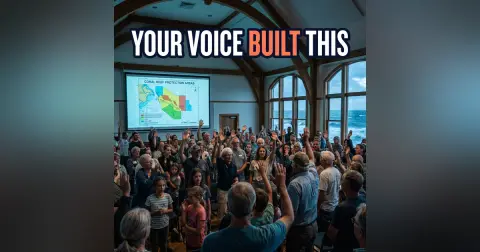
 Earlier this year, about 65,000 people submitted comments on a federal deep-sea mining proposal near the Northern Mariana Islands, most of them opposed. The area under consideration nearly doubled anyway. So why should anyone show up to a public meeting about the ocean? Andrew Lewin makes the case with two marine protected area processes that earned broad public support by design.
The first is the Great Barrier Reef Marine Park's Representative Areas Program, which rezoned the entire park between 1999 and 2004. Two formal community participation phases, one before any draft existed, drew more than 31,000 public submissions, while standing local advisory committees kept fishers, tourism operators, and coastal communities in the conversation year round. No-take zones grew from about 4.5 percent of the park to 33.3 percent. The second is the Chumash Heritage National Marine Sanctuary off California's Central Coast, nominated by the Northern Chumash Tribal Council in 2015 and designated in October 2024 after a staged NOAA process that drew more than 110,000 comments, over 98 percent in support.
Andrew explains what those processes had that a bare petition process lacks: staged phases, standing advisory structures, clear ownership of the proposal, and a room where people feel safe to speak. He connects it to what happened in California's MPA review, covered earlier this week with Anupa Asokan, and to the Fish and Game Commission meetings in Sacramento this October. He wants to hear about your own public comment experiences, good or bad.
Takeaways:
- A petition process with no staged phases, standing advisory structure, or way to reconcile competing input tends to produce conflict and weak buy-in.
- The Great Barrier Reef rezoning ran two formal public phases, in 2002 and 2003, and drew more than 31,000 submissions.
- Local marine advisory committees kept dialogue with fishers, tourism operators, and communities going between the formal windows.
- No-take zones grew from about 4.5 percent to 33.3 percent of the Great Barrier Reef Marine Park in 2004.
- Andrew recalls fisher tracking data being used to place new no-take areas where they would have the least impact on fishing.
- A study of the rezoning found science, leadership, public engagement, and politics all had to work together for approval.
- The Chumash Heritage National Marine Sanctuary was the first tribally nominated national marine sanctuary in the US, and more than 98 percent of comments supported it.
- Without buy-in, a marine protected area risks becoming a paper park.
- Knowing how the process works makes it easier to show up, speak, and support others in the room.
Support Independent Podcasts: https://www.speakupforblue.com/patreon
Need help with your ocean non-profit, company, or project? Get the help you need with Pisces Oceans Inc.: https://www.piscesoceans.ca
Connect with Speak Up For Blue
Website: https://bit.ly/3fOF3Wf
Instagram: https://bit.ly/3rIaJSG
TikTok: https://www.tiktok.com/@speakupforblue
Twitter: https://bit.ly/3rHZxpc
YouTube: www.speakupforblue.com/youtube
00:00:00,000 --> 00:00:02,722
In 2004, halfway across the world,
2
00:00:02,722 --> 00:00:06,815
a government agency rezoned an entire
National Marine Park and ended up being
3
00:00:06,815 --> 00:00:10,367
one of the largest protected area
decisions on the planet.
4
00:00:10,367 --> 00:00:14,590
And somehow they ended up with broad
public support instead of a fight.
5
00:00:14,590 --> 00:00:17,562
They didn't just get lucky, right?
6
00:00:17,562 --> 00:00:21,255
They built that process specifically to
design to earn the support that they
7
00:00:21,255 --> 00:00:25,788
received. And here's what that process
actually looks like and what
8
00:00:25,788 --> 00:00:28,770
it tells us about how any of these
decisions
9
00:00:29,027 --> 00:00:33,300
can be made in the future and just even
now in the present.
10
00:00:33,300 --> 00:00:35,402
This is the How to Protect the Ocean
podcast.
11
00:00:35,402 --> 00:00:39,335
I'm your host, Andrew Lewin, and this is
where I talk about marine science,
12
00:00:39,335 --> 00:00:44,349
marine conservation, and just how we can
protect the ocean better.
13
00:00:44,349 --> 00:00:46,211
I am a marine biologist myself.
14
00:00:46,211 --> 00:00:50,825
I am also a science communicator and I am
the ocean communications manager
15
00:00:50,825 --> 00:00:55,569
for a consulting firm called Pisces Oceans
where we work with ocean projects
16
00:00:55,840 --> 00:00:58,901
to help them succeed to make a bigger
ocean impact.
17
00:00:58,901 --> 00:01:02,503
Today on the podcast, we're gonna be
talking about marine protected areas,
18
00:01:02,503 --> 00:01:03,894
just like we have been all week.
19
00:01:03,894 --> 00:01:05,695
We're gonna be talking about something
that's really,
20
00:01:05,695 --> 00:01:08,667
really important is actually getting
public support.
21
00:01:08,667 --> 00:01:11,908
That doesn't always happen, and it and it
can be very tricky.
22
00:01:11,908 --> 00:01:14,110
And there's a lot of things that have
happened over the years,
23
00:01:14,110 --> 00:01:15,110
over the decades.
24
00:01:14,940 --> 00:01:16,531
That have improved that process.
25
00:01:16,531 --> 00:01:20,993
But we're gonna be talking about two
successes and what doesn't really work.
26
00:01:20,993 --> 00:01:23,655
So, like the two successes, we're gonna
talk about why they worked,
27
00:01:23,655 --> 00:01:27,467
and we're also gonna be talking about
another process that happens that doesn't
have
28
00:01:27,467 --> 00:01:31,159
the right things to make this work and and
it causes conflict,
29
00:01:31,159 --> 00:01:34,861
which we kind of saw in the California
Marine Protected Areas Network interview
30
00:01:34,861 --> 00:01:38,453
I did with Anupa Asokon earlier this this
week.
31
00:01:38,453 --> 00:01:40,544
So you can check that out after you listen
to this one.
32
00:01:40,544 --> 00:01:42,515
But this is something that's really
important because like
33
00:01:42,879 --> 00:01:45,772
I think the biggest thing when we talk
about MPAs or we talk about
34
00:01:45,772 --> 00:01:49,405
any kind of public process where
conservation is the focus,
35
00:01:49,405 --> 00:01:53,298
people wonder if it's even worth showing
up to a public meeting,
36
00:01:53,298 --> 00:01:56,121
right? About any kind of environmental
decision.
37
00:01:56,121 --> 00:01:58,293
Or is it just kind of noise that they just
like,
38
00:01:58,293 --> 00:01:59,566
hey, yeah, we want to get your input,
39
00:01:59,566 --> 00:02:00,566
but we're not going to listen.
40
00:02:00,445 --> 00:02:03,938
To be honest, this happened already this
year or last year when
41
00:02:03,938 --> 00:02:07,992
the American government put out a public
opinion period for about a month
42
00:02:07,992 --> 00:02:08,993
or a little bit longer.
43
00:02:09,419 --> 00:02:12,230
For the American Samoa and the Northern
Mariana Islands,
44
00:02:12,230 --> 00:02:16,332
the CNMI, when it came to looking at and
exploring deep sea mining.
45
00:02:16,332 --> 00:02:18,612
Sixty-six thousand people came out and
said,
46
00:02:18,612 --> 00:02:21,593
We do not want deep sea mining around the
Mariana Islands.
47
00:02:21,593 --> 00:02:23,694
And the government said, Hey, you know
what?
48
00:02:23,694 --> 00:02:26,746
Actually, we're gonna do it and we're
gonna double the amount.
49
00:02:26,746 --> 00:02:28,436
So that makes people wonder like,
50
00:02:28,436 --> 00:02:30,717
why do we even show up to these public
processes?
51
00:02:30,717 --> 00:02:33,758
Cause having like a just a bare petition
you know,
52
00:02:33,758 --> 00:02:35,579
where you just submit and w and wait.
53
00:02:36,274 --> 00:02:40,516
with no dedicated structure for managing
conflict or reconciliation,
54
00:02:40,516 --> 00:02:44,168
~ compete like some kind of competing
input in plain language.
55
00:02:44,168 --> 00:02:45,719
like that doesn't necessarily work.
56
00:02:45,719 --> 00:02:47,570
You need something to put together,
57
00:02:47,710 --> 00:02:49,181
So here's the problem with that structure.
58
00:02:49,181 --> 00:02:50,229
But before I talk about the problem,
59
00:02:50,229 --> 00:02:53,172
I want explain first. When there is
something at hand,
60
00:02:53,172 --> 00:02:54,792
like something ~ environmental,
61
00:02:54,792 --> 00:02:56,553
and an environmental decision needs to be
made,
62
00:02:56,553 --> 00:02:59,524
we'll say we'll use MPAs, that's what
we've been talking all the day.
63
00:02:59,524 --> 00:03:01,774
Marine Practical Areas, we've been talking
about that all week.
64
00:03:01,774 --> 00:03:07,796
When when a petition gets gets put forward
of a question or of a worry or even
65
00:03:08,182 --> 00:03:12,285
Proposing an MPA, that has to go through
an entire process.
66
00:03:12,285 --> 00:03:15,407
But if you just have this bare petition
process and you submit,
67
00:03:15,407 --> 00:03:18,510
you wait, and you don't have any dedicated
structure for managing
68
00:03:18,510 --> 00:03:21,722
any kind of conflict or reconciling
competing input,
69
00:03:21,722 --> 00:03:27,746
it just doesn't work. So this is the part
of where like I've seen this stuff happen
70
00:03:27,746 --> 00:03:30,028
where it's succeeded and I've seen where
it hasn't succeeded.
71
00:03:30,028 --> 00:03:31,729
So we're gonna talk about that today.
72
00:03:31,729 --> 00:03:35,552
I'm gonna guide you through the process of
what worked with two examples.
73
00:03:36,084 --> 00:03:39,006
The first is the Great Barrier Reef Marine
Park,
74
00:03:39,006 --> 00:03:41,027
the Marine Park. And this is, you know,
75
00:03:41,027 --> 00:03:43,239
one of the wonders of the world.
76
00:03:43,239 --> 00:03:47,271
We've been talking about a lot on the
podcast because they have a huge barrier
coral
77
00:03:47,271 --> 00:03:51,264
reef. it is one of the most beautiful
places in the world to go diving.
78
00:03:51,264 --> 00:03:53,576
and it is the the ecosystem services,
79
00:03:53,576 --> 00:03:57,748
the things that that that are provided
through this process or through this
barrier
80
00:03:57,748 --> 00:03:58,748
reef park.
81
00:03:58,629 --> 00:04:00,640
Is unbelievable and we need to protect it.
82
00:04:00,640 --> 00:04:03,461
And so a while ago, back in the 70s,
83
00:04:03,461 --> 00:04:05,372
they went Australia went through a
process,
84
00:04:05,372 --> 00:04:08,823
the government went through a process to
put in these zones,
85
00:04:08,823 --> 00:04:13,235
these managed management zones of the the
Great Barrier Reef Park.
86
00:04:13,235 --> 00:04:15,685
And they call it the Great Barrier Reef
Marine Park.
87
00:04:15,685 --> 00:04:21,087
And it's so it is it is a an authority on
there that works to protect
88
00:04:21,288 --> 00:04:23,598
the interests of a number of different
coastal people,
89
00:04:23,598 --> 00:04:27,050
but also the environmental aspect and
protect the environmental aspect.
90
00:04:27,070 --> 00:04:29,190
when they went through a part where
they're like,
91
00:04:29,190 --> 00:04:31,351
let's get feedback, because in the law,
92
00:04:31,351 --> 00:04:34,022
they had to have feedback, right?
93
00:04:34,022 --> 00:04:38,014
So you know, this is like 30 years later
after it was it was put into place,
94
00:04:38,014 --> 00:04:42,405
there was a what they called a Great
Bearer Reese representative areas program,
95
00:04:42,405 --> 00:04:48,368
which ran from 1999 to 2004 and rezoned
the entire marine park.
96
00:04:48,368 --> 00:04:51,119
One of the largest protected area planning
decisions that have
97
00:04:51,279 --> 00:04:55,950
Ever been undertaken. And it wasn't an
optional thing for the agency to do.
98
00:04:55,950 --> 00:04:58,251
They had to do this because it was
governed by law,
99
00:04:58,251 --> 00:05:04,352
right? It legally required a minimum of
two separate formal public comment phases,
100
00:05:04,352 --> 00:05:09,854
each at least a month long. And then one
before a draft zoning plan
101
00:05:09,854 --> 00:05:13,005
was ever written, and a second on the
completed draft itself.
102
00:05:13,005 --> 00:05:15,636
So people can comment on the different
parts.
103
00:05:15,636 --> 00:05:16,736
And on top of that,
104
00:05:17,080 --> 00:05:19,892
There's a legal minimum. The agency built
and ~ and
105
00:05:19,892 --> 00:05:22,554
may maintained standing community
structures.
106
00:05:22,554 --> 00:05:26,197
So the local marine advisory committees
and reef advisory committees.
107
00:05:26,197 --> 00:05:28,448
So that ongoing dialogue with fishers,
108
00:05:28,448 --> 00:05:32,271
tourism operators, and coastal communities
happened continuously,
109
00:05:32,271 --> 00:05:34,763
not just during the official two windows.
110
00:05:34,763 --> 00:05:36,454
So this was something that was ongoing.
111
00:05:36,454 --> 00:05:40,036
This was a system, a governing system that
was put in place,
112
00:05:40,036 --> 00:05:44,199
implemented to say, hey, this is how we're
gonna go forth and we're gonna.
113
00:05:44,468 --> 00:05:48,031
You know, move forward with all of these
like getting that feedback from people.
114
00:05:48,031 --> 00:05:49,342
It's been an ongoing conversation,
115
00:05:49,342 --> 00:05:52,014
not just a one you submit and you just
wait.
116
00:05:52,014 --> 00:05:56,717
The process drew over 31,500 public
submissions.
117
00:05:56,717 --> 00:06:00,911
And the outcome, the no-take protection
areas were like,
118
00:06:00,911 --> 00:06:03,262
so I remember I said there was a different
management zones.
119
00:06:03,262 --> 00:06:06,155
One of them was no-take, meaning like you
couldn't take anything from there.
120
00:06:06,155 --> 00:06:09,527
Even researchers weren't allowed in to
survey these places.
121
00:06:09,527 --> 00:06:12,019
They were at five percent protection of
the entire park.
122
00:06:12,019 --> 00:06:14,141
So five percent of that park was no-take
areas.
123
00:06:14,419 --> 00:06:19,163
That went after this process went from 5%
to more than 33%.
124
00:06:19,163 --> 00:06:20,774
This was unprecedented at the time.
125
00:06:20,774 --> 00:06:25,028
I remember sitting in on a lecture at
Akata University where I did my graduate
work.
126
00:06:25,028 --> 00:06:27,150
And Brian Day, who was the chair of the
park,
127
00:06:27,150 --> 00:06:28,311
he was a director of the park,
128
00:06:28,311 --> 00:06:29,661
he was like, Yeah, this is what we did,
129
00:06:29,661 --> 00:06:32,784
and this was amazing. We did no clue that
this was happening.
130
00:06:32,784 --> 00:06:36,497
And a side story on top of that is that
one of the things that they were looking
131
00:06:36,497 --> 00:06:41,702
at was they had actually ~ followed and
tracked fishers and where they would go.
132
00:06:42,492 --> 00:06:44,483
And they noticed when they put the tracks
like at first,
133
00:06:44,483 --> 00:06:47,476
fishers were like really against you know
it like increasing the
134
00:06:47,476 --> 00:06:49,928
no take areas because that affected their
business,
135
00:06:49,928 --> 00:06:51,639
right? And then what they did is they
said,
136
00:06:51,639 --> 00:06:52,880
yeah, okay, well, I'll tell you what,
137
00:06:52,880 --> 00:06:55,061
we're gonna overlay where you guys were,
138
00:06:55,061 --> 00:06:57,573
so the tracks over this certain amount of
time,
139
00:06:57,573 --> 00:07:00,415
and ~ we're gonna show you where we wanna
increase.
140
00:07:00,415 --> 00:07:06,370
And it actually happened where the
increase in the in the area didn't affect
where
141
00:07:06,370 --> 00:07:08,892
these fishers fished. And so they like,
142
00:07:09,446 --> 00:07:10,827
Okay, well, this makes sense. Like,
143
00:07:10,827 --> 00:07:12,709
yeah, this is where you guys are are
fishing,
144
00:07:12,709 --> 00:07:16,392
and we want to protect it just on the cusp
of that,
145
00:07:16,392 --> 00:07:18,594
but not where you fish. And the fish are
like,
146
00:07:18,594 --> 00:07:20,295
Yeah, that makes sense. No problem.
147
00:07:20,295 --> 00:07:22,677
That's actually going to improve our
fishing later on.
148
00:07:22,677 --> 00:07:26,140
So I'm sure it wasn't that great of a
dialogue in terms of that easy,
149
00:07:26,140 --> 00:07:27,662
but you know, that's what they did.
150
00:07:27,662 --> 00:07:31,925
They used the data that they were
collecting to provide that in the comment
period.
151
00:07:31,925 --> 00:07:35,398
They had these conversations with fishers,
152
00:07:35,398 --> 00:07:36,940
and it ended up winning. And not only
that,
153
00:07:36,940 --> 00:07:37,940
were they
154
00:07:37,510 --> 00:07:40,812
The whole process was recognized
internationally as best practice,
155
00:07:40,812 --> 00:07:43,134
winning multiple national and
international awards,
156
00:07:43,134 --> 00:07:44,975
including the UNESCO Environmental Prize.
157
00:07:44,975 --> 00:07:48,268
So the program's own director later
co-authored an analysis,
158
00:07:48,268 --> 00:07:50,459
making a specific point worth repeating.
159
00:07:50,459 --> 00:07:55,023
Strong science alone would not have
produced that outcome.
160
00:07:55,023 --> 00:07:58,285
It took science, public participation,
161
00:07:58,285 --> 00:08:03,048
and the political support that
participation generated together
162
00:08:03,209 --> 00:08:05,010
as three connected pieces.
163
00:08:05,443 --> 00:08:07,864
Not one substituting for the others.
164
00:08:07,864 --> 00:08:14,727
That's huge. That is what we need to put
into these plans so that we get the
buy-in.
165
00:08:14,727 --> 00:08:19,218
Because the marine protected areas is
great in theory,
166
00:08:19,218 --> 00:08:23,490
but unless you have buy-in, it just
becomes a paper park because nobody's
gonna want
167
00:08:23,490 --> 00:08:25,941
to follow what what they're doing,
168
00:08:25,941 --> 00:08:29,202
like what the plan was to do. And if you
get that buy-in,
169
00:08:29,202 --> 00:08:32,803
that's even better. Now the second case is
closer to
170
00:08:33,212 --> 00:08:36,124
the US, actually in the US, in California.
171
00:08:36,124 --> 00:08:40,745
And so this is the Shumash Heritage
National Marine Sanctuary
172
00:08:40,745 --> 00:08:42,405
off California's Central Coast.
173
00:08:42,405 --> 00:08:45,647
So the critical difference here is where
the idea came from.
174
00:08:45,647 --> 00:08:48,135
So before the Marine Park had already been
put in,
175
00:08:48,135 --> 00:08:51,216
like the Great Berry Reef Marine Park had
already been established for
176
00:08:51,416 --> 00:08:55,407
a number of years. And this was part of
their ongoing feedback and
177
00:08:55,407 --> 00:08:59,018
and using science and feedback and public
support to do that.
178
00:08:59,460 --> 00:09:03,372
But this one wasn't like a state or a
federal agency proposing a protected area,
179
00:09:03,372 --> 00:09:05,212
asking the public to react to it.
180
00:09:05,212 --> 00:09:10,615
The Northern Shumash Tribal Council itself
nominated the site in 2015.
181
00:09:10,615 --> 00:09:16,877
And it was the results of like decades of
the tribe's own advocacy for this area.
182
00:09:16,877 --> 00:09:22,119
So from there, it moved through NOAA's
formal stage sanctuary designation
process,
183
00:09:22,119 --> 00:09:27,061
an initial nomination review, a scoping
phase seeking public input
184
00:09:27,061 --> 00:09:28,612
on boundaries and priorities.
185
00:09:28,898 --> 00:09:32,060
Releasing of draft management
environmental documents,
186
00:09:32,060 --> 00:09:36,003
and then a defined like final public
comment period.
187
00:09:36,003 --> 00:09:41,046
And that final comment window alone drew
more than 98,000 submissions
188
00:09:41,407 --> 00:09:45,749
of people putting comments, with
independent analysis finding over 99%
189
00:09:45,810 --> 00:09:47,711
in support of the protected area.
190
00:09:47,711 --> 00:09:51,894
So the sanctuary was formally designated
in November 2024.
191
00:09:51,894 --> 00:09:56,837
It's the first tribally nominated national
marine sanctuary in the country.
192
00:09:56,837 --> 00:09:58,148
That's huge.
193
00:09:58,841 --> 00:10:03,913
That's that's insane to get 99% report ~
support from
194
00:10:03,913 --> 00:10:07,354
a tribal nominated marine sanctuary,
195
00:10:07,354 --> 00:10:09,215
huge, huge to be able to do that.
196
00:10:09,215 --> 00:10:11,126
I don't think we've ever seen that happen,
197
00:10:11,126 --> 00:10:14,277
obviously in the US, but I don't know if
I've seen it happen elsewhere either.
198
00:10:14,277 --> 00:10:16,088
And then of course with the Great Barra
Reef,
199
00:10:16,088 --> 00:10:20,439
you went from no-take growth from five
percent to over thirty-three percent
200
00:10:20,439 --> 00:10:24,461
of the entire marine park. That I've like
that was unheard of at the time.
201
00:10:24,461 --> 00:10:27,012
Like there's there's no way that that
happens.
202
00:10:27,524 --> 00:10:31,546
So the the the real thing here is that
when you look at the petition only process
203
00:10:31,546 --> 00:10:35,757
without any kind of stage ~ phases or
standing advisory structure
204
00:10:35,757 --> 00:10:38,819
or clear proposal ownership, is if that's
all missing,
205
00:10:38,819 --> 00:10:41,380
then you you don't have anything.
206
00:10:41,380 --> 00:10:44,781
This here had a structure to the process.
207
00:10:44,781 --> 00:10:48,442
It was the fact that for the Schumas ~
example,
208
00:10:48,442 --> 00:10:51,834
it was the fact that there was a petition
that was submitted after a lot
209
00:10:51,834 --> 00:10:53,945
of work and they put all the information
in there.
210
00:10:53,945 --> 00:10:57,156
It went through a federal process where
state authorities were involved.
211
00:10:57,430 --> 00:10:59,612
And the tribal council was involved the
entire way.
212
00:10:59,612 --> 00:11:02,815
And of course, they were in support of it
because they're the ones who nominated it.
213
00:11:02,815 --> 00:11:06,658
The government just provided the feedback
in terms of regulatory process
214
00:11:06,898 --> 00:11:08,660
and handling all the public comment.
215
00:11:08,660 --> 00:11:10,261
When the public comment comes out,
216
00:11:10,261 --> 00:11:14,605
98,000 public comments, or even more than
98,000,
217
00:11:14,605 --> 00:11:19,069
and 99% support. That's like that's
success.
218
00:11:19,069 --> 00:11:23,873
That is success. And I think what what
what happens is when you when
219
00:11:23,873 --> 00:11:25,344
you fall short of that.
220
00:11:25,816 --> 00:11:27,886
And you don't put that structure in,
221
00:11:27,886 --> 00:11:30,728
you don't get buy-in for the marine
protected areas,
222
00:11:30,728 --> 00:11:35,089
and that becomes a problem. That's where
it becomes a paper park where nobody
223
00:11:35,089 --> 00:11:38,660
is going to listen to the rules and
they're just gonna do what they want
224
00:11:38,660 --> 00:11:40,531
to do because they didn't feel heard,
225
00:11:40,531 --> 00:11:43,672
constant ~ contact. And I think that's
really important.
226
00:11:43,672 --> 00:11:48,764
And of course, having the structure is
just like a one part of the process.
227
00:11:49,085 --> 00:11:52,227
To make sure that everybody gets their say
within the struct,
228
00:11:52,227 --> 00:11:54,128
like within the public comment period,
229
00:11:54,128 --> 00:11:57,119
whether it's written submissions or in
person,
230
00:11:57,119 --> 00:12:01,978
that's another story, which I think we
found out that it could go very wrong when
231
00:12:01,978 --> 00:12:05,583
we s when we spoke to Anupa in the latest
California run,
232
00:12:05,583 --> 00:12:07,854
MPL run, like the Marine Protected Area
Network run,
233
00:12:07,854 --> 00:12:09,875
where people were shouting back and forth.
234
00:12:09,875 --> 00:12:12,026
Some people didn't feel safe to say
anything.
235
00:12:12,026 --> 00:12:17,869
And that's a that's a an ~ you know a a
way of of that process failing.
236
00:12:18,311 --> 00:12:22,174
Because that doesn't make it safe to first
speak out.
237
00:12:22,174 --> 00:12:23,525
You're not getting buy-in from everybody.
238
00:12:23,525 --> 00:12:24,886
Then people are going complain after.
239
00:12:24,886 --> 00:12:26,668
And they may not listen to the new,
240
00:12:26,668 --> 00:12:31,521
the new rules. And so what I want you guys
to think about and listening to this,
241
00:12:31,521 --> 00:12:32,521
you're probably wondering like,
242
00:12:32,263 --> 00:12:35,795
why do we need to care? Because the public
process,
243
00:12:35,795 --> 00:12:39,789
if that opens up near you and you want to
have a say,
244
00:12:39,789 --> 00:12:44,373
this is how it goes. So I want you to
understand the process so that
245
00:12:44,373 --> 00:12:47,245
you feel like you can go and speak your
mind.
246
00:12:47,847 --> 00:12:50,198
Right. You can you can get a group of
people to go.
247
00:12:50,198 --> 00:12:52,879
You can go with your family. You can go on
your own,
248
00:12:52,879 --> 00:12:55,570
but you know the process, you're familiar
with the process.
249
00:12:55,570 --> 00:12:59,042
So you're not going in blind and you're
not going in because sometimes these
250
00:12:59,042 --> 00:13:00,762
processes can be emotionally charged,
251
00:13:00,762 --> 00:13:02,623
which I understand for a lot of places,
252
00:13:02,623 --> 00:13:06,965
but you want to still have that background
and that understanding of how
253
00:13:06,965 --> 00:13:09,626
the str the process works and how the
structure works.
254
00:13:09,626 --> 00:13:11,577
By all means, join another group.
255
00:13:11,577 --> 00:13:16,629
Like the you know, Surfrider always
organizes ways to go to these processes.
256
00:13:16,955 --> 00:13:18,886
Anupa's organization, Fish On,
257
00:13:18,886 --> 00:13:24,331
is also like helping to organize like
buses to go to Sacramento in in October
258
00:13:24,471 --> 00:13:29,496
to be able to attend these public meetings
and make sure that people feel safe
259
00:13:29,496 --> 00:13:31,747
to say things and support one another.
260
00:13:31,747 --> 00:13:35,400
Because everybody has a stake within a
marine protected area and they
261
00:13:35,441 --> 00:13:39,954
all deserve to have a voice, but not one
should be listened to over
262
00:13:39,954 --> 00:13:42,426
the other or shouted over the other.
263
00:13:42,426 --> 00:13:45,309
And when we have a good design process and
we can
264
00:13:45,585 --> 00:13:47,526
It could be repeatable just like science.
265
00:13:47,526 --> 00:13:50,547
You know, it doesn't mean that luck plays
a role.
266
00:13:50,547 --> 00:13:54,968
It's it's the it's the actual difference
between ~ you know lasting conflict
267
00:13:55,128 --> 00:13:57,709
and lasting buy-in if you have that
structure.
268
00:13:57,709 --> 00:14:03,101
And I think when we these two examples
show a a ~ perfect way of doing things,
269
00:14:03,101 --> 00:14:06,272
obviously it's never perfect, but a good
way of doing things and having
270
00:14:06,272 --> 00:14:09,753
a having a solid structure so that people
can feel hurt.
271
00:14:10,203 --> 00:14:11,993
And that's the episode for today.
272
00:14:11,993 --> 00:14:15,014
It is a simple one. It is about public
comments.
273
00:14:15,014 --> 00:14:19,396
And it's one of the most important parts
of a protected area process.
274
00:14:19,396 --> 00:14:23,087
Whether it's just been designated or it's
trying to be designated
275
00:14:23,087 --> 00:14:25,157
or they're trying to make improvements and
assessment.
276
00:14:25,157 --> 00:14:29,159
This is what really counts. And now you've
been told how it works.
277
00:14:29,159 --> 00:14:34,120
So I'd love to hear your experiences doing
a public comment in person
278
00:14:34,240 --> 00:14:37,081
as well as participating on one written.
279
00:14:37,309 --> 00:14:41,031
Because I would love to know your
experience in in both or either.
280
00:14:41,031 --> 00:14:43,252
~ because this is the start of a
conversation.
281
00:14:43,252 --> 00:14:46,024
~ I want to hear you, I want to I want you
to continue it.
282
00:14:46,024 --> 00:14:49,296
I want to have that conversation with you
and see what your experience is like,
283
00:14:49,296 --> 00:14:51,057
good or bad. Hopefully it's good.
284
00:14:51,057 --> 00:14:55,019
But if it's bad, I would love to hear how
we can learn and how I can learn
285
00:14:55,139 --> 00:14:58,781
to tell people of what some of the
experiences are and and what we can learn
286
00:14:58,781 --> 00:15:02,883
in the future. So I want to thank you so
much for joining me on today's episode
287
00:15:02,983 --> 00:15:04,884
of the How to Protect the Ocean podcast.
288
00:15:04,884 --> 00:15:06,245
I'm your host, Andrew Lewin.
289
00:15:06,781 --> 00:15:08,900
Thank you for joining us. Have a good day.
290
00:15:08,900 --> 00:15:11,321
We'll talk to you next time and happy
conservation.

