Does Your Public Comment Count? Two Ocean Wins Show How
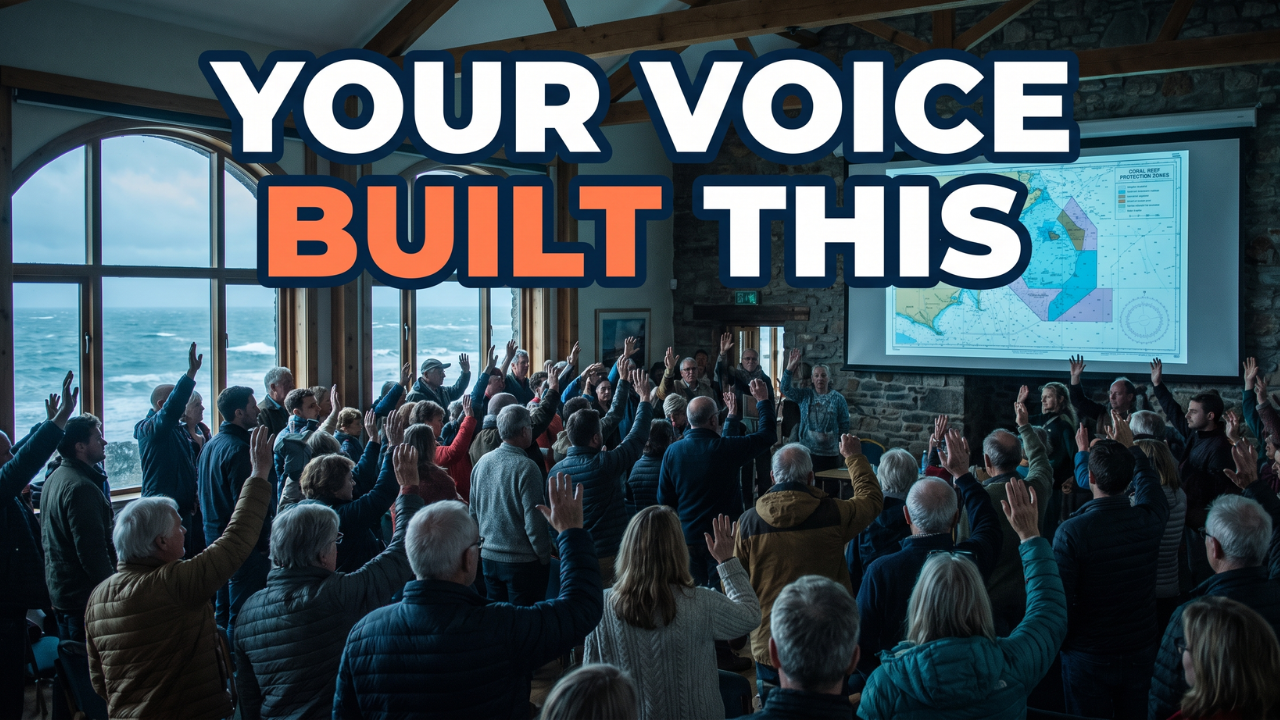
Earlier this year, the Bureau of Ocean Energy Management received about 65,000 submissions on a proposal to explore deep-sea mining near the Northern Mariana Islands. Most opposed it. In March 2026, the area under consideration grew from 35.5 million acres to about 69 million.
It's fair to ask why anyone should bother with public comment after that. The answer depends on the process. When all a public process offers is a place to submit and wait, with no stages, no standing structure for working through conflict, and no clear way to reconcile competing input, people tend to feel unheard. Some processes are built differently, and the results show it.
The Great Barrier Reef Rezoning
The Great Barrier Reef Marine Park has been managed through zoning since the 1970s and 1980s. Between 1999 and 2004, the Great Barrier Reef Marine Park Authority ran the Representative Areas Program and rezoned the entire park, one of the largest protected area planning decisions ever undertaken.
The law required public consultation, and the Authority ran two formal community participation phases. The first, from May to August 2002, came before any draft zoning plan was written and drew 10,190 submissions. The second, from June to August 2003, asked people to respond to the completed draft and drew more than 21,500. Together that's more than 31,000 submissions, the most the Authority had ever received.
Between those windows, the conversation kept going. Local Marine Advisory Committees and Reef Advisory Committees gave fishers, tourism operators, and coastal communities a standing seat, so dialogue happened continuously.
The result: no-take zones grew from about 4.5 percent of the park to 33.3 percent, taking effect on 1 July 2004.
Using Data in the Conversation
Andrew recalls sitting in on a lecture in graduate school where a senior official from the Marine Park Authority described one part of that process. Fishers were strongly opposed to more no-take area at first, since it could affect their business. The Authority overlaid fishing vessel tracks on the proposed zones, and showed that many of the new no-take areas sat just outside where those fishers actually fished. With the data on the table, the conversation changed. It likely wasn't that easy in practice, and the principle holds: sharing data during the comment period helped people see the plan on their own terms.
Jon Day, who worked at the Authority through the rezoning, later studied the process for his PhD. He found that science, leadership, public engagement, and politics all had to work together, and that the plan would not have been approved without strong political support, which itself depended on the other three.
The Chumash Heritage National Marine Sanctuary
The second example comes from California's Central Coast, and the key difference is where the idea started. In this case the community proposed the protected area. The Northern Chumash Tribal Council nominated the site in 2015, the product of decades of the tribe's own advocacy.
From there, NOAA ran its staged national marine sanctuary designation process: nomination review, a scoping phase on boundaries and priorities, release of a draft management plan and environmental documents, and a final public comment period. NOAA reports more than 110,000 comments across the process, with more than 98 percent in support. The Chumash Heritage sanctuary coalition, an advocacy group, counted more than 100,000 comments in the final 2023 comment period alone, over 99 percent in support.
NOAA designated the sanctuary in October 2024. At 4,543 square miles, it's the third largest national marine sanctuary in the US and the first nominated by a tribe. The tribal council stayed involved the entire way, state authorities were part of the process, and the federal government managed the regulatory steps and public comment.
What Both Had in Common
Both processes had staged phases, standing structures for ongoing dialogue, and clear ownership of the proposal. That structure is what turns public input into buy-in. Without buy-in, a marine protected area risks becoming a paper park, where people ignore the rules because they never felt heard.
Structure also has to include the room itself. Earlier this week, Anupa Asokan described public meetings in California's MPA review where people shouted over each other and some didn't feel safe to speak. A process fails when people are afraid to take part, and the complaints show up later as low compliance.
Why This Matters to You
If a public process opens near you, knowing how it works means you don't walk in blind. These meetings can be emotionally charged, and understanding the structure helps you speak your mind. Go with friends or family, or join a group. Surfrider regularly organizes people to attend, and Andrew notes that Anupa's organization, Fish On, is helping organize rides to the California Fish and Game Commission meetings in Sacramento this October, where MPA petitions are on the agenda October 15 and 16.
Everyone has a stake in a marine protected area, and everyone deserves a voice without being shouted over. A good process can be repeated, much like good science.
Andrew wants to hear about your experience with public comment, in person or in writing, good or bad.
Takeaways:
- A petition process with no staged phases, standing advisory structure, or way to reconcile competing input tends to produce conflict and weak buy-in.
- The Great Barrier Reef rezoning ran two formal public phases in 2002 and 2003 and drew more than 31,000 submissions.
- Local marine advisory committees kept dialogue going between the formal windows.
- No-take zones grew from about 4.5 percent to 33.3 percent of the park in 2004.
- Sharing fishing data during consultation helped place no-take areas with less impact on fishers.
- The Chumash Heritage National Marine Sanctuary, nominated by the Northern Chumash Tribal Council, was designated in October 2024 with more than 98 percent of comments in support.
- Buy-in is what keeps an MPA from becoming a paper park.
- Knowing the process makes it easier to show up, speak, and support others in the room.

CEO

You Left a Public Comment. Now What?