American Samoa Deep-Sea Mining Lease Sale: What's Happening and Why It Matters
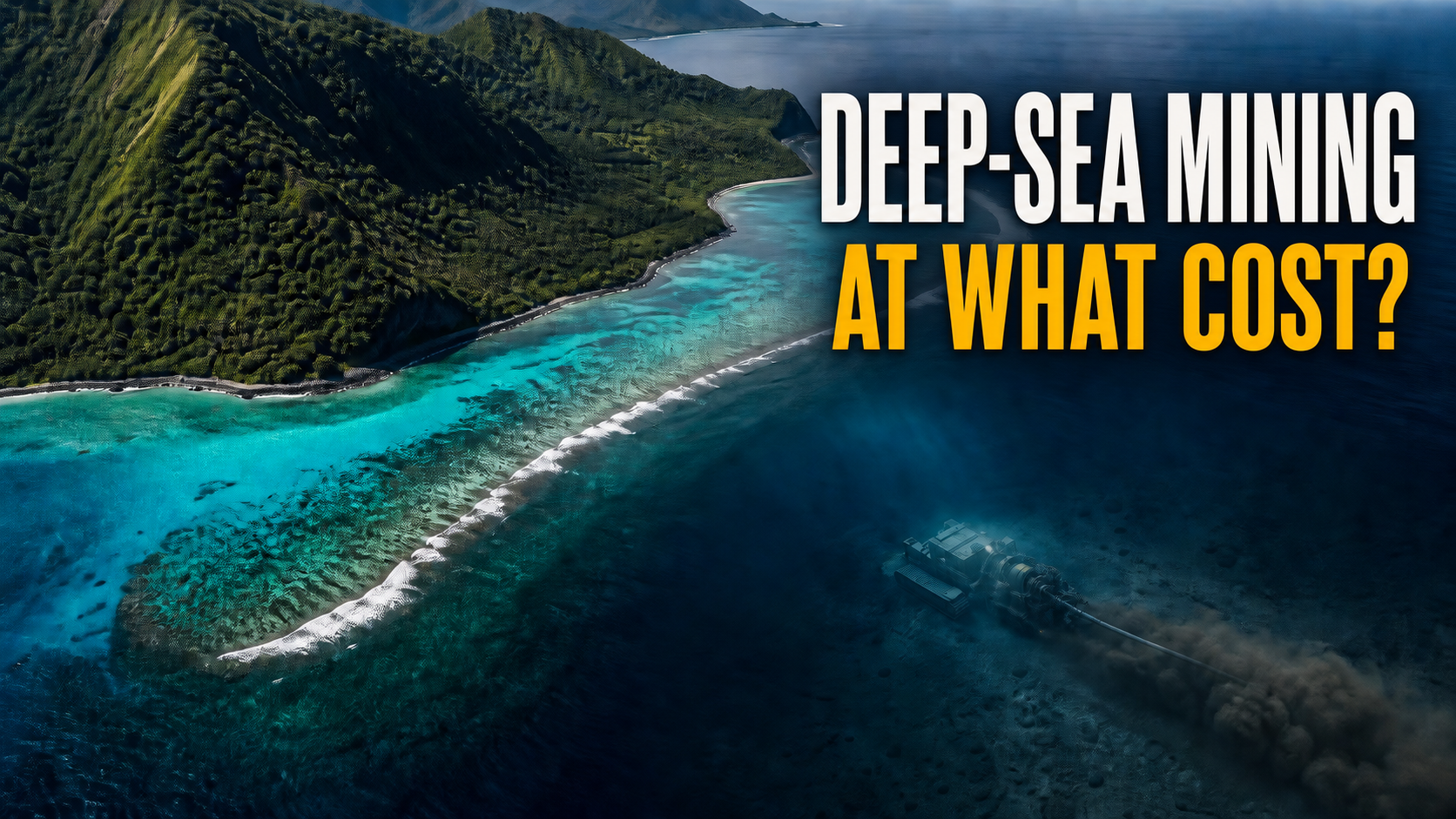
The United States is on track to hold the world's first commercial deep-sea mining lease sale. It is happening in federal waters off American Samoa, and it is moving forward despite overwhelming public opposition.
The Situation
The agency running this process is the Marine Minerals Administration (MMA), a newly formed agency merging the Bureau of Ocean Energy Management (BOEM) and the Bureau of Safety and Environmental Enforcement. On July 16, 2026, MMA and BOEM published a Proposed Leasing Notice for the American Samoa Outer Continental Shelf Mineral Lease Sale. The sale itself is projected for August 2026 and will be live streamed rather than open to the public.
The area up for auction covers roughly 33 million acres of seafloor, about 51,560 square miles. The target resource is polymetallic nodules, potato-shaped rocks on the ocean floor containing nickel, cobalt, copper, manganese, and other critical minerals used in EV batteries and electronics. The proposed mining area sits adjacent to the Rose Atoll Marine National Monument and borders the National Marine Sanctuary of American Samoa, both protected for their unique biodiversity.
How We Got Here
This process started in April 2025, when California-based startup Impossible Metals formally asked BOEM to open a leasing process for nodules off American Samoa. BOEM responded by publishing a Request for Information and Interest (RFI) in the Federal Register on June 16, 2025, opening a 30-day public comment period.
On June 23, 2025, American Samoa's government leaders, including the governor, legislature, and congressional delegate, issued a unified statement opposing the leasing process. This built on a moratorium the territory's governor put in place in July 2024, banning mining, extraction, or exploration activity in local waters. That moratorium only covers roughly three nautical miles offshore. Beyond that, federal waters are outside the territory's control.
What the Public Actually Said
Between 75,000 and 76,000 comments were submitted during the RFI comment period. Reported opposition ranges from roughly 80% to as high as 98%, depending on the source and analysis. BOEM's own summary of the comment period acknowledged that most commenters cited American Samoa's local moratorium and opposed leasing.
Despite this, BOEM proceeded to the next stage of the process: identifying the lease area. And instead of shrinking, that area grew, from about 18 million acres to 33 million acres. Drivers cited include US Geological Survey mapping priorities and industry proposals for additional acreage. BOEM has acknowledged it does not have a clear framework showing how community opposition was weighed against industry interest in that decision.
Timeline:
- June 2025: RFI published, 18 million acres
- August 2025: comment period closes, 75,000+ comments, majority opposed
- November 2025: BOEM announces RFI process complete
- March 2026: BOEM releases analysis of comments, area already growing
- July 16, 2026: Proposed Leasing Notice published, area now 33 million acres
- August 2026 (projected): lease sale takes place
Who Wants to Mine It
Several companies have expressed interest in the American Samoa lease area:
- Impossible Metals, the San Jose-based startup that filed the original request. The company is developing an AI-guided robotic vehicle designed to selectively collect nodules while avoiding visible marine life, and signed a memorandum of understanding with the American Samoa Economic Development Council in late 2023.
- The Metals Company, widely seen as the deep-sea mining industry's global frontrunner, which has already tested equipment at scale, hauling up roughly 3,000 metric tons of nodules in a 2022 trial in the Clarion-Clipperton Zone.
- Several smaller and newer entrants, including American Metal Resources, SeaX, Deep Sea Minerals Corp, and a company planning to rename itself Eco Minerals.
What the Science Says About the Risks
Environmental impacts. A 2025 study in Nature Ecology & Evolution examined an actual industrial-scale mining test in the Pacific and found that seafloor animal density dropped 37%, with a 32% reduction in species richness, just two months after a single test mining pass. A separate 2025 Nature study looking at a 1970s test mining site found that four decades later, biological impacts in many groups of organisms were still detectable, though some species had begun to reestablish. A 2025 Frontiers in Marine Science review describes anticipated impacts as long-lasting and potentially irreversible, including habitat removal, far-reaching sediment plumes, toxic metal release, and noise and light pollution. Field research in the western Pacific found sediment disturbance from mining vehicles was 30 times greater than natural wave or current activity.
Socioeconomic impacts. A 2023 study in npj Ocean Sustainability found that deep seabed mining lacks social legitimacy, noting that Pacific fisheries provide revenue, nutrition, employment, and livelihoods for island communities already stressed by climate impacts. That study flagged tuna fisheries specifically, since they can overlap with proposed mining areas and tuna access fees account for up to 84% of GDP in some tuna-dependent Pacific island states. A 2025 Nature commentary from Pacific island leaders warned that sediment plumes can drift across hundreds of kilometers for decades, potentially diminishing catch rates and contaminating seafood. A 2021 Frontiers in Marine Science paper stresses that for Pacific communities, the ocean is not just an economic resource but central to cultural identity and worldview, something current regulatory frameworks don't account for.
Do American Samoans Actually Want This?
Based on every available measure of public sentiment, no. American Samoa's governor, territorial legislature, and congressional delegate have all publicly and formally opposed deep-sea mining in the territory's waters. Community groups have criticized the federal government for fast-tracking the lease sale while, in their words, ignoring the voices of the people whose waters, traditions, and livelihoods are on the line.
There is one important nuance. The American Samoa Economic Development Council (ASEDC), a territorial economic development body, signed an MOU with Impossible Metals in 2023 and has separately pursued an International Seabed Authority license application, framing mining as a source of jobs and economic growth. That puts ASEDC's public position at odds with the territory's elected government, legislature, and, based on the comment data, the broader public. Opposition here is not universal. It reflects a real tension between a struggling local economy in need of opportunity and a public wary of an industry nobody fully understands yet.
The Bottom Line
This is on track to be the first commercial deep-sea mining operation anywhere in the world. It is not hypothetical. It is actively moving through the federal process, with a lease sale currently projected for August 2026 and the governor of American Samoa given 60 days to comment once the leasing notice is finalized.
The gap between what the public said, overwhelming opposition, and what the government did, expanding the mining area, is the central tension of this story.
Takeaways
- Sign a petition opposing the lease sale
- Follow and support Earthjustice, Greenpeace, and NRDC as they track legal action
- Follow Future Swell for ongoing updates
- If you're a US voter, remember this fight runs through the midterms

CEO


