How Beach Cleanup Data Helped Canada Ban Plastic
You rinse your yogurt tub. You check the little number on the bottom. You put it in the blue bin and hope for the best.
A lot of it never gets recycled. And one of the biggest legal wins against plastic in Canada started with people doing something even simpler: picking up trash on a beach and writing down what they found.
Why Plastic Is a Different Kind of Problem
This week on the show is all about marine pollution. New York Harbor got cleaned up by building treatment plants. Switzerland is upgrading its plants to pull pharmaceuticals out of wastewater. Plastic doesn't work that way.
It comes from everywhere: bags blowing off a truck, tires wearing down on the road, clothes in the wash, litter in a parking lot. You can't build one plant to catch it all, so plastic needs a different kind of fix.
Just 9%
The federal government hired Deloitte to track where Canada's plastic goes. Using 2016 data, more than 3 million tonnes of plastic were thrown away that year. Only 9% was recycled. 86% went to landfill, and about 29,000 tonnes, roughly 1%, ended up as litter in parks, rivers, lakes, and eventually the ocean.
The global picture looks almost the same. The OECD found that the world's plastic waste doubled between 2000 and 2019 to 353 million tonnes a year. About 9% was recycled, half went to landfill, about a fifth was incinerated, and 22% was mismanaged, which is the polite way of saying it escaped into the environment.
Why Recycling Is So Hard
Plastic isn't one material. It's polyethylene, polypropylene, polystyrene, PET, PVC, and more. Each one melts differently and has to be handled separately. Then add the colours, dyes, additives, labels, and leftover food. Mix it together and you get something few buyers want, and recycling only works when someone buys the material.
The plastics industry promoted recycling for decades while some of its own people doubted it would ever pay off. That's why people who study plastic keep repeating the same message: we can't recycle our way out of this. We have to make less of it. Recycling still has a role, and it can't carry the whole load.
The Microplastics Problem
Plastic that isn't recycled doesn't disappear. It breaks into smaller and smaller pieces. Anything 5 millimetres or smaller is a microplastic, and most are too small to see. They've been found in seawater, sea ice, fish, shellfish, table salt, rain, and air.
That creates an unusual headache for scientists. A good experiment needs a control, something that hasn't been exposed. Microplastics are in the air of the lab, they settle out of the ventilation, and they shed from lab coats and plastic equipment. Some labs now work in ultra-clean rooms just to get a reading they can trust.
In February 2025, a team led by researchers at the University of New Mexico published a study in Nature Medicine that measured plastic in human brain samples from people who died between 1997 and 2024. They reported that the median amount of plastic in the brain rose by about 50% between 2016 and 2024, and headlines ran with the idea that we each carry a spoonful of plastic in our heads.
Then other scientists took a closer look. Duplicated images turned up in the supplementary material, which the lead researcher called a purely clerical mistake that didn't change the conclusions. By January 2026, a Guardian investigation counted seven high-profile studies on microplastics in the human body that had been formally challenged in published critiques, including the brain study. One key concern: the brain is about 60% fat, and fat can produce a false signal that looks like polyethylene in one of the main testing methods.
Scientists on both sides agree on the core fact. Plastic pollution is everywhere in the environment. What we don't know yet is exactly how much ends up inside us and what it does there. Waiting for perfect proof means waiting forever, and Canada decided it didn't have to.
It Started on a Beach
In 1994, staff and volunteers at the Vancouver Aquarium cleaned up a beach in Stanley Park. By 1997, about 400 volunteers were working 20 sites. In 2002, it went national with WWF-Canada as the Great Canadian Shoreline Cleanup. Today it runs as the Ocean Wise Shoreline Cleanup.
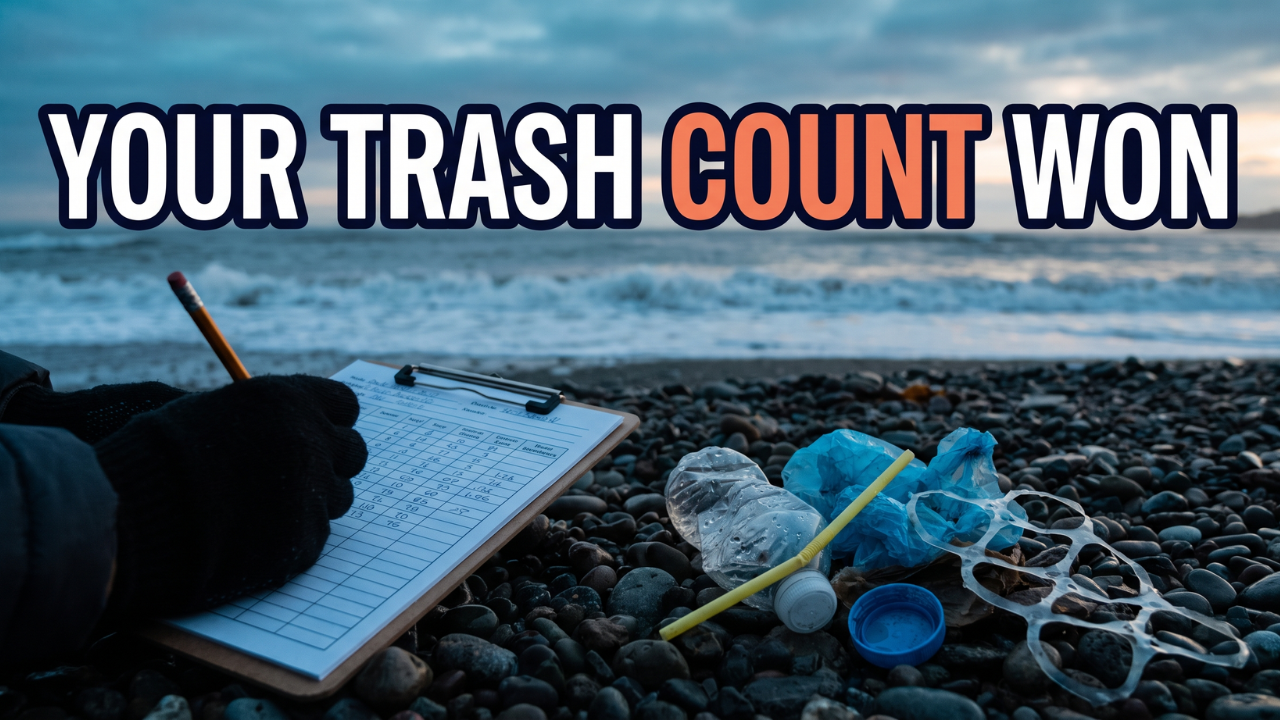
Along the way, the volunteers did something that turned out to matter a lot. They counted what they picked up. Every bag, bottle cap, and straw was recorded as data and shared with researchers and policymakers. Year after year, plastic dominated the list of what they found on ocean coasts, lake shores, and riverbanks.
From Data Cards to the Law
In October 2020, the federal government released its Science Assessment of Plastic Pollution, pulling together hundreds of studies and drawing on that shoreline data. It found that plastic litter harms wildlife through entanglement and ingestion, leading to suffocation, strangulation, and starvation. On microplastics, it said the evidence was still developing, and it called for action now, under the precautionary principle, to reduce both.
In 2021, the government added plastic manufactured items to the list of toxic substances under the Canadian Environmental Protection Act. That listing gave it the legal power to regulate plastic. Its first move was a ban on six single-use items: checkout bags, cutlery, certain foodservice containers, six-pack rings, stir sticks, and straws.
Look at that list again. Those are the same items volunteers had been pulling off Canadian shorelines and writing down for decades.
The Court Fight
A coalition of plastics producers and industry groups took the government to court. They argued that "plastic manufactured items" was far too broad to count as a single toxic substance and that the government lacked the evidence to back it up. In November 2023, the Federal Court agreed and ruled the listing unreasonable and unconstitutional.
The stakes went beyond six items. The listing is the legal foundation for everything else Canada might do on plastic. The government appealed, the ruling was put on hold, and the ban stayed in place the whole time.
On January 30, 2026, the Federal Court of Appeal overturned the decision. It found that plastic manufactured items do qualify as a substance under the law, that the government had enough evidence to reasonably conclude plastic can cause harm, and that it didn't need to test every type of plastic one by one before acting. You don't need perfect proof to protect the environment from something this widespread.
The industry coalition has asked the Supreme Court of Canada to hear the case. At the time of recording, the court hadn't decided whether it will. Either way, the ban stays in effect.
What the Win Gets Us
The government projected that the ban would keep about 1.3 million tonnes of hard-to-recycle plastic waste and more than 22,000 tonnes of plastic pollution out of the environment over ten years.
Canada also created the Federal Plastics Registry. Companies that make, import, or sell plastic packaging, electronics, and single-use products now have to report how much they put on the Canadian market, what kind of plastic it is, and what happens to it at the end of its life. Canada is now tracking plastic from the producer to the landfill.
There have been setbacks. In December 2025, the government proposed dropping its planned ban on exporting those six items, citing tariffs and economic pressure. Later phases of the registry, which would cover more products, have been delayed. The foundation still stands: the listing survived its first court fight, the domestic ban is in place, and the registry collects data every year. You can't reduce what you can't measure, and Canada is finally measuring.
What You Can Do
Join a shoreline cleanup that records what it finds. In Canada, the Ocean Wise Shoreline Cleanup lets you join an event or start your own at any beach, lakeshore, or riverbank. Outside Canada, look for Ocean Conservancy's International Coastal Cleanup or a local group that logs its data.
The data card is the point. Your tally goes into the same kind of dataset that helped build Canada's case. Picture a volunteer on a beach in 1994 writing "straw" on a data card. Thirty years later, that same item is banned across the country, and a federal appeal court has confirmed the government can regulate plastic as toxic.
Next time you pick up a piece of plastic on a beach, write it down. It counts.
Takeaways:
- Canada recycled about 9% of its plastic waste in 2016; 86% went to landfill.
- Global plastic waste hit 353 million tonnes a year in 2019, with 22% mismanaged.
- Mixed plastic types, colours, additives, and contamination make recycling hard to sell.
- Microplastic research struggles to find uncontaminated controls.
- Several headline studies on plastic in human bodies face published methodological challenges.
- Volunteer shoreline cleanup data fed into Canada's 2020 science assessment.
- Canada listed plastic manufactured items as toxic in 2021 and banned six single-use items.
- The Federal Court of Appeal upheld the listing on January 30, 2026.
- The ban is projected to prevent more than 22,000 tonnes of plastic pollution over ten years.
- The Federal Plastics Registry tracks plastic placed on the Canadian market.
- Join a cleanup that records its data, and log what you find.

CEO
What Happens to Fish When Our Pills Reach the Water?