Short-Form Content for Ocean Awareness: What Actually Works
Most people scrolling through TikTok, Instagram Reels, or YouTube Shorts have had the experience: you see an underwater clip, tap the little info tag, and an hour later you're deep in a rabbit hole of ocean facts you never expected to learn. That pull is exactly why short-form video matters for ocean conservation, and it's the focus of this week's How to Protect the Ocean series on science communication formats.
Andrew opens the episode with an honest admission: short-form original content is hard for him. Most of what appears on his Instagram, TikTok, and YouTube Shorts today is repurposed podcast clips, usually two per episode, pulled and posted by his editor. That works, and he has no plans to stop doing it, but it isn't built for the format the way true short-form content needs to be. Talking for three minutes and making it feel tight is a different skill than talking for an hour on a podcast.
What makes short-form content work
The episode lays out a clear set of principles. The hook in the first one to three seconds is everything. If a viewer doesn't feel pulled in immediately, the algorithm won't push the video further. From there, a short should introduce exactly one idea, not a summary of everything a creator knows about a topic, delivered in roughly sixty seconds to three minutes. Overly produced content tends to underperform compared to raw, direct-to-camera "yapping" style video, and captions are essential since most viewers watch with sound off.
Andrew points to two creators he'll reference throughout the week: Christian Parton, who runs Shark Bites on YouTube, and KPassionate, who has a large following across YouTube, Twitch, TikTok, and Instagram. Both show that talking about animals in a fun, casual way, even in a "yapping" format, can still produce genuinely good content.
How the algorithm actually works now
One of the more interesting shifts Andrew describes is how little follower count matters anymore. TikTok's For You Page and similar algorithms on other platforms are constantly testing content in front of users regardless of whether they follow the creator. Andrew shares that one of his TikTok clips about ghost nets hit roughly 107,000 views in about two days, compared to the two to three hundred views his typical clips get. That kind of spike isn't about follower count. It's about the algorithm finding the right fringe audience for that specific piece of content.
What short-form content actually pays
Andrew is direct about monetization: short-form platforms don't pay like YouTube's long-form partner program. [VERIFY before publishing] He references the TikTok Creator Rewards Program paying roughly 40 cents to a dollar per thousand qualified views, requiring at least 10,000 followers and 100,000 views in the past 30 days, with only videos over one minute qualifying, and notes it isn't available in Canada. YouTube Shorts RPM is described as roughly a cent to 10 cents per thousand views, and Instagram Reels as roughly one to three cents per thousand views through Reels and bonuses. The real money, Andrew explains, tends to come from brand sponsorships, affiliate codes, product placement, and using short-form clips as a funnel toward a long-form platform or Patreon-style support.
The bigger picture
Short-form is a great entry point for ocean awareness, not the destination. It's low commitment for the viewer, which means a low barrier to that first exposure to ocean science and conservation content. Andrew's advice for anyone considering this path: pick something you enjoy talking about consistently, whether that's pure education, conservation projects, or myth-busting, and understand that your first several posts probably won't be your best. Consistency, not perfection, is what builds a following over time.
This episode kicks off a week-long look at science communication formats on How to Protect the Ocean, building toward Friday's conversation with Amy Weldon, host of Blue Collar White Coat, as she releases her second season.
Takeaways
- Short-form content needs a hook in the first one to three seconds or the algorithm moves on
- Stick to one idea per video, delivered in one to three minutes
- Native, casual, direct-to-camera style tends to outperform overly produced content
- Captions matter because most viewers watch with the sound off
- The algorithm rewards watch time and virality over follower count, so small accounts can go viral
- Consistency over perfection is what builds a following over time
- Short-form monetization pay rates are modest [VERIFY]; real income tends to come from sponsorships, affiliates, and funneling to long-form or Patreon-style support
- Short-form is best used as an entry point into a creator's larger body of work, not the destination

CEO
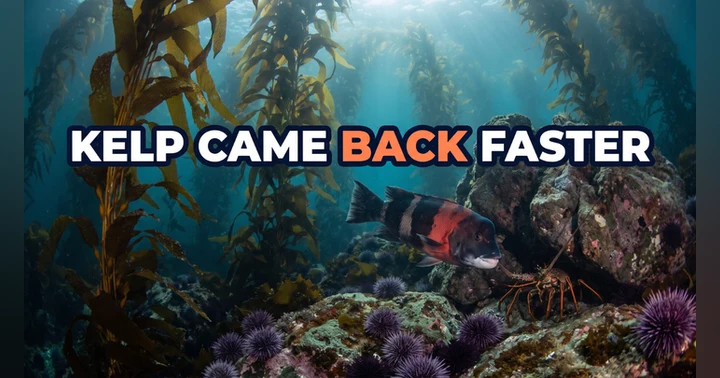
The Blob Hit California's Kelp. Protected Kelp Came Back Faster.