Why YouTube Might Be the Future of Ocean Science Communication
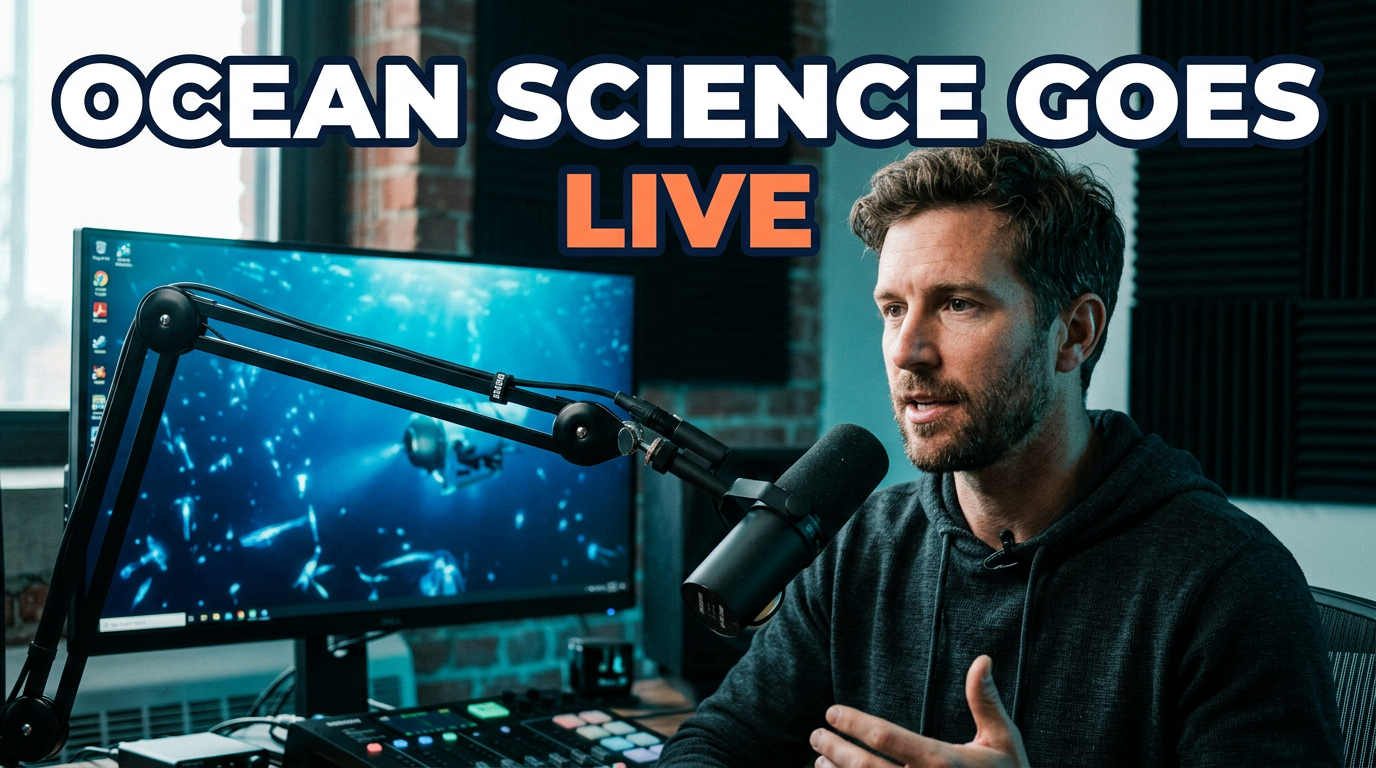
After 11 years of podcasting and 2,000 episodes of How to Protect the Ocean, Andrew Lewin is doubling down on a platform he first tried and stepped away from twice: YouTube. In this episode, recorded the day after HTPTO's milestone 2,000th episode and the announcement of the Pisces Oceans licensing agreement, Andrew explains why he believes YouTube is one of the best tools available for ocean science communication, and why he's launching a brand new daily livestream, Ocean Decoded Live.
A long history with video, and a few burnouts along the way
Andrew's video journey didn't start this year. Long before How to Protect the Ocean existed as an audio podcast, he ran Speak Up for Blue TV, a YouTube channel he filmed in the evenings after his kids went to bed. He built it up steadily, growing from under 200 subscribers to just over 1,000, and posted three times a week with a consistent, unedited format. But the workload eventually caught up with him. Without the budget for an editor, filming and posting became unsustainable, and he stepped away.
He picked video back up when YouTube began making a real push into podcasting, rebranding the channel to Ocean Decoded and posting the audio podcast alongside dedicated video content. That run also hit a wall last spring, when Andrew paused again while working through a broader rebrand of the Speak Up for Blue network.
Why now: the Pisces Oceans deal changed the math
The turning point is the Pisces Oceans licensing agreement, which now houses How to Protect the Ocean and has added the Ocean Leaders Podcast to the Speak Up for Blue network. With that operational work now happening during the day as part of his role as ocean communications manager, Andrew has his evenings back, and he's using that time to rebuild the YouTube presence he's had to shelve twice before.
Why YouTube beats podcasting for discovery
The core argument Andrew makes is about how people find content. Podcasting is largely subscriber-driven: growth depends on people already choosing to follow a show. YouTube, by contrast, is search-driven. If someone searches a specific question, like whether a video explains why orcas attack great white sharks, a relevant video can surface regardless of subscriber count. Andrew expects AI-powered search and answer engines to reshape this even further, but the underlying principle, that specific questions create high-intent traffic, still holds.
Video also adds a storytelling dimension that audio alone can't. B-roll, underwater footage, AI-assisted visualizations, and playlists that let viewers binge related content all give ocean science creators more tools than a podcast feed offers on its own.
Why Ocean Decoded is a separate channel from the main podcast
Andrew explains that mixing solo episodes and interviews on the same channel disrupted his metrics: viewers expecting a short update would get a long interview, or vice versa, and the algorithm struggled to serve consistent expectations. Splitting Ocean Decoded out as its own channel lets each format find its own audience.
Why he chose to go live
Ocean Decoded Live launches this week, running Monday to Thursday (with a possible move to Friday) at 4 PM Eastern. Andrew cites two main reasons for going live rather than continuing to post pre-recorded video. First, he's long admired what Pat McAfee built by owning his own platform independent of traditional broadcast networks, and he sees a parallel opportunity in ocean conservation media. Second, and more personally, Andrew found that AI-written scripts, while efficient, started to feel inauthentic, both to him and, he suspects, to his audience. Going live and working from bullet points instead of a script brings back the off-the-cuff authenticity he wants viewers to connect with.
How YouTube's monetization actually works in 2026
Andrew breaks down YouTube's current two-tier Partner Program. The early access tier requires 500 subscribers and either 3,000 watch hours or 3 million Shorts views within 90 days, and unlocks channel memberships, Super Chats, Super Thanks, and YouTube Shopping, but not ad revenue. Full monetization requires 1,000 subscribers and either 4,000 watch hours in the past 12 months or 10 million Shorts views within 90 days.
On the payout side, standard long-form ad revenue splits 55% to the creator and 45% to YouTube. Super Chats, Super Stickers, and channel memberships carry a better split, 70% to the creator and 30% to YouTube, because they're direct fan funding rather than ad-based revenue. For comparison, Andrew notes Patreon's platform fee tends to run lower, but ties creators to a separate audience and payment relationship.
Real examples from the ocean science community
Andrew points to two creators as proof of concept. Kristian Parton's Shark Bytes channel blends shark science with pop culture commentary and has grown into one of the more successful channels in the space. KPassionate, a marine mammologist with both field and zoological experience, built an audience first on Twitch before moving to YouTube, and covers marine mammal science and conservation news. Both, Andrew notes, run sponsor integrations directly in their videos as an added revenue layer on top of ad revenue and fan funding.
The real takeaway: pick one format and stay consistent
Above all the platform mechanics, Andrew's core advice for anyone considering science communication is simple: pick one format, build a repeatable workflow, and stay consistent. He'll be speaking on exactly this topic at IMCC8, the 8th International Marine Conservation Congress, in Edinburgh, Scotland, from November 13–17, 2026, and is inviting anyone attending to talk through their own science communication workflow in person.
Takeaways:
- YouTube's search-driven discovery model makes it a strong platform for niche science content, unlike subscriber-driven podcasting
- Ocean Decoded Live launches Monday–Thursday at 4 PM Eastern, with a possible Friday addition
- YouTube's Partner Program early access tier (500 subs) unlocks fan funding; full monetization (1,000 subs) unlocks ad revenue
- Ad revenue splits 55% creator / 45% YouTube; Super Chats and memberships split 70% creator / 30% YouTube
- Splitting solo episodes and interviews across separate channels can protect algorithm performance and viewer expectations
- Consistency and a repeatable workflow matter more than any single platform choice
- Andrew will discuss content workflow in person at IMCC8, Edinburgh, November 13–17, 2026

CEO
You Left a Public Comment. Now What?