Blue Collar White Coat: Meet the People Behind Ocean Science
Every field has its designated spokespeople. In marine science, it's usually whoever has the most letters after their name. Amy Weldon thinks that's a mistake, and she built an entire podcast to prove it.
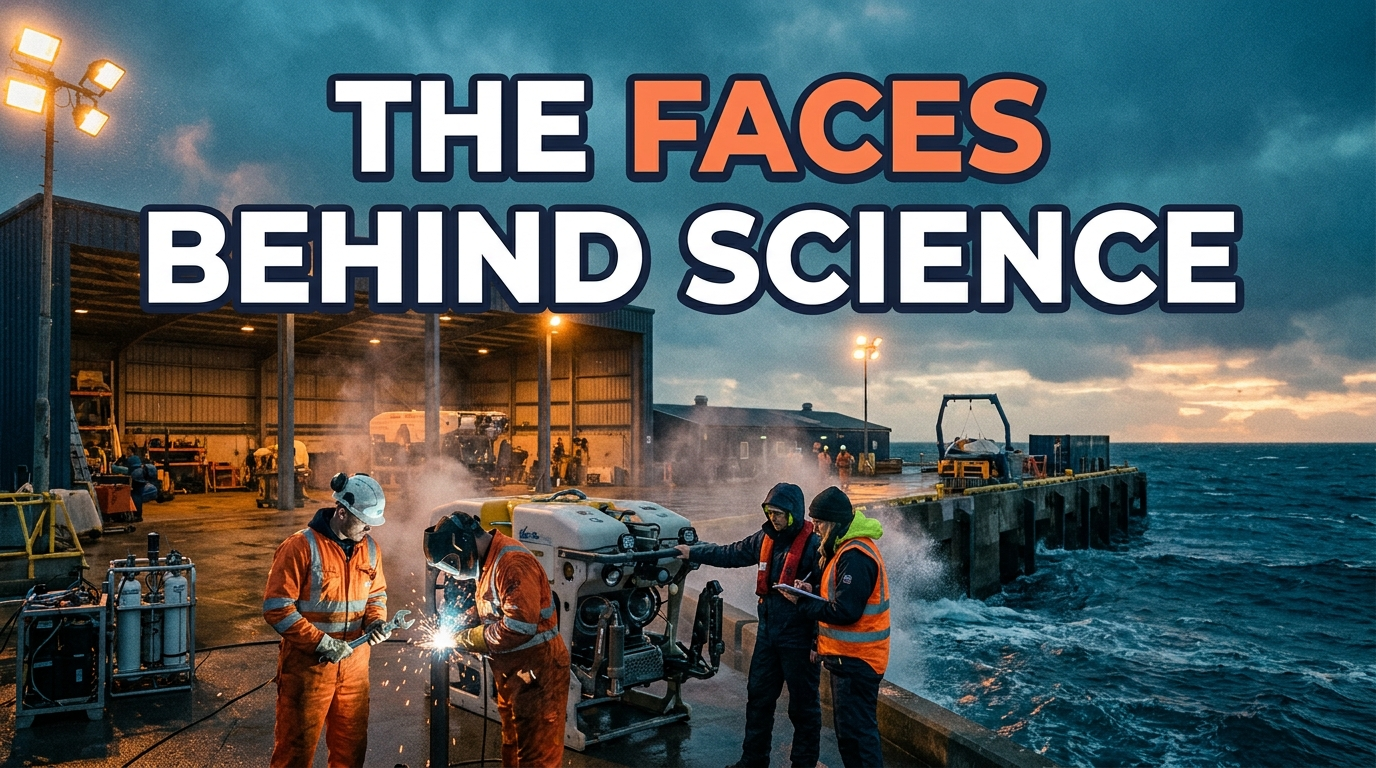
Amy is the host and executive producer of Blue Collar White Coat, a show entering its second season that interviews the people who keep science and conservation running without necessarily holding a PhD. She spent 15 years in science communications, starting at the National Aquarium in Baltimore, before deciding the field had a storytelling gap: the electricians, dive supervisors, HVAC technicians, and ship repair crews who make research possible almost never get interviewed.
Why podcasting, and why now
Amy's path to podcasting started with a simple question: how do you reach audiences who aren't already interested in science? Her answer was to look at how radio used to work, a medium that reached everyone regardless of what they cared about, simply because it was on in the car, on the bus, and in the background of daily life. Podcasting, she argues, is the closest modern equivalent, with the added benefit of near-zero barriers to entry.
That's also where the show's title comes from. "Blue Collar White Coat" is a deliberate contrast: the people in lab coats get the spotlight, while the people who keep the lights on, the fume hoods working, and the equipment running rarely do. Amy's approach is to put both groups in the same conversation and let listeners see how much they actually have in common.
What season one taught her
Season one leaned heavily on Amy's existing network, people she already knew who happened to have interesting science-adjacent jobs. Season two is a deliberate stretch further into skilled trades: a commercial diving supervisor and team lead at an Alaska-based marine operation, staff from a Norfolk, Virginia ship repair yard that services naval vessels, and connections across three aquariums.
The easy part, Amy says, is that people genuinely want to talk once you make it low-pressure. The hard part is logistics: scheduling around full-time jobs, coaching first-time interviewees through microphone anxiety, and pairing guests so a PhD scientist and the technician who supports their work can have a conversation together.
Getting nervous guests to relax
Amy's method is to schedule a pre-interview call with no recording involved, just a conversation to build rapport before the microphones turn on. She sends her questions in advance and tells guests explicitly that the conversation won't follow them in strict order, which she estimates removes a large share of the anxiety scientists in particular carry about being misquoted or clipped out of context.
On Joe Rogan, and what actually made him big
The conversation turns, unsurprisingly, to Joe Rogan. Amy and Andrew agree that his success isn't the result of a clever content strategy or SEO play. He simply had long, unstructured conversations, recorded consistently, and did it before anyone else was doing it at that scale. The lesson for smaller shows isn't to copy his format; it's that consistency and genuine conversation tend to outperform over-engineering.
What's next
Season two of Blue Collar White Coat releases every two weeks on Fridays, starting August 14th. Guests include NASA Ames staff, a director of Artemis landing operations and safety, and technicians from the National Aquarium, Tennessee Aquarium, and Monterey Bay Aquarium. Amy and Andrew will also both present at the International Marine Conservation Congress (IMCC8) in Edinburgh, Scotland this November.
Takeaways:
- Blue Collar White Coat interviews the skilled trades workers and technicians behind science and conservation, not just credentialed scientists.
- Podcasting reaches audiences who aren't already interested in science, similar to how radio once cut across demographics.
- Season two pushes further into skilled trades: commercial diving, naval ship repair, and aquarium life-support staff.
- Pre-interview calls and advance questions are Amy's main tool for calming nervous first-time guests.
- Joe Rogan's success is attributed to consistency and genuine conversation, not content strategy or SEO.
- Amy and Andrew will both present at IMCC8 in Edinburgh, Scotland this November.

CEO
How Did Humpback Whales End Up in New York Harbor?