Plastic Is Still the Ocean's #1 Villain
More than 2,000 episodes ago, the very first guest on How to Protect the Ocean was Dr. Judith Weis, talking about her book Marine Pollution: What Everyone Needs to Know. This week she's back for her fourth appearance, with a fully updated second edition from Oxford University Press.
Judith is Professor Emerita of Biological Sciences at Rutgers University Newark. After a career of scholarly papers and technical books, she learned to write for the public by co-authoring a book on salt marshes, then followed it with books on fishes, crabs, and marine pollution. When her editor asked for a second edition, she updated every chapter and added a new one on microplastics, a field that barely existed when the first edition came out.
Three Questions for Every Pollutant
Each chapter of the book tackles one type of pollution and asks the same three questions: where does it come from, what does it do, and what can we do about it?
Nutrients. Sewage and fertilizer runoff feed algal blooms, some of them harmful, which can strip oxygen from the water.
Metals. Mercury, cadmium, lead, and others, mostly from industry, concentrated at some major contaminated sites.
Oil. Large tanker spills have become far less common over the decades. Judith points out that's no accident. Tankers now have double hulls, and the industry cleaned up its act after years of costly, highly publicized disasters.
Pesticides and other organic chemicals. Most pesticides used today break down within weeks. The earlier generation, DDT and its relatives, persisted for decades. Pesticides are still sprayed on farms, gardens, and lawns, and rain carries them into creeks and down to the coast.
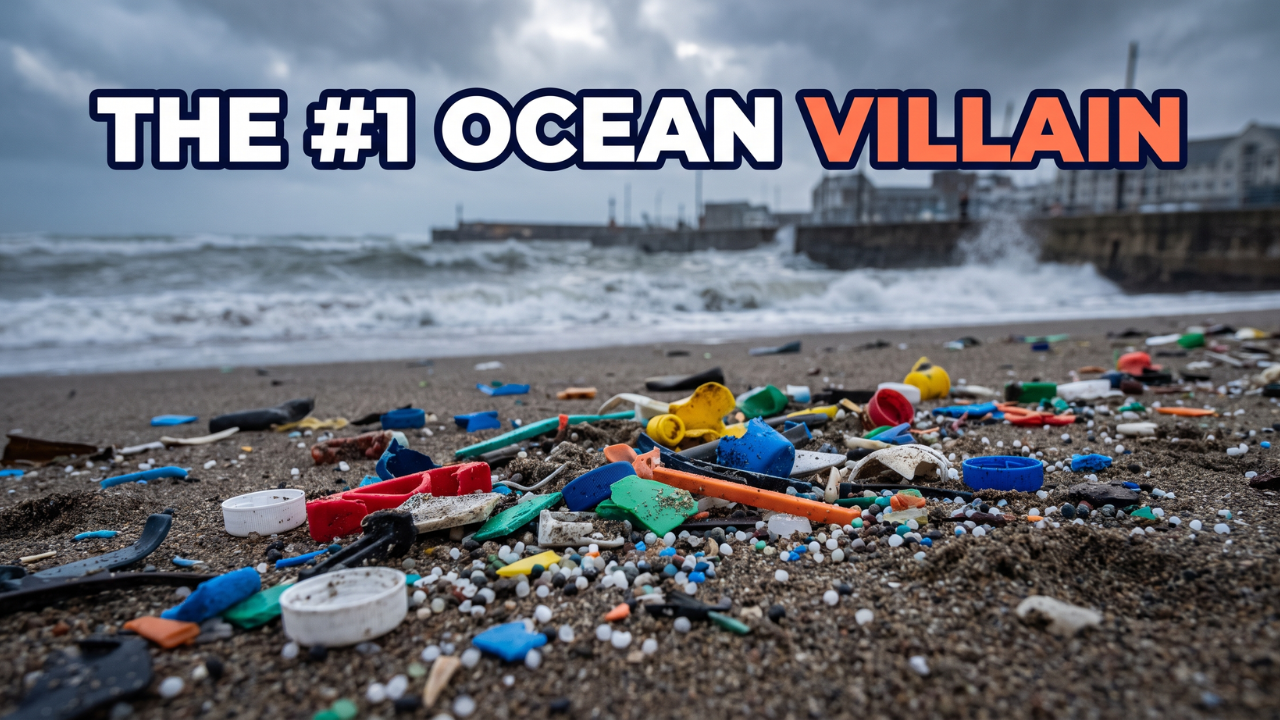
Marine debris. Trash on beaches, especially after storms, and floating garbage patches where currents gather it. Most of it is plastic.
Why Plastic Tops the List
"I would consider plastic currently the number one villain," Judith says. Other pollution problems are being reduced. Plastic production keeps rising, and plastic never goes away. It moves with the currents and piles up offshore and onshore.
Recycling isn't keeping up. Plastic isn't a single material. Polyethylene, polypropylene, polystyrene, and many others each need their own stream, and Judith explains that colors complicate sorting even further. Chemical recycling, which breaks plastic down with heat, releases its own toxic chemicals in her view. Meanwhile, she says, the companies making plastic have resisted efforts to reduce it.
Microplastics: Everywhere, Including the Lab
Plastic breaks down into microplastics, defined as pieces 5 mm or smaller. The ones between 1 and 5 mm are visible. Most are not. They're in our food, the air we breathe, and our bodies, including our brains, hearts, and livers.
They also carry chemicals in two ways. Some are part of the plastic itself. Others, pulled from surrounding water or air, stick to the surface. Once inside an animal, those chemicals can accumulate up the food web.
Here's a detail that shows how widespread they are: scientists struggle to run clean experiments. A good study needs a control group with no exposure, and microplastics are in the air of the lab itself. Some labs use ultra-clean rooms, and researchers are still developing standard methods.
Canada's Plastics Fight
Andrew shares how Canada is tackling plastic. Under the Canadian Environmental Protection Act, the federal government listed "plastic manufactured items" as toxic in 2021. That opened the door to banning six single-use categories: checkout bags, cutlery, foodservice ware made from problematic plastics, ring carriers, stir sticks, and straws. Canada also created a Federal Plastics Registry that requires producers to report the plastic they put on the market.
Industry challenged the toxic listing and won in Federal Court in 2023. The federal government appealed, and in early 2026 the Federal Court of Appeal upheld the listing. So why no limits on production anywhere? Judith suggests it's partly because regulating something that's already everywhere is so hard. How do you set a limit, and how do you enforce it?
What You Can Do
Feeling helpless is a common reaction. Judith's advice is practical. Join a beach cleanup, where most of what you'll pick up is plastic. Cut your own plastic use where you can, like buying juice in glass. Join a local chapter of a membership-driven group such as the Sierra Club or Audubon, where members work on local issues, or a smaller group that runs cleanups.
Andrew adds something he's heard from ocean leaders: people come to a cleanup to help the coast and stay for the community. Spending time with people who share your values can do more for your ocean anxiety than any comments section.
The Good News: New York Harbor
When Judith was growing up in Manhattan near the Hudson River, nobody went near the water. Raw sewage from the whole Upper West Side flowed straight into the river. Then Congress passed the Clean Water Act in 1972, which required sewage treatment. The North River Wastewater Treatment Plant opened on the Hudson in 1986.
The river slowly recovered. Today a waterfront walkway runs along the West Side of Manhattan from the Battery north. Heavy rain still triggers combined sewer overflows, and in dry or moderate weather the water is swimmable. Judith predicts New York will one day have city swimming like downtown Chicago on Lake Michigan.
The wildlife came back too. Menhaden returned, and the whales followed. Humpbacks, and sometimes fin whales and dolphins, now feed in New York waters. Judith goes whale watching with Gotham Whale, a local nonprofit that tracks the region's whales.
The lesson Andrew draws: when we identify a problem and put laws in place, it works. Judith adds a caution. The harbor had a clear source to fix, sewage, and a clear remedy, treatment plants. Microplastics come from everywhere, so that playbook doesn't transfer neatly.
Three More Pollutants to Know
Pharmaceuticals. We take medications and excrete much of them, and treatment plants don't remove them. Studies have shown anti-anxiety and antidepressant drugs changing fish behavior, and synthetic hormones from birth control pills can feminize male fish.
Ocean acidification. As the ocean absorbs carbon dioxide, its pH drops. It's still above neutral, and it's shifting enough to make shell building harder for young oysters, mussels, clams, and shelled plankton such as forams.
Biological pollution. Judith's final category surprises people: invasive species. Zebra mussels transformed the Great Lakes. Lionfish, released from the aquarium trade, eat nearly everything in the tropical Atlantic because native prey don't recognize them as predators. Here's the key difference, Judith says. A chemical only increases when more is released. An invasive species reproduces.
Andrew's Take
After the interview, Andrew's view is clear. We need to go after the makers: better materials, better manufacturing, and a lot less plastic overall. It's in our water, our air, and our bodies, to the point where scientists can barely find a control. How do we get there? He wants to hear your ideas.
Want the full picture? Pick up the second edition of Marine Pollution: What Everyone Needs to Know by Judith Weis. It's the updated version, and it's the one she recommends.
Takeaways:
- Every pollutant in the book is covered through three questions: source, effect, and solution.
- Dr. Judith Weis calls plastic the number one villain in marine pollution today.
- Recycling fails at scale because plastic comes in many different resins and colors that can't be processed together.
- Microplastics are 5 mm or smaller, carry chemicals inside and on their surfaces, and turn up throughout the human body.
- Researchers struggle to find microplastic-free controls, even in ultra-clean labs.
- Canada's toxic listing for plastic manufactured items was upheld by the Federal Court of Appeal in early 2026.
- Double-hulled tankers helped make large oil spills far less common.
- The Clean Water Act and New York's sewage treatment plants brought the Hudson River back, and whales returned to New York Harbor.
- Pharmaceuticals and hormones pass through treatment plants and affect fish.
- Invasive species are biological pollution, and they multiply on their own.
- Beach cleanups, local environmental chapters, and reducing your own plastic use are good places to start.
Frequently Asked Questions About Marine Pollution
What is nutrient pollution, and how does it affect the ocean?
Nutrient pollution occurs when sewage and fertilizer runoff carry excessive nutrients into coastal waters. These nutrients can stimulate harmful algal blooms and reduce oxygen levels, creating conditions that make it difficult for marine animals to survive.
How do heavy metals pollute the ocean?
Heavy metals such as mercury, cadmium, and lead can enter marine environments through industrial discharges and contaminated runoff. They may persist in the environment and accumulate in marine organisms, potentially harming wildlife and moving through the food web.
What damage does oil pollution cause to marine ecosystems?
Oil spills can coat shorelines, damage habitats, and harm marine animals through direct exposure. The interview notes that measures such as double-hulled tankers have helped reduce major shipping-related spills, although oil pollution remains a serious risk.
How do pesticides and other chemicals get into the ocean?
Pesticides used on farms, lawns, and gardens can wash into creeks and rivers when it rains, eventually reaching coastal waters. Some chemicals break down relatively quickly, while persistent compounds such as DDT can remain in the environment and continue affecting wildlife for years.
Why is plastic pollution such a major ocean problem?
Plastic makes up much of the marine debris found along shorelines and in ocean garbage patches, and it does not readily disappear. Larger items gradually fragment into microplastics that can physically harm organisms, contain chemical additives, and collect other contaminants from the surrounding water.
How do pharmaceuticals end up in marine environments?
After people take medications, some pharmaceutical compounds pass through the body and enter wastewater. Conventional sewage-treatment plants may not remove all of them, allowing drugs and hormones to reach waterways and potentially alter fish behavior, development, and reproduction.
Is ocean acidification a form of marine pollution?
The interview treats ocean acidification as a pollution issue connected to climate change. When the ocean absorbs carbon dioxide, its pH falls and the water becomes less alkaline, making it more difficult for oysters, mussels, clams, and some plankton to build calcium-carbonate shells.
Why are invasive species considered biological pollution?
Invasive species are organisms introduced into environments where they did not previously occur, often through shipping or the aquarium trade. Species such as zebra mussels and lionfish can spread rapidly, alter ecosystems, displace native organisms, and create ecological and economic damage.

CEO
You Left a Public Comment. Now What?