Whales Are Sprinters: What a Blue Whale's Heart Does When It Lunge Feeds
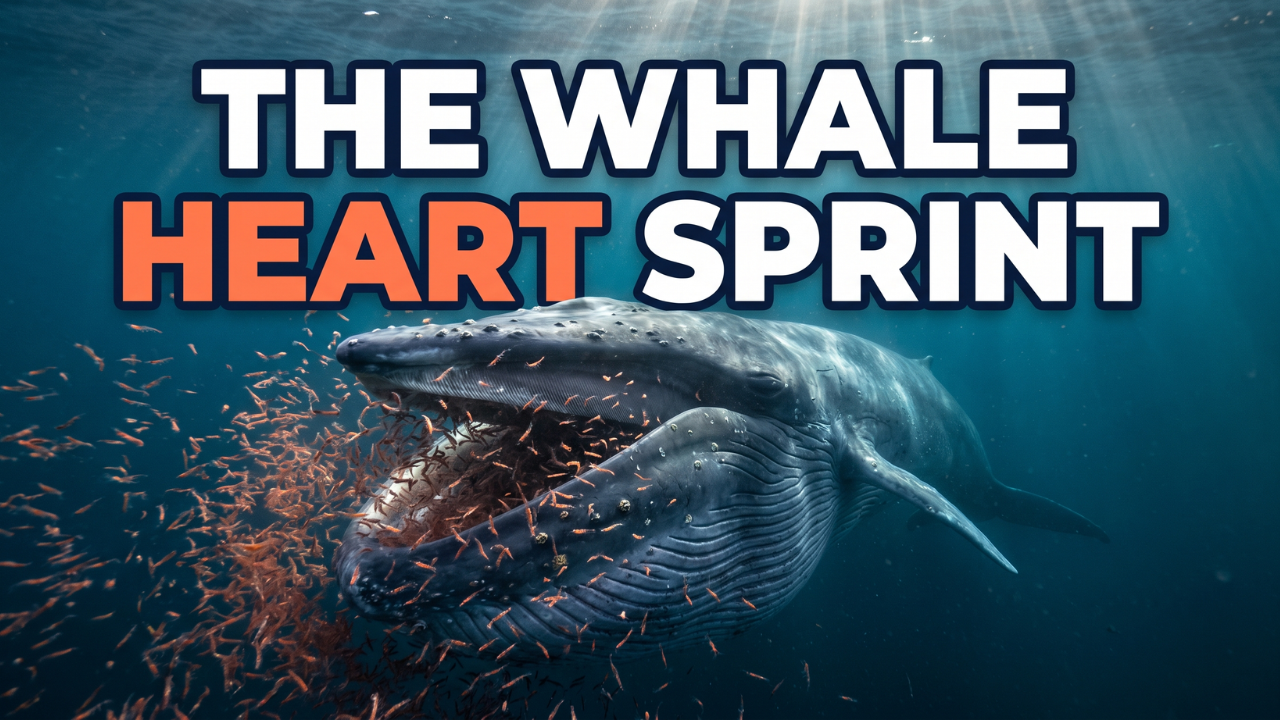
The blue whale is the largest animal that has ever lived, and every time it feeds, it pulls off one of the most extreme physical feats on the planet. It speeds up, throws open its mouth, swallows a volume of water and krill that can rival its own body, then glides while pushing that water back out through its baleen. All of this happens on a single breath, sometimes hundreds of metres below the surface.
So what is the heart doing through all of it? On this episode of the How to Protect the Ocean podcast, Dr. Ashley Blawas joins me to share the answer from her new study in PNAS.
Who is Ashley Blawas?
Ashley is a postdoctoral scholar in Jeremy Goldbogen's lab at Hopkins Marine Station, part of Stanford's Doerr School of Sustainability. She describes herself as a physiologist who wants to know how animals work, with a focus on rorqual whales: blue whales, fin whales and humpbacks.
Her path started with family beach trips in North Carolina. She went on to study biomedical engineering at Duke, where she took a semester at the Duke Marine Lab, the same coastal town she had vacationed in as a kid. There she met Dr. Doug Nowacek, a biologist turned engineer who builds tools to study ocean animals. That meeting showed her that engineering and marine science could work together. Her PhD looked at the diving physiology of dolphins and pilot whales, including the discovery that a dolphin resting at the surface can swing its heart rate from around 120 beats per minute during a breath to about 40 between breaths.
How do you measure a whale's heartbeat?
You cannot follow a diving blue whale with a stethoscope. Ashley's team uses biologging tags, which she compares to a slightly oversized smartphone, fitted with two metal electrodes about the size of a quarter. These record an electrocardiogram (ECG), the same method doctors use on people, by picking up the electrical signal of the heart muscle as it beats.
The tags are non-invasive. A team member stands on the pulpit of a small boat and uses a carbon fibre pole about six metres long to place the suction-cup tag on the whale's back when it surfaces. Once the whale dives, water pressure presses the tag down even tighter. Tags usually stay on for 12 to 36 hours, then pop off and float so the team can recover them and download the data. Many of the lab's tags also record video and audio, which is how researchers learned to match tag movements to real feeding behaviour.
Ashley's postdoc project was to improve this heart rate tag. The lab had already recorded the first blue whale heart rates in 2019, and her job was to make the device more reliable and usable on more species. That meant solving true engineering problems like drag, skin contact, and tag vibration that adds noise to the signal.
The three phases of lunge feeding
Ashley breaks lunge feeding into three parts:
- Accelerate. The whale flukes hard and reaches about 4 metres per second. That sounds modest until you remember the size of the animal doing it.
- Engulf. At top speed the whale opens its mouth and its pleated throat balloons outward like a parachute. In a few seconds it goes from full speed to almost zero.
- Filter. The whale glides without fluking, pushing water out through its baleen before swallowing. For the largest blue whales this takes about a minute to a minute and a half.
Because filtering takes so long, whales can only fit a limited number of lunges into each dive. That makes each lunge, and each prey patch, count.
Finding 1: Whales are sprinters
The team analyzed nine tag records from blue and humpback whales collected over several field seasons. They found that whale heart rates during lunge feeding follow the same pattern seen in human sprinters doing intervals. Heart rate stays high at the start of the filtering phase and only slowly comes down.
In sprinters, that recovery period sends oxygen-rich blood through the body to restore the fuel used in the last burst. Ashley's team thinks whales do the same thing, which suggests they may rely on similar energy pathways and muscle adaptations to human sprinters.
Finding 2: Bigger bodies, bigger heart rate range
The team then compared whales with smaller marine mammals, seabirds and land animals. Big whales appear to access a much wider heart rate range, roughly 5 to 35 beats per minute, or about sevenfold. A person typically runs from about 60 to 180, only about threefold. That wide "cardiac scope" may help the largest whales power intense lunges at depth while still conserving oxygen on a breath-hold dive.
How do whales find their food?
One of the most interesting open questions is how whales find prey patches in the first place. When feeding deep, they often approach a patch from below, which may help if the krill are backlit by light from the surface. Beyond that, Ashley says it is a big question mark. Whales might be cueing on sight, touch, sound from other animals, or ocean conditions like water temperature.
It matters because lunge feeding only works when prey is densely packed. As Ashley puts it, you would not shop at a poorly stocked grocery store when a well-stocked one is down the street. Large whales cannot survive on the average spread of prey in the ocean. They need concentrated patches, and anything that shifts where those patches form changes the math of survival.
What comes next
Ashley wants to tag minke whales, the smallest rorquals, and North Atlantic right whales, which skim-feed slowly like a lawnmower instead of lunging. Her team also wants longer records to see how whales recover after extended feeding bouts.
The long-term hope is a kind of smartwatch for whales. With bigger datasets, measures like heart rate variability could one day help researchers track stress and health in wild whales over time. For now, tools like drone photogrammetry give faster answers about body condition, but heart rate data adds another layer to understanding how these animals cope in a changing ocean.
Why it matters for ocean protection
Every species we hope to protect has a physiological limit. Knowing how blue and humpback whales spend and recover energy helps us understand what happens when their prey moves, thins out, or gets disturbed. You cannot protect what you do not understand, and Ashley's work is filling in one heartbeat at a time.
Takeaways
- Ashley Blawas and colleagues published new findings on lunge-feeding whale heart rates in PNAS in 2026.
- Lunge feeding follows three phases: accelerate, engulf, filter.
- Whale heart rates stay high after a lunge and recover gradually, the same pattern seen in human sprinters.
- Large whales use a heart rate range of about sevenfold, more than double the human range.
- Suction-cup ECG tags record 12 to 36 hours of data without harming the whale.
- Dense prey patches are essential for lunge feeders, so changes to prey distribution matter for whale survival.
- Future research aims to track whale health and stress with heart rate variability.

CEO

The Pollution That Breeds: How the Great Lakes Stopped Invaders