What Actually Forces Companies to Protect the Ocean?
What Actually Forces Companies to Protect the Ocean?
Most people believe companies change when they care enough about the environment.
That sounds good, but it is usually not how change happens.
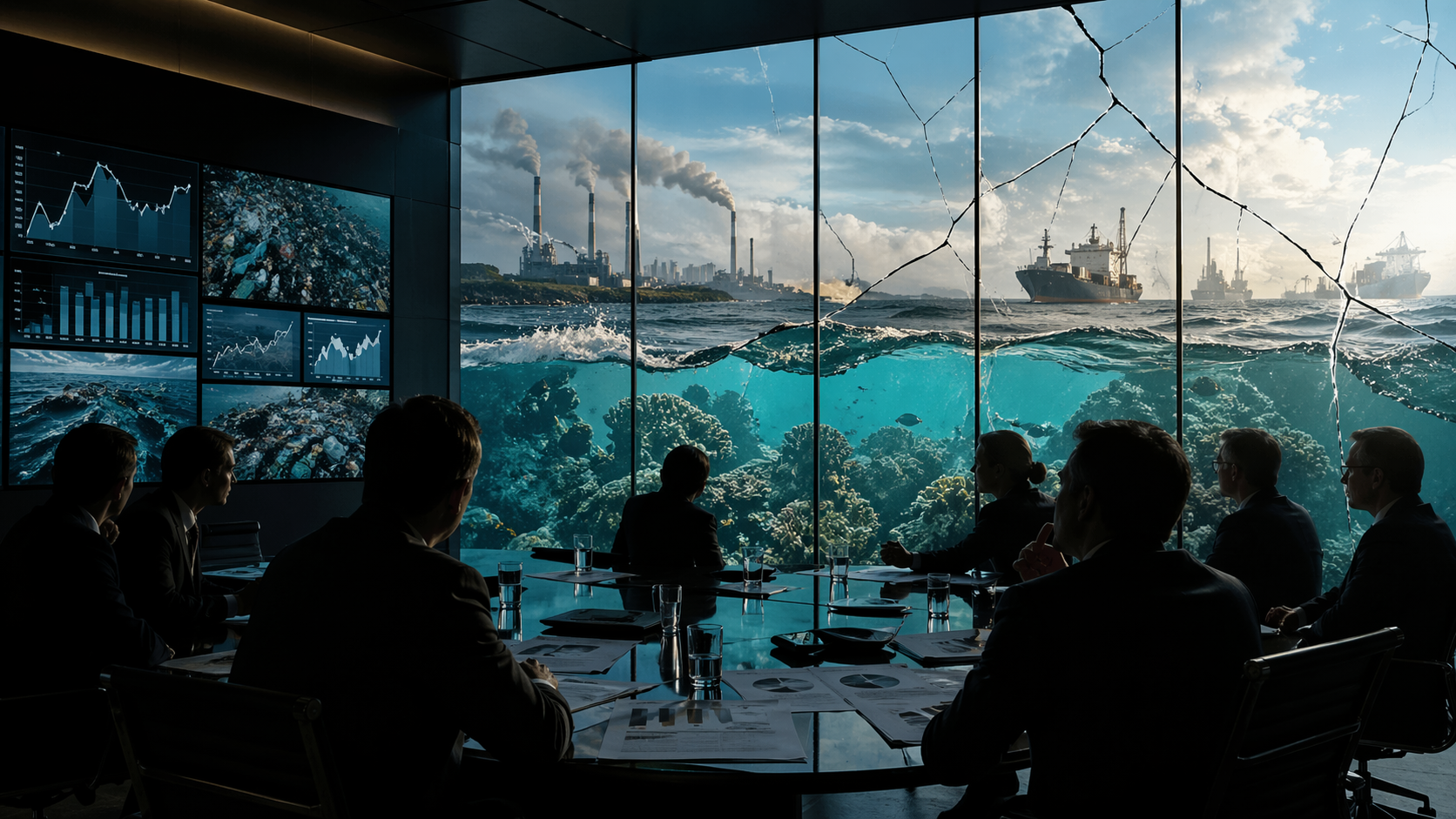
In reality, most companies change when pressure builds to a tipping point. They act when staying the same becomes riskier, more expensive, or more damaging than adapting.
Understanding that difference matters if we want real progress for the ocean.
Why Awareness Alone Rarely Works
For years, environmental campaigns have focused on raising awareness.
Awareness is important. It helps people understand the problem. It can inspire concern and start conversations.
But awareness by itself often does not move large organizations.
Many companies already know their packaging creates waste. They know emissions contribute to climate change. They know poor sourcing can damage ecosystems.
The challenge is not always knowledge.
The challenge is incentives.
If profits remain strong, customers stay loyal, and regulations stay weak, many businesses feel little urgency to change quickly.
That is why some harmful practices continue long after the science is clear.
What Actually Creates a Tipping Point
Companies respond when pressure reaches something they cannot ignore.
That tipping point can look different depending on the business.
It may include:
- Losing major customers
- Negative public attention
- Employee pressure from inside the company
- Investor concern about long-term risk
- New laws or regulations
- Leadership having a personal wake-up call
- Competitors proving a better model works
There is no single formula.
The key is identifying what matters most to that company.
Why This Matters for Ocean Conservation
Many of the biggest threats to the ocean are linked to business decisions.
These include:
- Plastic pollution
- Carbon emissions
- Destructive fishing practices
- Habitat loss
- Poor supply chain oversight
- Misleading sustainability claims
- Coastal industrial expansion
If businesses help create these problems, then business behavior must be part of the solution.
That means ocean advocates need more than passion. They need strategy.
Why Individual Action Has Limits
Many people try to make better personal choices.
That matters. Individual choices can reflect values and support better products.
But one customer quietly changing brands rarely transforms a multinational company.
Collective action is different.
When thousands of customers speak together, companies notice.
When employees organize, leaders notice.
When media asks questions, leaders notice.
When investors see risk, leaders notice.
When governments act, markets notice.
The lesson is simple: personal action becomes stronger when it connects to a larger movement.
What Effective Pressure Looks Like
If you want to influence a company, start by asking one question:
What is their real pressure point?
Some companies care most about reputation.
Some care most about revenue.
Some care most about attracting talent.
Some care most about avoiding regulation.
Some care most about investor confidence.
Once you know that, your message becomes more effective.
Instead of saying “do better,” you can focus on what actually moves decisions.
Signs of Progress
Not every company is stuck.
Some businesses have redesigned products, changed sourcing, reduced waste, improved transparency, and tied profits to environmental goals.
These examples matter because they show change is possible.
They also prove that protecting the ocean and running a successful business do not have to be opposites.
The future belongs to organizations that understand both.
What You Can Do Right Now
You do not need to run a corporation to create pressure.
You can:
- Support companies making credible improvements
- Join campaigns pushing for change
- Contact brands directly with clear requests
- Vote for stronger environmental policy
- Share reliable information
- Work with others instead of acting alone
Small actions gain power when multiplied.
Final Thought
Companies rarely change because they suddenly care.
They change when enough people, enough pressure, and enough consequences make change unavoidable.
If we want to protect the ocean, we need to stop hoping companies will act on their own.
We need to help create the tipping point.

CEO


