Why Your Choices Feel So Hard, And What Actually Needs to Change
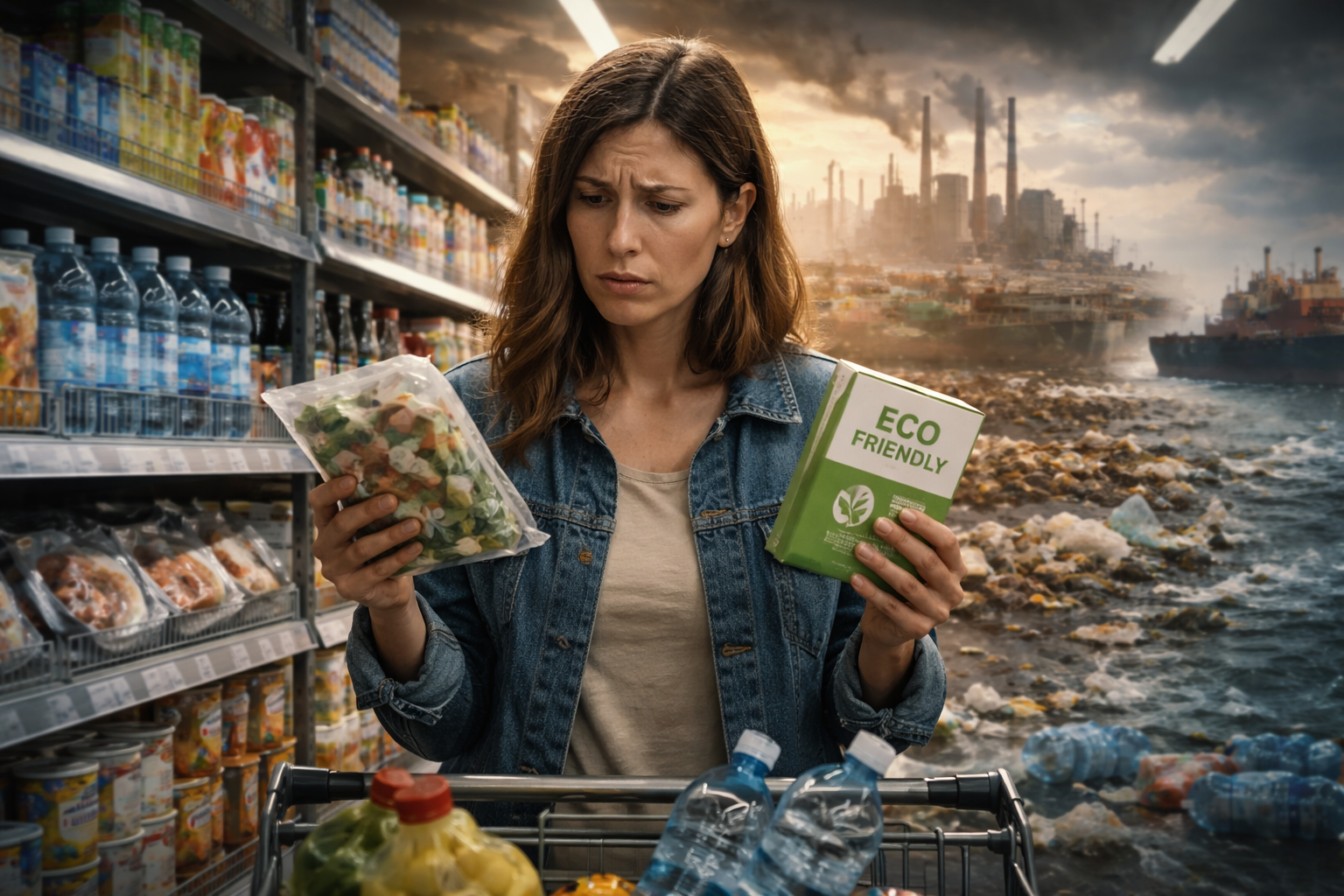
Have you ever stood in a store trying to make the “right” decision and felt overwhelmed?
Should you buy the product with less packaging? Should you avoid plastic? Is the seafood sustainable? Is the cheaper option unethical? Is using AI wasting water and energy?
Many people feel this pressure every day. But here’s the truth: a lot of these choices were never supposed to become your burden alone.
The Hidden Shift
Over time, environmental responsibility has been pushed downstream to consumers.
Instead of solving waste at the production level, companies ask consumers to recycle more.
Instead of building transparent seafood systems, shoppers are expected to decode labels.
Instead of regulating resource-heavy technology, users are told to feel guilty for using it.
That creates confusion, stress, and burnout.
Why This Happens
It is easier for powerful systems to shift responsibility than to redesign those systems.
Real reform can cost money, require regulation, or challenge profitable business models. Asking individuals to “choose better” is often cheaper and easier.
That does not mean personal choices do not matter.
It means personal choices are only one part of the solution.
The Ocean Example
Seafood is a perfect example.
Consumers are asked to know:
- What species they are buying
- Where it was caught
- Whether it was legal
- Whether labor was fair
- Whether stocks are healthy
- Whether labels are accurate
Most people just want dinner.
That is why better traceability, stronger fisheries rules, and honest labeling matter so much.
What Real Accountability Looks Like
Instead of carrying constant guilt, we can focus on actions that create leverage:
- Support better companies
- Ask questions
- Contact brands
- Vote for stronger policy
- Join local environmental groups
- Share trustworthy information
- Reduce waste where practical
Final Thought
You do not need to be a perfect consumer.
You need to be an informed citizen in a system that needs improvement.
And when enough people demand better systems, change becomes possible.

CEO


