What Does NOAA Have to Do With Saving Marine Wildlife?


 Apple Podcasts
 Spotify
 YouTube
 Amazon Music
 PocketCasts
 Overcast
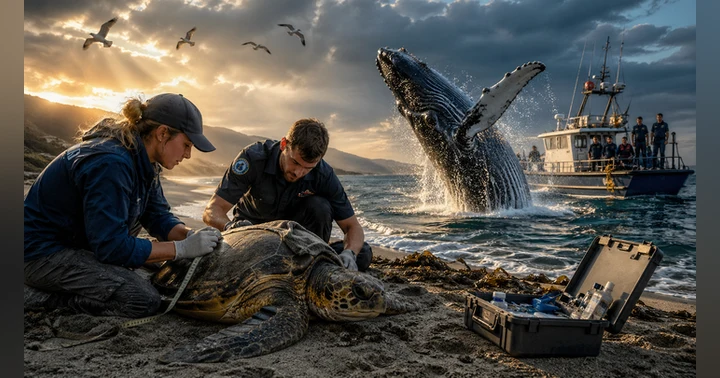
 NOAA marine wildlife protection affects whales, sea turtles, dolphins, seals, and endangered ocean species in ways most people never see. In this episode, we break down how one agency helps prevent extinctions, protects habitats, responds to strandings, and enforces laws that keep marine wildlife alive.
Ocean conservation is not only about beach cleanups or personal choices. It also depends on science, rescue teams, habitat monitoring, fisheries rules, and long-term public systems. If those systems weaken, marine wildlife can pay the price.
Marine biology listeners will learn why protecting species requires more than passion, and why invisible infrastructure matters as much as visible activism.
Support Independent Podcasts: https://www.speakupforblue.com/patreon
Help fund a new seagrass podcast: https://www.speakupforblue.com/seagrass
Connect with Speak Up For Blue
Website: https://bit.ly/3fOF3Wf
Instagram: https://bit.ly/3rIaJSG
TikTok: https://www.tiktok.com/@speakupforblue
Twitter: https://bit.ly/3rHZxpc
YouTube: www.speakupforblue.com/youtube
00:00:00,050 --> 00:00:04,130
Some of the ocean's most iconic
animals would be in even deeper trouble
2
00:00:04,130 --> 00:00:06,470
without the quiet work of one agency.
3
00:00:06,470 --> 00:00:11,313
So whales, sea turtles, sharks, and coral
reefs, and many people do not realize
4
00:00:11,313 --> 00:00:14,673
how much NOAA is actually involved.
5
00:00:15,176 --> 00:00:18,056
This is the How to Protect the
Ocean Podcast, your daily ocean
6
00:00:18,056 --> 00:00:19,346
News and conservation podcast.
7
00:00:19,526 --> 00:00:23,576
Follow now if you care about what
actually helps Marine life, not
8
00:00:23,576 --> 00:00:25,826
just what sounds good online.
9
00:00:26,396 --> 00:00:30,686
Today we're gonna be talking
about how NOAA protects Marine
10
00:00:30,686 --> 00:00:32,726
wildlife and its habitats.
11
00:00:32,986 --> 00:00:35,986
And I'm talking about this
'cause this is part of my ongoing
12
00:00:35,986 --> 00:00:38,621
weekly, I guess topic for NOAA.
13
00:00:38,621 --> 00:00:42,011
Really, it's just all about the
National Oceanographic and Atmospheric
14
00:00:42,011 --> 00:00:45,765
Administration, NOAA, which is an
important part of a lot of things.
15
00:00:45,865 --> 00:00:49,225
Two episodes ago we looked
at storms saving, basically.
16
00:00:49,225 --> 00:00:53,275
Saving people from storm damage and
harm that can happen with hurricanes,
17
00:00:53,275 --> 00:00:55,318
tsunamis, flooding, and so forth.
18
00:00:55,478 --> 00:00:58,988
Yesterday we looked at how it protects
seafood and seafood, the seafood
19
00:00:58,988 --> 00:01:01,334
economy in the United States and beyond.
20
00:01:01,334 --> 00:01:05,178
Today we're talking about marine
wildlife in general and how important
21
00:01:05,178 --> 00:01:09,068
it is to save those as a species
and what they do with these species.
22
00:01:09,068 --> 00:01:12,455
So when species decline, recovery
doesn't just happen by itself.
23
00:01:12,455 --> 00:01:14,945
We can't just leave a species
to say, Hey, they're declining.
24
00:01:15,038 --> 00:01:15,758
They'll be fine.
25
00:01:16,163 --> 00:01:17,273
We're not gonna monitor them.
26
00:01:17,273 --> 00:01:18,443
We're not gonna do anything.
27
00:01:18,443 --> 00:01:21,263
We're just gonna continue on
with our merry way and do what
28
00:01:21,263 --> 00:01:24,053
we've been doing, and we don't
have to worry about what happens.
29
00:01:24,133 --> 00:01:27,916
But no, it takes science,
enforcement, planning, and long-term
30
00:01:27,916 --> 00:01:29,986
commitment to help these species.
31
00:01:30,229 --> 00:01:34,730
NOAA plays a central role in marine
species protection in US waters.
32
00:01:34,866 --> 00:01:39,156
So that includes the responsibilities
under the Endangered Species Act and the
33
00:01:39,156 --> 00:01:43,280
Marine Mammal Protection Act, plus habitat
Conservation and Sanctuary Management.
34
00:01:43,630 --> 00:01:45,633
Take the North Atlantic
right whale, for instance.
35
00:01:45,790 --> 00:01:49,840
One of the most endangered whales
on the planet facing vessel strikes
36
00:01:49,870 --> 00:01:51,400
and fishing gear entanglement.
37
00:01:51,570 --> 00:01:55,120
NOAA has been deeply involved
in monitoring populations for
38
00:01:55,120 --> 00:01:58,913
decades, proposing protections,
tracking mortalities, and
39
00:01:58,913 --> 00:02:00,833
supporting recovery measures.
40
00:02:01,046 --> 00:02:02,996
That work can be controversial.
41
00:02:03,255 --> 00:02:06,788
It can affect industries and
it can trigger political fights.
42
00:02:06,995 --> 00:02:10,625
But without intervention,
extinction risks rises.
43
00:02:10,865 --> 00:02:12,815
Sea turtles are another example.
44
00:02:13,165 --> 00:02:17,345
NOAA has supported bycatch reduction
measures, nesting beach to science,
45
00:02:17,435 --> 00:02:22,705
migration tracking and fishery gear
changes that reduce accidental captures.
46
00:02:22,981 --> 00:02:27,088
Those actions have helped multiple
turtle population improve over time even
47
00:02:27,088 --> 00:02:29,188
though some of the threats still remain.
48
00:02:29,578 --> 00:02:34,291
And speaking of sea turtles, the work
that NOAA has contributed among many
49
00:02:34,291 --> 00:02:37,531
other conservation organizations and
scientists around the world have helped
50
00:02:37,531 --> 00:02:42,961
green sea turtles kind of get out of
their endangered status of going extinct
51
00:02:43,021 --> 00:02:47,851
and into a different status of being
less critical when it goes into endanger.
52
00:02:47,851 --> 00:02:50,391
So that's an important aspect
when we're talking about the
53
00:02:50,391 --> 00:02:54,081
effectiveness of this science, of
these engagement opportunities,
54
00:02:54,081 --> 00:02:57,778
education and policy making from NOAA.
55
00:02:57,838 --> 00:02:59,098
That's very important.
56
00:02:59,248 --> 00:03:00,598
And of course, there are sharks.
57
00:03:00,598 --> 00:03:04,448
No supports population science,
fisheries regulations for some species,
58
00:03:04,484 --> 00:03:08,564
protected area science, and ecosystem
monitoring that helps understand
59
00:03:08,564 --> 00:03:09,854
predator roll.
60
00:03:09,854 --> 00:03:10,934
So we talk about sharks.
61
00:03:10,964 --> 00:03:12,434
Those are predators.
62
00:03:12,521 --> 00:03:14,008
And habitats matter too.
63
00:03:14,008 --> 00:03:17,488
It's not just the fact that the sharks
are important, but habitats matter.
64
00:03:17,518 --> 00:03:21,674
Marine sanctuaries protect critical
ecosystems, cultural sites, reefs,
65
00:03:21,674 --> 00:03:25,844
kelp forests and migration corridors
that help house all these species
66
00:03:25,844 --> 00:03:27,164
that we're talking about today.
67
00:03:27,344 --> 00:03:29,024
They're very important species.
68
00:03:29,234 --> 00:03:32,864
These places support
biodiversity, education, tourism,
69
00:03:32,864 --> 00:03:35,336
and research all at once.
70
00:03:35,427 --> 00:03:37,997
A lot of these species, they've
been considered enemies.
71
00:03:38,183 --> 00:03:43,666
Movies like Jaws have made great white
sharks, the enemy number one in the Ocean.
72
00:03:43,666 --> 00:03:45,016
People don't wanna see them.
73
00:03:45,016 --> 00:03:46,066
They don't wanna be around them.
74
00:03:46,066 --> 00:03:47,666
Obviously you don't wanna
be in the water with them.
75
00:03:47,813 --> 00:03:51,273
But the fact that this apex predator
plays such an important role in
76
00:03:51,273 --> 00:03:54,573
ecosystem management in and of
itself, not take away humans.
77
00:03:55,005 --> 00:03:58,215
They regulate the food
web within their area.
78
00:03:58,318 --> 00:04:02,217
The fact that back in the ' and
'60s and even '70s, they realized
79
00:04:02,217 --> 00:04:04,901
that the great white shark
population has actually decreased.
80
00:04:05,121 --> 00:04:08,001
And then the movie jaws comes out and
people are worried about them, but
81
00:04:08,051 --> 00:04:10,966
they're like, how do we know where
these animals are, where are they?
82
00:04:10,966 --> 00:04:14,986
And it triggered funding to find out
more about these great white sharks.
83
00:04:14,986 --> 00:04:18,276
I talked to Dr. David Ebert, who's
a colleague of mine and my co-host
84
00:04:18,276 --> 00:04:20,346
on the Beyond Sharks podcast.
85
00:04:20,346 --> 00:04:23,312
And he's talked about the jaws
generation where funding came in
86
00:04:23,312 --> 00:04:27,422
for Jaws work, to like to know where
these animals are and what they do,
87
00:04:27,422 --> 00:04:28,652
and find out as much as possible.
88
00:04:28,652 --> 00:04:33,426
And now we know so much more about these
amazing and incredible animals that
89
00:04:33,456 --> 00:04:37,026
their population has increased more
and more because of their protection.
90
00:04:37,146 --> 00:04:40,632
So what started off as villains and
even though they still may not have that
91
00:04:40,632 --> 00:04:44,029
great of a reputation with most people,
there are a lot of people out there,
92
00:04:44,029 --> 00:04:47,449
a lot more out there that are want to
protect them and have protected them.
93
00:04:47,539 --> 00:04:51,217
And we've seen an increase in not
only the number and the size of these
94
00:04:51,217 --> 00:04:53,497
animals, but also their distribution.
95
00:04:53,497 --> 00:04:55,657
And of course climate
change is helping that.
96
00:04:55,834 --> 00:04:59,021
But we're seeing great whites on the
East Coast come into Nova Scotia and
97
00:04:59,021 --> 00:05:02,741
even further up, which is incredible to
see 'cause these animals doing so well
98
00:05:02,741 --> 00:05:06,791
and extending their range a lot of the
times because there's so much competition
99
00:05:06,821 --> 00:05:09,191
'cause there's so many of those
great white sharks within areas.
100
00:05:09,191 --> 00:05:12,661
So nursery areas in Southern California
are being monitored and they're being
101
00:05:12,661 --> 00:05:15,751
researched and we're getting more
and more actions of those animals.
102
00:05:15,751 --> 00:05:17,881
And I think that's really
great in that protection.
103
00:05:18,197 --> 00:05:22,341
Now, again, we talk about why this matters
to people because wildlife protection
104
00:05:22,341 --> 00:05:24,291
is not separate from human wellbeing.
105
00:05:24,577 --> 00:05:27,367
And again, a lot of times we kind of
take ourselves out of the equation
106
00:05:27,367 --> 00:05:30,464
of the food web and we realize
that we are part of the food web.
107
00:05:30,684 --> 00:05:33,144
And we're not at the top of the
food web necessarily, but we're
108
00:05:33,144 --> 00:05:35,094
involved in this ecosystem.
109
00:05:35,224 --> 00:05:38,704
And many communities are economically
tied to the living oceans.
110
00:05:38,954 --> 00:05:41,131
And I think that's an
important aspect to realize.
111
00:05:41,171 --> 00:05:42,157
We saw that yesterday.
112
00:05:42,251 --> 00:05:45,554
Ecotourism communities are
very much tied to the Ocean.
113
00:05:45,754 --> 00:05:48,897
Healthy oceans mean people are gonna
go out and explore, which means
114
00:05:48,897 --> 00:05:53,277
people are going to pay money and
support communities in that way.
115
00:05:53,367 --> 00:05:54,584
I think that's also cool.
116
00:05:54,771 --> 00:05:56,721
And also it matters to the Ocean.
117
00:05:56,941 --> 00:05:58,861
Species are not just decorations.
118
00:05:59,436 --> 00:06:01,742
Predators regulate food
webs, as I mentioned before.
119
00:06:01,922 --> 00:06:05,522
Grazers maintain habitats like
coral reefs and seagrasses.
120
00:06:05,739 --> 00:06:10,119
Migratory animals move nutrients
across ecosystems like whales
121
00:06:10,119 --> 00:06:12,999
and so forth, which is something
that's not talked about enough.
122
00:06:13,222 --> 00:06:15,322
You lose enough species
and a system weakens.
123
00:06:15,327 --> 00:06:16,462
They're not as stable.
124
00:06:16,642 --> 00:06:19,042
We talk about biodiversity
all the time on this podcast.
125
00:06:19,042 --> 00:06:23,396
When you have a system like say, a coral
reef system and you have this beautiful
126
00:06:23,396 --> 00:06:27,396
habitat of these corals, these corals
cannot be just sitting there all the time
127
00:06:27,396 --> 00:06:28,956
without any kind of maintenance on them.
128
00:06:29,172 --> 00:06:33,376
You'll see other parasites that will come
on, a disease that will come on the corals
129
00:06:33,376 --> 00:06:33,976
eventually.
130
00:06:34,109 --> 00:06:37,289
If there's a lot of nutrients, you'll see
an overgrowth of vegetation that will come
131
00:06:37,289 --> 00:06:38,699
like algae that will come on these corals.
132
00:06:38,699 --> 00:06:40,529
And these corals can't just
remove them on its own.
133
00:06:40,709 --> 00:06:41,549
You need grazers.
134
00:06:41,549 --> 00:06:44,369
So you have fishes that will come
in and they'll start to peck at
135
00:06:44,369 --> 00:06:47,519
these corals to make sure that the
algae is not widespread over the
136
00:06:47,519 --> 00:06:49,386
corals and destroy the coral system
137
00:06:49,386 --> 00:06:51,876
' cause all the corals are die
because they're smothered.
138
00:06:51,876 --> 00:06:53,436
They can't get the nutrients they need.
139
00:06:53,436 --> 00:06:56,166
They can't get the sun that
they need to do photosynthesis.
140
00:06:56,377 --> 00:06:59,992
And so it could be a hell of a
system if your species are not there.
141
00:07:00,156 --> 00:07:03,846
If you start taking out those species
either through fishing or because of
142
00:07:03,846 --> 00:07:07,602
climate changes and things like that,
you start to weaken the stability
143
00:07:07,602 --> 00:07:11,382
of that habitat and that weakening
of the stability will weaken the
144
00:07:11,382 --> 00:07:13,257
overall health of the coral system.
145
00:07:13,287 --> 00:07:17,167
And so when you have a weak system,
you have a weak biodiversity, you
146
00:07:17,167 --> 00:07:19,612
have a weak system, you don't get
to reap the rewards, let's say.
147
00:07:19,612 --> 00:07:22,786
So from fishing, from
seafood support, from economic
148
00:07:22,786 --> 00:07:24,346
support, tourism and so forth.
149
00:07:24,546 --> 00:07:25,716
A lot of communities depend on that.
150
00:07:25,716 --> 00:07:27,976
We don't realize how much the
communities depend on this.
151
00:07:27,976 --> 00:07:31,516
So protecting wildlife especially Marine
wildlife is very difficult and it's
152
00:07:31,516 --> 00:07:34,036
expensive and often politically messy.
153
00:07:34,036 --> 00:07:36,916
Not a lot of politicians wanna protect
these animals because they don't really
154
00:07:36,916 --> 00:07:40,459
see the direct benefits of that,
or even the indirect benefits of it.
155
00:07:40,646 --> 00:07:44,186
But the alternative is simpler,
decline, collapse, and regret.
156
00:07:44,216 --> 00:07:47,006
And that's what we want to
avoid as much as possible.
157
00:07:47,196 --> 00:07:51,926
We've seen in the Gulf of Mexico recently
that the US government has reduced
158
00:07:51,926 --> 00:07:55,646
the amount of quote unquote hoops that
developers like in the oil and gas
159
00:07:55,646 --> 00:07:59,216
industry have to go through when they're
looking at protecting endangered species.
160
00:07:59,216 --> 00:08:02,966
So essentially what happens when a
lease is bought, an oil and gas lease
161
00:08:02,966 --> 00:08:04,502
is bought in the Gulf of Mexico.
162
00:08:04,692 --> 00:08:06,702
They have to go through
a bunch of regulations.
163
00:08:06,702 --> 00:08:08,562
The companies have to go through
a bunch of regulations to ensure
164
00:08:08,562 --> 00:08:09,972
that they're not harming the Ocean.
165
00:08:10,092 --> 00:08:11,862
And it takes time to go through that.
166
00:08:11,862 --> 00:08:13,969
It takes a lot of research,
it takes money to do that.
167
00:08:14,139 --> 00:08:18,476
Not all of the time the businesses
are happy to do it because they takes
168
00:08:18,476 --> 00:08:20,186
time to go through those studies.
169
00:08:20,336 --> 00:08:22,556
They'll pay a hundred to couple
hundred thousand dollars,
170
00:08:22,556 --> 00:08:23,641
maybe even more to do that.
171
00:08:24,011 --> 00:08:26,951
And they'll say it's really expensive
and it takes a lot of time too.
172
00:08:26,981 --> 00:08:29,007
That's the argument that
I hear all the time.
173
00:08:29,007 --> 00:08:31,317
We heard in Canada with
the pipeline extensions.
174
00:08:31,507 --> 00:08:34,387
But we also hear that in the US now
with this, and they say it takes too
175
00:08:34,387 --> 00:08:36,007
much time to actually build on this.
176
00:08:36,231 --> 00:08:39,741
But even if they were allowed to jump
through those hoops a lot of the times
177
00:08:39,866 --> 00:08:44,156
to go from exploration to drilling,
to lease buying and all that kinda
178
00:08:44,156 --> 00:08:47,636
stuff, not in that order, but to
do all that, that'll take 20 years.
179
00:08:47,846 --> 00:08:48,686
They have the time.
180
00:08:48,716 --> 00:08:51,326
They just don't want to go through
it because there's a possibility that
181
00:08:51,326 --> 00:08:53,576
they could be harming the Ocean and
they don't want people to know that
182
00:08:53,576 --> 00:08:54,652
they're gonna be harming the Ocean.
183
00:08:54,742 --> 00:08:56,766
They don't care if they harm the Ocean.
184
00:08:56,766 --> 00:08:59,769
They still get their money out of
each of those wells that they drill.
185
00:08:59,909 --> 00:09:01,829
And not even long term,
they just want short term.
186
00:09:01,829 --> 00:09:03,509
That's all these companies care about.
187
00:09:03,602 --> 00:09:05,432
And that's something
that we have to prevent.
188
00:09:05,482 --> 00:09:08,392
And that's why we go through these
regulations that they think about it more.
189
00:09:08,592 --> 00:09:11,932
They think about the animals
and the fish and all the other
190
00:09:11,947 --> 00:09:14,947
communities that depend on the
Ocean that are not affected by that.
191
00:09:14,947 --> 00:09:17,754
So it's not just the fact that
you're gonna help destroy the Ocean.
192
00:09:17,887 --> 00:09:20,647
It's the fact that so many other
communities in the Gulf of Mexico, as
193
00:09:20,647 --> 00:09:24,394
well as around the world, depend on
these systems, depend on the coastline
194
00:09:24,394 --> 00:09:26,771
for money, for stability, for safety.
195
00:09:26,997 --> 00:09:30,117
And when you don't get that and
because of one other sector that
196
00:09:30,117 --> 00:09:33,271
comes through ' cause they find it
takes too long to go through and they
197
00:09:33,271 --> 00:09:34,531
can't make their money fast enough,
198
00:09:34,661 --> 00:09:36,311
that becomes a real problem.
199
00:09:36,401 --> 00:09:39,691
So this is why we talk about on
these episodes, on this podcast.
200
00:09:39,791 --> 00:09:43,181
This is why NOAA is there to help,
to help protect these animals, to
201
00:09:43,181 --> 00:09:46,504
speak up for these animals that have
somebody to speak up for, and to make
202
00:09:46,504 --> 00:09:47,764
sure that we're doing things properly
203
00:09:47,969 --> 00:09:48,689
as a country.
204
00:09:48,929 --> 00:09:51,479
Whether you're in Canada, whether
in the US, it doesn't matter.
205
00:09:51,639 --> 00:09:55,249
We wanna make sure government agencies
really do provide this and NOAAa
206
00:09:55,599 --> 00:09:59,599
provides it for the US and that's what
you're gonna hear on these episodes of
207
00:09:59,599 --> 00:10:00,859
the How to Protect the Ocean Podcast.
208
00:10:00,859 --> 00:10:04,146
We've covered studies from NOAA before,
may not have just gone out and mentioned
209
00:10:04,366 --> 00:10:07,266
NOAA, but we have covered a lot of
sites from amazing scientists that
210
00:10:07,266 --> 00:10:09,066
worked at NOAA all their entire life.
211
00:10:09,076 --> 00:10:10,756
Careers, which have been phenomenal.
212
00:10:10,816 --> 00:10:12,226
So, that's it for today's episode.
213
00:10:12,226 --> 00:10:13,336
I'd love to hear from you.
214
00:10:13,336 --> 00:10:14,206
Let me know what you think.
215
00:10:14,206 --> 00:10:17,712
Go to speak up for slash feedback
and let me know how you feel.
216
00:10:17,712 --> 00:10:19,802
You can leave a voicemail
or you can write to me.
217
00:10:20,222 --> 00:10:22,112
You can also hit me up on
any of my socials, which
218
00:10:22,112 --> 00:10:23,649
are in the show notes below.
219
00:10:23,769 --> 00:10:26,769
And I wanna thank you so much for
joining me on today's episode of the
220
00:10:26,769 --> 00:10:28,059
How to Protect the Ocean Podcast.
221
00:10:28,059 --> 00:10:30,642
Don't forget to follow this podcast
if you want to hear tomorrow's
222
00:10:30,642 --> 00:10:32,602
episode of more about NOAA.
223
00:10:32,669 --> 00:10:35,542
And I wanna thank you so much for
joining me on today's episode of the
224
00:10:35,542 --> 00:10:36,742
How to Protect the Ocean Podcast.
225
00:10:36,862 --> 00:10:37,522
Have a great day.
226
00:10:37,522 --> 00:10:39,472
We'll talk to you tomorrow
and happy conservation.