He Almost Quit the Dive Business. Then a Coral Reef PhD Student Walked In.


 Apple Podcasts
 Spotify
 YouTube
 Amazon Music
 PocketCasts
 Overcast
 Mike Goldberg had over 10,000 dives and decades running a dive shop in the Florida Keys, enough time to have seen the reefs at their pristine best. Then came a coral bleaching event in 2008, and a few years later, Stony Coral Tissue Loss Disease, a still-unexplained outbreak that's killed coral tissue outright across more than 20 of Florida's roughly 45 stony coral species since 2014. At one point his wife told him directly: the reef isn't what it used to be, and it's not getting better. Get out of the business before there's nothing left to sell. He didn't know what to do about it.
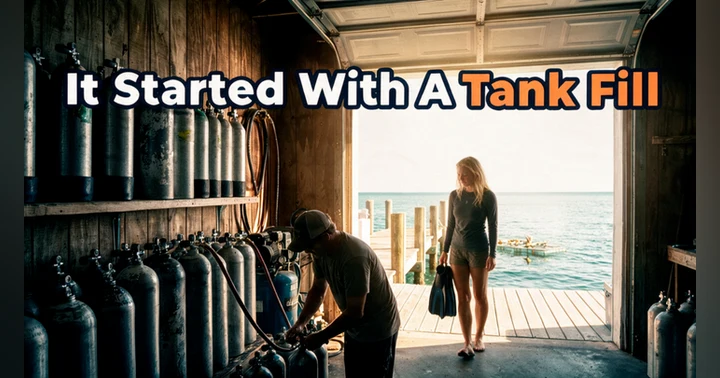
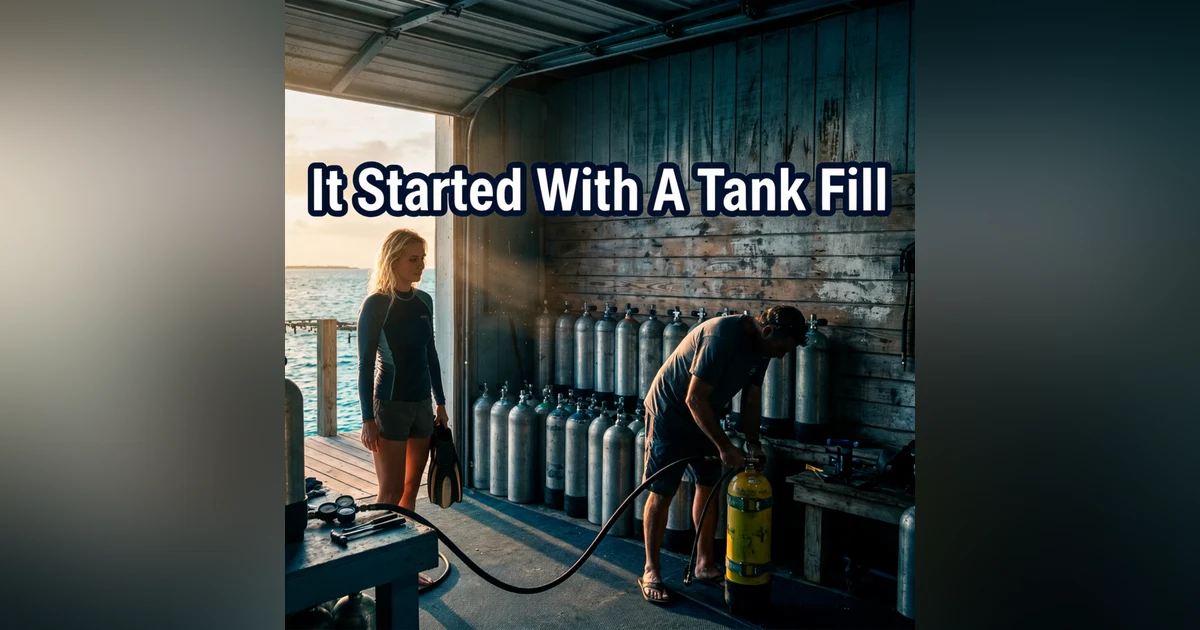
Then, around 2017 into 2018, a young woman walked into his shop just to fill a couple of scuba tanks. She turned out to be Dr. Kylie Smith, a PhD student studying the relationship between parrotfish populations and coral outplants nearby. By the time she left, Mike had asked her a dozen questions. She kept coming back, and he kept asking more, in what he calls his own "period of discovery." It took roughly a year to find direction, and part of that year was Mike convincing Kylie not to take a government job and instead co-found a nonprofit with him, something her own family saw as risky. In this episode, Andrew walks through how that unlikely partnership, her science and his three decades of local hustle, became I.CARE (Islamorada Conservation and Restoration Education): a nonprofit that planted its first coral in January 2021, now runs its own onshore nursery, and partners with Mote Marine Laboratory, Reef Renewal USA, the Florida Aquarium, and the Reef Institute.
This is episode two of a four-part week built around Andrew's interview with Mike Goldberg, co-founder of I.CARE. Monday's episode covered the global state of coral reefs and the case for restoration; this episode is Mike's own story before his full interview airs Friday.
Takeaways:
- I.CARE didn't start with a grant or a strategic plan. It started with a dive shop owner's frustration and one chance conversation with a grad student who walked in to fill some tanks.
- The disease that pushed Mike to act, Stony Coral Tissue Loss Disease, isn't like bleaching. It's an unresolved, contagious, tissue-killing outbreak that's been spreading through Florida and the wider Caribbean for over a decade with no confirmed cause.
- The partnership worked because it paired two kinds of expertise that don't usually sit in the same room: a scientist's research and a small business owner's community connections and hustle.
- Mike spent part of a year talking Kylie out of a safer path (a government job) and into co-founding a nonprofit instead, a real risk her own family flagged at the time.
- Watching your own livelihood visibly decline, and choosing to act instead of walking away, is its own kind of origin story, separate from the science.
Website: https://icareaboutcoral.org/
Support Independent Podcasts: https://www.speakupforblue.com/patreon
Need help with your ocean non-profit, company, or project? Get the help you need with Pisces Oceans Inc.: https://www.piscesoceans.ca
Connect with Speak Up For Blue
Website: https://bit.ly/3fOF3Wf
Instagram: https://bit.ly/3rIaJSG
TikTok: https://www.tiktok.com/@speakupforblue
Twitter: https://bit.ly/3rHZxpc
YouTube: www.speakupforblue.com/youtube
0:00 I wanna tell you a story of a dive shop owner's wife who told him that it's time to get out of the business. We're in the Keys. The environment's not looking that great. We don't know how long we're gonna be in business, if people are gonna come out anymore if the reefs are gone. So she tells him, "We gotta get out now. We gotta sell before it's too late." He doesn't know what to do about it. It's a very difficult decision when you've spent decades trying to have a dive shop, get it off the ground, you know, get good clientele coming back and forth. You're in the Keys, you're in one of the best places in the US to dive. And then so he's thinking about this. He's like, "This is a major life decision." He's approaching sort of the, you know, closer to his retirement. He's like, "Wait a minute, I'm not sure if I can do this." Then a grad student walks into his shop, a marine biology grad student, and just to fill a couple scuba tanks 'cause she's got to do some work.
0:46 And by the time she leaves, he asked her, like, a dozen questions about the reef and what's been going on. And that's the entire origin of the story of a nonprofit that's since planted its first coral it started as small as a tank fill. We're gonna talk about that on today's episode of the How to Protect the Ocean podcast. It's a great story about, you know, a guy who doesn't know much about… Like, he's not a marine biologist. He doesn't know much about the science of reefs or things like that, but he's gone diving a lot. And that's what we're gonna talk about today. And so if you wanted to learn more about this, and this is the type of information you like to learn, don't forget to follow on your favorite podcast app so that you get more stories of this Monday to Friday. Every week we kinda pick a theme, and this week's theme is coral reefs and coral restoration.
1:26 And we're gonna talk about this story of how this dive owner became the president of an organization that plants corals, and so that the other dive businesses can do really well and his as well. So we're gonna find out how he does that, all that kinda stuff and the origin story of that. It's kinda like a Marvel movie, I guess. No, no, it's not. Uh, but it's a great story anyway, so let's look at it. Now, Mike Goldberg had over 10,000 dives and decades in the dive business. Enough to have seen that, like, Florida coral reefs at their pristine, almost the impeccable finest. Some of the dives that he's done like, decades ago, wall-to-wall coral. Imagine just diving, and you're just going through, and you're probably maybe, like, 10 feet, 20 feet deep, maybe a little bit more.
2:09 You're in the Keys, beautiful weather, nice calm day on the boat. You dive down, and you see wall-to-wall corals. Like, just, sea fans going back and forth. You see these hard corals that are causing, like, the complex, like, the branching corals and the plate corals, and they're causing this, like, complexity in the system where you're seeing all these little critters hide. Fish, like, schools of fish by the hundreds and thousands of them. And you see all these little critters that come out, these invertebrates, shrimp and crabs, and all the nematodes and worms, and all these wonderful things that you get to see when you go to a reef. It is why people travel to the Keys all of the time. But then he had his first widespread coral bleach event around 2008.
2:49 It was like a huge event across the eastern Caribbean. And it was a shock. He even says like, "We didn't even know coral bleaching was. Now, about 10 years before that, there was a thing called stony coral loss disease, SCTDL, and it hit. And Mike, as a non-scientist, he was like, almost threw up my hands and, like, describing it as genuinely depressing. He's just like, "I'm done. I can't do it." "The corals are all dying." It hit, like, crazy amounts of corals. Just to explain what it is, cause it's a specific crisis here that we're talking about. It was first identified off Virginia Key near Miami in the fall of 2014. So almost exactly about 10 years ago, of that window that Mike was describing to me.
3:34 The cause is still not fully identified, but it's a bacteria that appear to be involved since like, the antibiotic treatment slows its progression, so it must be, like, a bacteria. But no single confirmed pathogen has been pinned down to this disease. But what makes it different from bleaching is bleaching is a stress response a coral can sometimes recover from once the water temperature drops. But with stony coral tissue disease, it kills living coral tissue outright. So in lesions that can spread, like, five to 40 square centimeters a day. So it's rapidly spreading, and often kills the entire colony within weeks to months. It affects more than 20 of Florida's roughly 45 stony, coral species. So there are difference in corals. There are stony and soft corals.
4:15 So the stony corals are, like, the hard corals, the stuff you scratch yourself on if you're a diver or a snorkeler or a free diver. The soft corals are kinda like they're more tissue than skeleton and they, you know, mushroom corals, Xenia, like, all these different… They're very, like, wavy, very flowery. Some are thick, like the mushroom corals can be thick at times. But the stony corals are, like, the branching corals, the flat corals, the brain corals. Those are the stony corals, the hard corals, right? They have that hard limestone skeleton where the soft ones don't. But this is like, 20 out of 45 stony coral species are affected, including the major reef-building species like the brain and pillar corals. With mortality, almost the most vulnerable species running as high as 66 to 100% through virtually the entire Florida Reef Tract.
4:57 An estimated 90% of it, more than 109,000 acres, and onto reefs in at least 18 countries and territories across the wider Caribbean. So this has hit everybody. This has hit a lot of people. Now at that time, his wife told him directly, it's like, "What are you gonna do? You know, like the product that you sell, the reef, it's not what it used to be, and it's not getting better." So she suggested he get out of the business before it's too late. You know? Or you're not gonna have anything to sell. You're not gonna have anything to offer on these dives. And that's just like, this is a wife, not, again, not a scientist. Maybe not in the know of what's happening, not following the science, and that's fine. That's normal. This is a business person. This person is trying to show people a good time.
5:38 Her and her husband are trying to show people a good time at the dive sites, and it's beautiful. Like, when you go to a lot of dive sites, like they care about the ocean so much. It's not just their business, but it's what they do. And Mike was the same thing. Mike and his wife, like, they care about it. But at some point you have to ask yourself, "Is this, like, a thing that we're gonna do?" He's like, "What am I gonna do? I have no idea." But he's not a person that he describes. So I interview him on Friday and he says, "I'm not a person that, like, I'm gonna just give up." So around 2017 into 2018, a young woman walked into Mike's shop just to fill up some tanks. She turned out to be Dr. Kylie Smith, who ended up being a co-founder of ICARE For with him. She was working on her PhD, studying the relationship between parrotfish populations and coral outplants nearby.
6:23 Now he's like, "All right, Kylie. Like, I don't know you too well, but I need you to sit down. You're a scientist, you know, you're a PhD student." So, like, just to let people know, like, although graduate students, master's and PhD students are technically students, they know a hell of a lot. Like, they have been doing review after review and been pounded with information throughout their undergrad and graduate studies where they know a lot, especially about the particular subject that they're studying. Here is Kylie, a PhD student, who's studying the, uh, relationship between parrotfish populations and coral plants in the Keys. So she knows a lot about the environment. She probably knows a lot about what's happening. So he sits down and he's like, "I don't know you too well, but I need to ask you a bunch of questions." He's like, that's exactly how their relationship, like business relationship started, is just him just sitting there and being like, " You know, I'm not a scientist.
7:05 I need to know, like, what is happening. I need to know whether I need to close my business down." She came back two to three weeks later, and he then he says, "She couldn't get out without me asking a dozen questions." He calls it his period of discovery. This is a period where he was able to find out from a scientist, from an expert, about what's happening with the reef. That's a huge, huge thing. A lot of business owners are just gonna be like, "How can I make money? How can I make more money? How can I stay with making the money that I am? What if people don't come anymore?" So he needs to ask questions about what's happening to the reef, and are there ways to make it better. And it took a roughly a year to figure out, like, the direction he wanted to take. And part of that year was Mike convincing Kylie not to take a government job and instead running her own nonprofit, something her own family said was a little risky.
7:51 'Cause like, look, you're a PhD student, you graduate with your PhD. And then you gotta figure out what you're gonna do. And even before you graduate and before your defense, you're looking for post-docs. You're looking at which you can get at government or you can get at institutions, like in academic institutions. You might go to a nonprofit. You might go to, like, a coral restoration foundation that's already established. The options are there, but it's just a matter of, like, what she wants to do, but it's not always easy to get a government job or to get anything like this. This is in 2018. Trump administration, the first time, was in power. Environmental jobs weren't coming by the wayside, especially for government, so there's not a lot available at that time. And of course, it's before COVID, so God knows what would've happened if she had taken a job somewhere else.
8:32 You know, he's convincing her. He's like, "Hey, you need to start something with me. We need to do something together. We need to start a nonprofit." And he convinced her. He's like, "I need to do it." And he's like, "It's gonna be great. Trust me," like, " We're gonna make this work." And look, he's had this experience of running a business for, like, 30 years. A dive business. He knows the reef, and local information is always better when you couple it with science. Or science is always better when you couple it with local knowledge. And so I think it worked. And it did. It worked. Her connections in the scientific community, his connections in the dive industry, it was perfect. And in comes ICARE, which is a nonprofit, and the partnership started with Mote Marine Laboratories, and the first coral went into the water in January 2021.
9:15 Now, I think you have to realize the way all of this works is you have to establish, you know… Like, there's a lot to go into it. There's the infrastructure of actually putting up a nonprofit organization, like starting a nonprofit, building the team, finding partners. Like Mote Marine Laboratories is not just your regular partner. It is Mote Marine Laboratories. It is internationally known. They have a great coral program. They know Florida very well. Some of the best researchers have come and gone through that and continue to be there in the laboratories. And so having the knowledge and the backing of them, plus a bunch of other partners now, you start to realize, like, you can do a lot of things here. Now it's just a matter of actually implementing, 'cause they knew the science was there. They knew the science said, "Hey, locally, we can actually restore this area, this reef on Islamorada." The keys that they were on.
10:03 Now, since the start, since that first frag went in, that first coral went in in January 2021, it's grown into, like, Eye Care propagating all its own coral, running its own onshore nursery with nine offshore coral and sponge nurseries installing this October coming up. Plus partnerships with Reef Renewal USA, Mote Marine Lab, the Florida Aquarium, and the Reef Institute. So there's a lot of places where this is growing out. And it's like, for the last five and a half years through COVID, like, they started at the beginning of COVID. If you know business owners, whether it's nonprofits or for-profits, and if you ever watched them or asked them questions during COVID how to manage their business, that's a tough thing. That's a tough thing. Like dive shops, I don't even know how Mike kept his dive shop open during COVID.
10:46 Like, I know Florida was different, I know the US was different in the way they managed it, but not a lot of people were traveling for a good amount of time before it started to open up again. And a lot of businesses, like especially tourist business, lost money 'cause people weren't going on planes because that's where you caught a lot of COVID, right? 'Cause we know planes are bad for that kind of stuff to pass around just the common cold, let alone a global pandemic disease. And whatever you think about the pandemic or not, it doesn't matter. People just weren't moving around that much. And to be able to not only continue his business, like his dive business for Mike through that, but also start and grow ICARE, a nonprofit organization that looks for funding all the time, that's a very difficult thing to do, and he's able to grow it. And in the interview on Friday, you'll see how much he's gonna be growing it and going into the details of those pop-up installations of these reef, sort of nurseries.
11:31 And it's amazing. Absolutely amazing. And ICARE, like, didn't start with, like, a grant or a strategic plan. It started with people having conversations at a dive shop. And the dive shop's owner's, like, frustration, and his one chance to have a conversation by a grad student who just happened to walk in, who was a coral reef researcher, and then this partnership bloomed into something like ICARE, which is phenomenal. Not something like ICARE, ICARE. And if you wanna go to the website, let me just pull it up here. It's icareaboutcoral.org. It's that simple. I'll put the links in the show notes. But the disease that pushed Mike to act, that stony coral tissue disease, it's not like bleaching. It's unresolved, it's contagious, tissue-killing outbreak that's been actively spreading through Florida and the wider Caribbean for over a decade with no confirmed cause.
12:18 But this partnership worked because it paired the two different expertise that don't usually sit in the same room, right? A scientist's research, a small business owner's community connections, and the, his hustle. And I think when you start to watch your own livelihood, you know, and you see it decline, and you choose to act instead of just walk away, that's admirable. That's its own kind of origin story, separate from the science. It's people who need to survive. It's this resilience that people have and communities have. And like there are big things coming with ICARE About Coral. There really is, and you're gonna see that over the years. We're gonna cover that. We're gonna have Mike back on, probably have Kylie on as well, and it's just phenomenal, and I think you're gonna be very proud to see that people are actually fighting out there.
12:59 It builds my optimism, it builds my enthusiasm to get more of these stories out there to you because we need these stories. We need the people to fight. Whether it's local, whether it's just, like, to build a little bit of resiliency until we figure out this climate change thing or act on this climate change thing, that's something that's tangible that we can bring home and just be like, "Yes, somebody out there is doing something." And he's not the only one. And Kylie's not the only one. But they are doing a great job, and we're gonna hear more about that this week. We're gonna talk about, the monitoring that they're doing, the transparency that they're gonna have. You're gonna hear all about it. And it's gonna be pretty big, so I'm looking forward to seeing that turn into something huge. But that's it for today's episode. I really appreciate you listening in. If you have any questions or comments, you know, please feel free to hit me up on my socials.
13:42 If you're on Spotify, just put a comment. I usually get pinged when a comment is up, and I'll r-reply usually within the next 24 hours. So hit me up on Spotify in a comment if you have a question, comment, anything like that on the podcast. And if not, just go to the show notes. Not only will you get the website for ICARE About Coral, but you'll also get, the links to my social so you can DM me on either Instagram, Facebook, or TikTok. But I wanna thank you so much for joining me on today's episode of the How to Protect the Ocean podcast. I'm your host, Andrew Lewin. Have a great day. We'll talk to you next time, and happy conservation.