How One Tide Pool Can Hold an Entire Ocean World
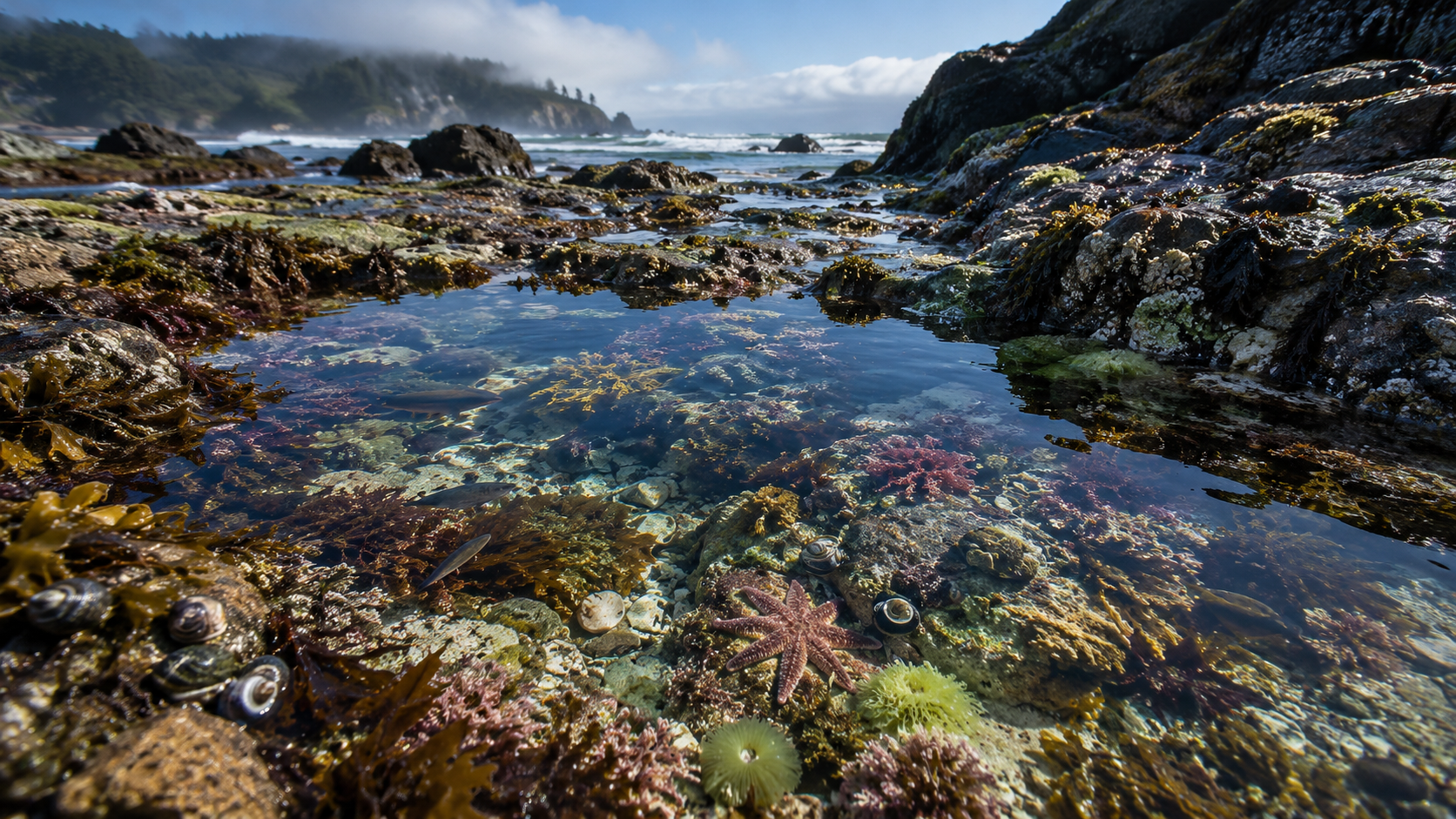
The Ocean Ecosystem Most People Walk Past
When most people visit the coast, they focus on the waves, the beach, or the horizon. Few stop to look closely at the small pools of water left behind when the tide goes out. These tide pools often appear quiet and empty from a distance, but they are actually bustling ecosystems packed with life.
A tide pool is created when seawater becomes trapped between rocks as the tide recedes. For a few hours, these pools become isolated worlds where marine organisms must survive until the ocean returns. Within just a few square meters, you can find predators, prey, grazers, scavengers, and countless interactions that mirror what happens in the larger ocean.
A Tiny World Filled With Surprises
One of the most exciting things about tide pools is how much life they contain. At first glance, you may notice only seaweed and rocks. However, if you spend a few minutes observing carefully, small fish begin to emerge, crabs crawl from hiding places, snails move across algae-covered surfaces, and anemones reveal their tentacles.
Every tide pool is different. Some are dominated by colorful algae, while others are filled with invertebrates such as sea stars, mussels, limpets, and barnacles. The longer you look, the more species you discover, making each visit feel like a small scientific expedition.
Life in a Tough Neighborhood
Although tide pools are beautiful, they can be challenging places to live. Unlike the open ocean, conditions inside a tide pool can change dramatically throughout the day. Water temperatures can rise under the sun, oxygen levels can fluctuate, and salinity can increase as water evaporates.
The animals that live in tide pools have evolved remarkable adaptations to survive these changes. Some species can tolerate extreme temperature swings, while others seal themselves tightly to rocks to avoid drying out. These adaptations make tide pool organisms some of the toughest creatures in the marine environment.
Why Tide Pools Matter for Biodiversity
Tide pools play an important role in supporting coastal biodiversity. They provide shelter, feeding opportunities, and nursery habitat for a variety of marine species. For many organisms, tide pools act as temporary refuges during low tide when access to the open ocean is limited.
Because so many species use these habitats, tide pools also help scientists understand how ecosystems function. Studying the interactions between organisms in tide pools can reveal insights about competition, predation, adaptation, and resilience. They serve as natural laboratories where ecological processes can be observed up close.
One of the Best Places to Connect With the Ocean
Many ocean experiences require specialized equipment, boats, or significant travel. Tide pools are different. They offer one of the easiest and most accessible ways for people to connect with marine life and develop an appreciation for the ocean.
Families, students, and nature enthusiasts can explore tide pools with little more than curiosity and patience. These small ecosystems provide an opportunity to slow down, observe carefully, and discover that the ocean is far more complex than it first appears. For many people, a fascination with marine life begins with a simple look into a tide pool.
The Next Time You Visit the Coast
The next time you find yourself on a rocky shoreline, take a few extra minutes to explore the tide pools around you. Move carefully, watch quietly, and allow the animals time to emerge from their hiding places. You may be surprised by how much life exists in such a small space.
Tide pools remind us that some of the ocean’s greatest wonders are not found far offshore or deep beneath the waves. Sometimes an entire ocean world is hiding right at our feet, waiting to be discovered.

CEO


