Can High Seas Protected Areas Actually Work?


 Apple Podcasts
 Spotify
 YouTube
 Amazon Music
 PocketCasts
 Overcast
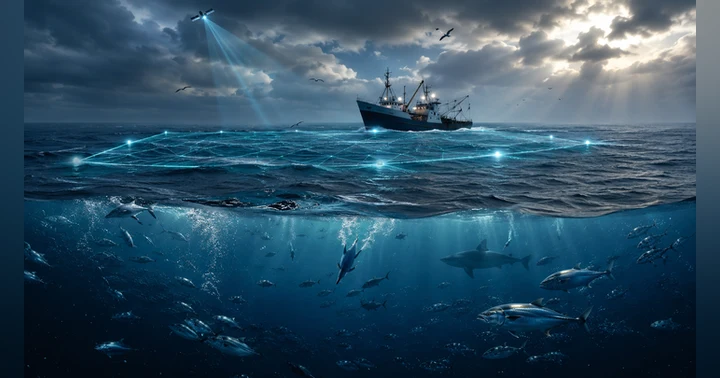
 High seas protection sounds powerful, but can marine protected areas actually work thousands of kilometres from shore? In this episode of How to Protect the Ocean, Andrew Lewin breaks down why creating protected areas beyond national waters is historic, but also incredibly difficult.
The episode explores the difference between paper parks and real protection, why enforcement matters more than most people realize, and how satellite monitoring, AIS tracking, Global Fishing Watch, political will, and long-term funding could determine whether the High Seas Treaty becomes a turning point or just another promise on paper.
Support Independent Podcasts: https://www.speakupforblue.com/patreon
Need help with your ocean non-profit, company, or project? Get the help you need with Pisces Oceans Inc.: https://www.piscesoceans.ca
Connect with Speak Up For Blue
Website: https://bit.ly/3fOF3Wf
Instagram: https://bit.ly/3rIaJSG
TikTok: https://www.tiktok.com/@speakupforblue
Twitter: https://bit.ly/3rHZxpc
YouTube: www.speakupforblue.com/youtube
00:00:00,049 --> 00:00:04,412
Creating a marine protected area thousands
of kilometers offshore sounds impressive,
2
00:00:04,822 --> 00:00:07,152
but how do you actually enforce it?
3
00:00:07,662 --> 00:00:10,952
This is the How to Protect the Ocean
podcast, your weekday ocean news update.
4
00:00:11,222 --> 00:00:15,412
If you care about staying informed
on the ocean every weekday, Monday to
5
00:00:15,412 --> 00:00:18,965
Friday, hit that follow button right
now on your favorite podcast app, so
6
00:00:18,965 --> 00:00:21,185
you do not miss tomorrow's story.
7
00:00:21,905 --> 00:00:25,575
Today, we are talking about
one of the biggest questions
8
00:00:25,679 --> 00:00:28,879
surrounding the High Seas Treaty,
which we talked about yesterday.
9
00:00:29,255 --> 00:00:33,215
Can marine protected areas
actually work on the high seas?
10
00:00:33,455 --> 00:00:36,235
Now, if you don't know, if you don't know
me at all, if this is your first time or
11
00:00:36,235 --> 00:00:39,302
you haven't listened to me in a while, I
haven't talked a lot about my background.
12
00:00:39,332 --> 00:00:42,852
I do have a background as I did a
master's in marine protected areas.
13
00:00:43,161 --> 00:00:46,747
I was on the board for an
organization called Pacific Marine
14
00:00:46,747 --> 00:00:48,265
Research Analysis, PACMARA.
15
00:00:48,484 --> 00:00:53,024
And we talked a lot about marine protected
areas, looking at data, matching science
16
00:00:53,024 --> 00:00:54,394
with policy, all that kinda stuff.
17
00:00:54,717 --> 00:00:57,317
I've been involved in a lot of marine
protected areas, not necessarily marine
18
00:00:57,317 --> 00:01:00,075
protected area, like processes and
stuff like that, but I know quite
19
00:01:00,075 --> 00:01:01,285
a bit about marine protected areas.
20
00:01:01,315 --> 00:01:03,585
Definitely not an expert,
but I know quite a bit.
21
00:01:03,615 --> 00:01:07,570
And so this actually matters to
me this topic a lot, a lot more
22
00:01:07,570 --> 00:01:10,270
than a lot of the other ones because
I have a bit of a background in it.
23
00:01:10,565 --> 00:01:14,753
And knowing that marine protected
areas, even in exclusive economic zones
24
00:01:14,753 --> 00:01:17,313
where there's national jurisdiction,
how hard it is to designate,
25
00:01:17,418 --> 00:01:21,308
imagine doing it in an area where
there's no national jurisdiction.
26
00:01:21,378 --> 00:01:24,399
It's the high seas, and now with the
High Seas Treaty, we are going to be
27
00:01:24,399 --> 00:01:28,719
putting in the first, second, third,
fourth, fifth marine protected area ever.
28
00:01:28,989 --> 00:01:32,049
So this is historic, but it's
also... it has a lot of questions.
29
00:01:32,362 --> 00:01:34,852
Because, like, when you're talking
about the high seas, you can
30
00:01:34,852 --> 00:01:38,362
announce it, that's one thing, but
enforcing it is completely different.
31
00:01:38,776 --> 00:01:42,767
A marine protected area, or MPA,
is essentially an ocean zone where
32
00:01:42,767 --> 00:01:46,307
human activity is restricted to
protect ecosystems and biodiversity.
33
00:01:46,408 --> 00:01:50,480
So some MPAs limit fishing,
some restrict, like mining
34
00:01:50,648 --> 00:01:51,908
or any kind of activity.
35
00:01:52,098 --> 00:01:55,838
Sometimes they reduce shipping
impacts or protect critical habitats.
36
00:01:56,167 --> 00:01:58,877
Near coastlines is
difficult enough, obviously.
37
00:01:59,157 --> 00:02:02,507
But now imagine doing it, trying
to monitor something in the
38
00:02:02,507 --> 00:02:03,797
middle of the Pacific Ocean.
39
00:02:04,167 --> 00:02:07,534
An area so large it takes
days to reach by boat.
40
00:02:07,604 --> 00:02:10,264
You're not gonna have a coast guard
patrolling there all the time.
41
00:02:10,421 --> 00:02:13,081
And this is the challenge
facing high seas conservation.
42
00:02:13,332 --> 00:02:16,689
And historically, it has been one of the
biggest weaknesses in ocean protection.
43
00:02:16,689 --> 00:02:19,939
We just didn't know how to enforce the
high seas because there's no jurisdiction.
44
00:02:20,344 --> 00:02:23,973
A country can declare protection,
but if nobody monitors the area,
45
00:02:24,043 --> 00:02:25,523
illegal activity can still happen.
46
00:02:25,663 --> 00:02:28,063
That even happens within
national boundaries like
47
00:02:28,063 --> 00:02:29,163
the exclusive economic zone.
48
00:02:29,563 --> 00:02:32,911
If you don't have the resources to
put together, an enforcement package
49
00:02:32,911 --> 00:02:35,271
where you have coast guard going
out and actually looking at these
50
00:02:35,271 --> 00:02:38,341
places, satellites and planes and all
this kind of stuff, there's really
51
00:02:38,341 --> 00:02:39,841
no point in protecting it at all.
52
00:02:40,101 --> 00:02:41,241
It just becomes a paper park.
53
00:02:41,451 --> 00:02:44,458
And that's why scientists and advocates
increasingly focus on the difference
54
00:02:44,458 --> 00:02:46,728
between paper parks and real protection.
55
00:02:47,198 --> 00:02:49,798
A paper park looks great,
you know, politically.
56
00:02:50,108 --> 00:02:52,638
It's great to announce,
but real protection changes
57
00:02:52,638 --> 00:02:53,758
the outcomes in the water.
58
00:02:54,158 --> 00:02:58,008
So if you're protecting for biodiversity,
and you don't measure that, and you
59
00:02:58,008 --> 00:03:01,364
don't enforce, like, people coming in
on their boats and fishing all the...
60
00:03:01,364 --> 00:03:04,520
whatever they can find, then leaving or
destroying a habitat because they're
61
00:03:04,520 --> 00:03:07,320
trawling and they're just digging
up the bottom trying to catch as
62
00:03:07,320 --> 00:03:10,786
many fish as possible, then you're
not really gonna protect anything.
63
00:03:10,786 --> 00:03:14,681
If you are trying to increase
abundance and biomass of a specific
64
00:03:14,681 --> 00:03:17,721
fisheries to protect fisheries,
we can't allow fisheries to happen
65
00:03:17,760 --> 00:03:19,110
in the marine protected area.
66
00:03:19,464 --> 00:03:20,554
But how do you enforce that?
67
00:03:20,894 --> 00:03:23,604
So enforcement may be the most
underrated part of conversation.
68
00:03:23,604 --> 00:03:24,744
We don't talk about it a lot.
69
00:03:24,958 --> 00:03:27,748
What we always mention as conservationists
and scientists, we're like, "Oh, yeah,
70
00:03:27,748 --> 00:03:30,625
well, it's not enforced, so it really
doesn't really matter." Studies have
71
00:03:30,625 --> 00:03:35,519
repeatedly shown that protected areas
only succeed when rules are actually
72
00:03:35,519 --> 00:03:37,769
followed, and that doesn't happen often.
73
00:03:37,769 --> 00:03:39,509
A lot of people try and get
away with a lot of stuff.
74
00:03:39,839 --> 00:03:43,679
That means, you know, you need staffing,
you need funding, you have monitoring
75
00:03:43,679 --> 00:03:49,068
systems, you need political support for
sure, and consequences for violations.
76
00:03:49,538 --> 00:03:51,898
This becomes incredibly
difficult offshore.
77
00:03:51,898 --> 00:03:57,530
Like recently, there was a video of a man
throwing a rock at a critically endangered
78
00:03:57,530 --> 00:03:59,364
species off the coast of Hawaii
79
00:03:59,364 --> 00:04:01,204
he threw a rock at a Hawaiian monk seal.
80
00:04:01,472 --> 00:04:03,472
Now, these monk seals, like I said,
they're on the endangered species list.
81
00:04:03,472 --> 00:04:04,252
They are protected.
82
00:04:04,539 --> 00:04:08,220
If you harass it or you hurt it
in any kind of way, you can be
83
00:04:08,220 --> 00:04:09,680
charged, and this guy was charged.
84
00:04:09,680 --> 00:04:12,280
And, you know, somebody videoed it,
and you probably know the story.
85
00:04:12,280 --> 00:04:14,290
It went viral over the
last week and weekend.
86
00:04:14,616 --> 00:04:15,536
And he's being charged.
87
00:04:15,536 --> 00:04:16,086
He got arrested.
88
00:04:16,086 --> 00:04:18,716
He's being charged for it, and he
also got beaten up by the locals.
89
00:04:18,978 --> 00:04:20,048
That's a cultural thing.
90
00:04:20,048 --> 00:04:22,671
You don't mess with things that
are culturally significant.
91
00:04:22,671 --> 00:04:26,221
You don't mess with animals anyway
like that, but this guy got it a lot.
92
00:04:26,481 --> 00:04:28,031
But there was somebody there to video it.
93
00:04:28,061 --> 00:04:30,091
If not, he could've denied
that ever even happened.
94
00:04:30,091 --> 00:04:31,317
Nothing happened to the seal.
95
00:04:31,550 --> 00:04:32,670
Nothing that we saw anyway.
96
00:04:32,670 --> 00:04:34,440
It looked like the rock
missed it, thank God.
97
00:04:34,810 --> 00:04:37,970
But he could've just denied it, or he
paid a little fine, and nobody would've
98
00:04:37,970 --> 00:04:39,050
made a big deal about it at all.
99
00:04:39,050 --> 00:04:40,920
He probably never
would've gotten arrested.
100
00:04:41,090 --> 00:04:43,520
He may have still gotten beat up,
but even then, nobody was there...
101
00:04:43,550 --> 00:04:44,730
if nobody was there to record it.
102
00:04:45,021 --> 00:04:48,061
Now, imagine somebody doing that on
a ship out in the middle of the sea,
103
00:04:48,061 --> 00:04:49,761
and they threw something at an animal.
104
00:04:50,231 --> 00:04:53,228
Well, nobody would ever know because you
can't be there to video all that, right?
105
00:04:53,228 --> 00:04:57,938
So if you can't do that, if you can't give
consequences to people for violations,
106
00:04:58,039 --> 00:05:01,419
then it becomes really difficult,
especially when you're looking offshore.
107
00:05:01,812 --> 00:05:04,062
But of course, the technology
is changing the equation.
108
00:05:04,062 --> 00:05:06,844
Now, we don't have people taking
pictures out there, but satellite
109
00:05:06,844 --> 00:05:11,409
monitoring systems can now track vessel
movement across huge ocean regions.
110
00:05:11,919 --> 00:05:15,329
AIS systems, which is like the GPS
on the ships that track the ships,
111
00:05:15,329 --> 00:05:18,589
especially for shipping, but even for
fisheries that do have it or have it
112
00:05:18,589 --> 00:05:22,992
turned on, they are designated to
improve ship safety, but also help
113
00:05:22,992 --> 00:05:24,632
identify suspicious fishing behavior.
114
00:05:24,899 --> 00:05:28,430
They will be able to tell if a
boat is in a marine protected
115
00:05:28,430 --> 00:05:30,800
area, and if it's slowed down to
show that it's actually fishing.
116
00:05:31,170 --> 00:05:34,610
So organizations like Global
Fishing Watch have helped expose
117
00:05:34,610 --> 00:05:38,600
activity that previously went unseen
because they have all this data.
118
00:05:39,250 --> 00:05:42,460
That matters because visibility
creates the accountability, and
119
00:05:42,460 --> 00:05:47,104
accountability creates that pressure on
people who are not doing great things.
120
00:05:47,400 --> 00:05:49,040
But there are still major gaps.
121
00:05:49,040 --> 00:05:51,740
Not all vessels keep
tracking systems active.
122
00:05:52,052 --> 00:05:56,086
There was a study that came out saying
that 75% of the fishing fleets don't
123
00:05:56,086 --> 00:05:59,461
actually put on their tracking system,
so we don't know where they're
124
00:05:59,461 --> 00:06:01,231
fishing or how much they're fishing.
125
00:06:01,508 --> 00:06:02,218
Like, imagine that.
126
00:06:02,218 --> 00:06:05,397
You have, like, this great
technology, but nobody's using it
127
00:06:05,397 --> 00:06:06,717
and nobody's being enforced to use it.
128
00:06:06,984 --> 00:06:09,874
So some governments have actually
limited enforcement capacity, so
129
00:06:09,874 --> 00:06:11,444
they can't get out there to do it.
130
00:06:11,707 --> 00:06:14,757
And geopolitical tensions
can complicate compliance.
131
00:06:15,194 --> 00:06:18,444
So the challenge is not just
scientific, like we know the science.
132
00:06:18,702 --> 00:06:21,032
It's actually a political
and economic one as well.
133
00:06:21,342 --> 00:06:23,662
It's an important part of the system.
134
00:06:23,993 --> 00:06:24,743
We know the science.
135
00:06:24,743 --> 00:06:25,803
We know overfishing is bad.
136
00:06:25,803 --> 00:06:27,294
We know that it happens
all over the world.
137
00:06:27,581 --> 00:06:30,711
That political and economic have to
work together with the scientific.
138
00:06:30,993 --> 00:06:32,343
If it's science informed,
that's one thing.
139
00:06:32,343 --> 00:06:35,117
But if you don't have the political
will, just like we're not getting it
140
00:06:35,117 --> 00:06:38,787
in the US right now, which we typically
would get it on a lot of things.
141
00:06:39,001 --> 00:06:41,761
It looks like they're trying to just
strip away any kind of environmental
142
00:06:41,761 --> 00:06:45,149
law that's ever been activated just
so they can do some pretty nefarious
143
00:06:45,149 --> 00:06:48,604
things with fossil fuels and so forth
and cut up some pretty bad landscapes.
144
00:06:49,204 --> 00:06:52,054
And so, that is obviously a problem
if you don't have that political
145
00:06:52,054 --> 00:06:54,824
will and of course you don't
have that economic will to do so.
146
00:06:55,204 --> 00:06:59,041
So you don't want to see that
happening So what happens next?
147
00:06:59,289 --> 00:07:02,949
The High Seas Treaty does create
a possibility for more large-scale
148
00:07:02,949 --> 00:07:05,890
ocean protection, but success
depends on whether countries
149
00:07:05,890 --> 00:07:08,000
commit resources to implementation.
150
00:07:08,243 --> 00:07:11,013
There's one thing to commit to
say, "Hey, this High Seas Treaty is
151
00:07:11,013 --> 00:07:13,683
really great," and then of course,
to ratify it, that's another thing.
152
00:07:13,965 --> 00:07:17,581
But the actual thing to implement it
and to enforce it, that's a huge thing.
153
00:07:17,661 --> 00:07:20,048
Because that's what
success really depends on.
154
00:07:20,138 --> 00:07:22,628
It includes monitoring
technology, scientific research,
155
00:07:22,628 --> 00:07:26,534
enforcement cooperation,
transparency, long-term funding.
156
00:07:26,924 --> 00:07:28,114
All these things matter.
157
00:07:28,534 --> 00:07:30,834
And this is where, like,
the public attention matters
158
00:07:30,934 --> 00:07:32,234
more than people realize.
159
00:07:32,409 --> 00:07:34,999
Because governments often
respond to sustained pressure.
160
00:07:35,344 --> 00:07:38,694
And if we don't provide that pressure,
then they're just gonna ignore it.
161
00:07:38,974 --> 00:07:42,674
When ocean issues disappear from the
public conversation, the urgency fails.
162
00:07:42,674 --> 00:07:43,984
The government doesn't
have to do anything.
163
00:07:44,349 --> 00:07:48,439
But when citizens and scientists
and journalists and advocates keep
164
00:07:48,439 --> 00:07:52,361
paying attention, accountability
becomes harder to ignore.
165
00:07:52,764 --> 00:07:56,338
The next decade could define whether
high seas protection becomes
166
00:07:56,598 --> 00:07:59,078
transformative or even symbolic.
167
00:07:59,548 --> 00:08:03,058
Marine protected areas only work
when protection is measurable,
168
00:08:03,338 --> 00:08:05,118
enforceable, and real.
169
00:08:05,458 --> 00:08:08,868
The future of the high seas may
depend less on drawing lines on a
170
00:08:08,868 --> 00:08:12,564
map and more on whether the world
is willing, and I'm gonna say that
171
00:08:12,564 --> 00:08:14,194
again, is willing to enforce them.
172
00:08:14,574 --> 00:08:15,654
I'm gonna say that one more time.
173
00:08:15,974 --> 00:08:19,544
The future of the high seas
depends less on drawing lines
174
00:08:19,544 --> 00:08:23,732
on maps and more on whether the
world is willing to enforce them.
175
00:08:24,262 --> 00:08:25,652
That's what it really comes down to.
176
00:08:26,142 --> 00:08:27,222
As are we willing?
177
00:08:27,292 --> 00:08:31,128
After this high seas treaty, 20
years, two decades trying to put this
178
00:08:31,128 --> 00:08:35,708
together, finally agreeing to it,
all the countries agreed to it, then
179
00:08:35,708 --> 00:08:40,288
you get 89 at this point to ratify it
and more coming each and every day.
180
00:08:40,705 --> 00:08:43,365
And then all of a sudden, you're not
willing to enforce them, you're just
181
00:08:43,365 --> 00:08:46,295
signing this paper and saying, "Hey, yeah,
we're willing to do this, but we're not
182
00:08:46,295 --> 00:08:49,246
actually gonna do anything." No, that's
not happening, 'cause once you ratify,
183
00:08:49,246 --> 00:08:53,139
you actually have to put laws in place
to say, "Hey, we now have a high seas
184
00:08:53,139 --> 00:08:56,609
policy in this country," whether it's
Canada, United States, anywhere else.
185
00:08:57,059 --> 00:08:59,159
That's an important,
important thing to remember.
186
00:08:59,382 --> 00:09:00,552
So I'd love to hear your thoughts.
187
00:09:00,552 --> 00:09:03,222
Do you think countries are
actually going to follow this?
188
00:09:03,492 --> 00:09:04,222
Is it gonna take a while?
189
00:09:04,222 --> 00:09:06,622
Is it gonna take 10
years, 15 years, 20 years?
190
00:09:06,782 --> 00:09:08,162
Are people gonna follow it at all?
191
00:09:08,162 --> 00:09:10,749
I'm sure there's some countries
that are gonna be, like, off, but
192
00:09:10,989 --> 00:09:13,219
I would love to hear what you think.
193
00:09:13,359 --> 00:09:14,529
Hit me up on my socials.
194
00:09:14,529 --> 00:09:15,549
You can just go in the show notes.
195
00:09:15,549 --> 00:09:16,619
You can check that out.
196
00:09:16,857 --> 00:09:20,037
And of course, I'm always
willing to chat on any social,
197
00:09:20,037 --> 00:09:21,857
LinkedIn, TikTok, Instagram.
198
00:09:22,077 --> 00:09:24,506
Please let me know how you
feel about these episodes.
199
00:09:24,506 --> 00:09:26,706
If you have questions or comments,
you wanna have a conversation.
200
00:09:26,965 --> 00:09:27,875
This is just the start.
201
00:09:28,035 --> 00:09:30,015
We wanna continue having
those conversations, whether
202
00:09:30,015 --> 00:09:31,233
you agree with me or not.
203
00:09:31,233 --> 00:09:32,383
I'm not mad at anybody.
204
00:09:32,383 --> 00:09:33,203
Just come with me.
205
00:09:33,431 --> 00:09:34,051
Don't be rude.
206
00:09:34,051 --> 00:09:34,991
Just be polite.
207
00:09:34,991 --> 00:09:36,151
We'll have conversations.
208
00:09:36,421 --> 00:09:38,551
It'll be a lot of fun, 'cause
this is what we're gonna do.
209
00:09:38,551 --> 00:09:39,691
We talk about the ocean.
210
00:09:39,691 --> 00:09:44,675
Of course, don't forget, if you want
to hear more about the ocean and you
211
00:09:44,675 --> 00:09:47,115
wanna hear more about how to protect
it, especially about the high seas,
212
00:09:47,395 --> 00:09:51,255
this week is the week to follow this
podcast by hitting that follow button
213
00:09:51,255 --> 00:09:52,998
right now on your favorite podcast app.
214
00:09:53,154 --> 00:09:55,674
And thank you so much for joining
me on today's episode of the How
215
00:09:55,674 --> 00:09:56,774
to Protect the Ocean podcast.
216
00:09:56,774 --> 00:09:57,824
I'm your host, Andrew Lewin.
217
00:09:58,014 --> 00:09:58,634
Have a great day.
218
00:09:58,634 --> 00:10:00,861
We'll talk to you next
time, and happy conservation.