Why Ocean Exploration Could Matter to Your Future More Than You Think


 Apple Podcasts
 Spotify
 YouTube
 Amazon Music
 PocketCasts
 Overcast
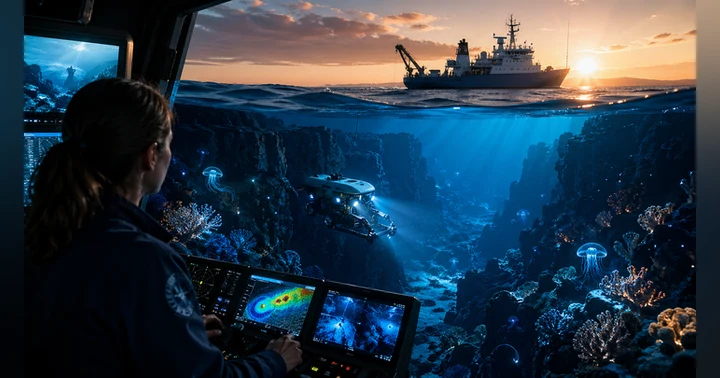
 Ocean exploration may sound like a niche science topic, but it affects far more than research ships and submarines. If most of the ocean remains poorly mapped and rarely observed, how can we protect habitats, predict hazards, discover new species, or understand climate change? In this episode, we break down why exploring the ocean still matters right now.
NOAA ocean science plays a major role in uncovering what happens below the surface. From mapping the seafloor to discovering deep-sea ecosystems and tracking changing ocean conditions, exploration gives us the information needed to make better decisions for people and the planet.
Deep-sea discovery is not just about curiosity. It is about safety, innovation, conservation, and understanding the largest living space on Earth. The surprising truth is that we know more about some distant planets than we do about our own ocean floor.
Support Independent Podcasts: https://www.speakupforblue.com/patreon
Help fund a new seagrass podcast: https://www.speakupforblue.com/seagrass
Connect with Speak Up For Blue
Website: https://bit.ly/3fOF3Wf
Instagram: https://bit.ly/3rIaJSG
TikTok: https://www.tiktok.com/@speakupforblue
Twitter: https://bit.ly/3rHZxpc
YouTube: www.speakupforblue.com/youtube
00:00:00,000 --> 00:00:03,196
Did you know that we know more about
some parts of the moon than we do about
2
00:00:03,196 --> 00:00:04,966
large areas of our own ocean floor?
3
00:00:05,316 --> 00:00:10,354
That should bother probably all
of us because you cannot protect
4
00:00:10,481 --> 00:00:12,581
a world that you have never seen.
5
00:00:13,241 --> 00:00:16,545
This is the How to Protect the ocean
Podcast, your weekday podcast for
6
00:00:16,545 --> 00:00:19,875
people who want to understand what
is really happening in the ocean.
7
00:00:20,011 --> 00:00:23,765
So hit that follow button if you
do not wanna miss future episodes.
8
00:00:24,101 --> 00:00:28,161
Today we are talking about ocean
exploration, discovery, and why NOAA's
9
00:00:28,181 --> 00:00:30,581
deep ocean work actually matters.
10
00:00:30,728 --> 00:00:34,721
We've been talking about NOAA for the past
week and we have an interview tomorrow
11
00:00:34,721 --> 00:00:37,511
with somebody from the ocean Conservancy
who's talking about how important it's
12
00:00:37,511 --> 00:00:41,921
to keep NOAA programs funded, which NOAA
has been undergoing cuts over the last
13
00:00:41,921 --> 00:00:44,361
year because of the Trump administration.
14
00:00:44,488 --> 00:00:47,788
They want to decrease anything that has to
do with climate change related work, even
15
00:00:47,788 --> 00:00:52,235
though it's important to us all, not only
from US citizens, but also from the world.
16
00:00:52,391 --> 00:00:57,301
Because NOAA leads a lot of this research,
not only in protecting marine mammals, sea
17
00:00:57,301 --> 00:01:01,411
turtles, sharks, and other fish, not only
protecting seafood markets and fishing
18
00:01:01,411 --> 00:01:06,428
communities and the seafood economy as
a whole, but also in natural disasters.
19
00:01:06,571 --> 00:01:09,211
And one thing that we haven't talked
about yet, which we're gonna be talking
20
00:01:09,211 --> 00:01:12,501
about today, is we're gonna be talking
about exploration, discovery, and
21
00:01:12,531 --> 00:01:17,241
why NOAA's deep ocean work actually
matters because this is something
22
00:01:17,241 --> 00:01:18,861
that doesn't get talked about enough.
23
00:01:18,921 --> 00:01:23,541
And because the ocean covers most of
our planet, over 70% of our planet, yet
24
00:01:23,541 --> 00:01:29,691
vast areas remain poorly mapped, rarely
observed, or even completely unexplored.
25
00:01:30,016 --> 00:01:34,006
It's interesting that we know more about
the Marianna Trench, which is the deepest
26
00:01:34,006 --> 00:01:36,270
trench in the world, and we still need
to know a lot about it, but we don't
27
00:01:36,270 --> 00:01:39,690
know much about any other place in the
ocean, which is difficult to think.
28
00:01:39,903 --> 00:01:41,283
It's not just a trivia fact.
29
00:01:41,283 --> 00:01:43,023
It is a real management problem.
30
00:01:43,386 --> 00:01:47,466
If we don't know where vulnerable coral
gardens exist, where unique sea mount
31
00:01:47,466 --> 00:01:51,853
ecosystems thrive or where critical
habitats lie, we can accidentally damage
32
00:01:51,853 --> 00:01:53,833
them before we even knew where they are.
33
00:01:53,833 --> 00:01:55,693
So just even think about deep sea mining.
34
00:01:55,753 --> 00:01:58,220
Deep sea mining is a terrifying thing.
35
00:01:58,280 --> 00:02:02,509
I know it can provide a great resource
for electric vehicle batteries and
36
00:02:02,509 --> 00:02:04,893
other renewable energy systems.
37
00:02:05,073 --> 00:02:08,733
But the fact that we don't know
much about, or anything really about
38
00:02:08,733 --> 00:02:12,963
deep sea processes compared to what
we should is really a travesty.
39
00:02:12,963 --> 00:02:16,923
And it's scary to think that we can say
yes to deep sea mining without fully
40
00:02:16,923 --> 00:02:20,333
understanding the deep sea, or more
about the deep sea and how the deep
41
00:02:20,333 --> 00:02:23,153
sea runs, operates that will help us.
42
00:02:23,153 --> 00:02:26,576
And if we disrupt that
operation, how it could harm us.
43
00:02:26,686 --> 00:02:30,136
So NOAA's exploration
programs use research vessels.
44
00:02:30,136 --> 00:02:34,973
They use remotely operated vehicles,
ROVs, sonar mapping sensors, and cameras
45
00:02:35,023 --> 00:02:37,603
to reveal hidden parts of the ocean.
46
00:02:37,881 --> 00:02:41,501
And recent expeditions have
documented deep sea corals, sponge
47
00:02:41,501 --> 00:02:44,671
fields, unusual geology and species
48
00:02:44,671 --> 00:02:47,461
many people have never
actually seen before.
49
00:02:47,585 --> 00:02:51,695
I mean, we never would've had the
Dumbo octopus without NOAA and without
50
00:02:51,695 --> 00:02:53,945
these deep sea aspiration missions.
51
00:02:54,155 --> 00:02:58,335
These missions have produced a
stunning footage, but the real value
52
00:02:58,335 --> 00:03:00,195
is the actual data that we've seen.
53
00:03:00,973 --> 00:03:03,283
Maps inform marine protected areas.
54
00:03:03,283 --> 00:03:07,933
Habitat data informs fisheries decisions
and baseline observations help detect
55
00:03:07,933 --> 00:03:09,996
climate change impacts over time.
56
00:03:10,293 --> 00:03:14,523
That's a really important part, and
discovery can often drive innovation.
57
00:03:14,523 --> 00:03:18,363
We often find out that the
new medications, the new
58
00:03:18,363 --> 00:03:21,033
discoveries in medicine have
actually come from the ocean.
59
00:03:21,391 --> 00:03:24,961
And that's a really important aspect,
the fact that we barely know what's
60
00:03:24,961 --> 00:03:28,531
happening in the ocean, and we know
that understanding some of these
61
00:03:28,561 --> 00:03:33,331
species, some of these habitats and
how they survive different aspects
62
00:03:33,331 --> 00:03:37,938
of the ocean and how they can recoup
or regenerate or even recover from
63
00:03:37,938 --> 00:03:42,468
natural disasters could really help us
in our own biology, our own ecology.
64
00:03:42,468 --> 00:03:45,338
And I think that's an important
aspect that we just don't get.
65
00:03:45,706 --> 00:03:49,586
Also these exploration missions should
look at extreme ocean environments that
66
00:03:49,586 --> 00:03:54,266
have inspired advances in robotics,
material science, and biotechnology.
67
00:03:54,416 --> 00:03:56,280
So it's not just medicine
that we're looking at.
68
00:03:56,336 --> 00:03:59,360
We're looking at everything
that the deep sea can provide,
69
00:03:59,360 --> 00:04:00,800
that the ocean can provide.
70
00:04:00,996 --> 00:04:04,884
That's something looking at like
hydrothermal vent and how species survive
71
00:04:04,884 --> 00:04:09,474
in hydrothermal vent and how that can
translate in how humans can survive in
72
00:04:09,474 --> 00:04:14,301
really unlikely situations where you
have sulfur or you have different things
73
00:04:14,301 --> 00:04:17,691
we could look at the mechanisms that
allow animals that can survive these
74
00:04:17,721 --> 00:04:19,354
things, that could help us survive
75
00:04:19,474 --> 00:04:22,274
anything that happens, any kind
of poisoning that we can have or
76
00:04:22,274 --> 00:04:23,834
anything that changes in our bodies.
77
00:04:24,133 --> 00:04:27,129
And as I mentioned before, ocean
exploration also matters in the
78
00:04:27,129 --> 00:04:29,079
current debates like deep sea mining.
79
00:04:29,229 --> 00:04:32,979
How can society be responsible for
decisions about industrial activity
80
00:04:33,099 --> 00:04:35,489
in places like we barely understand?
81
00:04:35,876 --> 00:04:36,776
Think about that.
82
00:04:36,991 --> 00:04:41,101
It is just insane to say, Hey, we can
actually help ruin this area even though
83
00:04:41,101 --> 00:04:43,591
we don't think we're gonna ruin it, but
we don't really know what's gonna happen,
84
00:04:43,591 --> 00:04:45,271
what's gonna help us in the short term?
85
00:04:45,501 --> 00:04:46,581
Then we'll actually do it.
86
00:04:47,041 --> 00:04:50,791
That question of looking at
how we can spend on, how we can
87
00:04:50,791 --> 00:04:53,791
destroy environments instead of
protecting it is really difficult.
88
00:04:53,951 --> 00:04:58,384
And when we look at things like deep
sea mining, that type of question
89
00:04:58,414 --> 00:05:02,344
about how we can make responsible
decisions about industrial activity
90
00:05:02,374 --> 00:05:03,529
in places we barely understand.
91
00:05:03,529 --> 00:05:07,614
That question gets harder when
exploration budgets actually shrink.
92
00:05:07,971 --> 00:05:09,031
And this is what happens with NOAA.
93
00:05:09,691 --> 00:05:14,448
We start to seek funding cuts
and program cuts that can help
94
00:05:14,448 --> 00:05:18,348
bring down the operational
budget of the entire government.
95
00:05:18,918 --> 00:05:22,308
But in the long run, it doesn't
help us in any kind of way.
96
00:05:22,668 --> 00:05:23,898
It doesn't help US citizens.
97
00:05:23,898 --> 00:05:26,411
It doesn't help understanding the
ocean a lot better for a lot of the
98
00:05:26,411 --> 00:05:27,881
reasons that I've outlined this week.
99
00:05:28,361 --> 00:05:31,921
Exploration in general for it
helps people 'cause it helps that
100
00:05:31,921 --> 00:05:36,301
exploration, that creates knowledge,
that supports smarter policy, better
101
00:05:36,301 --> 00:05:39,001
risk decisions and scientific process.
102
00:05:39,191 --> 00:05:40,746
It also inspires the next generation.
103
00:05:41,456 --> 00:05:46,086
You know, a kid watching a live
ROV on YouTube, just like a kid who
104
00:05:46,086 --> 00:05:49,446
watch like the Artemis II mission
and they want to be astronauts.
105
00:05:49,606 --> 00:05:52,696
That watching an ROV dive today
could become tomorrow's ocean
106
00:05:52,696 --> 00:05:54,226
engineer or marine scientists.
107
00:05:54,226 --> 00:05:55,246
We have no idea.
108
00:05:55,463 --> 00:05:58,883
This actually matters to people
and why it matters to the ocean?
109
00:05:58,883 --> 00:06:03,443
Because knowing unknown ecosystems,
our vulnerable ecosystems, that
110
00:06:03,443 --> 00:06:06,053
could be really great to know because
we can make them less vulnerable
111
00:06:06,053 --> 00:06:07,226
through management decisions.
112
00:06:07,503 --> 00:06:11,943
That first step in protection
is knowing what exists.
113
00:06:12,123 --> 00:06:16,533
So imagine understanding vulnerable
and discovering vulnerable communities
114
00:06:16,533 --> 00:06:20,634
in the deep sea or elsewhere that we
hadn't just originally explored and
115
00:06:20,634 --> 00:06:25,284
protecting that area and having a benefit,
a net positive benefit on the ocean.
116
00:06:25,558 --> 00:06:27,388
The deep sea, it's not an empty space.
117
00:06:27,418 --> 00:06:28,348
It is alive.
118
00:06:28,648 --> 00:06:31,468
It is connected with the rest
of the planet and still full
119
00:06:31,468 --> 00:06:32,818
of surprises just because
120
00:06:32,818 --> 00:06:35,728
we don't think that there are marine
mammals underneath, but there are
121
00:06:35,728 --> 00:06:37,618
like tons of diversity of worms.
122
00:06:37,768 --> 00:06:42,148
We still don't understand how those worms
affect the deep sea and how they help the
123
00:06:42,148 --> 00:06:44,488
deep sea be the deep sea as we know it.
124
00:06:44,548 --> 00:06:46,678
And so I think that's
really important to know.
125
00:06:46,861 --> 00:06:50,281
And NOAA is one of the few institutions
that help us see it clearly.
126
00:06:50,716 --> 00:06:54,756
I think it's important to look
at a mission like the Artemis II
127
00:06:54,756 --> 00:06:57,493
and see how exciting it was, and
it was exciting for everybody,
128
00:06:57,493 --> 00:06:58,843
including me as a marine biologist.
129
00:06:58,843 --> 00:06:59,953
It was exciting to watch.
130
00:06:59,953 --> 00:07:02,863
It was cool to hear the scientists
and what they go through when they
131
00:07:02,863 --> 00:07:04,393
live in space and stuff like that.
132
00:07:04,599 --> 00:07:08,589
Just like it's important for me and fun
for me to find out what it's like to
133
00:07:08,589 --> 00:07:09,759
see what's on the bottom of the ocean.
134
00:07:10,489 --> 00:07:13,849
Looking at hydrothermal vents,
looking at how the smoke from the
135
00:07:13,849 --> 00:07:17,629
hydrothermal vents can go across the
Pacific and what that will do maybe
136
00:07:17,629 --> 00:07:19,489
for another habitat in that area.
137
00:07:19,539 --> 00:07:20,919
Does it work off of that smoke?
138
00:07:20,919 --> 00:07:22,989
Does it use that smoke
for some kind of reason?
139
00:07:22,989 --> 00:07:23,739
We don't know.
140
00:07:23,949 --> 00:07:27,849
Looking at these little nodules that are
out there that are being used to mine for
141
00:07:27,849 --> 00:07:32,109
critical minerals, but also they could
be producing dark oxygen that could help
142
00:07:32,109 --> 00:07:35,559
us understand how the deep sea survives
and how animals survive the deep sea.
143
00:07:35,743 --> 00:07:39,373
Knowing more about the moon and less
about this planet is not a good thing.
144
00:07:39,613 --> 00:07:42,313
We still need to know about what's
in space, but we also need to know
145
00:07:42,313 --> 00:07:45,823
what's helping drive every second
breath that we take from the ocean.
146
00:07:46,103 --> 00:07:49,493
I think that's an important aspect, and
it's something that we need to spend more
147
00:07:49,493 --> 00:07:53,836
money on, something we don't spend money
on, but we'll spend money on destroying it
148
00:07:54,196 --> 00:07:55,396
before we protect it.
149
00:07:55,876 --> 00:07:58,426
And that's something that I want you
to think about and think about why
150
00:07:58,426 --> 00:08:02,656
that's so important for us and why
we're not fighting for more of it.
151
00:08:03,026 --> 00:08:04,496
And I know a lot of the people
who are listening to this
152
00:08:04,496 --> 00:08:05,476
podcast are fighting for NOAA.
153
00:08:05,906 --> 00:08:09,376
If you live in the US or you don't and
you understand how important NOAA is
154
00:08:09,376 --> 00:08:13,086
to the ocean in general, not just to
the US citizens, but to the world,
155
00:08:13,206 --> 00:08:17,106
I think it's important to fight for
funding, for science, for exploration,
156
00:08:17,106 --> 00:08:20,526
for protection, and protection of
humans as well as marine species.
157
00:08:20,526 --> 00:08:21,846
It's really, really important.
158
00:08:22,179 --> 00:08:26,709
Tomorrow we're gonna be talking to a
representative from the Ocean Conservancy.
159
00:08:26,876 --> 00:08:30,296
He's gonna talk more about NOAA and
he's gonna go through a lot of the
160
00:08:30,296 --> 00:08:33,519
things that we discussed here, but
he's gonna reiterate why it's important.
161
00:08:33,519 --> 00:08:37,389
And I do these types of episodes
where I do these solo episodes on
162
00:08:37,389 --> 00:08:40,509
different aspects of, say, NOAA,
or different aspects of Antarctica,
163
00:08:40,509 --> 00:08:43,059
which we talked about last week,
because it's important for us to
164
00:08:43,059 --> 00:08:46,953
know what we need and what people are
doing to help protect us in general.
165
00:08:47,076 --> 00:08:48,156
And I think that's important.
166
00:08:48,186 --> 00:08:49,153
I live in Canada.
167
00:08:49,273 --> 00:08:50,913
There's often times where I go to the US.
168
00:08:51,129 --> 00:08:54,159
If I'm stuck in a storm there, I wanna
know if I need to evacuate or not.
169
00:08:54,249 --> 00:08:58,209
I wanna make sure that my colleagues,
my friends that live in the US are
170
00:08:58,209 --> 00:09:02,289
safe because they have an agency
like NOAA working at full capacity.
171
00:09:02,483 --> 00:09:05,633
Full budgeting, full funding to say,
Hey, we wanna protect the people.
172
00:09:05,633 --> 00:09:07,503
We want the information
to get to the people.
173
00:09:07,673 --> 00:09:10,913
And the science, the exploration,
the protection of marine mammals
174
00:09:10,913 --> 00:09:14,393
and other organisms as well
as us is extremely important.
175
00:09:14,393 --> 00:09:15,233
That's what NOAA does.
176
00:09:15,233 --> 00:09:17,483
So, with that said, that's
the episode for today.
177
00:09:17,533 --> 00:09:18,489
Tune in for the episode tomorrow.
178
00:09:18,539 --> 00:09:21,539
Follow this How to Protect The Ocean
Podcast for more of those episodes
179
00:09:21,539 --> 00:09:23,959
where we talk about a topic every week.
180
00:09:24,159 --> 00:09:28,190
And I think it's really important that we
do and so that we turn ocean systems into
181
00:09:28,190 --> 00:09:29,750
stories people can actually understand.
182
00:09:29,950 --> 00:09:32,656
It's a very complex system,
but we're here to help out.
183
00:09:32,656 --> 00:09:34,786
So more people follow the podcast.
184
00:09:35,056 --> 00:09:38,993
The more I can get funded to continue to
go on, the more I spend on this podcast.
185
00:09:38,993 --> 00:09:40,556
I'm gonna spend a lot
of time on it anyway.
186
00:09:40,713 --> 00:09:44,326
But follow it so you don't miss any of the
topics that we talk about in the future.
187
00:09:44,326 --> 00:09:47,626
And of course, tune in tomorrow
for that Ocean Conservancy interview
188
00:09:47,656 --> 00:09:49,766
I am doing speaking about NOAA.
189
00:09:49,826 --> 00:09:50,716
So we're talking about NOAA.
190
00:09:50,946 --> 00:09:52,356
This is gonna be really important.
191
00:09:52,406 --> 00:09:55,166
It was a great interview and I can't
wait for you to listen to it tomorrow.
192
00:09:55,166 --> 00:09:55,976
So tune in tomorrow.
193
00:09:56,156 --> 00:09:58,436
Thank you so much for joining
me on this episode of the How
194
00:09:58,436 --> 00:09:59,516
to Protect the Ocean Podcast.
195
00:09:59,726 --> 00:10:01,016
I'm your host, Andrew Lewin.
196
00:10:01,016 --> 00:10:01,616
Have a great day.
197
00:10:01,616 --> 00:10:03,746
We'll talk to you tomorrow
and happy conservation.