Why Sea Cucumbers Matter More Than You Think


 Apple Podcasts
 Spotify
 YouTube
 Amazon Music
 PocketCasts
 Overcast
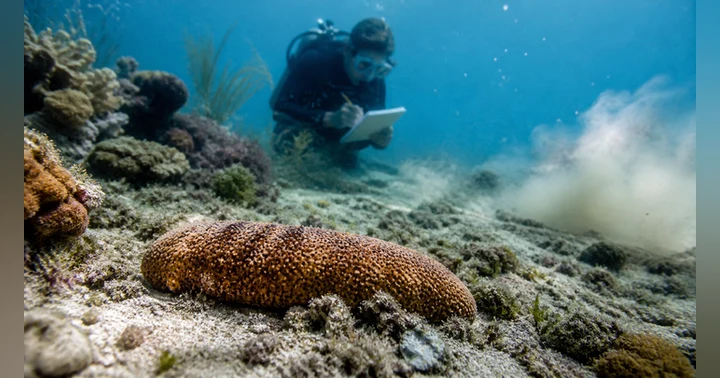
 Sea Cucumbers are disappearing in parts of the ocean, and most people have no idea why that matters. These strange, soft-bodied animals might not look important, but they play a critical role in keeping marine ecosystems healthy and functioning.
Ocean Ecosystems rely on sea cucumbers to recycle nutrients, clean sediments, and support the balance of life on the seafloor. When they are removed through overfishing, the consequences can ripple across entire habitats, affecting biodiversity and long-term ocean health.
Overfishing Impacts are often hidden from public view, especially when they involve species people rarely think about. This episode explores why sea cucumbers are declining, what that means for the ocean, and why losing them could have bigger consequences than expected.
Support Independent Podcasts: https://www.speakupforblue.com/patreon
Help fund a new seagrass podcast: https://www.speakupforblue.com/seagrass
Connect with Speak Up For Blue
Website: https://bit.ly/3fOF3Wf
Instagram: https://bit.ly/3rIaJSG
TikTok: https://www.tiktok.com/@speakupforblue
Twitter: https://bit.ly/3rHZxpc
YouTube: www.speakupforblue.com/youtube
00:00:00,000 --> 00:00:04,050
One of the most important animals in the
ocean is something most people never even
2
00:00:04,050 --> 00:00:09,983
think about, and we're removing it faster
than almost anything else in the world.
3
00:00:10,553 --> 00:00:14,183
This is the How to Protect the Ocean
podcast, your weekday ocean news update.
4
00:00:14,183 --> 00:00:18,333
If you care about staying informed
on the ocean every weekday, hit
5
00:00:18,333 --> 00:00:22,073
that follow button right now so
you do not miss tomorrow's story.
6
00:00:22,756 --> 00:00:26,526
If you've been following me at all for
the last couple of months, you've noticed
7
00:00:26,526 --> 00:00:28,853
that I've been doing, like theme weeks.
8
00:00:29,016 --> 00:00:32,186
So every week, there's an interview on the
Friday, and I take that interview, and I
9
00:00:32,186 --> 00:00:36,686
break down the interview so that I prepare
you for the interview by doing four solo
10
00:00:36,686 --> 00:00:38,533
episodes, Monday to Thursday, every week.
11
00:00:38,703 --> 00:00:40,213
This week, we're gonna
do something different.
12
00:00:40,213 --> 00:00:43,383
We're gonna go back to old school
How to Protect the Ocean podcast,
13
00:00:43,383 --> 00:00:45,683
where it's not really gonna
necessarily gonna be themed week.
14
00:00:45,842 --> 00:00:48,239
It's just gonna be stuff that
I really found interesting and
15
00:00:48,239 --> 00:00:49,599
it's gonna be five solo episodes.
16
00:00:49,599 --> 00:00:51,878
So Monday to Friday, you're gonna
get different episodes, probably
17
00:00:51,878 --> 00:00:53,928
about 10 minutes long or so
18
00:00:54,022 --> 00:00:56,812
but just covering stories
that I find interesting that I
19
00:00:56,812 --> 00:00:58,372
wanted to kinda update you on.
20
00:00:58,562 --> 00:01:00,592
I'm gonna have more
interviews coming soon.
21
00:01:00,592 --> 00:01:01,665
I'm conducting two this week.
22
00:01:01,665 --> 00:01:05,379
We're gonna go back to our regular
programming of four solo episodes
23
00:01:05,379 --> 00:01:06,729
with an interview on the Friday.
24
00:01:06,832 --> 00:01:07,732
I I hope you enjoy this.
25
00:01:07,852 --> 00:01:09,342
Let me know what are you liking.
26
00:01:09,342 --> 00:01:11,882
I'm looking forward to doing
more of the theme episodes.
27
00:01:11,942 --> 00:01:14,669
But for now, we're just gonna try to
switch it up and go a little assorted.
28
00:01:14,869 --> 00:01:16,266
It's an assorted week this week.
29
00:01:16,372 --> 00:01:18,952
And today, we're gonna be
talking about sea cucumbers.
30
00:01:18,982 --> 00:01:22,712
And today's episode answers
really one simple question.
31
00:01:22,982 --> 00:01:25,845
Why should anyone care
about sea cucumbers?
32
00:01:25,895 --> 00:01:29,345
That's really the question that I think a
lot of people are Because, you know, when
33
00:01:29,345 --> 00:01:35,009
you look at a sea cucumber, it doesn't
look the most appetizing, let's just say.
34
00:01:35,262 --> 00:01:36,792
It looks like a massive worm.
35
00:01:36,862 --> 00:01:38,622
They come in a variety of colors, right?
36
00:01:38,662 --> 00:01:42,802
They come in black, they come in pink,
they go white, they're gray, they're blue.
37
00:01:42,802 --> 00:01:45,589
Like, they come in a lot of different
colors, but they als- often have,
38
00:01:45,589 --> 00:01:47,029
like, detritus all over them.
39
00:01:47,099 --> 00:01:49,772
They're part of the echinoderm
family, like the starfish family but
40
00:01:49,772 --> 00:01:52,962
they don't look anything like a
starfish from what you would think.
41
00:01:52,962 --> 00:01:54,232
A starfish looks like a star.
42
00:01:54,232 --> 00:01:57,232
It has, like, the five sort of
limbs, and it looks kinda cool
43
00:01:57,232 --> 00:01:58,722
and just kinda cool to pick up.
44
00:01:58,722 --> 00:02:01,062
And you have sea stars as well,
which have more than five limbs,
45
00:02:01,062 --> 00:02:02,842
but they look like starfish.
46
00:02:02,842 --> 00:02:05,645
When people say starfish, they look
like, "That's really cool." But sea
47
00:02:05,645 --> 00:02:10,275
cucumbers are very different but they're
very important in the marine ecosystem
48
00:02:10,275 --> 00:02:12,095
cause they're, they just pick up stuff.
49
00:02:12,155 --> 00:02:15,005
They're detritus eaters, meaning
they just kinda pick up anything
50
00:02:15,005 --> 00:02:17,655
that's on the ground that they
can eat on the ocean bottom, and
51
00:02:17,655 --> 00:02:19,065
they're kinda really important.
52
00:02:19,119 --> 00:02:23,189
And so I want to kinda cover this 'cause
there was a recent article on Mongabay
53
00:02:23,189 --> 00:02:26,399
News, which we love Mongabay News here
on the How to Protect the Ocean podcast.
54
00:02:26,649 --> 00:02:28,039
And so I want to cover one of these.
55
00:02:28,039 --> 00:02:31,849
The article's looking at how these
animals are decreasing because of fishing,
56
00:02:31,849 --> 00:02:33,589
'cause people are eating sea cucumbers.
57
00:02:33,619 --> 00:02:36,649
Yes, people eat sea cucumbers, even
though they look a little different.
58
00:02:36,739 --> 00:02:39,849
So we're gonna talk about that today
because I think it's really interesting.
59
00:02:39,849 --> 00:02:44,692
I am a big echinoderm fan, so I love
starfish, I love sea stars, I love,
60
00:02:44,692 --> 00:02:46,692
sea urchins, I love sea cucumbers.
61
00:02:46,692 --> 00:02:48,596
I think they're all
very, very interesting.
62
00:02:48,649 --> 00:02:52,742
It's kind of an interesting thing to
cover sea cucumbers because of the
63
00:02:52,742 --> 00:02:55,432
fact that they are in demand right now.
64
00:02:55,552 --> 00:02:57,752
And we have to look out at
what's happening, right?
65
00:02:57,752 --> 00:03:01,472
Because what's happening to them tells
us a lot about how the ocean actually
66
00:03:01,472 --> 00:03:04,026
works and how it starts to break down.
67
00:03:04,266 --> 00:03:06,876
And so I think that's what we're
gonna be talking about today.
68
00:03:06,926 --> 00:03:09,902
A new study highlighted by Mongabay
is raising concerns about the
69
00:03:09,902 --> 00:03:11,692
global trade in sea cucumbers.
70
00:03:11,692 --> 00:03:17,849
Because like I said before, demand is
rising, and prices are so high for these.
71
00:03:17,892 --> 00:03:22,412
And harvesting is happening much
faster, and then many of the populations
72
00:03:22,412 --> 00:03:24,062
can recover for sea cucumbers.
73
00:03:24,149 --> 00:03:27,862
These animals are being collected
across tropical regions, often with
74
00:03:27,862 --> 00:03:32,512
weak monitoring, limited regulation,
and in many cases, illegal trade.
75
00:03:32,754 --> 00:03:36,920
When you are capturing these things,
it's not like regular fisheries where
76
00:03:36,920 --> 00:03:40,017
you put a pole, a rod and pole, or you
have a net and you try and pick them up.
77
00:03:40,080 --> 00:03:42,040
You can just go diving
and just pick them up.
78
00:03:42,040 --> 00:03:43,240
They're not gonna run from you.
79
00:03:43,444 --> 00:03:45,340
They're not gonna sit there and bite you.
80
00:03:45,340 --> 00:03:46,580
They're not gonna cause any harm.
81
00:03:46,580 --> 00:03:47,580
You have, uh, gloves on.
82
00:03:47,580 --> 00:03:50,720
You just pick them up, put them in your
net, and you can collect a bunch of them.
83
00:03:50,880 --> 00:03:53,470
You do have to be careful because
if you kill one of them, they
84
00:03:53,604 --> 00:03:55,384
release, like, this toxin out.
85
00:03:55,434 --> 00:03:56,664
It's a deterrent to do that.
86
00:03:56,700 --> 00:03:57,514
You do have to be careful.
87
00:03:57,514 --> 00:04:01,384
But it's really easy to just go snorkeling
or go free diving or even go scuba
88
00:04:01,384 --> 00:04:04,357
diving and just pick up as many as you
can because a lot of times when you see
89
00:04:04,357 --> 00:04:06,214
one, you're gonna see a bunch of them.
90
00:04:06,494 --> 00:04:09,714
They're not easy to spot, but I'm
sure these fishers are going out
91
00:04:09,714 --> 00:04:12,830
and they're finding them pretty
quickly because it's easy to do that.
92
00:04:13,090 --> 00:04:16,040
Most of them are dried and
sold as a luxury food product.
93
00:04:16,277 --> 00:04:20,804
And while that might sound like a niche
issue, it's not really because sea
94
00:04:20,804 --> 00:04:23,754
cucumbers are not just another species.
95
00:04:23,960 --> 00:04:27,130
Sea cucumbers actually act
like the ocean's cleanup crew.
96
00:04:27,240 --> 00:04:31,194
They sit on the bottom of the ocean, the
sea floor, and they process sediment.
97
00:04:31,454 --> 00:04:34,534
So essentially, they will go through
the sediment with their little filaments
98
00:04:34,534 --> 00:04:37,514
that they have, and they go through the
sediment, and they pick up all the stuff.
99
00:04:37,544 --> 00:04:38,774
They recycle all those nutrients.
100
00:04:38,774 --> 00:04:42,367
So all the stuff that goes in, all the
crap essentially that is on the bottom
101
00:04:42,367 --> 00:04:46,557
of the ocean gets cycled through the
sea cucumber, and then it gets recycled
102
00:04:46,557 --> 00:04:47,987
as nutrients, which is kinda cool.
103
00:04:48,027 --> 00:04:50,337
And they help keep ecosystems stable.
104
00:04:50,550 --> 00:04:52,330
So I think that's a really cool thing.
105
00:04:52,330 --> 00:04:54,590
They're like a sanitation
system or a recycling system.
106
00:04:54,820 --> 00:04:58,560
So when you have sea cucumbers that go
through an area, they will just kinda
107
00:04:58,560 --> 00:05:02,540
go through any kind of, like, ammonia or
anything that can cause ammonia, right,
108
00:05:02,540 --> 00:05:05,940
as part of the nutrient cycle, and
just kinda pick up stuff that gets bad.
109
00:05:05,940 --> 00:05:09,747
Like, if you ever have an aquarium
and you let all the fish poo and
110
00:05:09,747 --> 00:05:12,900
everything else, like, sit on the
bottom for too long, it breaks down.
111
00:05:12,900 --> 00:05:15,394
It can turn into ammonia, you get
what's called an ammonia bomb.
112
00:05:15,584 --> 00:05:19,127
So all the ammonia stays underneath the
sediment, and once that is released, you
113
00:05:19,127 --> 00:05:20,837
can actually kill animals from that.
114
00:05:20,967 --> 00:05:24,650
And so in the ocean, you can get the
same thing, but these animals will
115
00:05:24,650 --> 00:05:25,820
go through and they're the janitors.
116
00:05:25,820 --> 00:05:28,624
They just kinda clean up the system
and it's really cool that they do that.
117
00:05:28,684 --> 00:05:31,674
So without them, the sea floor
becomes a lot less healthy, and
118
00:05:31,674 --> 00:05:34,100
nutrients don't cycle in the same way.
119
00:05:34,460 --> 00:05:37,660
That can be a detriment to the
ocean floor, the ecosystem and
120
00:05:37,690 --> 00:05:41,387
over time, that affects everything
from coral reefs to fisheries, and
121
00:05:41,387 --> 00:05:42,587
that is something we don't want.
122
00:05:42,687 --> 00:05:44,140
But this is the part that people miss.
123
00:05:44,380 --> 00:05:48,330
The ocean doesn't run on the
animals we pay attention to.
124
00:05:48,620 --> 00:05:50,350
It runs on the ones we ignore.
125
00:05:50,430 --> 00:05:52,250
So it doesn't run on, like, salmon.
126
00:05:52,250 --> 00:05:53,750
It doesn't run on cod.
127
00:05:53,750 --> 00:05:55,040
It doesn't run on whales.
128
00:05:55,040 --> 00:05:58,194
I mean, they all help, and they
all contribute in some kind of way.
129
00:05:58,194 --> 00:06:00,914
Like, if you've ever heard of whale
fall, where whales die, they go
130
00:06:00,914 --> 00:06:02,340
to the bottom, they get eaten up.
131
00:06:02,550 --> 00:06:07,570
But all those microbes, invertebrates
like sea cucumbers and starfish and
132
00:06:07,570 --> 00:06:13,344
crabs and lobsters and shrimp and all the
different, like, worms that we see, those
133
00:06:13,344 --> 00:06:17,367
are the ones we kind of ignore, and those
are the ones that really help keep that
134
00:06:17,367 --> 00:06:19,137
bottom clean, keep that ocean cycling.
135
00:06:19,427 --> 00:06:20,537
And that's really important.
136
00:06:20,657 --> 00:06:23,587
And when those species disappear,
the ones that we normally ignore, the
137
00:06:23,587 --> 00:06:25,677
system doesn't collapse all at once.
138
00:06:25,754 --> 00:06:26,804
But it will, eventually.
139
00:06:26,854 --> 00:06:28,024
It weakens slowly.
140
00:06:28,466 --> 00:06:31,376
Now, I wanna interrupt just a little bit,
'cause if you're getting value from this,
141
00:06:31,436 --> 00:06:34,726
these quick ocean updates that we're doing
this week, I want you to follow the show.
142
00:06:34,726 --> 00:06:37,386
Hit that follow, 'cause it
helps us reach other people.
143
00:06:37,386 --> 00:06:41,066
The whole point of this podcast,
from when I started it 11 years ago,
144
00:06:41,156 --> 00:06:44,576
was to get in front of people to
provide a resource as an ocean news
145
00:06:44,636 --> 00:06:48,029
update and a resource for people who
want to learn more about the ocean.
146
00:06:48,029 --> 00:06:51,582
So hit that follow button, allow us
to get to the top of the charts, allow
147
00:06:51,582 --> 00:06:56,093
you to get access to five days a week
of wonderful podcasts on the ocean.
148
00:06:56,273 --> 00:07:00,033
And, yeah, hit the follow button, and you
can allow other people to see it as well.
149
00:07:00,370 --> 00:07:04,230
Now, so the challenge of these sea
cucumbers, this whole sea cucumber issue,
150
00:07:04,230 --> 00:07:07,100
is that there's not a lack of knowledge.
151
00:07:07,340 --> 00:07:13,223
We know these species are vulnerable,
and we know trade is increasing, and we
152
00:07:13,223 --> 00:07:15,713
know regulation is also inconsistent.
153
00:07:16,097 --> 00:07:18,247
But the real issue is governance.
154
00:07:18,487 --> 00:07:23,490
When you go back and look at enforcement,
it's really difficult to enforce when
155
00:07:23,490 --> 00:07:26,630
these sea cucumbers are found all over
the place, especially in shallow areas.
156
00:07:26,630 --> 00:07:29,807
So If I were somebody on a beach, and
I went out snorkeling, just looking
157
00:07:29,807 --> 00:07:33,613
at snorkeling, and I just grab like a
net, like a bag that's in a form of a
158
00:07:33,613 --> 00:07:35,613
net, and I just start packing them in.
159
00:07:35,823 --> 00:07:38,113
And then I can go up into the
forest, I can go up down the
160
00:07:38,113 --> 00:07:39,673
road, and I can sell it to people.
161
00:07:39,860 --> 00:07:41,250
It's really easy to do.
162
00:07:41,640 --> 00:07:43,420
So it's difficult to enforce.
163
00:07:43,420 --> 00:07:46,100
And so the real issue is
what I say is governance.
164
00:07:46,313 --> 00:07:48,323
There's a global supply chain.
165
00:07:48,603 --> 00:07:52,097
So it's harvested in one region
and sold in another and monitored
166
00:07:52,097 --> 00:07:55,017
poorly across the entire system.
167
00:07:55,513 --> 00:07:56,993
So the opportunity is clear.
168
00:07:57,083 --> 00:08:01,223
We need better tracking of the supply
chain, which to be honest, is with
169
00:08:01,223 --> 00:08:03,143
a lot of these fisheries, right?
170
00:08:03,143 --> 00:08:04,283
We need better tracking.
171
00:08:04,283 --> 00:08:06,733
We need to track the entire supply chain.
172
00:08:06,733 --> 00:08:09,010
And then when we are able to
track the entire supply chain,
173
00:08:09,083 --> 00:08:10,753
we need stronger enforcement.
174
00:08:11,163 --> 00:08:15,493
And treating these species like critical
infrastructure, not just seafood.
175
00:08:15,813 --> 00:08:16,763
That's what we need to do.
176
00:08:16,763 --> 00:08:21,700
We need to really realize that these
species are very important to the ocean
177
00:08:22,060 --> 00:08:24,350
and very important to the ocean mechanics.
178
00:08:24,630 --> 00:08:28,180
And that's something that we need to
start really thinking about the ocean in
179
00:08:28,210 --> 00:08:33,083
general is we need to respect how the
ocean functions and not just take what
180
00:08:33,083 --> 00:08:35,320
we want and expect nothing to happen.
181
00:08:35,670 --> 00:08:38,810
' Cause the ocean doesn't collapse
when the big animals disappear.
182
00:08:39,003 --> 00:08:41,663
It collapses when the
small invisible ones do.
183
00:08:41,943 --> 00:08:45,353
And that's what we're starting to
see, and we don't want this to happen.
184
00:08:45,667 --> 00:08:48,797
So with that said, if you see sea
cucumber on the menu, make sure it's
185
00:08:48,797 --> 00:08:50,767
sustainable, make sure it's monitored.
186
00:08:50,927 --> 00:08:51,897
Very difficult to do.
187
00:08:51,947 --> 00:08:54,953
Hopefully, we can get to that
one day because we know seafood
188
00:08:54,953 --> 00:08:56,213
monitoring is a very difficult.
189
00:08:56,213 --> 00:09:00,860
But in the meantime, pay attention,
stay updated, and keep listening to
190
00:09:00,860 --> 00:09:03,870
the How to Protect the Ocean podcast
by hitting that follow button.
191
00:09:03,997 --> 00:09:07,553
And we would love to be a part
of your life and your journey
192
00:09:07,553 --> 00:09:10,740
of learning about the ocean and
what you can do to protect it.
193
00:09:10,973 --> 00:09:14,480
Because this is a podcast that
starts a conversation and we
194
00:09:14,480 --> 00:09:15,420
want you to continue that.
195
00:09:15,420 --> 00:09:18,823
So you can hit me up online at
How to Protect the Ocean or
196
00:09:18,823 --> 00:09:20,940
at Speak Up for Blue, depending
on where you're looking at.
197
00:09:21,143 --> 00:09:24,713
But also you can just reach out to
me any way you feel that you want.
198
00:09:24,903 --> 00:09:28,813
If you want to give us feedback, go to
speakupforblue.com forward slash feedback.
199
00:09:29,073 --> 00:09:31,683
And I want to thank you so much for
joining me on today's episode of the
200
00:09:31,683 --> 00:09:33,003
How to Protect the Ocean podcast.
201
00:09:33,003 --> 00:09:33,613
Have a great day.
202
00:09:33,613 --> 00:09:35,923
We'll talk to you next time
and happy conservation.