3 For-Profit Companies Cleaning the Ocean and Paying Living Wages
Ocean conservation doesn't have to run on grants and donations alone. A growing number of companies are proving that cleaning up the ocean, funding wildlife research, and paying people fairly can also be a profitable business. In this episode of How to Protect the Ocean, Andrew breaks down three companies doing exactly that, and why he thinks this model is the direction ocean conservation should be heading.
Why for-profit conservation matters
Nonprofits depend on grants and donor cycles that can dry up without warning. A for-profit model funded by product sales gives conservation work a more stable revenue base, since the money comes from customers buying something they want rather than from competitive fundraising rounds. That stability lets companies commit to long-term local employment instead of short-term project funding.
4Ocean: full-time crews, living wages
4Ocean employs full-time captains and cleanup crews who work daily removing plastic from oceans, rivers, and coastlines across Florida, Bali, Haiti, and Guatemala. These are not informal, per-pound collectors. Crew members receive full-time status, health insurance, and bonuses, funded through product sales like the company's signature bracelets. The company also employs a large network of artisans in Bali and Guatemala who hand-make products from the plastic that gets recovered.
This stands in contrast to a collection-center model some competitors use, where informal collectors are paid per pound of material gathered rather than employed directly. Andrew points to 4Ocean's model as evidence that a cleanup operation can provide stable, dignified work rather than piecework income.
Ocean Sole: turning flip-flops into art
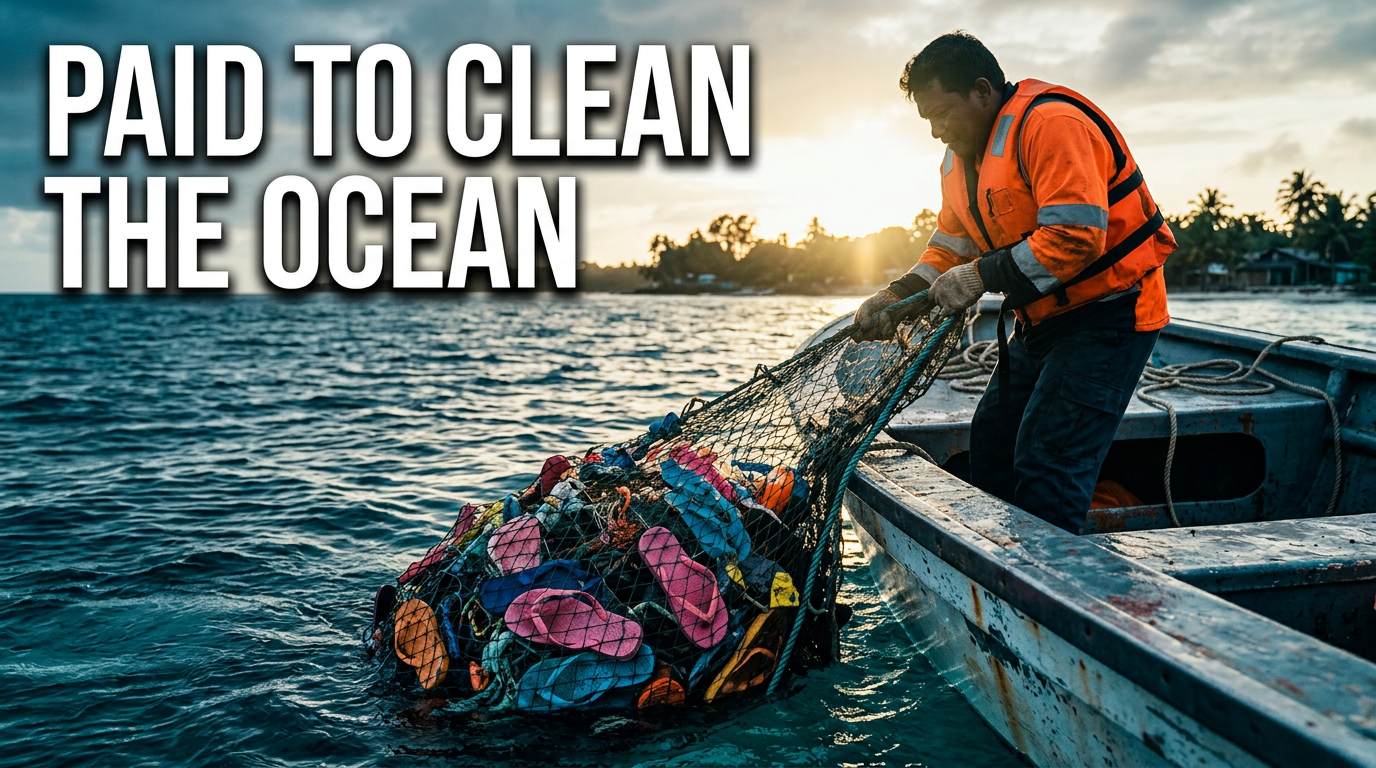
Ocean Sole is a Kenyan company that pays local collectors for discarded flip-flops washed up along the coast, then employs artisans to wash, sort, and carve those flip-flops into colorful animal sculptures. The sculptures range from small phone holders to life-size pieces sold to individuals, museums, and zoos around the world.
The model creates income at two points: collectors get paid for what they bring in, and artisans get paid to turn it into finished work. It also keeps a genuinely harmful material out of the ocean. Flip-flops made from foam and plastic break down into microplastics that harm sea turtles, marine mammals, sharks, and seabirds if left in the environment.
Wildlife tracking bracelets: funding research one purchase at a time
The third model Andrew highlights is a wildlife tracking bracelet company. Buy a bracelet featuring a shark, manatee, polar bear, or another animal, and a portion of that purchase goes toward funding a satellite tag on a real animal being studied by a partner research organization. Buyers can follow their animal's movements through an app, seeing real location data and updates from the field.
It is not a strict one-to-one exchange (one bracelet doesn't fund one full tag), but the collective revenue from bracelet sales adds up to real tagging studies. Tagging research is how scientists learn migration patterns, feeding grounds, and habitat use for species like great white sharks, manatees, and penguins, information that directly informs conservation and management decisions.
The business case for people, planet, and profit
Andrew frames all three companies around a simple idea: environmental benefit, social benefit, and profit don't have to be traded off against each other. He contrasts this with cheaply made, high-volume products from brands with no environmental or labor standards attached, arguing that consumers and regulators should expect more from businesses claiming to do good.
He is careful to note that none of these companies has solved ocean plastic pollution on their own, and that ambitious cleanup goals in this space have often taken longer than promised. What they have done is build sustainable local income around real conservation work, which he argues is a more durable contribution than a one-time cleanup effort.
Takeaways
- 4Ocean employs over 200 full-time captains and crew at living wages across Florida, Bali, Haiti, and Guatemala, plus 350+ bracelet artisans in Bali and Guatemala
- Ocean Sole pays Kenyan collectors for discarded flip-flops and employs local artisans to carve them into sculptures sold worldwide
- Wildlife tracking bracelets connect a single purchase to funding for a real satellite tag on an animal like a shark, manatee, or penguin
- All three companies operate as B Corps or B Corp-style social enterprises, combining environmental impact with fair local employment
- For-profit conservation businesses can offer more consistent funding than grant-dependent nonprofits
- Andrew argues the "triple bottom line" of people, planet, and profit should be the standard other conservation-minded entrepreneurs build toward

CEO
Boat Wake Erosion Explained: The Coastal Threat With Nothing to Do With Climate Change