Shark Depredation Is Rising. Here's Why That's Actually a Conservation Win.
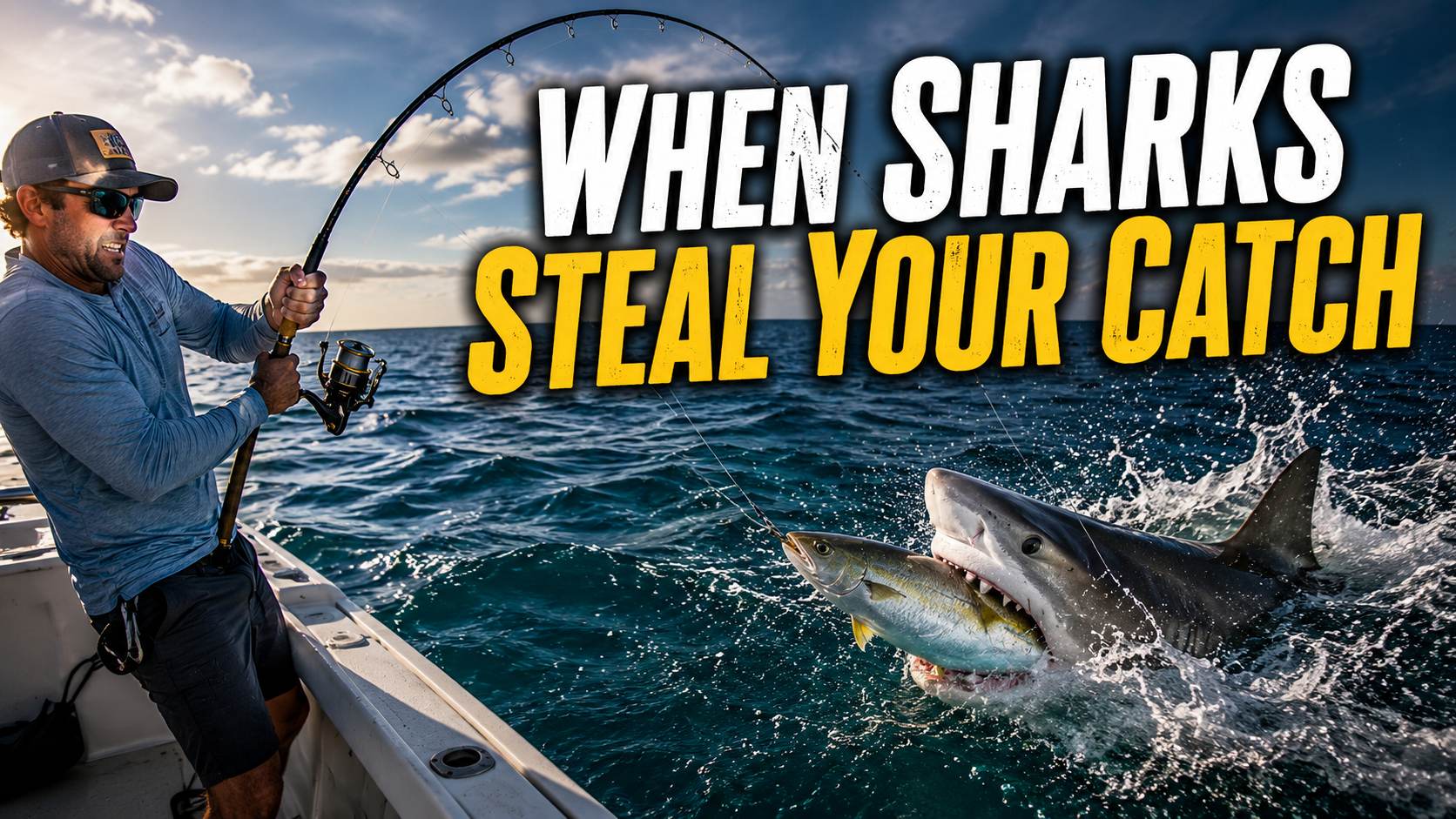
If you fish the Atlantic coast, you already know the feeling. The strike hits, the rod loads up, the drag sings, and for a few seconds you're winning. Then the rod goes light, you reel up fast, and what comes over the gunwale is just a head. Clean bite behind the gills. Sometimes not even that.
This is shark depredation, when a shark bites or steals a fish an angler has already hooked before it can be landed. It's frustrating, it's growing, and a lot of anglers are pointing at shark conservation as the cause. A new study looked back a hundred years of data to find out if that's actually true.
A hundred years of data, one coastwide picture
The study, reportedly published in the ICES Journal of Marine Science in June, tracked shark depredation across the entire Atlantic coast, from Maine down through Texas and the US Caribbean. It was led by a Mississippi State University researcher working with NOAA Fisheries and a group of regional experts. Before this study, everyone had their own local piece of the puzzle. Nobody had the whole board.
The board turned out to be bigger and messier than expected. The team documented at least 51 different targeted fish stocks affected by depredation and 22 different shark species doing the depredating. Bull sharks and sandbar sharks showed up most often, and the distinction between them matters: anglers can keep bull sharks, but sandbar sharks are off limits entirely.
The recovery nobody talks about
Here's the part most people miss. Back in the 1980s and early 1990s, Atlantic shark populations were getting hammered by overfishing and finning, with almost no rules in place. Sandbar sharks, the same species now showing up in bite-offs, were among the hardest hit.
In 1993, the United States put its first real shark management plan into place: quotas, limits, and protections that got stronger over the following years, including finning bans. And it worked. A 2023 study in the journal PNAS found nine wide-ranging coastal shark species recovering after decades of decline, crediting well-enforced management and science-based limits. NOAA's own surveys tell the same story, with dusky sharks, sandbar sharks, and even white sharks turning up more often. The sandbar shark fishery was shut down entirely in 2008, and the species is still officially rebuilding on a plan that stretches to 2070, but the trend is up.
Put those two facts together: more sharks in the water, and more anglers on the water than ever. More sharks plus more lines equals more overlap. More overlap equals more stolen fish. Shark depredation isn't proof that conservation failed. In a lot of cases, it's the shadow cast by conservation working.
The hidden data problem
Depredation rates range from about 1% to more than a quarter of an angler's catch, depending on where and how they fish, according to a broader global research review referenced in the study. A 2022 national angler survey found that more than three-quarters of anglers have experienced depredation, with Florida a major hotspot, and that nearly 80% of depredation events happen completely unseen.
This creates a real management problem. When a shark eats a hooked fish, that fish is still dead. It still came out of the population, but it never gets logged. Fishery scientists call this a "dead discard," a fish that died but was never counted. The NOAA-linked study flagged this directly: unaccounted mortality from depredation could throw off the stock assessments used to manage those fish populations in the first place. The bite-offs aren't just costing anglers an afternoon's catch. They're creating a blind spot in the data used to keep fish populations healthy.
What you can actually do
There's no single fix here, since 51 target species and 22 shark species are managed under different rules across different states and federal waters. Researchers recommend a combination: keep testing shark-deterrent devices, keep sustainable shark fisheries running effectively, and keep scientists, fishermen, and managers talking to each other.
If you fish, a few small changes can add up. Move spots more often instead of working one hole where sharks have learned to wait. Get your fish up faster to give sharks less time to close in. Try lures or jigs instead of soaking bait, since less scent in the water means a weaker invitation. Stop dumping fish waste where you're fishing. Some electrical and magnetic deterrent devices have shown real promise in field trials, though others on the market have little independent evidence behind them, so treat marketing claims with healthy skepticism.
Whether or not you fish, the biggest thing you can do is protect the story itself. The next time someone says the answer is to just kill more sharks, you now know enough to push back. The sharks coming back is a win. The bite-offs are a management puzzle, not a reason to undo decades of recovery. And if you fish and experience depredation, report it. NOAA and its partners are building better ways to log these events, and right now most vanish unseen. Your report helps turn that invisible 80% into real data, and better data is what keeps both fish and sharks managed honestly.

CEO


