What Dead Seabirds Are Trying to Tell Us About the Pacific Ocean

 Apple Podcasts
 Spotify
 YouTube
 Amazon Music
 PocketCasts
 Overcast
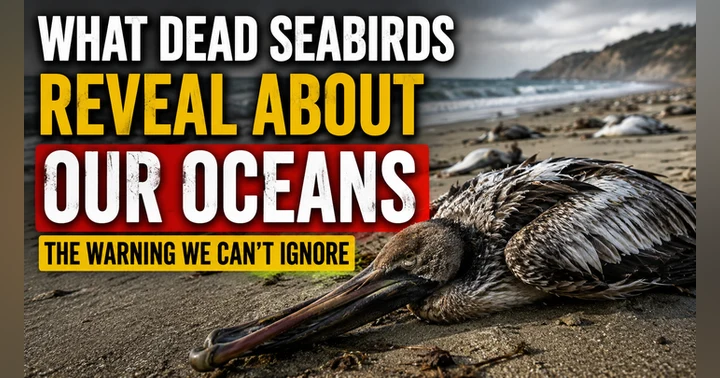
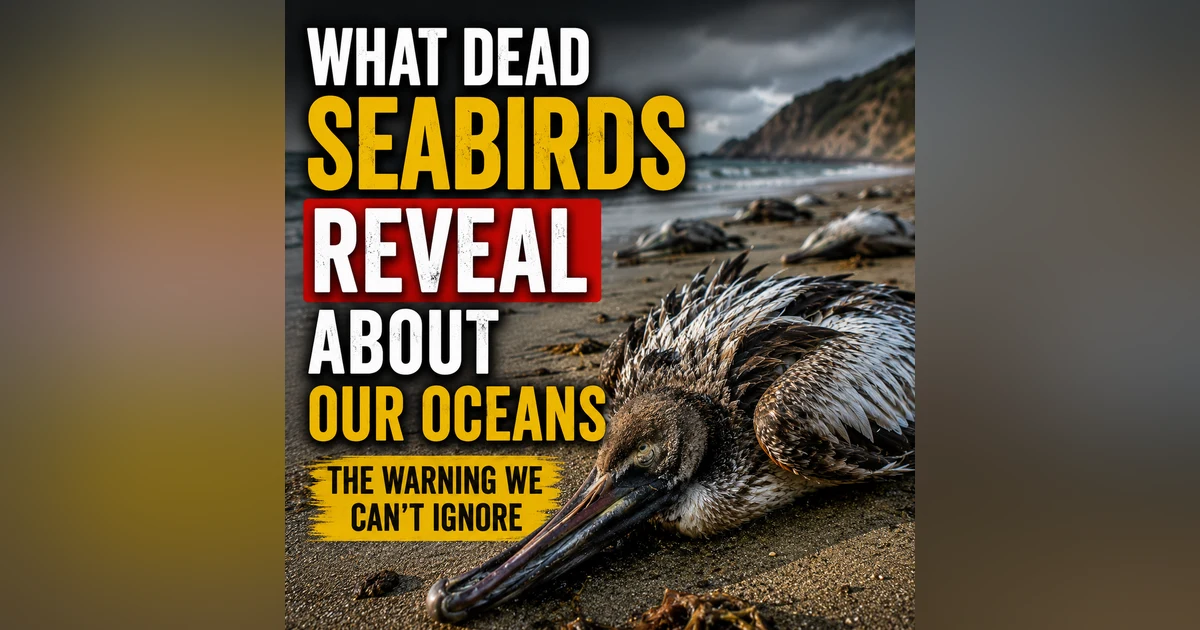
 Thousands of seabirds are washing ashore along California’s coast, starving, exhausted, and unable to find enough food. While the images are heartbreaking, scientists say the birds are only the visible symptom of a much larger problem unfolding beneath the surface. In this episode, we explore why seabirds are dying and what their struggle reveals about the health of the Pacific Ocean.
You’ll learn how marine heat waves are disrupting one of the world’s most productive ocean ecosystems by reducing nutrients, shrinking fish populations, and breaking apart the marine food web. We also look at why seabirds act as early warning indicators, often showing us that something is wrong long before the full impact reaches fisheries, marine mammals, or coastal communities.
With another powerful El Niño expected to develop, these warning signs may become even more important in the years ahead. Understanding what is happening today can help us prepare for tomorrow and remind us why protecting ocean ecosystems means protecting the communities and wildlife that depend on them. Listen now to discover why the fate of seabirds matters to all of us.
Support Independent Podcasts: https://www.speakupforblue.com/patreon
Need help with your ocean non-profit, company, or project? Get the help you need with Pisces Oceans Inc.: https://www.piscesoceans.ca
Connect with Speak Up For Blue
Website: https://bit.ly/3fOF3Wf
Instagram: https://bit.ly/3rIaJSG
TikTok: https://www.tiktok.com/@speakupforblue
Twitter: https://bit.ly/3rHZxpc
YouTube: www.speakupforblue.com/youtube
00:00:00,050 --> 00:00:03,316
Thousands of seabirds are dying
along California's coast, but the
2
00:00:03,326 --> 00:00:04,909
birds aren't actually the story.
3
00:00:05,206 --> 00:00:08,166
They're warning us that something
much bigger is happening beneath
4
00:00:08,166 --> 00:00:10,226
the surface of the Pacific Ocean.
5
00:00:10,639 --> 00:00:13,669
This is the How to Protect the Ocean
podcast, your weekly ocean news update.
6
00:00:13,669 --> 00:00:17,029
If you care about staying informed
on the ocean every single weekday,
7
00:00:17,029 --> 00:00:20,476
Monday to Friday, hit that follow
button right now on your podcast app
8
00:00:20,476 --> 00:00:22,463
so you don't miss tomorrow's story.
9
00:00:22,736 --> 00:00:24,106
Today, we're answering one question.
10
00:00:24,336 --> 00:00:28,506
Why are seabirds starving and what
does their struggle tell us about the
11
00:00:28,506 --> 00:00:33,716
future of our oceans, especially with an
impending super El Niño coming into play?
12
00:00:34,213 --> 00:00:38,403
Now, if you've watched a pelican glide
just above the waves or seen cormorants
13
00:00:38,433 --> 00:00:41,983
diving for fish, it's easy to think
they make hunting look effortless.
14
00:00:42,219 --> 00:00:45,399
But right now, off the coast of
California, many of those birds
15
00:00:45,466 --> 00:00:47,286
can't find enough food to survive.
16
00:00:47,606 --> 00:00:51,496
Scientists, volunteers, and wildlife
rehabilitation centers are reporting
17
00:00:51,516 --> 00:00:55,493
unusually high numbers of starving
seabirds washing up on the beaches.
18
00:00:55,653 --> 00:00:59,773
Some birds are so weak they walk
ashore and die within minutes.
19
00:01:00,063 --> 00:01:03,613
Others are turning up far inland,
desperately searching for food in lakes
20
00:01:03,696 --> 00:01:05,943
and reservoirs instead of the ocean.
21
00:01:06,449 --> 00:01:10,369
The images are heartbreaking, and
they also tell us something important.
22
00:01:10,633 --> 00:01:12,889
These birds are acting like
the ocean's warning lights.
23
00:01:12,989 --> 00:01:16,129
They're showing us that the
Pacific food web is under stress.
24
00:01:16,403 --> 00:01:19,363
Every month, teams of scientists
and volunteers walk California
25
00:01:19,363 --> 00:01:20,973
beaches counting dead seabirds.
26
00:01:21,193 --> 00:01:22,783
And it may sound like a strange job.
27
00:01:22,793 --> 00:01:24,013
I mean, nobody really wants to do that.
28
00:01:24,013 --> 00:01:24,813
It's pretty depressing.
29
00:01:25,013 --> 00:01:27,383
But these surveys have
been happening for decades.
30
00:01:27,593 --> 00:01:29,803
The goal isn't to simply count dead birds.
31
00:01:29,869 --> 00:01:32,846
It's to detect changes in health
of the marine ecosystem before
32
00:01:32,846 --> 00:01:34,846
they become impossible to ignore.
33
00:01:35,223 --> 00:01:37,993
This year, those surveys have
become much more alarming.
34
00:01:38,323 --> 00:01:42,333
Researchers are finding large
numbers of brown pelicans, loons,
35
00:01:42,423 --> 00:01:46,053
grebs, cormorants, and other
seabirds that died from starvation.
36
00:01:46,263 --> 00:01:49,299
According to marine ornithologist
Tammy Russell, some cormorants
37
00:01:49,309 --> 00:01:52,449
have been observed walking onto
shore and dying within fifteen
38
00:01:52,449 --> 00:01:54,269
minutes because they were so weak.
39
00:01:54,459 --> 00:01:56,509
That is a terrible thing to watch.
40
00:01:56,746 --> 00:01:57,986
So what changed?
41
00:01:58,306 --> 00:02:01,226
The answer isn't that the birds
suddenly forgot how to walk.
42
00:02:01,586 --> 00:02:02,956
The problem is the water.
43
00:02:03,416 --> 00:02:07,146
A marine heatwave has lingered off
parts of California's coast for months.
44
00:02:07,389 --> 00:02:11,429
According to scientists, it's one of
only three times on record that such
45
00:02:11,429 --> 00:02:15,209
a large stretch of coastal water has
stayed unusually warm for so long.
46
00:02:15,639 --> 00:02:18,899
Several long-term monitoring stations
have recorded record-breaking
47
00:02:18,899 --> 00:02:21,159
temperatures for more than 40 days.
48
00:02:21,549 --> 00:02:24,279
Warm water might not sound like a crisis.
49
00:02:24,489 --> 00:02:27,509
It may sound actually quite nice
'cause people like to go in warm water.
50
00:02:27,963 --> 00:02:29,943
Marine life often doesn't.
51
00:02:30,413 --> 00:02:33,533
California's coastal ecosystem
depends on cold, nutrient-rich
52
00:02:33,543 --> 00:02:35,413
waters rising from the deep ocean.
53
00:02:35,883 --> 00:02:40,223
That process, called upwelling, feeds
tiny organisms like plankton and krill.
54
00:02:40,663 --> 00:02:43,373
Those organisms feed
anchovies and sardines.
55
00:02:43,683 --> 00:02:47,993
These fish feed seabirds, sea
lions, whales, dolphins, and even
56
00:02:47,993 --> 00:02:49,473
people through commercial fisheries.
57
00:02:49,839 --> 00:02:53,629
When the water stays unusually warm, many
of those cold water fish move farther
58
00:02:53,629 --> 00:02:55,769
offshore or deeper beneath the surface.
59
00:02:56,063 --> 00:02:57,663
The birds can't always follow them.
60
00:02:58,013 --> 00:03:01,899
Many seabirds have evolved to feed
close to shore or near the surface.
61
00:03:02,279 --> 00:03:06,196
If the food disappears, they burn
through their energy reserves so quickly.
62
00:03:06,623 --> 00:03:09,993
For many species, starvation can
happen within just a few days.
63
00:03:10,326 --> 00:03:13,926
Here's why this story is bigger
than a few starving birds.
64
00:03:14,193 --> 00:03:15,623
Seabirds are indicators.
65
00:03:15,743 --> 00:03:18,089
Think of them as the ocean's
health monitors, like the
66
00:03:18,089 --> 00:03:19,859
canary in the coal mine in a way.
67
00:03:20,276 --> 00:03:22,896
When they start struggling, it's
often because something lower in
68
00:03:22,906 --> 00:03:24,986
the food chain has already changed.
69
00:03:25,326 --> 00:03:26,846
They're giving us an early warning.
70
00:03:27,286 --> 00:03:29,456
Imagine removing the
foundation from a building.
71
00:03:29,616 --> 00:03:31,576
The roof doesn't just
collapse immediately.
72
00:03:31,943 --> 00:03:35,943
The crack appears first, and that's
what we're seeing right now, the cracks.
73
00:03:36,373 --> 00:03:39,516
If forage fish like sardines and
anchovies become harder to find, the
74
00:03:39,526 --> 00:03:41,356
impacts spread throughout the ecosystem.
75
00:03:41,723 --> 00:03:43,753
Whales have to work harder to find food.
76
00:03:43,763 --> 00:03:45,383
Sea lions have to travel farther.
77
00:03:45,589 --> 00:03:47,029
Fish populations will shift.
78
00:03:47,203 --> 00:03:49,423
Commercial fisheries will
become less predictable.
79
00:03:49,663 --> 00:03:53,073
Entire coastal economies
can feel the effects.
80
00:03:53,429 --> 00:03:54,639
And there's another concern.
81
00:03:54,909 --> 00:03:58,579
Scientists say that this marine heatwave
may become even more disruptive because
82
00:03:58,579 --> 00:04:03,459
it's now overlapping with a newly formed
El Niño, which might be a super El Niño.
83
00:04:03,783 --> 00:04:07,063
Last month, the US National Oceanic
and Atmospheric Administration,
84
00:04:07,073 --> 00:04:10,409
NOAA, confirmed that El Niño has
developed and forecasters expect
85
00:04:10,409 --> 00:04:11,839
it to strengthen considerably.
86
00:04:12,199 --> 00:04:14,959
El Niño naturally warms
part of the Pacific Ocean.
87
00:04:15,216 --> 00:04:19,803
When that natural warming is already added
to unusually warm ocean waters, marine
88
00:04:19,803 --> 00:04:22,413
ecosystems face even greater stress.
89
00:04:22,796 --> 00:04:23,906
We've seen this before.
90
00:04:23,916 --> 00:04:28,186
Many listeners may remember the Blob, the
massive marine heatwave that stretched
91
00:04:28,186 --> 00:04:31,136
across the Northeast Pacific between
twenty thirteen and twenty sixteen.
92
00:04:31,136 --> 00:04:34,996
I covered it quite regularly during
those times when I had the podcast going.
93
00:04:35,309 --> 00:04:38,939
That event triggered the one of the
largest seabird die-offs ever recorded.
94
00:04:39,343 --> 00:04:43,433
Years later, scientists estimated that
more than four million common murres
95
00:04:43,433 --> 00:04:47,593
died during that event, and some
populations are still recovering today.
96
00:04:47,993 --> 00:04:50,453
That's why researchers are
paying such close attention now.
97
00:04:51,033 --> 00:04:53,043
They don't want history to repeat itself.
98
00:04:53,347 --> 00:04:56,777
The honest answer is that
scientists don't yet know how
99
00:04:56,777 --> 00:04:58,137
severe this event will become.
100
00:04:58,460 --> 00:05:01,630
Not every dead seabird is dying
because of the marine heatwave.
101
00:05:02,020 --> 00:05:05,230
Young birds naturally experience high
mortality after leaving the nests.
102
00:05:05,525 --> 00:05:08,875
Researchers are also testing birds
for diseases like avian influenza,
103
00:05:08,942 --> 00:05:10,782
and looking for other
contributing factors.
104
00:05:10,959 --> 00:05:12,979
But the timing is difficult to ignore.
105
00:05:13,339 --> 00:05:15,879
The increase in starving birds
lines up closely with one of the
106
00:05:15,879 --> 00:05:19,479
longest-lasting marine heatwaves ever
recorded along California's coast.
107
00:05:19,739 --> 00:05:22,679
Scientists will continue to
monitor ocean temperatures.
108
00:05:22,699 --> 00:05:23,899
They'll track fish movements.
109
00:05:23,909 --> 00:05:27,589
They'll analyze seabird populations, and
they'll compare today's observations
110
00:05:27,599 --> 00:05:29,519
with decades of historical records.
111
00:05:29,732 --> 00:05:32,472
Those long-term monitoring
programs are incredibly valuable.
112
00:05:32,619 --> 00:05:36,819
Without them, this story might simply look
like a few unfortunate birds on the beach.
113
00:05:37,119 --> 00:05:40,929
Instead, scientists can place today's
observations into a much bigger picture.
114
00:05:41,259 --> 00:05:44,539
Another important point is what we see
on the beach is only part of the story.
115
00:05:45,029 --> 00:05:47,779
Most birds that die at sea
never get washed ashore.
116
00:05:48,095 --> 00:05:51,032
It's almost like when we see the North
Atlantic right whales, when we see an
117
00:05:51,032 --> 00:05:53,542
entangled whale that washes up to shore.
118
00:05:53,729 --> 00:05:56,209
A lot of those whales we don't
actually see because they ended up
119
00:05:56,209 --> 00:05:58,949
drowning and they end up dying at
sea, and we never end up seeing them.
120
00:05:59,119 --> 00:06:00,439
The same thing is happening
with these seabirds.
121
00:06:01,212 --> 00:06:04,942
That means the birds people are finding
likely represent only a small fraction of
122
00:06:04,952 --> 00:06:07,122
the actual mortality happening offshore.
123
00:06:07,429 --> 00:06:09,992
It's a reminder that the ocean
often hides its problems.
124
00:06:10,175 --> 00:06:13,045
We usually don't notice them
until it's impossible to ignore.
125
00:06:13,399 --> 00:06:17,269
The encouraging news is that these
stories like this help scientists improve
126
00:06:17,279 --> 00:06:20,969
forecasting, understand the ecosystem
responses, and prepare conservation
127
00:06:20,969 --> 00:06:22,739
managers for future marine heatwaves.
128
00:06:22,915 --> 00:06:26,525
The better we understand these events, the
better we can adapt fisheries management,
129
00:06:26,525 --> 00:06:30,065
protect critical habitats, and strengthen
the resilience of marine ecosystems.
130
00:06:30,065 --> 00:06:34,012
The starving seabirds along
California's coast aren't just
131
00:06:34,022 --> 00:06:35,452
victims of a changing oceans.
132
00:06:35,589 --> 00:06:36,569
They're messengers.
133
00:06:36,749 --> 00:06:40,079
They're showing us what happens
when warming waters reshape entire
134
00:06:40,079 --> 00:06:42,019
food webs from the bottom up.
135
00:06:42,569 --> 00:06:45,735
If we pay attention to those signals
today, we'll be prepared for
136
00:06:45,735 --> 00:06:47,645
the changes that are still ahead.
137
00:06:47,869 --> 00:06:50,985
The problem is, is our governments,
are they paying attention?
138
00:06:51,325 --> 00:06:55,485
Yesterday, I just talked about how Canada
will not meet its targets for being
139
00:06:55,515 --> 00:06:58,885
under forty to forty-five percent under
the two thousand and five greenhouse
140
00:06:58,885 --> 00:07:02,939
gases, and that's above those targets,
and that's just not acceptable.
141
00:07:03,329 --> 00:07:06,669
But we have to change things because
politically, the world is changing from
142
00:07:06,669 --> 00:07:09,849
an economic standpoint, and that's
affecting our environmental policies.
143
00:07:09,919 --> 00:07:13,739
And now here we have messengers along
the California coast, and it's not just
144
00:07:13,739 --> 00:07:18,217
about the US getting the messengers It's
about the entire world getting the message
145
00:07:18,217 --> 00:07:20,007
that things are shifting in the ocean.
146
00:07:20,347 --> 00:07:22,997
Food is going elsewhere
for certain predators.
147
00:07:23,087 --> 00:07:25,777
Those predators have to travel
farther, and those predators are
148
00:07:25,787 --> 00:07:28,903
dying because of it, and it's
going to change our ecosystems to a
149
00:07:28,903 --> 00:07:30,683
point where it's going to affect us.
150
00:07:30,757 --> 00:07:34,900
If we don't act now or tomorrow or
the day after or even yesterday,
151
00:07:34,967 --> 00:07:36,520
then we are in trouble in the future.
152
00:07:36,623 --> 00:07:39,603
It just makes sure that we are
going to see the effect every
153
00:07:39,603 --> 00:07:42,983
time we ignore something like
this sooner and sooner and sooner.
154
00:07:43,513 --> 00:07:46,537
But that's the message for today, is
like we have to figure out what we
155
00:07:46,537 --> 00:07:47,947
are going to do with this message.
156
00:07:48,040 --> 00:07:52,130
We have to make sure that our
political representatives figure out
157
00:07:52,140 --> 00:07:55,000
what to do with this message, and
we have to tell them what we want.
158
00:07:55,053 --> 00:07:56,143
We have to tell them what you want.
159
00:07:56,143 --> 00:07:59,073
If you're listening to this and you
want your government representative
160
00:07:59,083 --> 00:08:04,123
to change its mind or focus on the
environment and the economy together,
161
00:08:04,203 --> 00:08:06,733
then we're in for a better future,
and that's what we need to look at.
162
00:08:06,733 --> 00:08:09,083
So I'm not trying to say
which party to support.
163
00:08:09,233 --> 00:08:12,623
What I say is support environment
and economic policies together
164
00:08:12,653 --> 00:08:15,520
so that we can actually see a
better planet in the future.
165
00:08:15,680 --> 00:08:16,870
That's it for today's episode.
166
00:08:16,880 --> 00:08:19,100
Hit me up with any questions or
comments or anything like that.
167
00:08:19,177 --> 00:08:22,107
Social media site links
are in the show notes.
168
00:08:22,220 --> 00:08:25,420
Also in the show notes is a link
to support the work that I do here
169
00:08:25,420 --> 00:08:29,570
on the podcast, on YouTube, on
TikTok, on Instagram, and all the
170
00:08:29,580 --> 00:08:31,207
Facebook and all the social media.
171
00:08:31,260 --> 00:08:34,193
I put out a lot of content, and if
you wanna support that content, a few
172
00:08:34,193 --> 00:08:35,850
people ask me for links to support.
173
00:08:35,920 --> 00:08:37,370
You can do that at my Patreon.
174
00:08:37,530 --> 00:08:39,352
Go to speakupforblue.com/patreon.
175
00:08:40,577 --> 00:08:42,479
That's speakupforblue.com/patreon.
176
00:08:43,967 --> 00:08:46,623
I wanna thank you so much for
joining me on today's episode of
177
00:08:46,623 --> 00:08:48,003
the How to Protect the Ocean podcast.
178
00:08:48,023 --> 00:08:49,243
I'm your host, Andrew Lewin.
179
00:08:49,440 --> 00:08:50,090
Have a great day.
180
00:08:50,090 --> 00:08:52,150
We'll talk to you next time,
and happy conservation.