The Boat Sharing Economy Is Exploding, Here's Why You Shouldn't Buy a Boat
Andrew Lewin has thought about buying a boat for months. It goes back to his dad, who spent a brief stretch on a fishing boat as a teenager in Quebec City and talked about it for the rest of his life. Andrew used to joke he'd buy his dad a boat one day. He never did before his dad passed away, but the idea stuck with him, and lately he's been seriously looking at boat ownership.
Then he looked at the numbers behind the boat rental market, and it changed his thinking.
A Market Worth Billions
As of 2026, the global boat rental market is valued between nineteen and twenty three billion dollars US, depending on which research firm you ask, and it's growing roughly five to seven percent a year. That range holds up against current industry data, several major research firms peg the market between about nineteen and twenty five billion dollars for 2026, with mid single digit annual growth consistently cited across reports.
Boat ownership carries a high upfront cost and an ongoing maintenance burden that most people would rather avoid. A boat is a big investment, often tens of thousands of dollars and sometimes hundreds of thousands, essentially a second mortgage with its own repair bills attached. That reality is a big part of why the rental and sharing market keeps growing.
Electric Motors Are the Fastest Growing Segment
Full electric boats are the fastest-growing power source segment within boat rentals. Current market research puts that segment's growth at roughly seventeen to eighteen percent annually through 2031, even though gas-powered rentals still dominate the overall market today.
Electric propulsion means fewer moving parts and lower maintenance, which matters a lot to rental fleet operators. Less downtime, fewer repair cycles, and a quieter, cleaner experience for renters. Andrew compares it to owning a Tesla: annual maintenance on an electric vehicle is far lighter than on a gas-powered one, and the same logic applies on the water.
Access Over Ownership
Peer-to-peer platforms like Getmyboat, Boatsetter, Click and Boat, and Samboat are expanding what's often called access-based boating. Instead of owning a boat and paying for storage, insurance, and repairs, you rent one when you actually want to be on the water.
Membership and boat club models are growing faster than traditional ownership too, according to industry trend reports. It's the same logic as renting a cottage instead of buying one: you get the experience without the year-round overhead.
First-time renters make up a significant share of total customers in these markets, suggesting the access model is bringing in new boaters rather than just converting people who already own boats.
What This Means for You
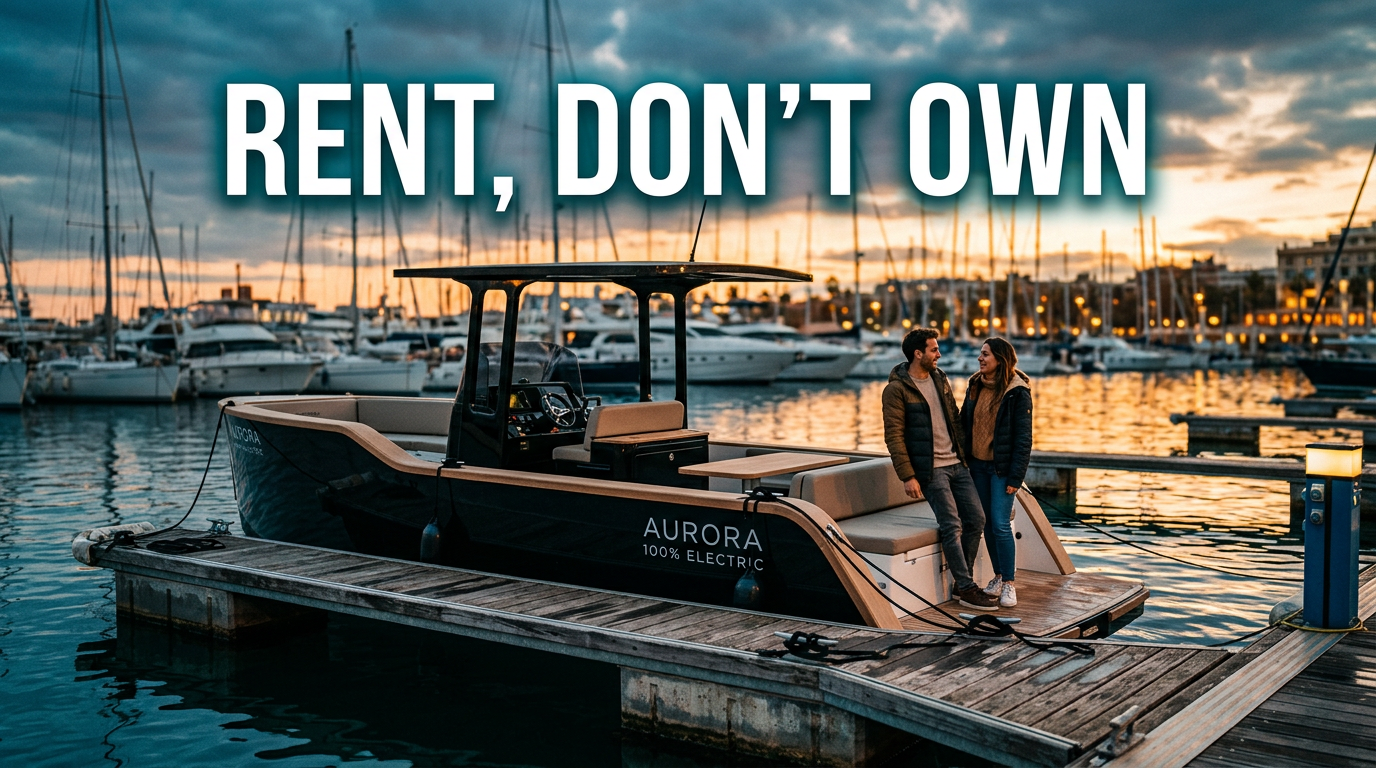
If you enjoy being on the water but don't want the cost and maintenance of ownership, renting or joining a boat club is worth a look, especially if you'd only use a boat a handful of times a year. When you rent, ask if electric options are available. You'll skip the noise, the smell, and the hassle of gas, and you can still talk to your family while you drive.
This episode sets up Friday's interview with Alexandra Manjon, who runs an electric boat sales business, for a closer look at where electric motors are headed next.
Takeaways:
- The global boat rental market is valued at roughly nineteen to twenty-three billion dollars US and growing five to seven percent annually
- Electric boats are the fastest-growing power source segment in boat rentals, projected at a compound annual growth rate near seventeen to eighteen percent through 2031
- Peer-to-peer platforms like Getmyboat, Boatsetter, Click and Boat, and Samboat are expanding access-based boating over ownership
- Electric propulsion means lower maintenance and fewer moving parts, making it attractive for rental fleet operators
- Renting lets you try a boat, including an electric one, without the upfront cost or ongoing maintenance burden of ownership

CEO
Boat Wake Erosion Explained: The Coastal Threat With Nothing to Do With Climate Change