The Giant Fish That Looks Dead, But Isn’t
Meet One of the Strangest Fish on Earth
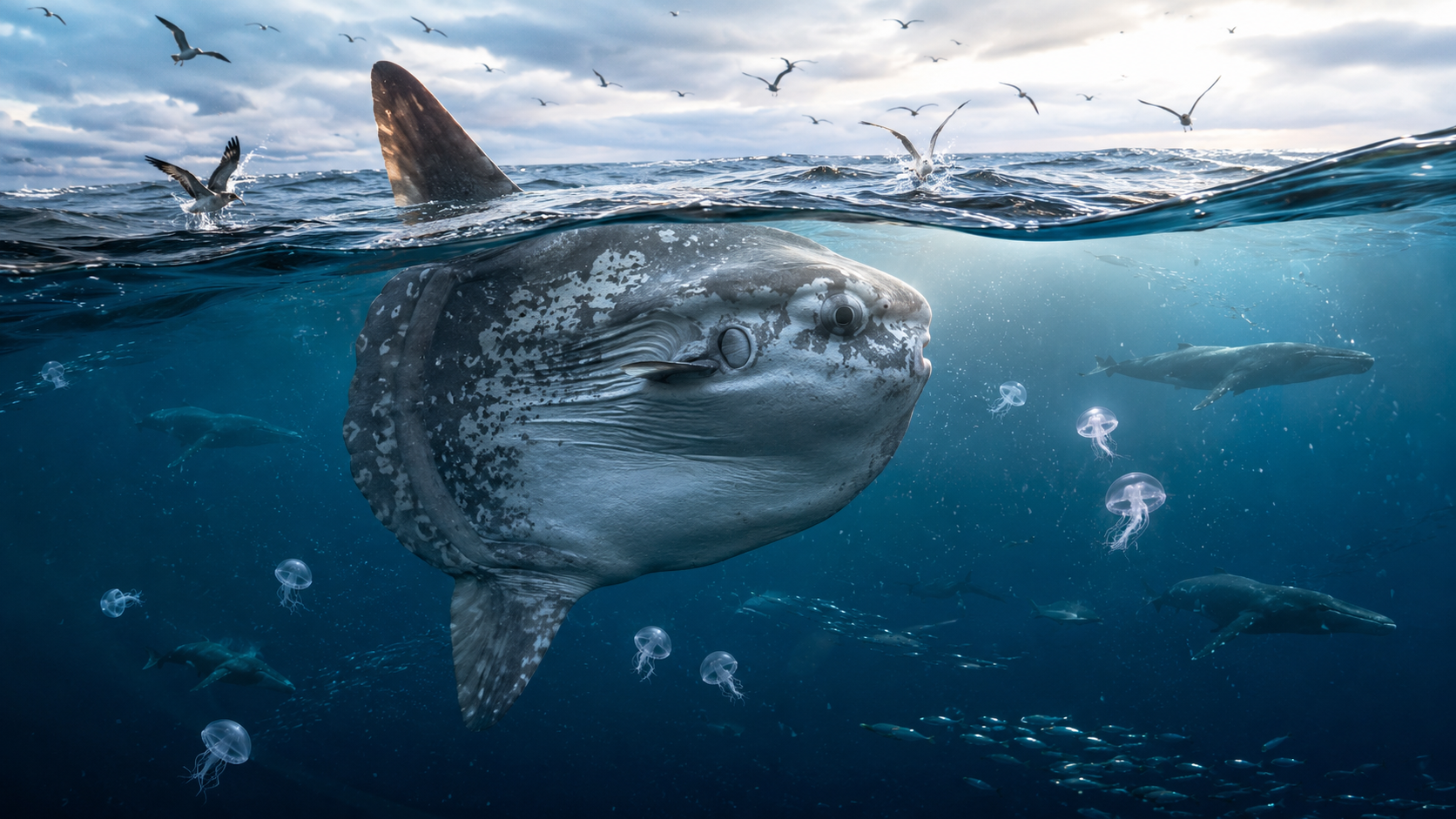
Imagine looking out across the ocean and seeing what appears to be a giant fish floating sideways at the surface. It barely moves. It looks injured, exhausted, or even dead. Most people would assume something is wrong. But what they are actually seeing is one of the most unusual and fascinating fish in the ocean, the ocean sunfish, also known as the mola mola.
The ocean sunfish is famous for its bizarre appearance. Its body looks like someone cut off the back half of a normal fish, leaving behind a giant flattened disc with oversized fins. Despite looking awkward and almost cartoonish, the sunfish is a remarkably successful species that can be found throughout oceans around the world, including the cold waters of Atlantic Canada.
Bigger Than Most People Realize
Many people are surprised to learn that ocean sunfish are among the heaviest bony fish on Earth. Large individuals can weigh well over a tonne, making them true giants of the marine world. Seeing one in person can be a shocking experience because their unusual shape often makes it difficult to judge their actual size.
Unlike sharks, which have skeletons made primarily of cartilage, sunfish are classified as bony fish. That distinction makes their enormous size even more impressive. They have evolved into one of the ocean’s most recognizable oddities, yet scientists are still learning new things about their behaviour and ecology.
Why Do Sunfish Float Sideways?
One of the most common questions people ask about ocean sunfish is why they spend time floating on their sides at the surface. At first glance, the behaviour seems strange. Many observers assume the fish must be sick or dying because it appears motionless and vulnerable.
Research suggests that the behaviour may actually serve an important purpose. Ocean sunfish regularly dive into deeper, colder waters while searching for food. After spending time in those colder depths, they often return to the surface where sunlight can help warm their bodies before they dive again. What looks like laziness or weakness may actually be a highly effective survival strategy.
A Diet Built Around Jellyfish
Ocean sunfish are closely associated with jellyfish, one of their favourite food sources. Although jellyfish are not particularly energy-rich prey, sunfish compensate by consuming large quantities of them. This feeding strategy helps explain why sunfish are often found in regions where jellyfish are abundant.
In Atlantic Canada and other temperate regions, productive waters create ideal conditions for jellyfish populations. Nutrient-rich currents support plankton growth, plankton supports jellyfish, and jellyfish provide food for species like the ocean sunfish. This connection highlights how seemingly unrelated organisms are linked together through complex food webs.
The Hidden Power of Cold Water Oceans
When people think about ocean biodiversity, they often picture tropical coral reefs filled with colourful fish and crystal-clear water. While tropical ecosystems are spectacular, they are not the only places where marine life thrives. Cold water oceans support an extraordinary amount of biodiversity and productivity that often goes unnoticed.
The colder waters off Canada’s Atlantic coast are rich in nutrients that fuel enormous plankton blooms. Those plankton blooms support everything from tiny zooplankton to whales, seabirds, seals, fish, and jellyfish. The presence of ocean sunfish is a reminder that these ecosystems are highly productive and capable of supporting an incredible diversity of life.
More Than Just a Weird Fish
The ocean sunfish is more than a biological curiosity. It serves as a visible reminder of the complex relationships that connect species throughout marine ecosystems. Every sunfish depends on healthy food webs, productive ocean conditions, and abundant prey to survive.
When scientists observe ocean sunfish in an area, they are often seeing evidence that an entire ecosystem is functioning properly. The fish becomes a symbol of something much larger than itself. It represents the productivity, biodiversity, and resilience of the ocean environment around it.
Challenging Our Assumptions
One reason ocean sunfish are so fascinating is that they challenge our assumptions about what successful animals should look like. They do not resemble streamlined predators like tuna or sharks. They do not have the elegance of dolphins or the power of whales. Instead, they appear awkward, slow, and almost unfinished.
Yet despite their unusual appearance, they have survived and thrived for millions of years. Their success reminds us that nature often finds solutions that seem strange from a human perspective. Sometimes the animals that look the most unusual have evolved some of the most effective survival strategies.
A Different Way to See the Ocean
The next time you think about cold ocean waters, try to look beyond the stereotype of dark, empty seas. Cold water ecosystems are dynamic, productive, and full of surprising wildlife. From whales and seabirds to jellyfish and giant ocean sunfish, these environments support an incredible variety of species.
The ocean sunfish may look like it is drifting aimlessly through the water, but its presence tells a much bigger story. It is a reminder that healthy oceans are often hiding extraordinary wonders in places we least expect. Sometimes the strangest animals become the best ambassadors for understanding why marine ecosystems matter.
Final Thought
The ocean sunfish is one of those rare animals that makes people stop and stare. It looks unlike almost anything else in the ocean, and its behaviour can seem completely mysterious. But once you understand its role in the ecosystem, the fish becomes more than a curiosity.
It becomes a symbol of the hidden complexity and beauty of cold water oceans. And if a giant floating dinner plate can teach us anything, it is that the ocean still has plenty of surprises left to discover.

CEO


