Why Leatherback Sea Turtles Travel to Canada
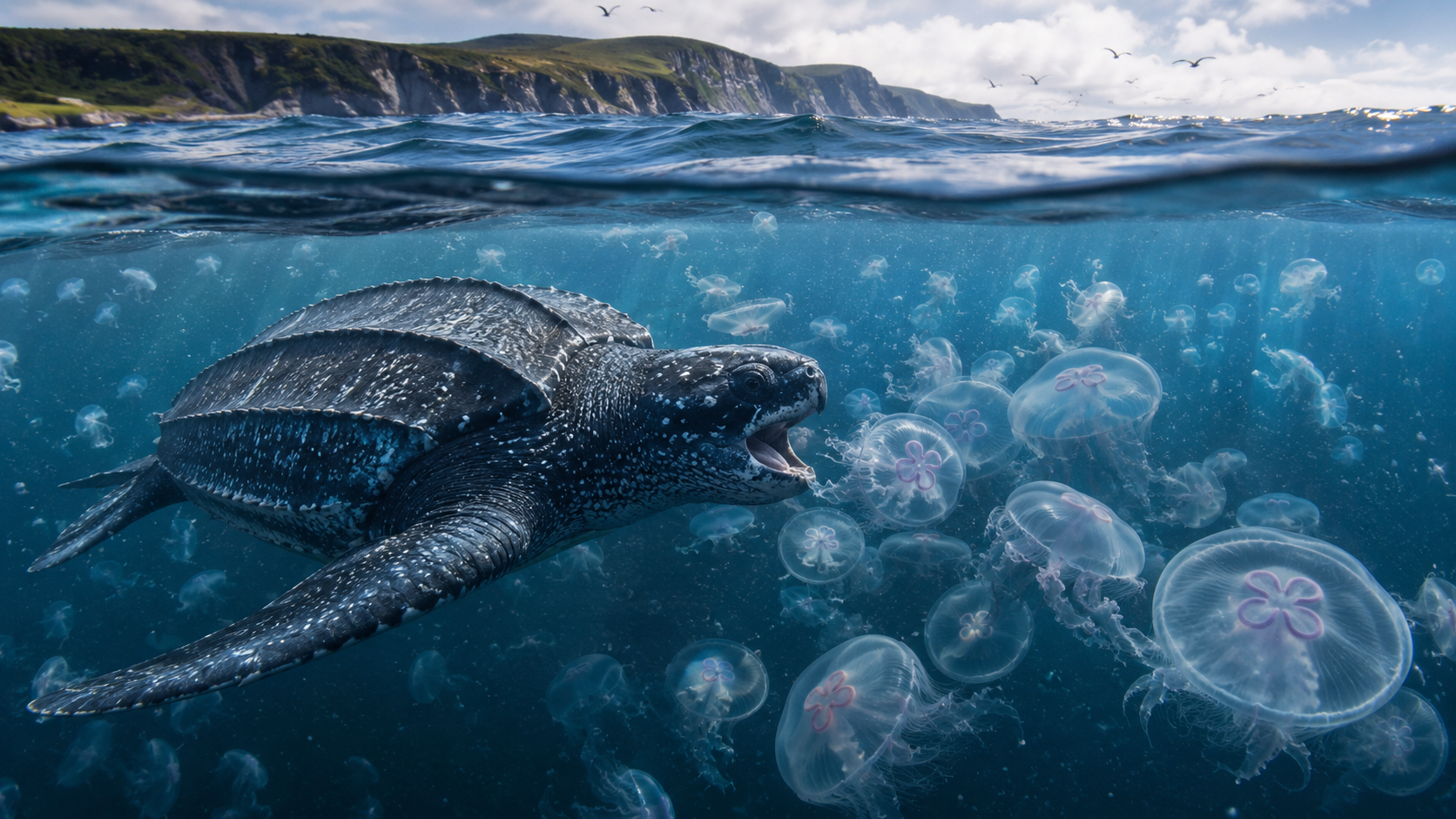
Sea Turtles in Canada? That Sounds Wrong
When most people think about sea turtles, they imagine warm tropical beaches, crystal-clear water, and sunny coastlines. Canada is usually the last place that comes to mind. Yet every summer, some of the largest sea turtles in the world travel thousands of kilometers to reach the cold waters of Atlantic Canada.
These visitors are leatherback sea turtles, an ancient species that has been swimming through Earth’s oceans for more than 100 million years. Unlike many other sea turtles, leatherbacks are built for long-distance travel and can tolerate much colder water temperatures. Their annual journey north surprises many people, but there is a very good reason they make the trip.
The World’s Largest Sea Turtle
Leatherback sea turtles are giants of the ocean. Adults can grow to more than two meters in length and weigh over 900 kilograms, making them the largest living sea turtle species. Instead of a hard shell like other sea turtles, they have a flexible, leathery carapace that helps them dive deeper and swim farther.
These adaptations allow leatherbacks to travel across entire ocean basins. Some individuals migrate between tropical nesting beaches and feeding grounds thousands of kilometers away. Their ability to cover such enormous distances makes them one of the most impressive travelers in the animal kingdom.
Why Travel So Far?
The answer is surprisingly simple: food.
Leatherback sea turtles specialize in eating jellyfish. While jellyfish may not seem particularly nutritious, leatherbacks consume huge quantities of them every day. To find enough food, they follow seasonal blooms of jellyfish that appear in productive ocean regions around the world.
Atlantic Canada becomes one of those feeding hotspots during the warmer months. As jellyfish populations increase, leatherbacks arrive to take advantage of the abundance. For these turtles, the trip north is worth the effort because it provides access to a massive seasonal buffet.
The Hidden Power of Cold Water Ecosystems
Many people assume cold oceans are less productive than tropical waters, but that is often not true. Cold water ecosystems can be incredibly rich because nutrients are constantly mixed throughout the water column. These nutrients fuel plankton growth, which supports entire food webs.
As plankton populations grow, so do the animals that depend on them. Jellyfish benefit from these productive conditions, creating feeding opportunities for leatherback sea turtles. This productivity is one reason whales, seabirds, sharks, and many other marine species also rely on cold northern waters.
Why Canada Matters for Leatherbacks
Atlantic Canada is more than just a stop along a migration route. Research shows that leatherbacks actively feed in these waters and spend significant time searching for prey. These areas provide critical energy that helps the turtles survive and continue their long migrations.
Without healthy feeding grounds, leatherbacks would struggle to obtain the resources they need. Protecting these habitats is therefore an important part of conserving the species. Conservation efforts cannot focus only on nesting beaches because the turtles depend on many different ecosystems throughout their lives.
The Threats Leatherbacks Still Face
Despite their incredible adaptations, leatherback sea turtles face numerous challenges. Entanglement in fishing gear remains one of the most significant threats in many regions. Plastic pollution is another concern because floating plastic bags can resemble jellyfish, causing turtles to accidentally ingest them.
Climate change may also affect leatherbacks by altering ocean temperatures, prey distribution, and migration patterns. Vessel strikes and habitat degradation add additional pressures. These threats highlight the need for coordinated conservation efforts across international boundaries.
A New Way to Think About Sea Turtle Conservation
The story of leatherback sea turtles challenges many assumptions about marine conservation. It reminds us that species often depend on habitats spread across vast distances and multiple countries. Protecting wildlife requires understanding the full journey, not just one part of it.
When we think about sea turtles, we should not only picture tropical beaches. We should also picture the cold waters of Atlantic Canada, where giant leatherbacks arrive each year in search of jellyfish. Their journey is a powerful reminder that every part of the ocean is connected.
The Big Takeaway
Leatherback sea turtles travel thousands of kilometers to reach Canada’s cold waters because these ecosystems provide an abundant source of food. Their migration demonstrates the incredible productivity of northern oceans and the importance of protecting feeding grounds as well as nesting beaches.
Cold oceans are not empty oceans. They are vibrant, productive ecosystems that support some of the most remarkable migrations on Earth. And every summer, leatherback sea turtles prove just how valuable those ecosystems really are.

CEO


