Are We Ignoring the Best Climate Solution We Already Have?


 Apple Podcasts
 Spotify
 YouTube
 Amazon Music
 PocketCasts
 Overcast
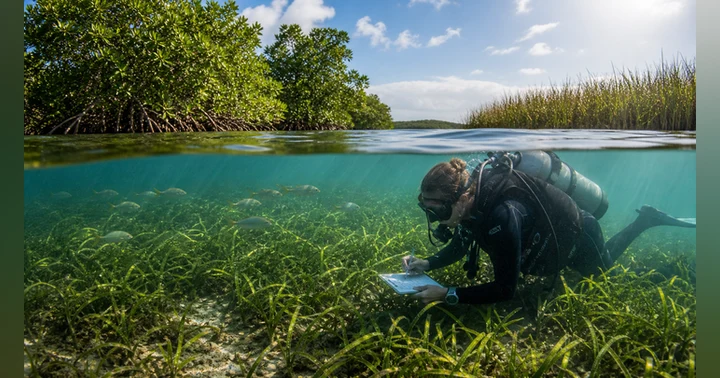
 Blue carbon could be one of the most powerful climate solutions we already have, so why is it still missing from so many climate plans? In this episode of How to Protect the Ocean, we look at how mangroves, seagrasses, salt marshes, and other coastal ecosystems store carbon, protect coastlines, and support ocean health.
Ocean climate solutions are often treated as secondary to land-based actions like planting trees, but coastal habitats can store carbon in sediments for long periods of time. The problem is that many countries still do not fully include blue carbon ecosystems in their climate strategies, even though protecting and restoring them could help reduce climate risk.
Blue economy action is not just about new technology or future innovation. It is also about funding, restoring, and protecting the natural systems that already work. The ocean is not separate from climate change. The ocean is climate.
Support Independent Podcasts: https://www.speakupforblue.com/patreon
Help fund a new seagrass podcast: https://www.speakupforblue.com/seagrass
Connect with Speak Up For Blue
Website: https://bit.ly/3fOF3Wf
Instagram: https://bit.ly/3rIaJSG
TikTok: https://www.tiktok.com/@speakupforblue
Twitter: https://bit.ly/3rHZxpc
YouTube: www.speakupforblue.com/youtube
00:00:00,050 --> 00:00:03,890
We may already know how to store
carbon, so why aren't we using it?
2
00:00:04,180 --> 00:00:05,540
Why aren't we using these methods?
3
00:00:05,813 --> 00:00:08,173
That's what we're gonna talk
about on this episode of the How
4
00:00:08,173 --> 00:00:09,263
to Protect the Ocean podcast.
5
00:00:09,446 --> 00:00:13,590
Because if you are here to find out
more about the ocean and use this podcast
6
00:00:13,590 --> 00:00:17,890
as a resource to help you make better
decisions in your daily life for the
7
00:00:17,890 --> 00:00:19,270
ocean, you've come to the right place.
8
00:00:19,420 --> 00:00:22,560
If you do not wanna miss tomorrow's
episode, we publish five days a
9
00:00:22,560 --> 00:00:25,973
week, Monday to Friday, you should
hit that follow button right now on
10
00:00:25,973 --> 00:00:29,623
your favorite podcast app because
we are coming with the heat today.
11
00:00:29,623 --> 00:00:31,730
We are gonna be talking about the
blue economy, and we are gonna
12
00:00:31,730 --> 00:00:34,256
be talking about something that
we've been doing for a while.
13
00:00:34,306 --> 00:00:37,776
And the question really is: Are we
ignoring one of the most effective
14
00:00:37,776 --> 00:00:40,323
climate solutions we already have?
15
00:00:40,603 --> 00:00:41,433
Think about that.
16
00:00:41,633 --> 00:00:44,640
Like, we always talk... I remember
here in Canada, Justin Trudeau
17
00:00:44,640 --> 00:00:46,260
comes out with a great plan.
18
00:00:46,370 --> 00:00:48,069
I'm not a hater of Justin Trudeau.
19
00:00:48,069 --> 00:00:50,619
I don't love everything he did as
a prime minister being a Canadian
20
00:00:50,619 --> 00:00:53,459
citizen, but I did like a lot of
the environmental stuff that he did.
21
00:00:53,636 --> 00:00:56,016
And at one time, he came out and
he said, "We're gonna plant a
22
00:00:56,016 --> 00:00:57,966
billion trees." And that was great.
23
00:00:58,256 --> 00:01:00,806
It was great to hear that more
trees are gonna be planted.
24
00:01:00,806 --> 00:01:01,696
It's a great program.
25
00:01:01,919 --> 00:01:04,019
But is that really the right solution?
26
00:01:04,349 --> 00:01:08,569
Are we really putting the right amount
of money into planting these trees?
27
00:01:08,813 --> 00:01:09,923
Yes, we have to plant trees.
28
00:01:09,923 --> 00:01:11,843
We should always be planting
trees, especially up here in
29
00:01:11,843 --> 00:01:13,446
Canada where we harvest trees.
30
00:01:13,646 --> 00:01:15,476
We always need to have
some kind of recoup.
31
00:01:15,476 --> 00:01:16,726
We always need to have some kind of plan.
32
00:01:16,726 --> 00:01:20,673
We have this massive land mass
that was once dominated by forests
33
00:01:20,673 --> 00:01:22,213
of all different types of species.
34
00:01:22,429 --> 00:01:25,519
Now it's being depleted, not only
because we've been harvesting a lot of
35
00:01:25,519 --> 00:01:29,189
it, but also because of forest fires,
disease and everything like that.
36
00:01:29,516 --> 00:01:32,466
But tree planting is not the
best solution that we have.
37
00:01:32,716 --> 00:01:36,516
The best solution is actually
below the ocean surface in the
38
00:01:36,546 --> 00:01:38,676
aquatic plants that are in there.
39
00:01:38,939 --> 00:01:43,099
And that's where the real blue economy is
and something that we've been ignoring.
40
00:01:43,249 --> 00:01:46,806
So a recent report that was highlighted
on phys.org focused on something
41
00:01:46,806 --> 00:01:50,316
called blue carbon, and we've
talked about blue carbon before.
42
00:01:50,316 --> 00:01:53,103
We've talked about how it
includes ecosystems like mangroves,
43
00:01:53,103 --> 00:01:54,913
seagrasses, and salt marshes.
44
00:01:55,133 --> 00:01:59,283
These environments capture and
store carbon and sediments many
45
00:01:59,283 --> 00:02:03,956
more times than an average tree
would do in a forest on land.
46
00:02:04,386 --> 00:02:05,356
That is the key.
47
00:02:05,626 --> 00:02:09,886
Often they are more efficient at
storing this carbon than forests.
48
00:02:10,176 --> 00:02:14,413
And I think we get this to the situation
where we know more about trees and
49
00:02:14,413 --> 00:02:17,893
we know less about these seagrasses,
these mangroves, these salt marshes,
50
00:02:17,923 --> 00:02:20,893
kelp forests and so forth because
they're above the surface of the ocean.
51
00:02:20,893 --> 00:02:22,773
We haven't studied these
forests in a long time.
52
00:02:22,993 --> 00:02:25,133
And to be honest, like, when
you put something down below
53
00:02:25,133 --> 00:02:26,823
the ocean, it just gets ignored.
54
00:02:26,943 --> 00:02:29,993
There's this famous meme that we've
seen or a cartoon that we've seen
55
00:02:29,993 --> 00:02:32,363
where you have these two guys,
these two cartoon characters that
56
00:02:32,363 --> 00:02:34,113
are stranded on a desert island.
57
00:02:34,113 --> 00:02:36,893
It's this tiny, tiny island in the
middle of the ocean, and they're
58
00:02:36,893 --> 00:02:39,973
staring out, and the one comments,
"Man, I wish there was something to
59
00:02:40,013 --> 00:02:42,949
eat out here." They're on this tiny,
like, little, little, tiny island where
60
00:02:42,949 --> 00:02:44,423
you can see all around and everything.
61
00:02:44,609 --> 00:02:46,519
And they look out into the ocean
surface, and they see nothing.
62
00:02:46,549 --> 00:02:49,419
But below the ocean are all the
animals that they can use to
63
00:02:49,419 --> 00:02:51,219
feed on and all that kinda stuff.
64
00:02:51,369 --> 00:02:54,739
And they just ignore it because all
they can see is just flat surface of
65
00:02:54,739 --> 00:02:56,419
ocean, as far as the eye can see.
66
00:02:56,609 --> 00:02:58,029
And that happens a lot, I feel like.
67
00:02:58,059 --> 00:03:00,953
We just are not connected to the
ocean as much because a lot of us are
68
00:03:00,953 --> 00:03:02,673
still afraid of going in the ocean.
69
00:03:02,869 --> 00:03:03,759
They're afraid of sharks.
70
00:03:03,759 --> 00:03:04,959
They're afraid of the unknown.
71
00:03:05,199 --> 00:03:09,679
People don't wanna put their feet in
aquatic plants or any kind of a macroalgae
72
00:03:09,706 --> 00:03:12,586
because it feels funny, and they're
just not used to it, and that's fine.
73
00:03:12,616 --> 00:03:14,593
If you're a little scared
of the ocean, that's okay.
74
00:03:14,676 --> 00:03:15,516
That's understandable.
75
00:03:15,673 --> 00:03:18,703
But it doesn't mean we don't have
to know much more or we just kind
76
00:03:18,703 --> 00:03:22,513
of ignore what's been going on in
the ocean or ignore the benefits
77
00:03:22,513 --> 00:03:23,753
that the ocean can provide.
78
00:03:23,896 --> 00:03:28,876
And a lot of times, because of these
areas, these habitats like mangroves,
79
00:03:28,876 --> 00:03:32,789
seagrass, and salt marshes are along the
coastline, we have altered a lot of that
80
00:03:32,789 --> 00:03:36,679
coastline to match our own benefits, our
own human benefits, and we don't do it
81
00:03:36,679 --> 00:03:40,223
where we are looking at, "Hey, how does
this system actually play a role in our
82
00:03:40,223 --> 00:03:42,253
ecosystem to actually help us breathe?"
83
00:03:42,763 --> 00:03:43,733
Just to breathe.
84
00:03:43,973 --> 00:03:44,843
And that's the problem.
85
00:03:44,903 --> 00:03:48,023
Here's the problem, like, only 20%
of countries are including these
86
00:03:48,023 --> 00:03:50,296
ecosystems in their climate strategies.
87
00:03:50,576 --> 00:03:52,746
We're not even including in the
climate strategies, let alone
88
00:03:52,746 --> 00:03:54,376
we're just ignoring it altogether.
89
00:03:54,603 --> 00:03:57,183
We're not including these climate
strategies even though they store more
90
00:03:57,183 --> 00:04:02,416
carbon in sediments or down below the
ocean than any other system on land.
91
00:04:02,769 --> 00:04:04,000
So imagine that.
92
00:04:04,030 --> 00:04:07,590
And you gotta remember, the ocean is
what gives us every second breath, so
93
00:04:07,590 --> 00:04:11,310
we should be focusing more on the ocean,
especially when it comes to climate.
94
00:04:11,663 --> 00:04:15,560
If only 20% of the countries are including
these ecosystems in their climate
95
00:04:15,560 --> 00:04:20,596
strategies, that means most climate
plans are missing a major opportunity.
96
00:04:20,596 --> 00:04:24,276
And it goes even as far as the
climate weeks that we hear, Climate
97
00:04:24,276 --> 00:04:25,816
Week Toronto, Climate Week New York.
98
00:04:26,136 --> 00:04:29,566
They have, like, one panel on
the oceans or a couple of panels.
99
00:04:29,566 --> 00:04:32,596
So a whole full week, like, five days,
seven days, however long it goes on.
100
00:04:32,596 --> 00:04:34,246
I've never been to one,
but I've heard them go on.
101
00:04:34,420 --> 00:04:37,386
I don't go because there's no
ocean stuff being talked about it.
102
00:04:37,386 --> 00:04:38,361
It's a huge complaint of mine.
103
00:04:38,361 --> 00:04:40,771
It's like, how do we have all these
people who are coming together with
104
00:04:40,771 --> 00:04:44,021
a lot of money and a lot of savvy
and, like, entrepreneurs, everything,
105
00:04:44,281 --> 00:04:49,181
and they don't know that the climate
is oceans, oceans is climate?
106
00:04:49,351 --> 00:04:52,358
If we wanna stop climate change,
we have to focus on the ocean.
107
00:04:52,608 --> 00:04:56,975
The ocean already absorbs a huge
portion of the carbon that we emit.
108
00:04:57,345 --> 00:05:01,545
This is why I say that every second
breath we take is because of the ocean.
109
00:05:01,815 --> 00:05:06,515
All this plankton, which is abundant in
every ocean, are basically plant cells.
110
00:05:06,645 --> 00:05:12,091
These plant cells will absorb the sun
for energy and absorb the carbon dioxide
111
00:05:12,181 --> 00:05:17,528
that is in the atmosphere, bring it into
their cells, so they can emit oxygen.
112
00:05:17,958 --> 00:05:18,628
That's what they do.
113
00:05:18,628 --> 00:05:22,678
Photosynthesis, absorb carbon
and sunlight, produce oxygen.
114
00:05:23,131 --> 00:05:23,891
That's what they do.
115
00:05:24,171 --> 00:05:27,951
So when you have that many, that much
plankton in the ocean, you're gonna get
116
00:05:27,951 --> 00:05:31,945
this huge system that absorbs carbon
dioxide and actually returns oxygen.
117
00:05:32,208 --> 00:05:35,278
And these coastal systems that we're
talking about today are some of the most
118
00:05:35,278 --> 00:05:38,138
powerful carbon sinks on the planet.
119
00:05:38,348 --> 00:05:40,848
We need to reduce greenhouse
gases, which is carbon dioxide.
120
00:05:41,061 --> 00:05:44,091
These systems can help, not only
plankton, but the systems like
121
00:05:44,091 --> 00:05:48,665
seagrasses, mangroves, kelp forests, salt
marshes, all these different things.
122
00:05:48,665 --> 00:05:51,648
And if I forget any, I'm not doing
it on purpose or anybody who's
123
00:05:51,648 --> 00:05:53,228
gonna email me because of that.
124
00:05:53,448 --> 00:05:56,528
But the thing is too is, like,
they're fragile ecosystems.
125
00:05:56,878 --> 00:05:59,338
When they are destroyed, they
don't just stop storing carbon.
126
00:05:59,505 --> 00:06:00,335
They release it.
127
00:06:00,721 --> 00:06:02,321
So it's like when you have a forest fire.
128
00:06:02,621 --> 00:06:05,868
When you have a forest fire, you get
more carbon dioxide released because
129
00:06:05,868 --> 00:06:07,728
of all that storage of carbon dioxide.
130
00:06:07,728 --> 00:06:10,751
So not only the tree is going and all
the stuff that comes off the tree, but
131
00:06:10,751 --> 00:06:14,101
you're also getting all that stuff in
the soil that is burning as well and
132
00:06:14,101 --> 00:06:15,471
all that carbon dioxide going out.
133
00:06:15,705 --> 00:06:19,061
So when you destroy a seagrass
or you destroy a mangrove,
134
00:06:19,061 --> 00:06:20,111
you're gonna get the same thing.
135
00:06:20,111 --> 00:06:22,001
Everything that's stored in
there kinda gets released.
136
00:06:22,001 --> 00:06:25,455
So keeping them intact, healthy is
something that's really important 'cause
137
00:06:25,455 --> 00:06:27,325
they're both a risk and a solution.
138
00:06:27,685 --> 00:06:30,118
And so this is not just
a discovery problem.
139
00:06:30,118 --> 00:06:32,418
We've known this for a long time.
140
00:06:32,608 --> 00:06:33,858
It's an implementation problem.
141
00:06:33,858 --> 00:06:35,558
You've probably heard me say this
a number of times if you've been
142
00:06:35,558 --> 00:06:38,431
listening to the podcast for any
number of days, or weeks or months.
143
00:06:38,585 --> 00:06:43,668
And so I think it's really important
to look at how we can not only
144
00:06:43,668 --> 00:06:48,138
protect the systems that are intact,
but scale up the systems of not just
145
00:06:48,138 --> 00:06:50,038
protecting, but also restoring.
146
00:06:50,405 --> 00:06:54,611
Because we need to protect what exists,
we need to scale that up, but we also
147
00:06:54,611 --> 00:06:58,758
need to restore what's been lost and
include these systems in our climate
148
00:06:58,758 --> 00:07:00,428
policy because it's gonna help us.
149
00:07:00,568 --> 00:07:04,100
It's gonna make changing the
climate back a lot easier when we
150
00:07:04,100 --> 00:07:05,930
include it into this climate policy.
151
00:07:06,270 --> 00:07:09,030
And it's just a matter of
countries actually understanding,
152
00:07:09,030 --> 00:07:12,666
like taking inventory of how
many seagrass systems they have.
153
00:07:12,850 --> 00:07:16,290
'Cause seagrasses are
temperate as well as tropical.
154
00:07:16,590 --> 00:07:17,780
You see seagrasses everywhere.
155
00:07:17,840 --> 00:07:19,110
Mangroves are tropical.
156
00:07:19,110 --> 00:07:20,500
You see them a lot of places.
157
00:07:20,673 --> 00:07:23,233
A lot of these systems actually
perform more than just carbon sinks.
158
00:07:23,403 --> 00:07:27,063
They actually perform a lot of
security functions for the coastline.
159
00:07:27,336 --> 00:07:30,596
I've talked about this before, but when
tsunamis or big wave actions happen,
160
00:07:30,730 --> 00:07:34,310
they actually reduce the energy of that
wave as it goes across, as it reaches
161
00:07:34,310 --> 00:07:36,086
land, it actually dissipates that.
162
00:07:36,220 --> 00:07:41,703
Areas in the 2004 tsunami in the Indian
Ocean where it killed a lot of people
163
00:07:41,703 --> 00:07:44,713
in areas where it didn't kill a lot or
didn't have much of an effect at all
164
00:07:44,743 --> 00:07:50,113
were areas that had mangroves, coral
reefs, seagrasses all intact because
165
00:07:50,113 --> 00:07:53,943
those systems ended up dissipating
the wave energy as it went across,
166
00:07:54,203 --> 00:07:56,123
and a lot more people survived.
167
00:07:56,383 --> 00:08:00,316
So, we need to make sure that
these are included in this policy
168
00:08:00,346 --> 00:08:01,796
for a number of different reasons.
169
00:08:02,063 --> 00:08:05,113
But when you start including these
natural barriers, that will provide
170
00:08:05,113 --> 00:08:09,280
safety and that'll provide stability
in our environment and our atmosphere.
171
00:08:09,340 --> 00:08:11,080
We know that the science is already there.
172
00:08:11,370 --> 00:08:13,970
The gap is really like funding and action.
173
00:08:14,223 --> 00:08:15,673
That's really where it comes down to.
174
00:08:15,866 --> 00:08:19,366
So when you go to a climate week or
you go to any kind of climate action
175
00:08:19,366 --> 00:08:23,490
function, look for where the ocean
is, like where the ocean people are.
176
00:08:23,650 --> 00:08:25,520
Are they bringing things to the table?
177
00:08:25,520 --> 00:08:26,570
Are they even there?
178
00:08:26,776 --> 00:08:27,476
Why aren't they there?
179
00:08:27,476 --> 00:08:30,416
And if you're somebody in ocean,
you should be going to these weeks.
180
00:08:30,493 --> 00:08:32,920
You should be going to Climate Week
New York, Climate Week Toronto.
181
00:08:32,920 --> 00:08:35,700
You should be going all over the place
where there's a COP And you should be
182
00:08:35,700 --> 00:08:38,143
bombarding them with ways to take action.
183
00:08:38,386 --> 00:08:42,700
Start businesses, start funding these
places, these actions because that's
184
00:08:42,700 --> 00:08:43,550
something that we're gonna need.
185
00:08:43,720 --> 00:08:47,866
And get our politicians on track to
be like, "Hey, stop destroying the
186
00:08:47,866 --> 00:08:50,760
environment and the ocean and start
protecting it because it's gonna be
187
00:08:50,760 --> 00:08:54,640
a lot easier to do the things that
we want down the road than not to."
188
00:08:54,983 --> 00:08:56,793
So we're not short on climate solutions.
189
00:08:56,793 --> 00:08:59,193
We're just ignoring the
ones that we already have.
190
00:08:59,530 --> 00:09:00,040
That's the thing.
191
00:09:00,040 --> 00:09:01,190
We're just short on using them.
192
00:09:01,510 --> 00:09:04,240
So I wish that we could start
really thinking about how we
193
00:09:04,240 --> 00:09:06,380
can do it better in the future.
194
00:09:06,830 --> 00:09:09,346
And that's what I really want you
guys to do when we look forward.
195
00:09:09,433 --> 00:09:11,843
I would love to hear your
comments, your feedback on this.
196
00:09:11,843 --> 00:09:14,163
You can hit me up on my socials, DM me.
197
00:09:14,356 --> 00:09:17,261
All the links are in the show
notes, so you can check that out.
198
00:09:17,378 --> 00:09:20,458
I'd love to continue the conversation with
you, ' cause that's why I started this
199
00:09:20,458 --> 00:09:22,228
podcast, was to start the conversation.
200
00:09:22,375 --> 00:09:23,135
You continue it.
201
00:09:23,135 --> 00:09:23,925
Send me feedback.
202
00:09:23,925 --> 00:09:26,285
Go to speakupforblue.com/feedback.
203
00:09:26,401 --> 00:09:27,445
You can leave a voicemail.
204
00:09:27,605 --> 00:09:29,845
You can type something in,
whatever you'd like to do.
205
00:09:29,845 --> 00:09:33,548
I would love to hear from you, or hit me
up on my socials, whichever is easiest.
206
00:09:33,758 --> 00:09:35,378
Let's have a conversation on the ocean.
207
00:09:35,378 --> 00:09:36,198
Let's have some fun.
208
00:09:36,328 --> 00:09:38,918
Let's talk about something
that we can do to really help.
209
00:09:39,061 --> 00:09:40,721
Your solutions are just as good as mine.
210
00:09:40,721 --> 00:09:41,831
There's no judgment.
211
00:09:41,831 --> 00:09:42,741
Love to hear from you.
212
00:09:42,915 --> 00:09:46,335
But until then, thank you so much
for joining me on today's episode of
213
00:09:46,335 --> 00:09:47,875
the How to Protect the Ocean podcast.
214
00:09:48,215 --> 00:09:48,765
Have a great night.
215
00:09:48,765 --> 00:09:50,995
We'll see you tomorrow,
and happy conservation.