What Dead Seabirds Reveal About an Ocean in Trouble
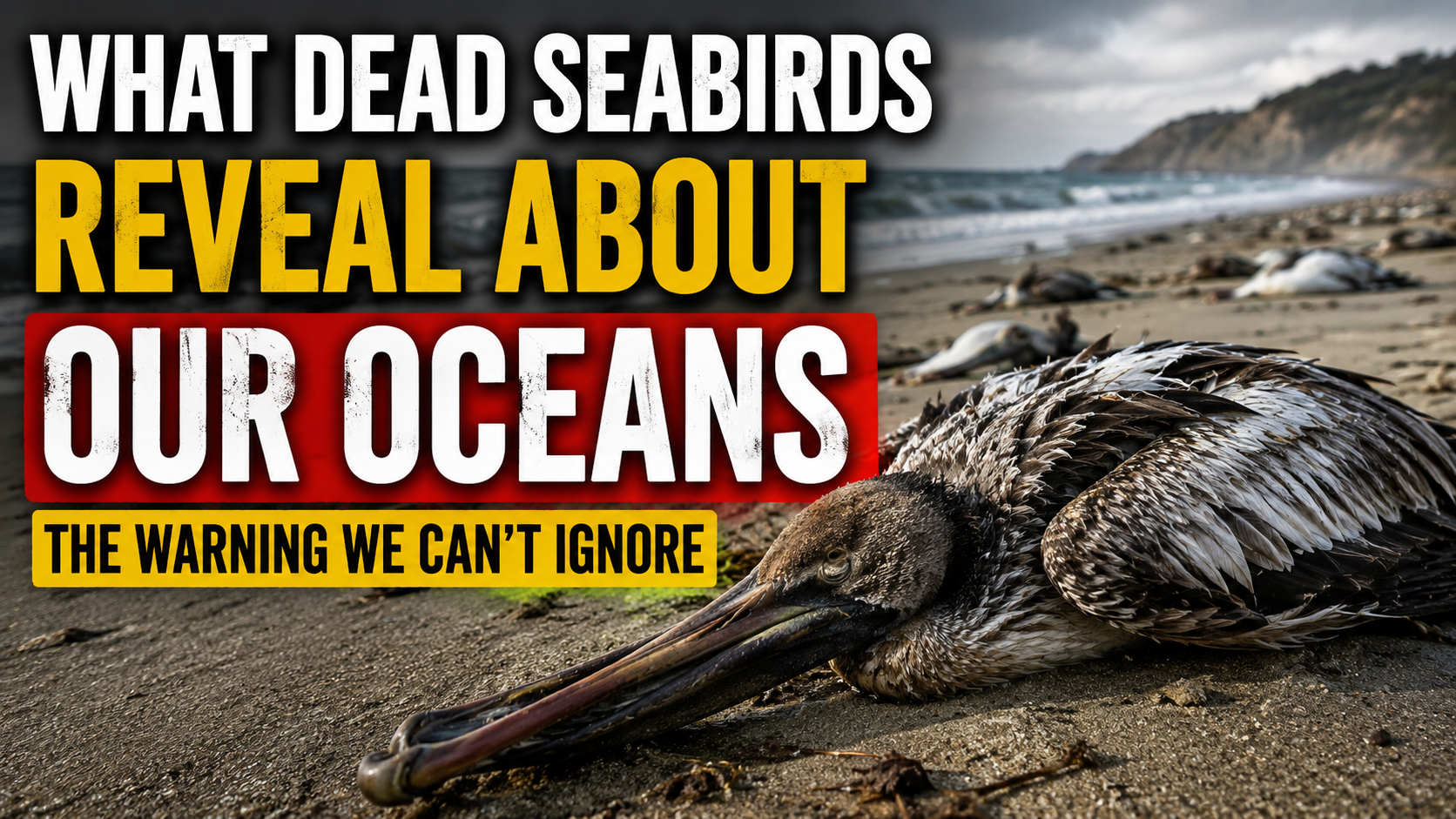
Thousands of starving seabirds are washing ashore along California’s coastline. At first glance, it looks like a tragic wildlife story. But scientists say these birds are actually warning us about something much bigger happening beneath the surface of the Pacific Ocean. Their struggle offers an early glimpse into how climate-driven ocean changes can ripple through entire ecosystems.
The birds themselves are not the main story. They are the visible symptom of a food web that is under increasing stress. By paying attention to these warning signs today, we have a better chance of understanding what could happen to fisheries, marine mammals, and coastal communities tomorrow.
The Ocean Is Running Out of Food
Brown pelicans, cormorants, loons, grebes, and other seabirds have been arriving on California beaches severely underweight and exhausted. Some birds are so weak that they walk onto shore and die within minutes. Others have been found far inland, desperately searching for food in places they would never normally visit.
Scientists believe the primary cause is an unusually persistent marine heat wave off California’s coast. Several long-term monitoring stations have recorded record-breaking ocean temperatures for more than forty consecutive days. While warm water may sound pleasant to swimmers, it creates serious problems for marine ecosystems that depend on cold, nutrient-rich water.
Why Warm Water Changes Everything
California’s productive coastline relies on a process called upwelling. Cold water rises from deep in the ocean, bringing nutrients that feed plankton and krill. Those tiny organisms support anchovies and sardines, which in turn feed seabirds, whales, dolphins, sea lions, and commercial fisheries.
When the ocean stays unusually warm, many forage fish move farther offshore or deeper beneath the surface. Seabirds often cannot follow them because they have evolved to hunt close to shore and near the surface. Without enough food, many birds can starve within just a few days.
Seabirds Are the Ocean’s Early Warning System
Scientists often describe seabirds as indicators of ocean health. Like the famous canary in a coal mine, seabirds can reveal ecosystem problems long before people notice broader impacts. When seabirds begin struggling, it usually means something lower in the food chain has already changed.
That is why researchers conduct beach surveys year after year. Counting stranded birds may seem like a depressing task, but decades of monitoring allow scientists to recognize when something unusual is happening. Without these long-term data sets, today’s event might simply appear to be an isolated tragedy instead of part of a much larger environmental shift.
Could History Repeat Itself?
Researchers are especially concerned because this marine heat wave is developing alongside a strengthening El Niño. Together, these two events could place even greater stress on Pacific ecosystems. Although scientists cannot yet predict exactly how severe the impacts will become, they are paying close attention.
There is good reason for that caution. Between 2013 and 2016, a massive marine heat wave known as “The Blob” contributed to one of the largest seabird die-offs ever recorded. More than four million common murres died during that event, and some populations are still recovering years later.
The Birds We See Are Only Part of the Story
One important reality is that most seabirds that die at sea never wash ashore. The birds found on beaches likely represent only a small fraction of the actual mortality occurring offshore. That means the problem may be much larger than what people are seeing in news reports or on social media.
The ocean often hides its problems until they become impossible to ignore. By the time wildlife begins washing ashore, changes have often been building beneath the surface for weeks or even months. That makes long-term monitoring and scientific research more important than ever.
What This Means for the Future
The encouraging news is that these events help scientists better understand how marine ecosystems respond to climate change. Improved forecasting allows fisheries managers, conservation organizations, and governments to prepare for future marine heat waves and adapt management strategies. The more we learn today, the better prepared we will be for tomorrow.
The starving seabirds along California’s coast are not simply victims of a warming ocean. They are messengers. They remind us that changes at the bottom of the food web eventually affect everything above it, including wildlife, fisheries, coastal economies, and ultimately people.
If we choose to listen, these birds may help us protect the ocean before even greater changes occur.

CEO
Whales Are Sprinters: What a Blue Whale's Heart Does When It Lunge Feeds