Canada’s Ocean Promise Sounds Big, But Is It Enough?
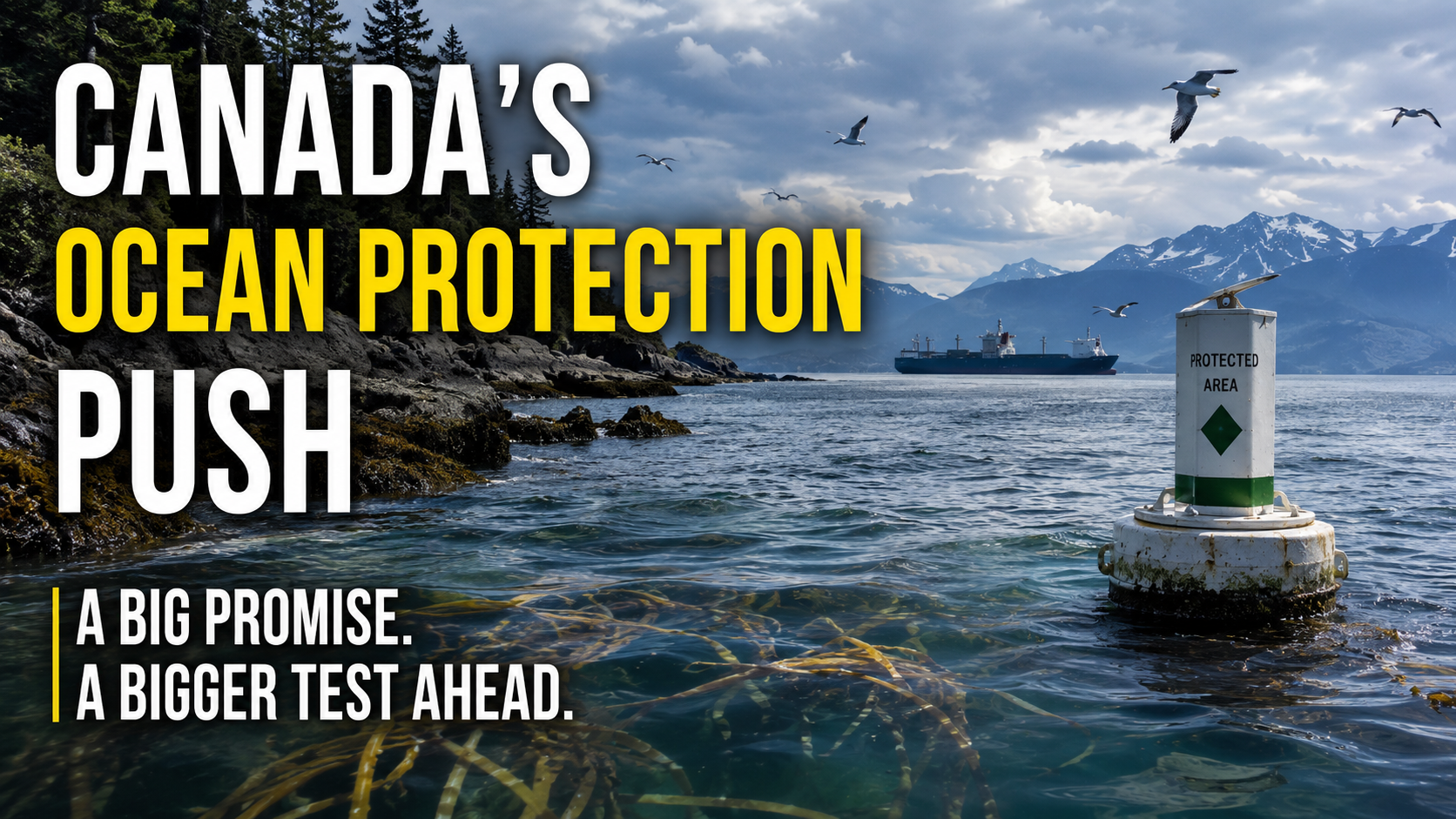
Canada has made another major commitment to nature conservation, proposing billions of dollars in funding to help protect ecosystems across the country. For ocean advocates, that sounds like great news. After all, Canada has the longest coastline in the world and is responsible for managing marine ecosystems that stretch across the Atlantic, Pacific, and Arctic Oceans. But while new funding and ambitious targets are important, they raise a critical question: will these commitments be enough to protect Canada’s oceans from the growing pressures they face?
Why Canada’s Oceans Matter
Canada’s oceans support an incredible diversity of life, from cold-water corals and kelp forests to whales, seabirds, fish, and countless other marine species. These ecosystems provide food, support local economies, store carbon, and help regulate our climate. Healthy oceans are essential not only for marine life but also for the millions of Canadians who depend on coastal communities and marine resources.
The importance of these ecosystems becomes even greater as climate change accelerates. Rising ocean temperatures, changing currents, ocean acidification, and extreme weather events are already affecting marine habitats across the country. Protecting ocean ecosystems today is one of the most effective ways to build resilience for the future.
Canada’s Growing Conservation Ambitions
Canada has committed to protecting 30 percent of its land and water by 2030, often referred to as the “30x30” target. To support that goal, the federal government has proposed significant investments in conservation initiatives, including marine protected areas, national marine conservation areas, freshwater protections, and Indigenous-led conservation projects. These efforts are intended to help preserve biodiversity while creating a more sustainable future.
The announcement demonstrates that ocean conservation is becoming a higher priority in national policy discussions. It also sends a signal internationally that Canada intends to play a leadership role in global biodiversity protection. However, setting targets is often easier than achieving them, particularly when competing economic interests are involved.
The Challenges Facing Ocean Protection
While conservation funding is encouraging, Canada’s oceans continue to face significant pressures from development. Shipping traffic continues to increase along many coastlines, creating risks for marine mammals and sensitive habitats. Offshore oil and gas development remains a contentious issue in some regions, while fisheries management challenges persist in others.
Climate change adds another layer of complexity. As Arctic sea ice declines, new opportunities for shipping, resource extraction, and development emerge. These activities can create economic benefits, but they also increase risks to ecosystems that are already under stress. Balancing conservation goals with development priorities will be one of the biggest tests of Canada’s ocean strategy.
Why Marine Protected Areas Alone Are Not Enough
Marine protected areas are often viewed as the cornerstone of ocean conservation. They can provide safe spaces where ecosystems recover, fish populations rebuild, and habitats remain intact. When properly designed and managed, they are among the most effective conservation tools available.
However, protected areas are not a silver bullet. A protected area that lacks enforcement, monitoring, or long-term funding may exist only on paper. Effective ocean conservation requires strong governance, scientific monitoring, compliance measures, and collaboration among governments, communities, industries, and Indigenous nations. Without these components, conservation targets may look impressive while delivering limited ecological benefits.
Indigenous Leadership Must Be Central
One of the most promising aspects of Canada’s conservation future is the growing recognition of Indigenous leadership in environmental stewardship. Indigenous communities have managed coastal and marine environments for generations and possess deep ecological knowledge that complements western science. Many successful conservation initiatives are already being led or co-managed by Indigenous governments and organizations.
Supporting Indigenous-led conservation is about more than meeting biodiversity targets. It is also about recognizing rights, strengthening relationships, and ensuring that conservation efforts reflect local knowledge and priorities. As Canada expands ocean protection, Indigenous leadership will be critical to achieving meaningful and lasting outcomes.
The Ocean Legacy We Are Choosing
The decisions being made today will shape Canada’s oceans for decades to come. Investments in conservation, stronger protected areas, and collaborative governance all have the potential to create lasting benefits for marine ecosystems and coastal communities. At the same time, development pressures and climate impacts continue to grow, making the need for effective protection more urgent than ever.
Canada’s ocean promise is ambitious and encouraging. But the true measure of success will not be how much funding is announced or how many targets are set. It will be whether future generations inherit healthier oceans, thriving marine wildlife, and resilient coastal ecosystems. That is the legacy Canada has the opportunity to create right now.

CEO


