How Do You Protect an Ocean Nobody Owns?
The Ocean Beyond Borders
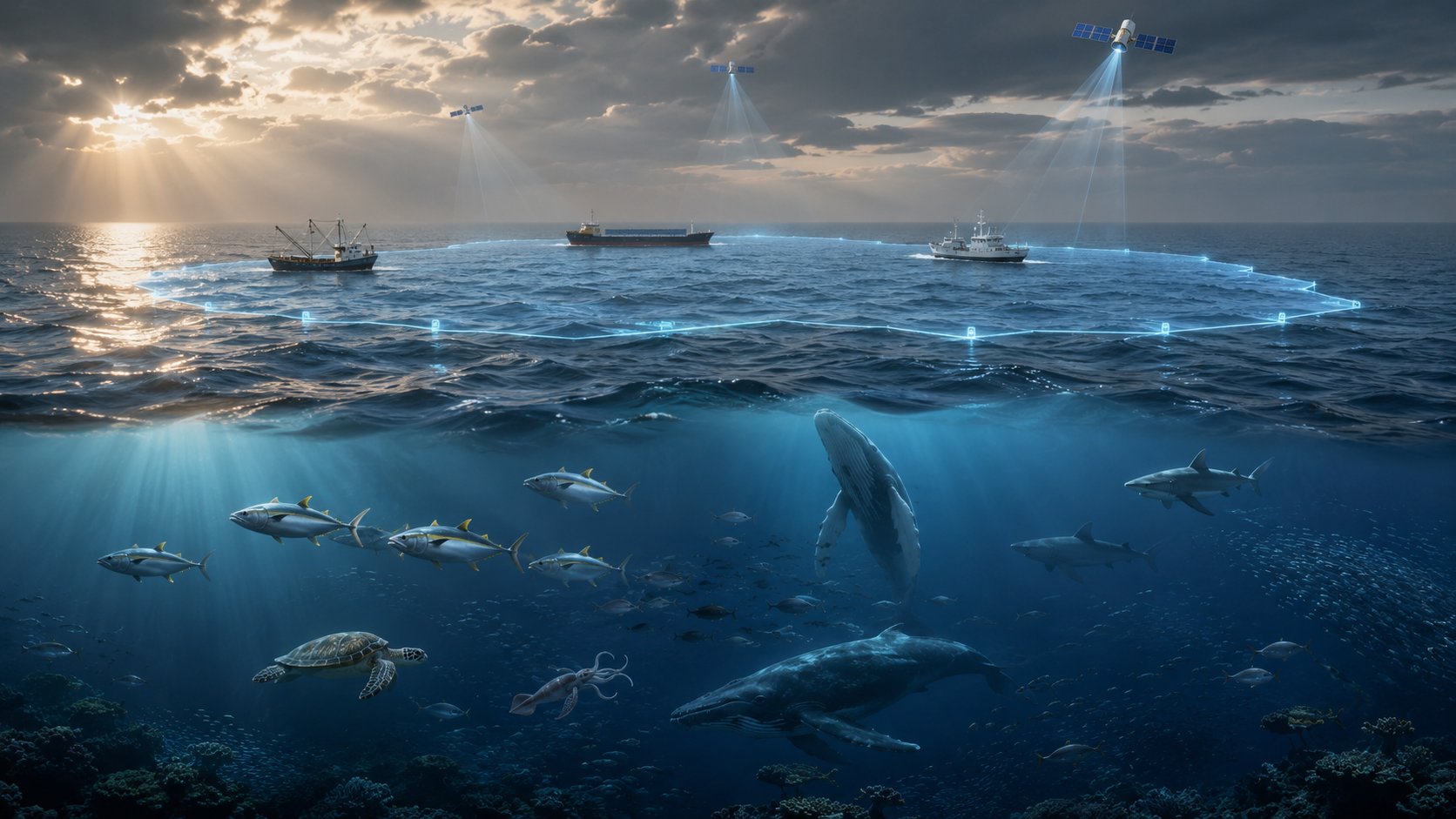
The ocean covers more than 70% of our planet, yet a huge portion of it exists beyond the control of any single nation. These waters, known as the high seas, begin where national Exclusive Economic Zones end and stretch across nearly half of Earth’s surface. They are home to some of the planet’s most important ecosystems, supporting migratory species, storing carbon, regulating climate, and sustaining fisheries that feed millions of people.
Despite their importance, these waters have historically lacked a comprehensive framework for protection. That gap has left some of the most valuable ecosystems on Earth vulnerable to increasing human pressure.
Why the High Seas Have Been So Difficult to Protect
For decades, the high seas have existed in a governance gap. While various international organizations oversee activities such as shipping and fishing, there has never been a unified system specifically designed to protect biodiversity across international waters.
As human activities expand farther offshore and technologies allow us to exploit increasingly remote regions of the ocean, concerns about overfishing, habitat destruction, pollution, and biodiversity loss have grown. Scientists and conservationists have warned for years that the existing system was not sufficient to address these challenges.
The result is a situation where many activities are regulated individually, but the overall health of the ecosystem often falls through the cracks.
Enter the High Seas Treaty
That is why the High Seas Treaty is being viewed as one of the most significant ocean conservation agreements in modern history.
Officially known as the Biodiversity Beyond National Jurisdiction Agreement, the treaty provides countries with a framework to work together to protect marine life in areas beyond national borders. For the first time, nations have agreed on a process that could allow marine protected areas to be established in international waters, helping conserve some of the world’s most important and vulnerable ecosystems.
The treaty represents years of negotiations and international cooperation. It is a recognition that protecting the ocean requires countries to work together, especially when no single nation has authority over the area in question.
More Than Marine Protected Areas
The treaty is about much more than creating protected areas.
It also establishes processes for environmental impact assessments, scientific cooperation, capacity building, and the sharing of marine genetic resources. These provisions are designed to ensure that activities taking place on the high seas are considered through the lens of long-term sustainability rather than short-term exploitation.
In many ways, the treaty represents a shift toward treating the high seas as a shared global responsibility rather than a collection of disconnected activities managed by separate organizations.
The Real Work Starts Now
Signing a treaty is often the easiest part. The real challenge begins after countries ratify the agreement.
Many international environmental agreements have ambitious goals, but translating those goals into meaningful action requires political will, funding, scientific expertise, and long-term commitment. Marine protected areas must be proposed and evaluated. Countries must negotiate management measures. Monitoring systems need to be established. Enforcement mechanisms must be developed.
All of these steps take time, resources, and cooperation among nations that often have competing interests.
The success of the treaty will depend on whether countries are willing to move from promises to implementation.
Why Implementation Could Determine Success or Failure
One of the biggest questions surrounding the High Seas Treaty is whether countries will move quickly enough to implement it effectively.
Ocean ecosystems are already facing significant pressures from climate change, industrial fishing, shipping, pollution, and habitat degradation. Many scientists argue that delays in implementation could undermine the treaty’s potential benefits.
While the agreement creates an unprecedented opportunity for ocean conservation, success will depend on what governments do next, not simply on what they agreed to on paper.
History is full of international agreements that sounded promising but failed to achieve their intended outcomes because implementation lagged behind ambition.
Why Everyone Should Care
The high seas may seem distant from everyday life, but their health affects all of us.
These waters support fisheries that feed millions of people around the world. They help regulate Earth’s climate by storing carbon and influencing ocean circulation patterns. They provide habitat for migratory species that travel through national waters and support coastal economies.
The health of the high seas affects food security, biodiversity, climate stability, and economic resilience.
Protecting these waters is not simply an environmental issue. It is a global issue.
A Historic Opportunity for Ocean Conservation
The High Seas Treaty offers a rare moment of optimism for ocean conservation. It demonstrates that countries can come together to address global environmental challenges and create solutions that extend beyond national interests.
For the first time, there is a pathway toward protecting biodiversity across nearly half of the planet’s surface. That opportunity is historic.
Yet optimism alone will not protect the ocean. Implementation, accountability, monitoring, and enforcement will determine whether this treaty becomes a historic conservation success or another example of ambitious promises falling short.
The future of nearly half the planet’s ocean may depend on how seriously countries take the next steps.
For ocean conservation advocates, scientists, policymakers, and citizens alike, the question is no longer whether the world needed a High Seas Treaty.
The question now is whether the world will follow through on its promise.

CEO


