What We Don’t Know About the Ocean Could Cost Us Everything

 Apple Podcasts
 Spotify
 YouTube
 Amazon Music
 PocketCasts
 Overcast
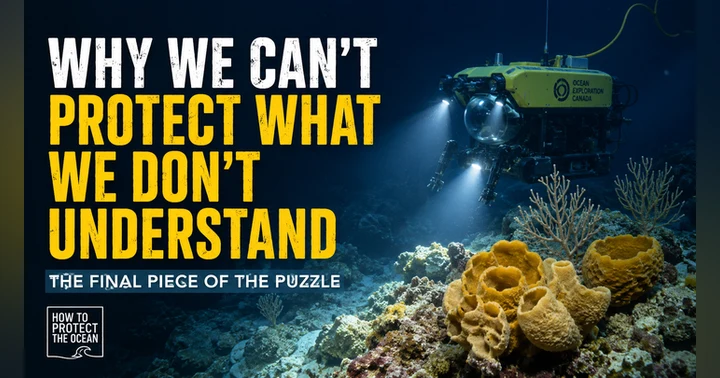
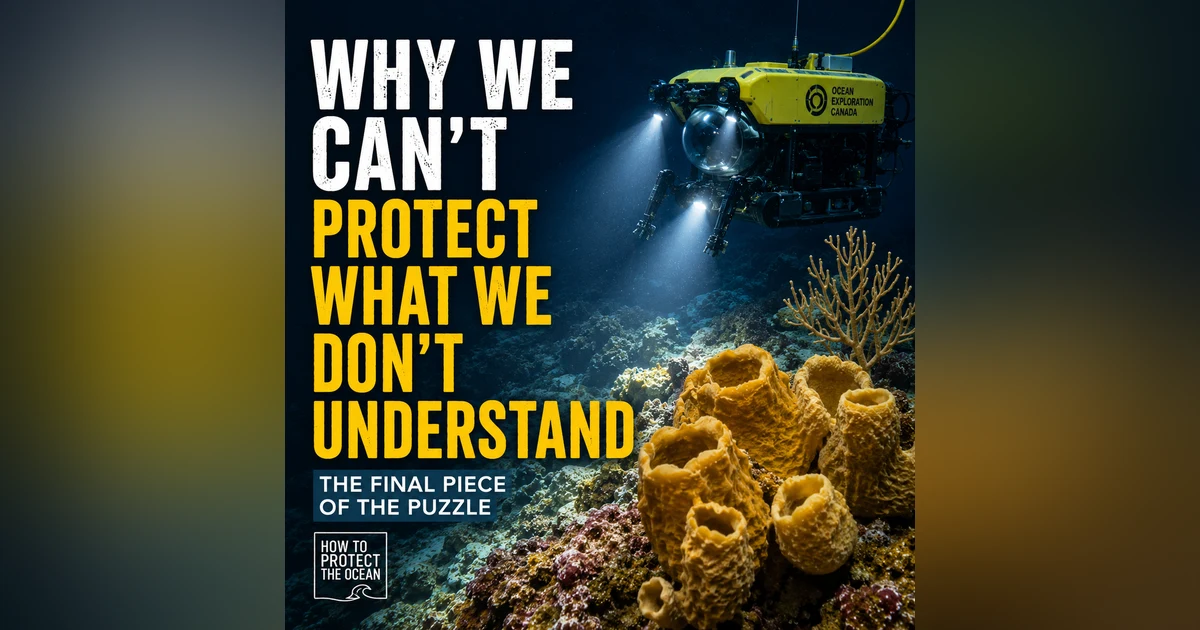
 How do you protect something you barely understand? In this episode, we explore why ocean exploration is much more than discovering strange creatures or mapping the seafloor. Every marine protected area, conservation plan, and fisheries decision begins with one essential ingredient: knowledge.
You’ll discover how scientists collect the information that guides conservation, from mapping underwater canyons to identifying coral gardens and sponge reefs that most people will never see. We also look at what happens when important ecosystems are damaged before we even know they exist, and why exploration gives decision makers the evidence they need to protect the right places.
This episode is the final part of our deep-sea exploration series leading into tomorrow’s special interview with experts from Fisheries and Oceans Canada and Ocean Networks Canada. If you’ve ever wondered why ocean science matters to your everyday life, this conversation will show you why understanding the ocean is the first step toward protecting it.
Support Independent Podcasts: https://www.speakupforblue.com/patreon
Need help with your ocean non-profit, company, or project? Get the help you need with Pisces Oceans Inc.: https://www.piscesoceans.ca
Connect with Speak Up For Blue
Website: https://bit.ly/3fOF3Wf
Instagram: https://bit.ly/3rIaJSG
TikTok: https://www.tiktok.com/@speakupforblue
Twitter: https://bit.ly/3rHZxpc
YouTube: www.speakupforblue.com/youtube
00:00:01,566 --> 00:00:02,767
Hello, hello, Michelle.
2
00:00:02,767 --> 00:00:03,187
All right.
3
00:00:03,187 --> 00:00:05,249
This is the last episode for the next week.
4
00:00:05,249 --> 00:00:09,669
And then Thursday, I'm hoping to get some episodes for the week after.
5
00:00:09,669 --> 00:00:17,698
I don't have an interview to do, but we'll probably do some ocean news ones that I'll
prepare when I'm at the cottage and I'll do them when I got back on Wednesday.
6
00:00:17,698 --> 00:00:19,621
Actually, I have a day off on Wednesday.
7
00:00:19,621 --> 00:00:23,814
So we can do it on Wednesday so that you have them available to get them ready.
8
00:00:23,814 --> 00:00:30,209
Because I'm going to be away in Costa Rica from the 6th to the 10th, or from the 4th to
the 11th, I should say.
9
00:00:31,498 --> 00:00:38,375
So that means I'm gonna have to record some episodes for the week after that as well.
10
00:00:38,375 --> 00:00:41,128
So I'm gonna have two sets of episodes for you by next week.
11
00:00:41,128 --> 00:00:43,951
Um so that you can do them as well.
12
00:00:43,951 --> 00:00:48,015
I will have access to when I'm in Costa Rica, access to uh internet.
13
00:00:48,015 --> 00:00:49,577
So I'll be able to do those up.
14
00:00:49,577 --> 00:00:51,208
Okay, anyway, here go.
15
00:00:57,016 --> 00:01:00,069
What if I asked you to protect a forest you've never walked through?
16
00:01:00,069 --> 00:01:05,994
You don't know where the oldest trees are, you don't know where the endangered animals
live, you don't even know where the rivers flow.
17
00:01:05,994 --> 00:01:08,916
You probably tell me you need a map first.
18
00:01:08,916 --> 00:01:11,017
The ocean is no different.
19
00:01:11,038 --> 00:01:14,241
This is the How to Protect the Ocean podcast, your weekday ocean news update.
20
00:01:14,241 --> 00:01:22,618
If you care about staying informed about the ocean every single weekday, Monday to Friday,
hit that follow button right now on the favorite podcast app that you're listening to this
21
00:01:22,618 --> 00:01:25,810
episode right now so you don't miss tomorrow's story.
22
00:01:25,836 --> 00:01:38,303
Welcome to part four of our series leading up to tomorrow's special interview with a DFO
scientist and an educator from Ocean Networks Canada talking about one of Canada's most
23
00:01:38,303 --> 00:01:40,274
exciting deep sea exploration projects.
24
00:01:40,274 --> 00:01:42,106
It is a phenomenal interview.
25
00:01:42,106 --> 00:01:43,916
I want you to listen to it.
26
00:01:43,916 --> 00:01:47,228
And then we're preparing you to listen to it by preparing you with these solo episodes.
27
00:01:47,228 --> 00:01:49,489
And I can't wait to kind of recount that.
28
00:01:49,489 --> 00:01:55,072
So, like earlier this week, we we learned that we've explored only a small portion of the
deep sea.
29
00:01:55,085 --> 00:02:01,420
And yesterday we looked at incredible technology helping scientists reach places humans
can't.
30
00:02:01,420 --> 00:02:05,763
Today we're going to answer the question that that ties everything together.
31
00:02:05,763 --> 00:02:09,905
Why do ocean why does ocean exploration matter?
32
00:02:09,905 --> 00:02:13,738
And the answer is simple, because we can't protect what we don't understand.
33
00:02:13,738 --> 00:02:17,391
And to be honest, we can't fall in love with what we don't know what's there.
34
00:02:17,391 --> 00:02:19,742
And we can't understand it if we don't know what's there.
35
00:02:19,742 --> 00:02:22,488
And of course, we can't protect it if we don't understand it.
36
00:02:22,488 --> 00:02:23,799
So it's all it's a whole thing.
37
00:02:23,799 --> 00:02:26,510
It's all a uh circle of life, right?
38
00:02:26,510 --> 00:02:32,486
Um, but whenever a new marine protected area is announced, most of us hear about the final
decision.
39
00:02:32,486 --> 00:02:39,092
The area has been protected, fishery rules have changed, uh, certain activities are maybe
limited.
40
00:02:39,092 --> 00:02:45,777
But what we rarely see is what's happening, but we rarely but what we rarely see is
everything that happened before that announcement.
41
00:02:45,777 --> 00:02:49,860
Scientists spend years, if not decades, collecting information.
42
00:02:49,860 --> 00:02:52,168
They map the seafloor, they identify
43
00:02:52,168 --> 00:02:53,999
Gardens or something like that.
44
00:02:53,999 --> 00:03:03,053
They locate sponge reefs, they document fish populations, they measure ocean currents,
they collect water samples, they study how species use different habitats throughout their
45
00:03:03,053 --> 00:03:03,983
lives.
46
00:03:03,983 --> 00:03:10,466
Only after all of the work can and all and of course they also talk to local communities.
47
00:03:10,466 --> 00:03:17,929
Only all only after all of that work can the decision makers begin asking important
questions.
48
00:03:17,929 --> 00:03:19,749
What are the most sensitive ecosystems?
49
00:03:19,749 --> 00:03:21,420
Which habitats are connected?
50
00:03:21,420 --> 00:03:24,342
Which areas support biodiversity that's found nowhere else?
51
00:03:24,342 --> 00:03:25,913
So endemic species.
52
00:03:25,913 --> 00:03:30,855
Where would protection have the greatest impact and how would it affect the local
community community?
53
00:03:30,855 --> 00:03:32,816
How will it benefit the local community?
54
00:03:32,816 --> 00:03:35,658
Without those answers, conservation becomes guesswork.
55
00:03:35,658 --> 00:03:37,619
With them, it becomes science.
56
00:03:37,619 --> 00:03:39,880
And we love science.
57
00:03:39,880 --> 00:03:45,263
History has taught us that waiting too long to understand an ecosystem can come with
consequences.
58
00:03:45,263 --> 00:03:50,196
Around the world, scientists have discovered deep sea coral communities only after some
had
59
00:03:50,196 --> 00:03:54,268
Already been damaged by fishing gear or other human activities.
60
00:03:54,268 --> 00:03:59,511
The challenge wasn't that people wanted to destroy these ecosystems.
61
00:03:59,511 --> 00:04:03,073
The challenge was that many didn't even know they existed.
62
00:04:03,153 --> 00:04:04,374
That's changing.
63
00:04:04,374 --> 00:04:12,618
Countries, including Canada, my country, are investing in ocean science because they
recognize that exploration isn't just about discovery.
64
00:04:12,618 --> 00:04:15,279
It's about making better decisions.
65
00:04:15,279 --> 00:04:18,486
Canada is committed to protecting 30% by
66
00:04:19,277 --> 00:04:24,299
Canada has committed to protecting 30% of the ocean by 2030.
67
00:04:24,299 --> 00:04:28,081
That's a pretty ambitious goal, and whether we get there or not, I don't know.
68
00:04:28,081 --> 00:04:31,302
But we've already hit 15%, which is great.
69
00:04:31,302 --> 00:04:33,904
But drawing the lines on a map isn't enough.
70
00:04:33,904 --> 00:04:37,965
Those protected areas need to include the habitats that matter most.
71
00:04:37,965 --> 00:04:46,881
Otherwise, we risk protecting the moat, otherwise, we risk protecting the wrong places
while leaving vulnerable ecosystems exposed.
72
00:04:46,881 --> 00:04:50,964
That's why exploration and conservation are partners.
73
00:04:51,405 --> 00:04:53,926
One doesn't work well without the other.
74
00:04:54,547 --> 00:04:56,889
Think about a family, think about your family doctor.
75
00:04:56,889 --> 00:05:00,371
Before recommending treatment, they gather information.
76
00:05:00,371 --> 00:05:04,454
They run tests, they ask questions, they build a diagnosis.
77
00:05:04,454 --> 00:05:06,716
Ocean conservation works pretty much the same way.
78
00:05:06,716 --> 00:05:13,691
Exploration is the diagnosis, protection is the treatment, and good treatment always
begins with understanding the problem.
79
00:05:15,381 --> 00:05:24,549
Now, if you and speaking of understanding the problem, if you listen to this podcast and
you want to support us by doing all the work that we do, and you want to support us for
80
00:05:24,549 --> 00:05:34,998
doing all the work that we do, you can go to speakupforblue.com forward slash Patreon,
join one of our tiers, and you can take part of being part of the community of people who
81
00:05:34,998 --> 00:05:36,670
have like minds, right?
82
00:05:36,670 --> 00:05:40,764
We love to protect the ocean, we love to protect the environment, and we love discussing
it.
83
00:05:40,764 --> 00:05:42,805
You can go to speakupforblue.com.
84
00:05:42,892 --> 00:05:48,714
forward slash Patreon to support the show and be part of a community that you have never
found before.
85
00:05:48,714 --> 00:05:50,042
So it is always great.
86
00:05:50,042 --> 00:05:52,046
All right, let's get back to the show.
87
00:05:52,046 --> 00:05:55,924
Cause like maybe you're thinking like I don't live near the deep ocean, right?
88
00:05:55,924 --> 00:05:57,387
Nobody really does.
89
00:05:57,388 --> 00:06:01,109
Why should I care about underwater canyons off British Columbia?
90
00:06:01,109 --> 00:06:03,270
Like why should I care about hydrothermal vents?
91
00:06:03,270 --> 00:06:06,011
Because healthy oceans benefit us all.
92
00:06:06,011 --> 00:06:08,812
Deep sea ecosystems help regulate the Earth's climate.
93
00:06:08,812 --> 00:06:10,653
They support biodiversity.
94
00:06:10,653 --> 00:06:12,117
They influence
95
00:06:12,117 --> 00:06:14,919
They influence fisheries that feed communities.
96
00:06:14,919 --> 00:06:23,804
They contribute to the health, they contribute to the health of marine, they contribute to
the health of marine food webs that connect oceans across the globe.
97
00:06:23,804 --> 00:06:29,887
And perhaps most importantly, they remind us how much there still is to learn about our
planet.
98
00:06:29,988 --> 00:06:35,451
One of my favorite things about ocean science is that every expedition begins with
uncertainty.
99
00:06:35,451 --> 00:06:39,493
Scientists, head down, scientists don't, scientists don't
100
00:06:40,385 --> 00:06:43,277
Scientists head down, not expecting to confirm what they already know.
101
00:06:43,277 --> 00:06:46,188
They are hoping to find something new.
102
00:06:46,248 --> 00:06:48,310
Sometimes they discover species.
103
00:06:48,310 --> 00:06:51,031
Sometimes they discover an ecosystem nobody expected.
104
00:06:51,031 --> 00:06:54,573
Sometimes they realize their assumptions were completely wrong.
105
00:06:54,633 --> 00:06:56,594
That's how science moves forward.
106
00:06:56,594 --> 00:07:03,989
Not by pretending to all not by pretend not by pretending to have all the answers, but by
asking better questions.
107
00:07:03,989 --> 00:07:08,241
Tomorrow, you're gonna hear from people doing exactly that.
108
00:07:08,361 --> 00:07:15,404
Scientists, educators, and explorers working together to better understand Canada's deep
sea Pacific Ocean.
109
00:07:15,765 --> 00:07:23,769
They'll talk about technology, the discoveries, the partnerships, the excitement of
exploring places few people have ever seen.
110
00:07:23,769 --> 00:07:27,091
And I hope this week's series has done one thing.
111
00:07:27,091 --> 00:07:37,457
I hope that instead of hearing about tomorrow's interview as conversation about robot
ships or maps, you'll hear it as a conversation about understanding our planet well enough
112
00:07:37,457 --> 00:07:38,577
to protect it.
113
00:07:38,657 --> 00:07:41,338
Because that's what exploration is really about.
114
00:07:41,459 --> 00:07:48,702
Not just discovering new places, helping us make better decisions about the places we
already depend on.
115
00:07:49,603 --> 00:07:52,205
Ocean exploration isn't separate from conservation.
116
00:07:52,205 --> 00:07:59,308
It's the foundation that allows us to protect the right places for the right reasons
before they're lost.
117
00:07:59,349 --> 00:08:01,670
I want to thank you for joining me on today's episode.
118
00:08:01,670 --> 00:08:06,252
And don't forget, tomorrow, don't miss our special invitation.
119
00:08:06,372 --> 00:08:07,871
And tomorrow, don't
120
00:08:07,871 --> 00:08:17,506
And tomorrow don't miss our special invit and tomorrow don't miss our special interview
with the team behind one of Canada's most exciting deep sea exploration initiatives.
121
00:08:17,727 --> 00:08:19,057
That's it for today's episode.
122
00:08:19,057 --> 00:08:24,070
If you want to support the podcast, you go to speakupforblue.com forward slash Patreon.
123
00:08:24,070 --> 00:08:30,944
Don't forget to follow the podcast and tune in tomorrow for the interview talking about
more about the deep sea.
124
00:08:30,944 --> 00:08:33,796
We've been preparing you for the f this these last four episodes.
125
00:08:33,796 --> 00:08:35,356
I hope you enjoyed it.
126
00:08:35,356 --> 00:08:36,641
I'm your host, Angela.
127
00:08:36,641 --> 00:08:37,231
Have a great day.
128
00:08:37,231 --> 00:08:40,163
We'll talk to you next time and happy conservation.
129
00:08:41,425 --> 00:08:43,646
Okay, Michelle, that is it.
130
00:08:43,887 --> 00:08:44,968
Thank you so much.
131
00:08:44,968 --> 00:08:46,869
And uh we'll talk to you soon.
132
00:08:46,869 --> 00:08:51,373
So just to go over it, Monday and Tuesday's episode, I'm gonna have the show notes already
done.
133
00:08:51,373 --> 00:08:55,686
Um, I may have, if I can get the other ones done, I'll I'll do all four.
134
00:08:55,686 --> 00:09:03,262
Uh and then so all you have to do is just look for it on Libsyn and just add that, uh add
that um, whatchall it?
135
00:09:03,262 --> 00:09:05,264
Oh, shoot.
136
00:09:05,264 --> 00:09:06,385
Add that
137
00:09:06,657 --> 00:09:07,659
The MP three file.
138
00:09:07,659 --> 00:09:07,970
Yeah.
139
00:09:07,970 --> 00:09:09,644
Just add this MP three file right in there.
140
00:09:09,644 --> 00:09:10,445
Okay.
141
00:09:10,445 --> 00:09:10,806
All right.
142
00:09:10,806 --> 00:09:11,096
Cool.
143
00:09:11,096 --> 00:09:11,637
Thanks a lot.
144
00:09:11,637 --> 00:09:12,129
Talk to there.
145
00:09:12,129 --> 00:09:12,859
Bye.