The Raft No One Is Steering
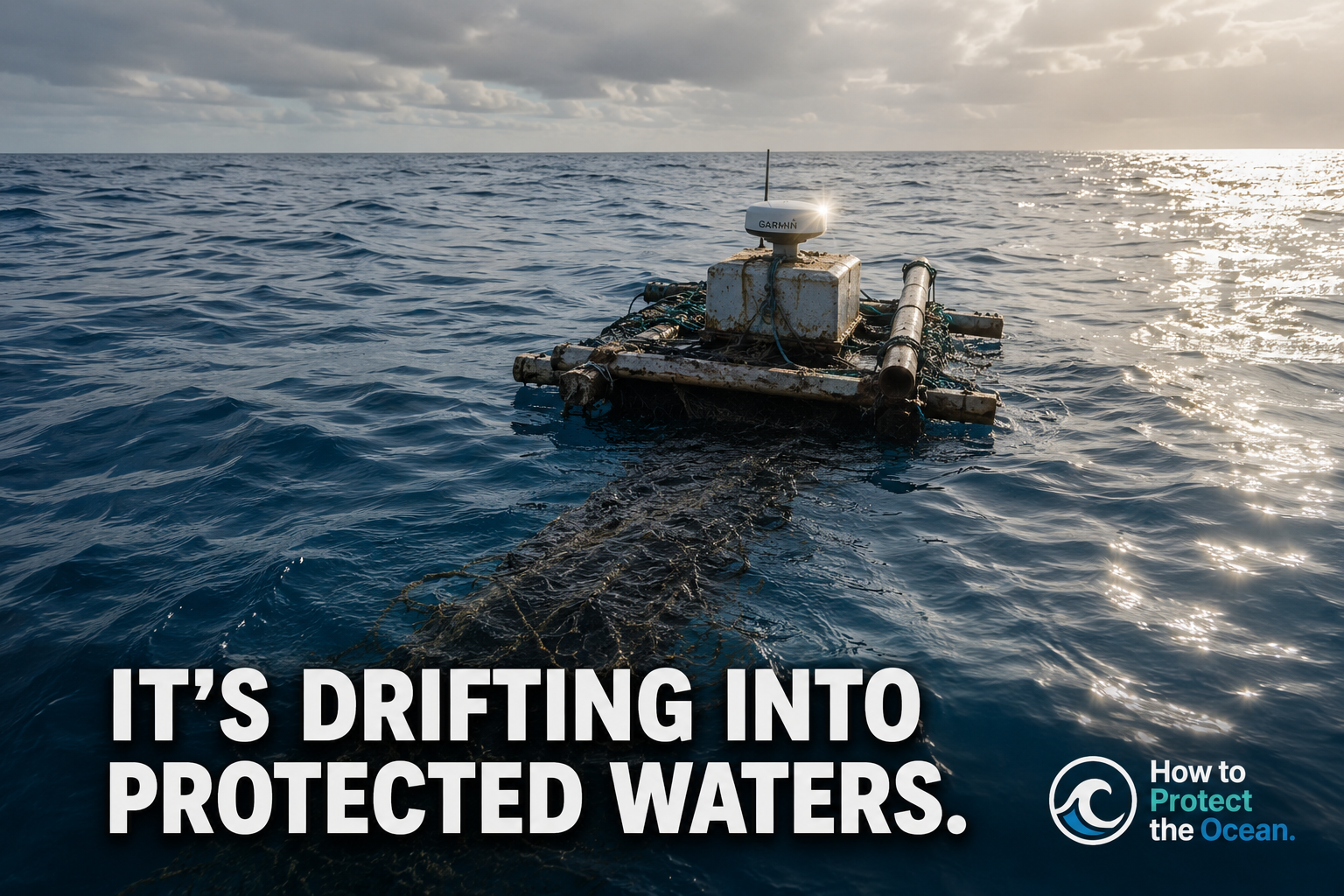
Somewhere in the open ocean right now, there's a raft about the size of a small table, drifting on the current. It has a GPS beacon on top and a long tail of netting hanging underneath. Nobody is steering it. And there's a decent chance it's drifting toward one of the places we've set aside to protect.
It's called a fish aggregating device, or FAD. In the tuna industry, that's just how people say it. The idea is simple, almost clever: fish are drawn to anything floating in open water, so a raft left to drift for a while gathers a whole community underneath it, tuna included. The GPS beacon tells the fleet exactly where the raft is and roughly how much life has gathered below. When it's worth the trip, a boat comes and scoops the whole thing.
Thousands of these are released into the ocean every year and left to drift. That's where the trouble starts.
What the Study Found
A study published in Science Advances in June tracked the public data on these devices. Researchers found they've likely drifted through more than half of the world's marine protected areas by total area, not half of one region, half of the protected ocean worldwide. The team also counted the times these rafts actually washed up or got stuck, and came back with more than 6,300 strandings across 174 protected areas in 53 different countries and territories.
A protected area is meant to be the ocean's safe room, the stretch fenced off on paper so coral, turtles, and fish can recover. These devices don't read the signs. When one washes onto a reef, the netting underneath snags and breaks the coral. When it starts falling apart, it becomes plastic pollution in the exact place we're trying to keep clean. And the netting keeps fishing even after nobody's watching, entangling sea turtles and sharks long after any tuna were ever caught. The study found nearly 500 at-risk species living inside the protected areas where these strandings happen, with damage clustered in a few hotspots: the Central Pacific, the Western Indian Ocean, and the Caribbean.
Who Actually Pays for the Cleanup
Here's the part that stuck with our host, Andrew Lewin, most. These devices come from large industrial fleets, but when they wash ashore, the cleanup usually lands on small island communities, the people who often see none of the profit from the tuna these devices caught in the first place.
One of the study's co-authors, an economist at the University of Hawaii at Manoa, put the core problem plainly: protected areas are drawn to guard specific places, but drifting gear doesn't recognize those boundaries.
The Progress, and What's Still Missing
The industry has started to change. Some fleets are switching to more biodegradable devices, so a lost raft breaks down instead of choking a reef for years. That's genuine progress. But researchers are clear it isn't enough on its own. They're calling for three things: stronger rules on how these devices get used, better tracking so a lost raft can be traced back to whoever put it in the water, and real systems to retrieve them before they turn into debris.
The Lever You Actually Have
You probably can't pass fishing regulation this afternoon. But this whole problem traces back to one style of tuna fishing, the drifting device method, and you weigh in on that every time you buy a can of tuna.
Next time you're at the store, flip the can over and look for two phrases: "pole and line caught" or "FAD-free." That's tuna caught without these rafts. If the can doesn't say it, that's usually your answer. It takes about ten seconds to check, and if you want to verify a specific brand, a free guide like Seafood Watch will rate it for you in about the same amount of time.
You're not going to clean a reef halfway across the world from your kitchen. But demand is the reason these devices are in the water in the first place. Choosing tuna caught the cleaner way chips away at the reason to drift another raft into a protected zone.
A protected area only protects what stays inside the lines. When the harm drifts in on its own, protection needs help from the outside, sometimes better rules and tracking, sometimes just a better choice made quietly at the shelf.

CEO
The Biggest Mouthful: How Blue Whales Eat and Why Krill Matters