Is the Ocean Really Protected?
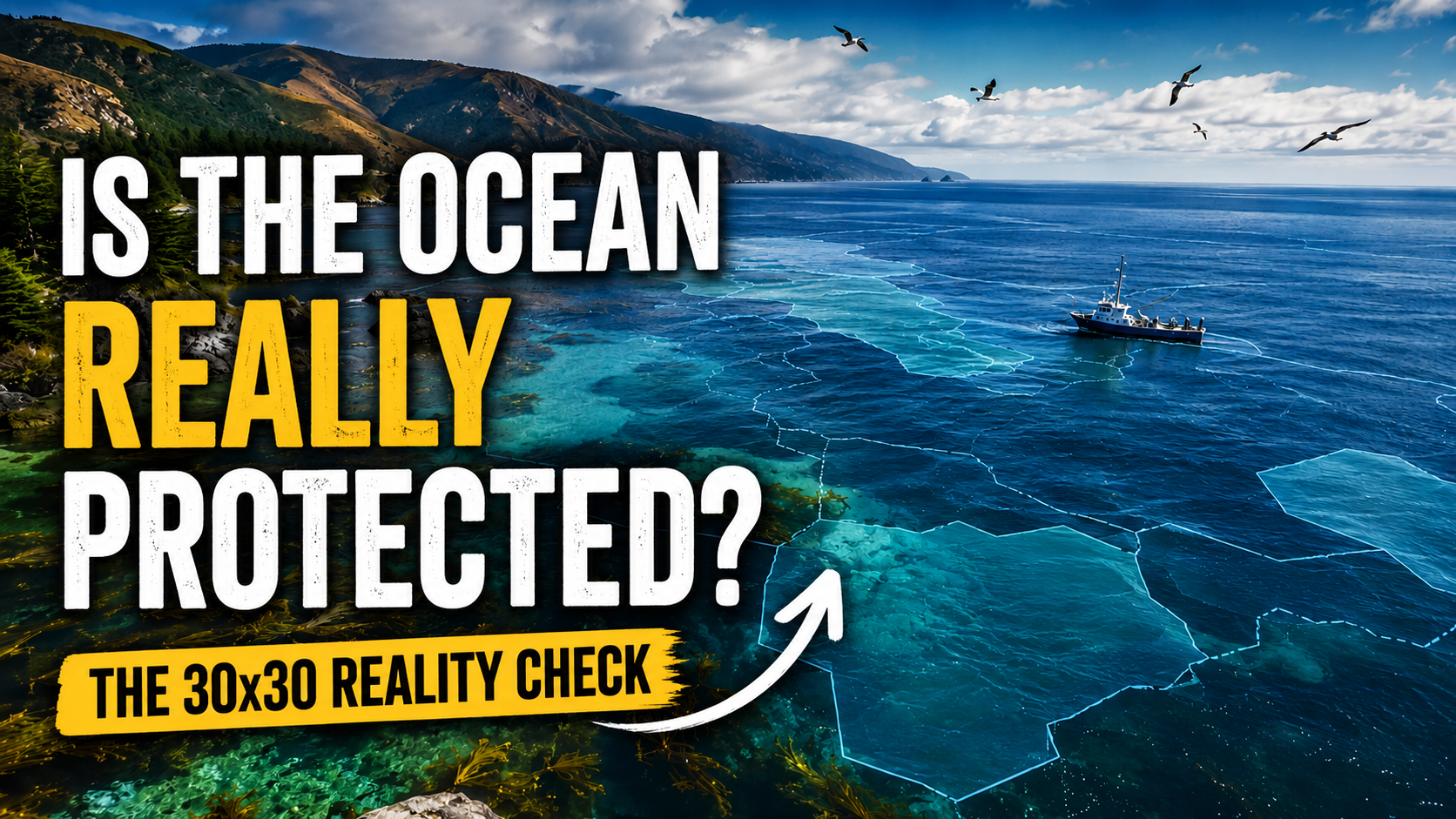
The ocean has reached an important milestone. Around 10% of the world’s ocean is now protected through marine protected areas and other conservation measures.
That number represents years of work by governments, scientists, conservation organizations, Indigenous communities, and local stakeholders. Compared to where we were just a decade ago, it is a significant achievement.
But hitting 10% raises an important question. Are we protecting the ocean in a way that actually delivers results?
Why 10% Protection Is Worth Celebrating
Marine protected areas are one of the most important tools available for ocean conservation. When managed effectively, they can help rebuild fish populations, protect biodiversity, and preserve important habitats.
Reaching 10% protection shows that countries around the world are taking ocean conservation more seriously than they once did. It demonstrates that large-scale protection is possible when governments and communities work together.
The milestone also provides momentum for future conservation efforts. Success can encourage countries to become more ambitious with their protection targets.
The Challenge of Reaching 30x30
The global goal known as 30x30 aims to protect 30% of the world’s land and ocean by 2030. While reaching 10% is a major step forward, it also highlights how much work remains.
To achieve the target, the world must protect another 20% of the ocean in less than four years. That is a significant challenge, especially as competing interests such as fishing, shipping, energy development, and mining continue to grow.
The pressure to increase protection quickly could lead to rapid expansion of marine protected areas. That is where quality becomes just as important as quantity.
The Risk of Paper Parks
Not all protected areas provide the same level of conservation benefit. Some areas exist primarily on maps and in government reports but lack the funding, enforcement, or management needed to make a difference.
These are often referred to as “paper parks.” While they contribute to global protection statistics, they may do little to reduce threats to marine ecosystems.
Simply drawing lines around an area of ocean does not automatically create protection. Real conservation requires monitoring, enforcement, community support, and long-term investment.
Why Smaller Protected Areas Still Matter
Large offshore protected areas often attract the most attention because they can add millions of square kilometres to global protection totals. However, smaller coastal protected areas can be equally important.
Coastal habitats such as kelp forests, seagrass meadows, salt marshes, mangroves, and coral reefs support enormous amounts of biodiversity. These ecosystems provide nursery habitat, feeding grounds, and shelter for countless marine species.
Protecting these areas may not dramatically change global percentages, but it can have a major impact on local ecosystems and fisheries. In many cases, these habitats are where conservation efforts can deliver some of the greatest benefits.
Measuring Success Beyond Percentages
As countries work toward the 30x30 goal, there will be growing pressure to focus on the numbers. Percentages are easy to measure and easy to communicate.
However, conservation success cannot be judged solely by how much ocean is protected. We also need to ask whether protected areas are located in the right places, managed effectively, and delivering meaningful ecological outcomes.
The most successful marine protected areas are not necessarily the biggest. They are the ones that achieve measurable conservation results.
Looking Ahead
The next phase of ocean conservation will require more than simply increasing protected area coverage. It will require thoughtful planning, scientific guidance, Indigenous leadership, stakeholder collaboration, and long-term commitment.
Reaching 10% ocean protection is absolutely worth celebrating. It represents real progress at a time when the ocean faces growing pressures from climate change, habitat loss, and overexploitation.
But the ultimate goal is not to protect a percentage. The goal is to protect the ocean in ways that allow marine ecosystems and coastal communities to thrive for generations to come.

CEO


