The Hidden Solar Power Plant Inside Coral Reefs
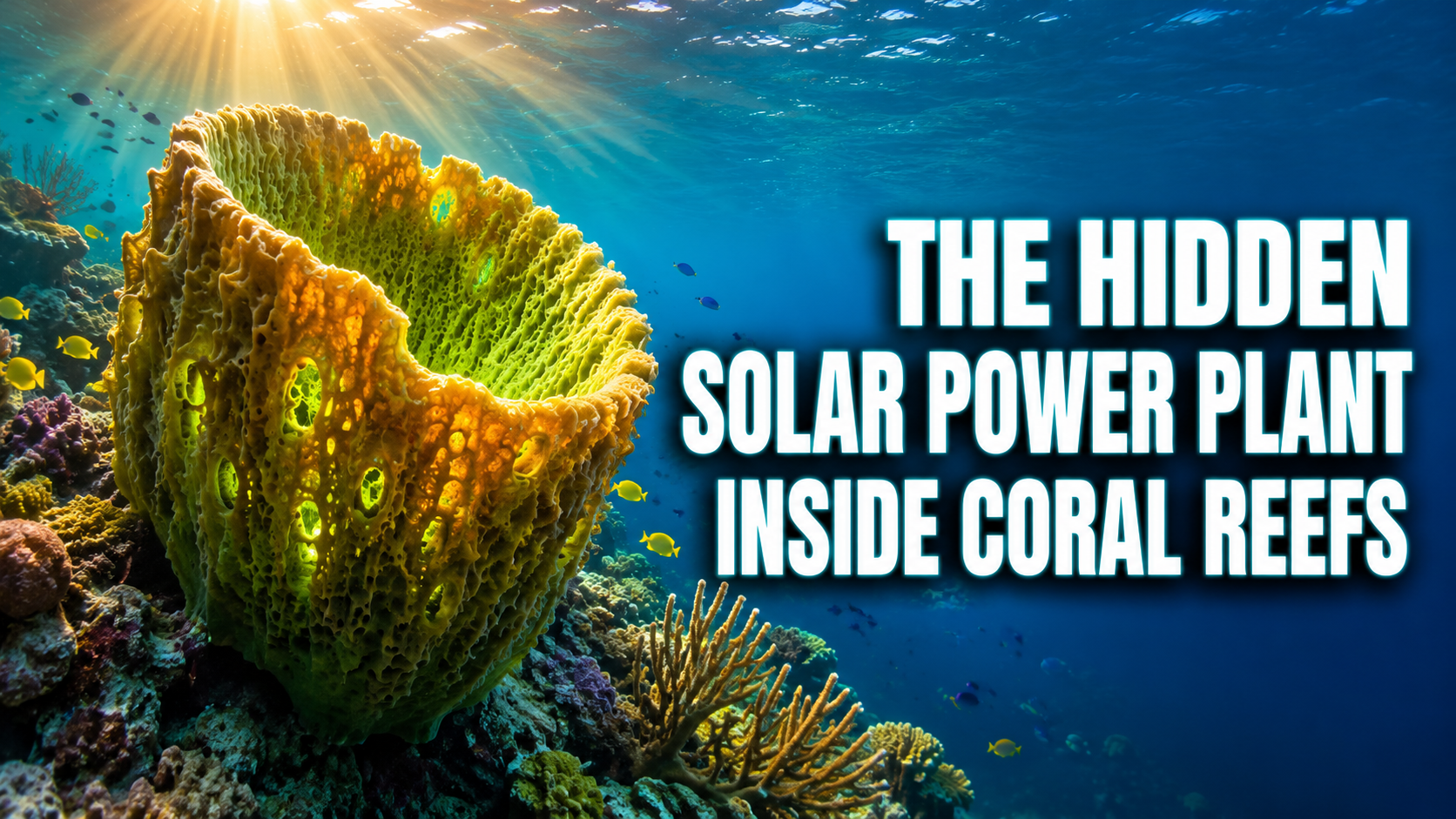
Most people think of sea sponges as simple animals that quietly sit on the ocean floor filtering seawater. They don’t move, they don’t hunt, and they rarely get much attention compared to colorful corals or charismatic sea turtles. But a new discovery suggests these ancient animals may be far more remarkable than we ever imagined.
Scientists have found that some tropical sea sponges are able to generate energy from sunlight through a partnership with microscopic algae living inside their tissues. This discovery is helping researchers rethink the role that sponges play in coral reef ecosystems and may change how we understand reef resilience.
Sea Sponges Are More Than Simple Filter Feeders
Sea sponges have existed for hundreds of millions of years, making them one of the oldest groups of animals on Earth. Their bodies continuously pump seawater through thousands of tiny pores, capturing bacteria and organic particles for food while helping recycle nutrients throughout the reef. Despite their simple appearance, they are essential engineers of healthy marine ecosystems.
Because they quietly perform these important jobs, sponges are often overlooked in ocean conservation discussions. This new research is a reminder that even familiar species can surprise scientists with abilities that were previously unknown.
A Partnership Powered by Sunlight
The newly studied tropical sponges host microscopic algae within their tissues. These algae use sunlight to perform photosynthesis, producing nutrients that help feed the sponge. In return, the sponge provides the algae with a safe place to live and access to carbon dioxide and other compounds needed for photosynthesis.
This mutually beneficial relationship is known as symbiosis. Similar partnerships are responsible for the incredible productivity of coral reefs, where corals rely on photosynthetic algae for much of their energy. Researchers now believe some sponges may benefit in much the same way.
Why This Discovery Matters
Coral reefs exist in waters that are surprisingly low in nutrients. Scientists have long wondered how such productive ecosystems can thrive under these conditions. The answer often lies in partnerships between different organisms that efficiently recycle and share energy.
If sea sponges are also capturing energy from sunlight, they may contribute far more to reef productivity than previously recognized. Understanding these relationships helps scientists build a more complete picture of how reefs function and how they may respond to environmental change.
Every Species Has a Role
Healthy coral reefs are built on thousands of interconnected relationships. Fish depend on corals, corals depend on algae, and now it appears some sponges depend on photosynthetic partners as well. Removing or damaging one part of this network can have consequences that ripple throughout the ecosystem.
This discovery reinforces an important lesson in marine conservation. Protecting biodiversity is not just about saving individual species. It is about preserving the countless relationships that allow ecosystems to survive and recover.
The Ocean Still Holds Incredible Surprises
One of the most exciting parts of marine science is realizing how much remains unknown. Even organisms that have been studied for decades continue to reveal unexpected adaptations and behaviors. Every new discovery reminds us that the ocean is far more complex than it first appears.
The next breakthrough in ocean science may not come from a massive whale or a newly discovered deep-sea creature. It could come from an animal that has been sitting quietly on a reef all along.
Listen to the Full Episode
In this episode of How to Protect the Ocean, we explore how tropical sea sponges are harnessing sunlight through microscopic algae, why this discovery matters for coral reefs, and what it tells us about the hidden complexity of marine ecosystems.
If you enjoy learning about the latest discoveries in ocean science, subscribe to How to Protect the Ocean wherever you listen to podcasts and join us every weekday for another story from beneath the waves.

CEO
The Biggest Mouthful: How Blue Whales Eat and Why Krill Matters